
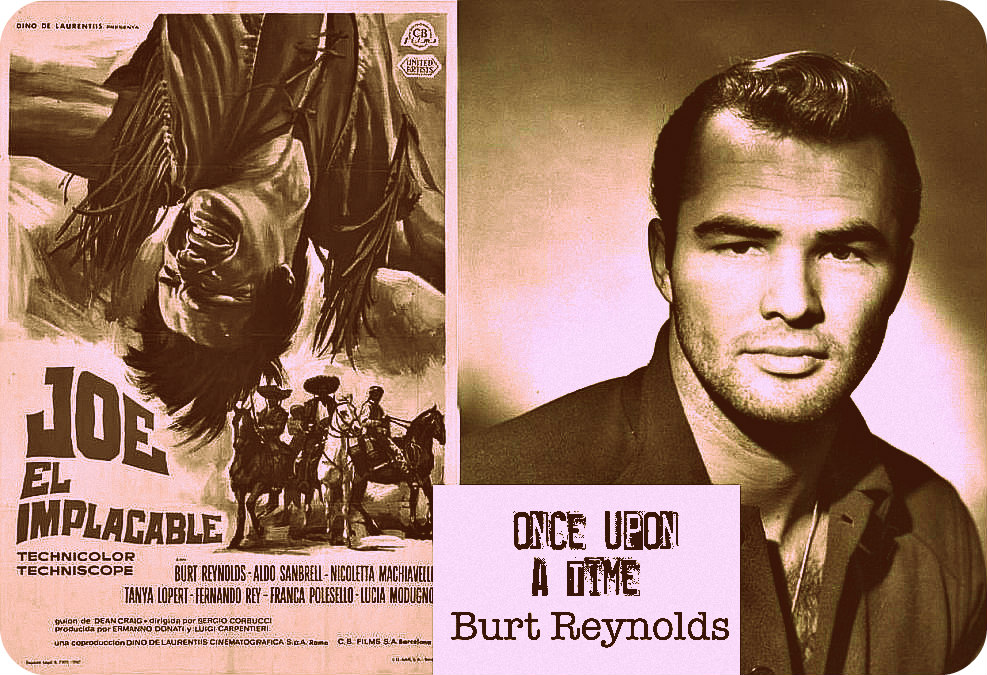
My man, Burt Reynolds, started his television career with two episodes of the anthology series Flight in 1959. He then scored his own series, Riverboat, which he left in the spring of ’59. His luck held out and he landed a regular role on the venerable western series Gunsmoke where he stayed for three years. As for a film career, as of 1966, he had none to speak of, really. Then, his phone rang.
Here again on Once Upon a Time we meet with venerable Italian director Sergio Corbucci. Corbucci had been approached by producer Dino De Laurentiis who had a script he thought would be suitable for Sergio’s next western. Corbucci later said that he was promised Marlon Brando for the project but he was unavailable. Corbucci and De Laurentiis commiserated and decided it was time to bring another American television actor over to Europe to star in a western. They chose Burt because they thought he looked like Brando. It helped that Burt was also part Cherokee; he had already played American Indians and “half breeds” on TV.
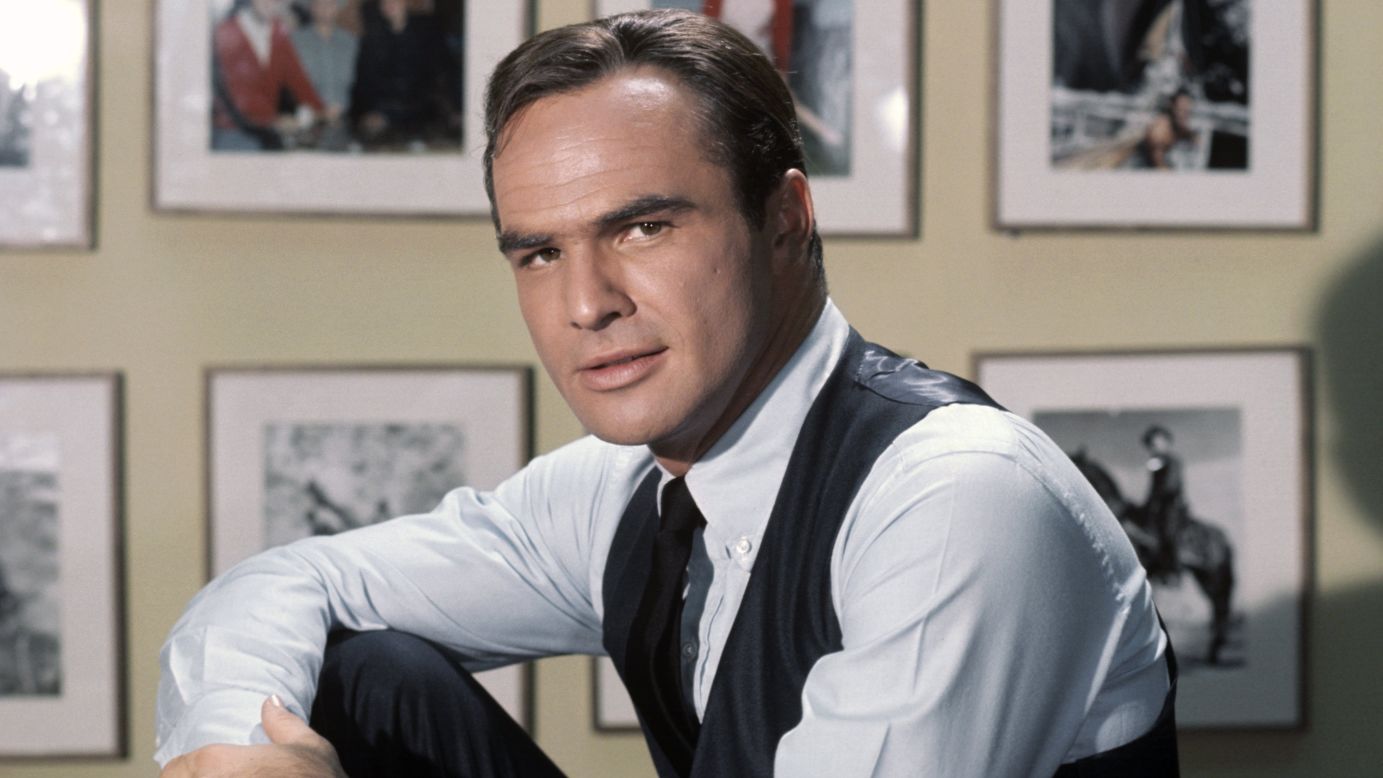
Clint Eastwood and Burt had been friends and remained so until the end of Burt’s life. When Burt asked Clint about making westerns in Spain with Italians, Clint showed Burt an early print of Fistful of Dollars and Burt was impressed. Clint then introduced Burt to Dino who took to Reynolds at once particularly since Corbucci’s upcoming film called for an actor who could do his own stunts. Burt, of course, had been a stunt man and always did many of his own stunts; he had been in the saddle since he was a child. Now, it seems that it is, in fact, true that Burt thought the “Sergio” Clint and Dino had been talking up to him was Sergio Leone, director of Fistful. Burt went ahead with the film, Navajo Joe, but joked for years afterwards that he got the “wrong” Sergio.
Burt always thought little of the film itself but he had fond memories of the horse he rode, Destaphanado. The groom had brought Burt horses to choose from and Reynolds chose the groom’s own. Burt later donated his fee to that wrangler, Mahan. Nice. Also nice is that when Burt was leaving the location after shooting, he had the car he was being driven in stopped when he saw Destaphanado. He called to the horse and the two said their goodbyes. Reynolds had received good news from back home while on location in Andalucía. The pilot he had made for Hawk had been picked up. Trouble was, Burt was needed back in the US immediately. Corbucci quickly filmed Burt throwing some dynamite and then Reynolds bolted. Ingenious Sergio finished his movie by continuing to film – without his star – for another six weeks!

Navajo Joe is a story that begins with a marauding gang of bandits murdering all in a peaceful Indian village, taking scalps that tell their mute tale of destruction. When they return to their home town, they notice wanted posters for themselves tacked up. The sheriff arrives to explain that Duncan (Aldo Sambrell) and his crew are now under arrest. Their previous deal with the law to bring in scalps proving their eradication of murderous Indians in the region is no more; Duncan’s gang has crossed the line and is now killing peaceful Indians, women and children. Corrupt leaders of the town, though, have further use for Duncan’s crew and they put their plans in motion. “Half breed” Indian Joe has learned of the massacres and vows revenge against Duncan and his gang.
The townspeople are expecting a cash shipment but through some intrigue and a traitor in their midst the cash is compromised and Joe is asked to help. He is aided by another “half breed”, Estella – played by the stunning Italian actress Nicoletta Machiavelli – and by some dance hall girls. Joe vows to assist the towns folk and they reluctantly agree. He takes the money and stashes it but is captured and the bandits torture him in hopes of learning where the loot is. Joe is eventually freed and slowly, methodically exacts his revenge on the bandit gang.

Like many of the best spaghetti westerns from the 1960s, Navajo Joe has a grit and a compelling watchability. The Spanish landscape is breathtaking and the score also adds much to the action. The orchestrations here are by one “Leo Nichols” who is none other than Il Maestro, Ennio Morricone. Spain’s Aldo Sambrell does really well as the head of the bandit gang. He is more well known from films in which he is simply one member of the gang. He can be seen in almost every one of the finest spaghetti westerns; the Dollars trilogy, Once Upon a Time in the West, 100 Rifles and Duck, You Sucker among others.
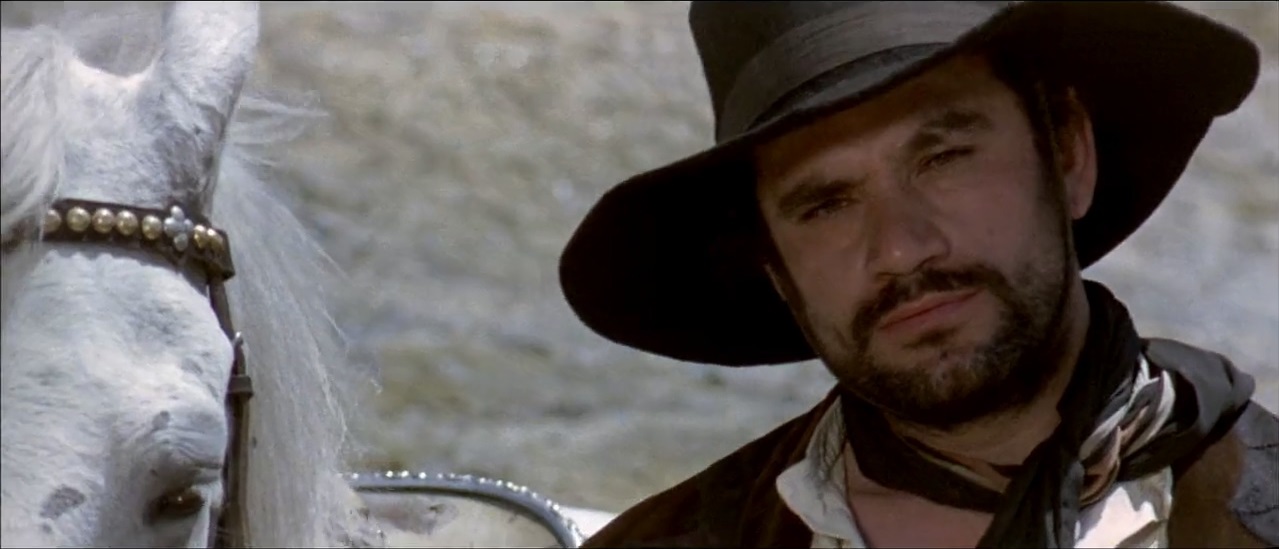
Duncan and his gang are savagely ruthless and there are many excellent scenes of carnage here. After all, Corbucci and spaghetti westerns in general are both marked by the violence they depict. Navajo Joe shows a particular dedication to severity when it comes to dispatching his enemies. Conversely, it’s a nice touch having Estella and the dance hall girls come to Joe’s aid. But if you’re bent on hating Duncan, the cold-blooded killer, watch out for a scene in which he shares the tale of his youth which serves to somewhat explain where his rage comes from.
Navajo Joe did little for Reynolds upon release. He was particularly derisive regarding the Italians’ stereotypical presentation of Indians. Three years later, he would return to Spain to make the American western, 100 Rifles in which he again played a “half breed” – this time instead of Navajo Joe he played Yaqui Joe. Reynolds would have to wait until 1972’s Deliverance to really make his mark. Afterwards, he became probably the biggest star of the Seventies and one of the all-time box-office champs.
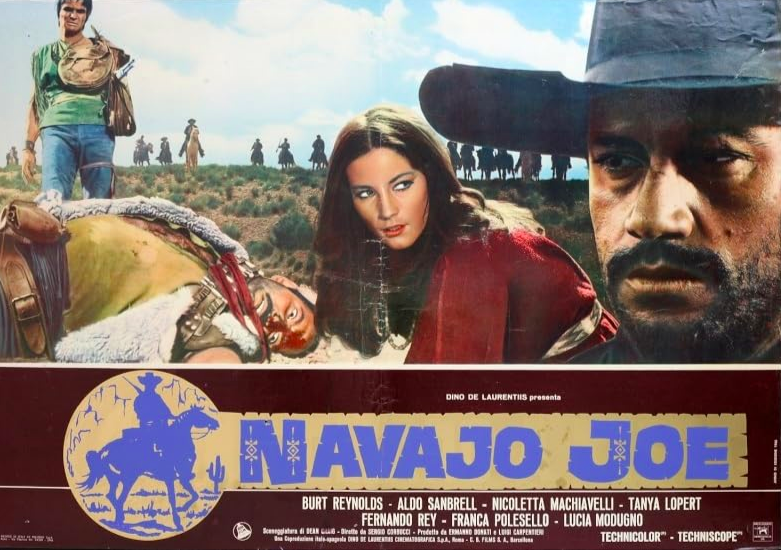
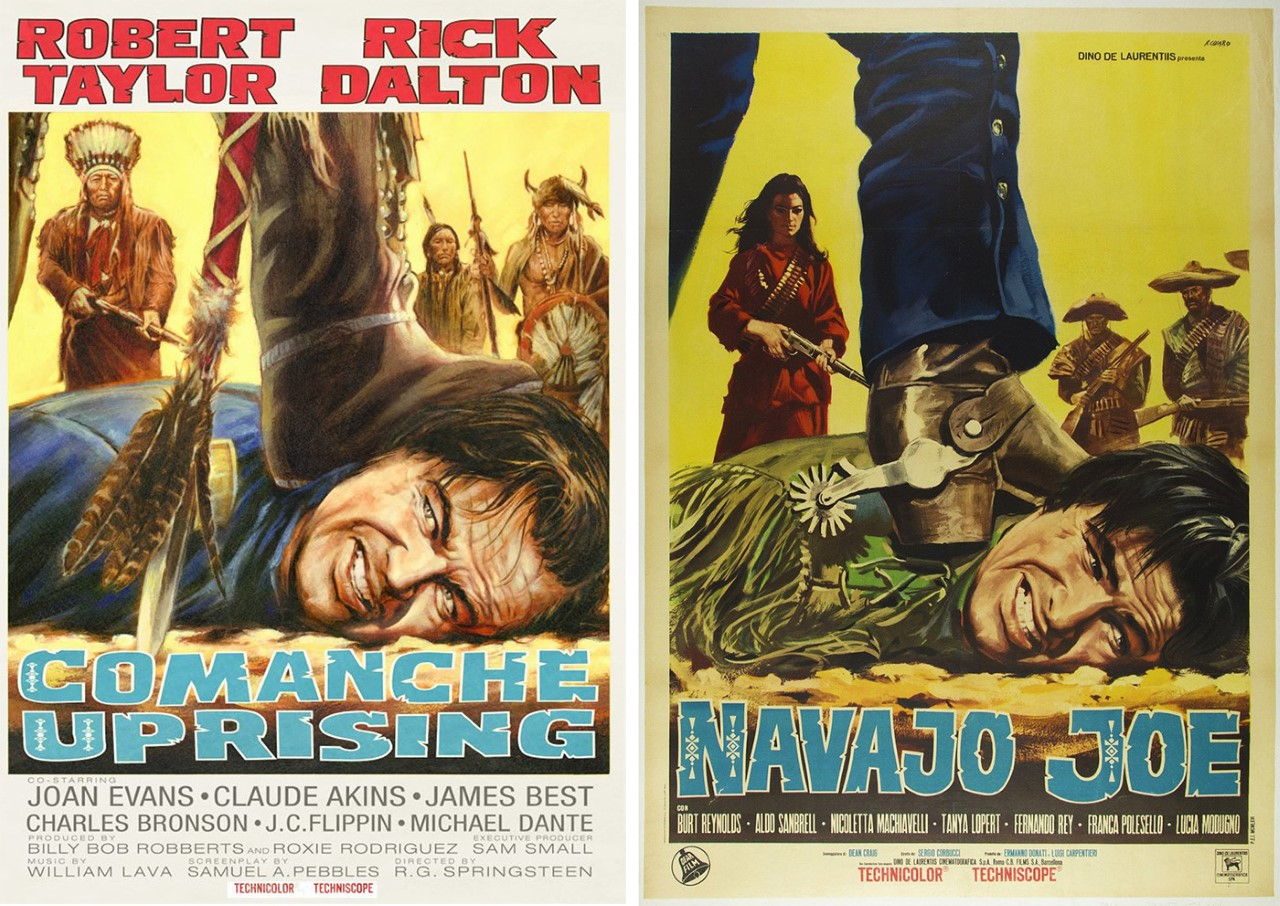
Today, Navajo Joe enjoys a rep as one of the quintessential examples of an American making a western abroad in the 1960s. It may be heavily flawed but the film has been reassessed and has found a favourable standing among those of us who know and appreciate this era and this type of filmmaking. Having received the Tarantino Stamp certainly hasn’t hurt. Navajo Joe earned a place of some distinction in QT’s Hollywood homage, 2019’s Once Upon a Time in Hollywood. Among that film’s first images is a reconstruction of the striking Navajo Joe poster. Quentin has co-opted it to illustrate Comanche Uprising, a 1961 film Rick Dalton made with Robert Taylor. Dalton has kept one segment of the poster and he keeps it where he parks his car at his home.
Burt Reynolds was a notable player in ExPat Cinema and in much the same way his friend Clint Eastwood was. The difference being that Burt’s Italian western in and of itself did not catapult Reynolds’ career the way Fistful did Clint’s. He had to wait several years but by the late Seventies, Burt Reynolds became arguably a bigger star than even Clint Eastwood. Better late than never and Navajo Joe is a better-than-average film that stands up today.
Sources
- Reynolds, Burt & Jon Winokur. But Enough About Me: A Memoir. G.P. Putnam’s Sons (2015)
- Hughes, Howard. Once Upon a Time in the Italian West: The Filmgoers Guide to Spaghetti Westerns. I.B. Tauris & Co. Ltd via The Internet Archive. (2004)
 SoulRide