“Frank Sinatra had ascended from mere teen idol to bona fide American superstar, one of only a handful of such creatures who had existed up to that point in history – think Caruso, Chaplin, Valentino, Crosby – but one who possessed unprecedented power and influence.”
Frank: The Voice
by James Kaplan (2010)
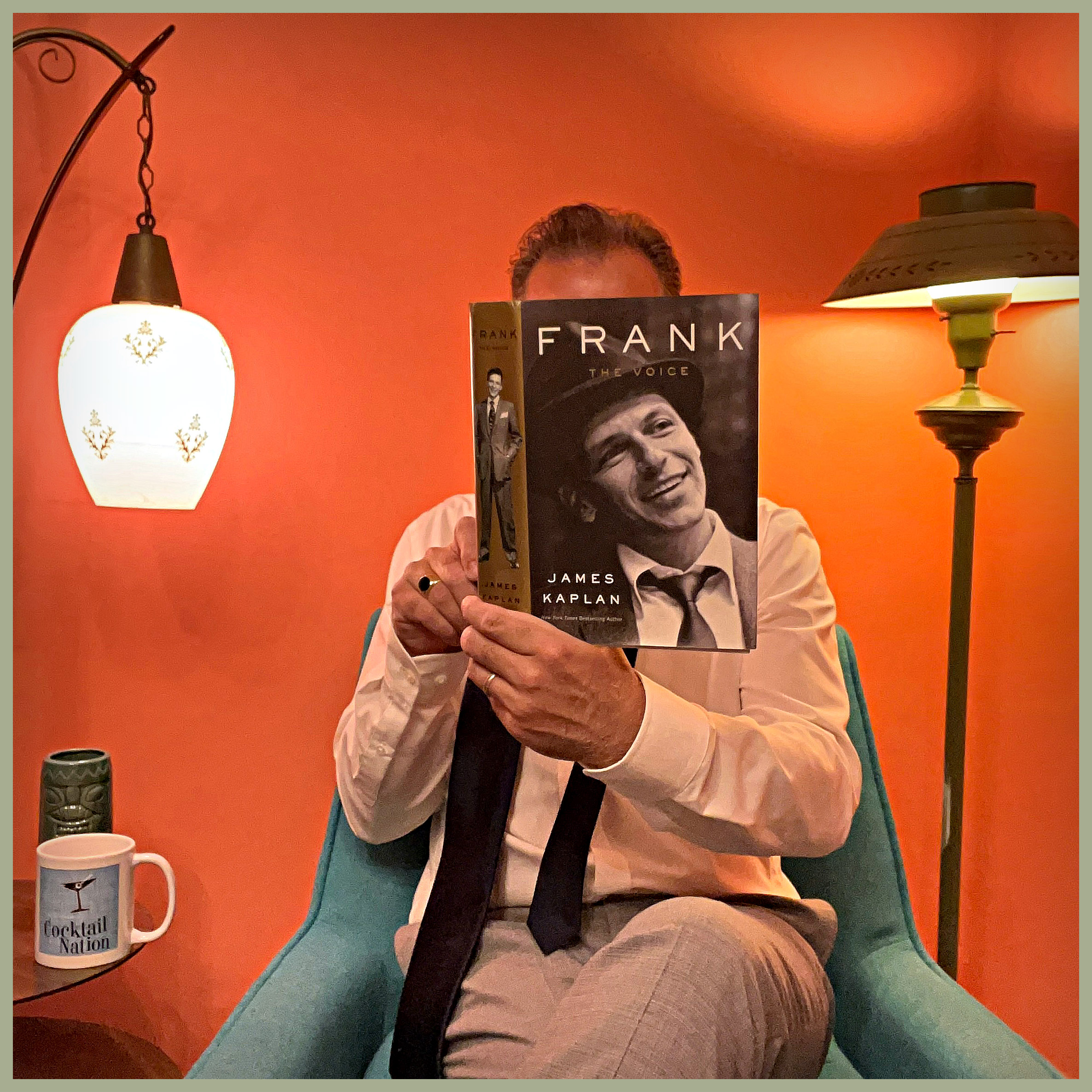
Most summers, I like to read the biggest book that I own that I have not yet read. One year, I pulled out three; Peter Guralnick’s bio of Sam Cooke, Of Human Bondage by Somerset Maugham and the book we’re looking at today by James Kaplan. Kaplan’s was the biggest so I took it on. Well, it was a heavy reading summer, I’ll tell you. Frank: The Voice is more than substantial – challenging in its particulars, it is quite a journey.
Author James Kaplan has written two other notable biographies. One is 2002’s book co-written with John McEnroe with the great title You Cannot Be Serious and the other was with Jerry Lewis, Dean and Me (A Love Story) issued in 2005. Kaplan came to tackle the gargantuan task of documenting the life of Frank Sinatra when he attended a party hosted by Jerry Lewis’s manager. Kaplan was inspired to tell the tale of the Sinatra that was remembered and celebrated in the many conversations among the industry insiders also in attendance. He embarked then on a journey that I am sure was much more taxing than the one I encountered just reading the book. Kaplan trekked through Sinatra history to tell his tale in two volumes; this first is The Voice and it tracks Frank from his birth through the winning of his Oscar in 1954.
“She loved him. And he loved her. It was the God’s honest truth. She knew him to the bottom of his soul, and loved him for it and in spite of it. What’s more, she knew he contained that strangest of all quantities…greatness. (And) he loved her so much, but he wasn’t cut out for it.”
Kaplan understands Mr & Mrs Frank & Nancy Sinatra
Kaplan’s staggering book is meticulously researched. The trouble perhaps with us Sinatra types who have read many biographies on Frank is that you may read something in a book that raises your eyebrows; you feel like you may be hearing this tidbit for the first time but you really cannot be sure that you didn’t run across it before in another book. And think about it; there are perfectly fine, even excellent, 300-page books written on the entire life and career of Frank Sinatra. How different then is this book that spends over 700 pages telling only half the story?
Kaplan shares with the reader the findings of his Herculean research in such a breezy, conversational tone that one could be excused for thinking that Kaplan has made much of this up. He has a casual way and presents some passages like those you would find in a novel. But it is because of his research that he knows that Lana Turner was drunk that night, etc.
“(Frank’s voice had) the indefinable something composed of loneliness and need and infinite ambition and storytelling intelligence and intense musicality…the thing that made him different from every other singer who had ever opened his mouth.”
Kaplan does well poking holes in the myth-making that has surrounded Sinatra over the years. Frank’s dealings with the Mafia are reported on well and Kaplan makes one excellent point, something I had never thought of. For many reasons, Sinatra may have been fascinated by hoods all his life but Kaplan suggests that, in his domineering mother, Dolly, Frank already knew firsthand a “godfather”, someone who did favours and had influential people and regular joes in her back pocket. Add to this the fact that Frank didn’t care to join an organization that included many other equals who all pledged fealty to a don – he was determined to build his own “organization” – an entertainment conglomerate – of which he would be the head.
The author also tries to delve into Sinatra’s psyche to explain the thoughts and feelings inside the man that lead to his famous largesse and his infamous rage and violence. The author notes dispassionately Frank’s propensity for meanness but the reader does note a scolding in Kaplan’s tone. Kaplan is to be applauded for not dismissing Frank’s kindness in light of his malice – nor does he amplify unnecessarily his cruelty. Kaplan speaks of the “compartments” of Sinatra’s heart explaining Frank could be many different people. While part of him really was vindictive and mean, an equal part of him was also gentle, kind and caring.
“The story of Frank Sinatra’s life is one of continual shedding, both of artistic identities and of associates and intimates who had outlived their usefulness. He would step on or over everyone in his path until he grasped the brass ring. The master plan for himself was exactly that: for himself. Alone.”
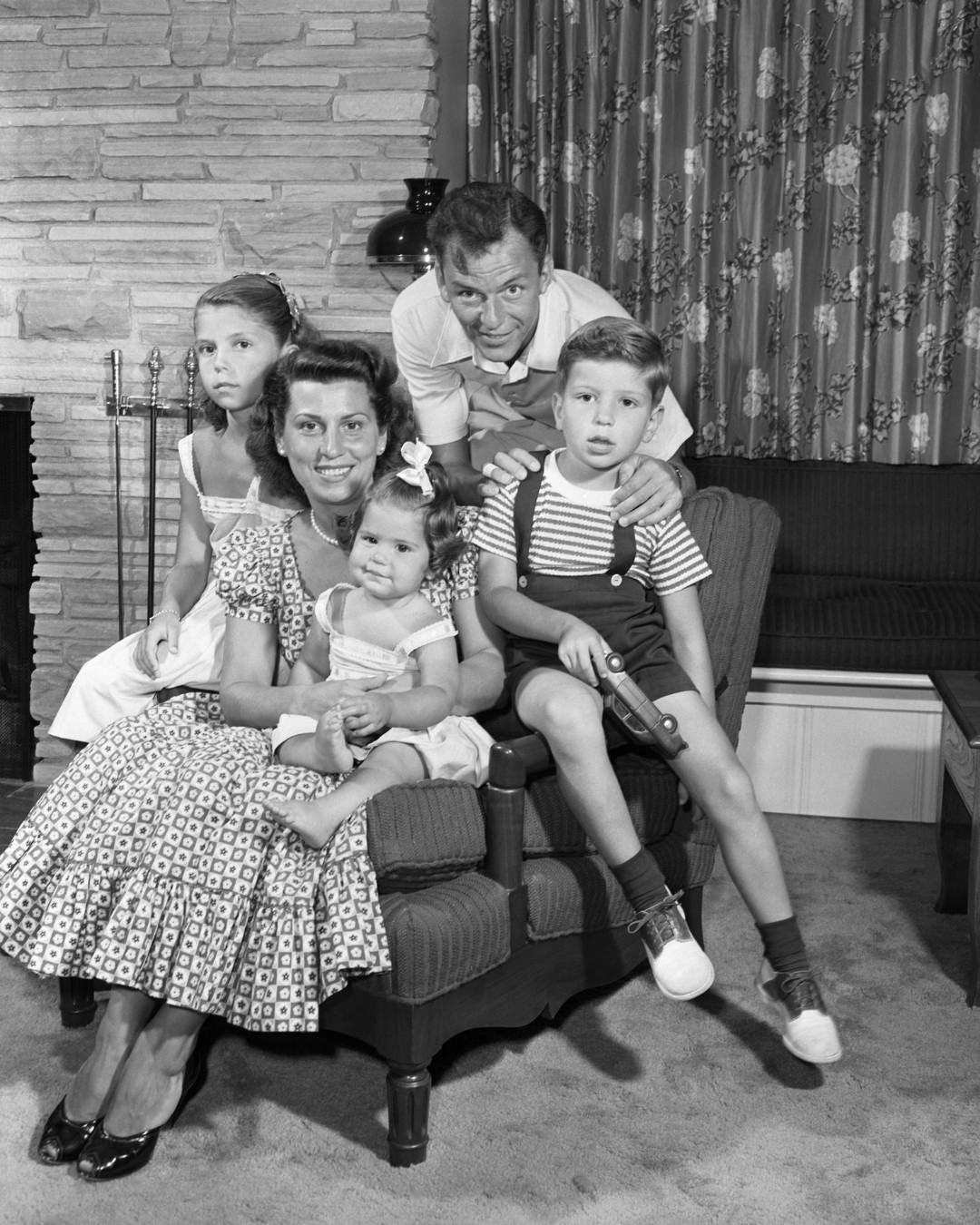
Two things in The Voice really stood out for me. James Kaplan may be the first and only author not named Sinatra to really provide a vivd portrait of Nancy Barbato Sinatra (interestingly, he also suggests Nancy, Jr, in her recollections of her father, may have always been less than “clear-eyed”). I have always referred to “Big” Nancy as “the winner” in the Frank Sinatra Story. She lived to be 101, and though she never remarried she spent the years in comfort and being loved and respected by all – Frank included. Kaplan brings Nancy to life as she suffers Frank’s transgressions and infidelities and one has no choice but to wonder how hard that was for her. Kaplan also seems smitten, mentioning often how beautiful Nancy was in the 40s. The reader realizes that this marriage had but one path it could travel; one that was tragic but also rewarding for the first Mrs. Sinatra.
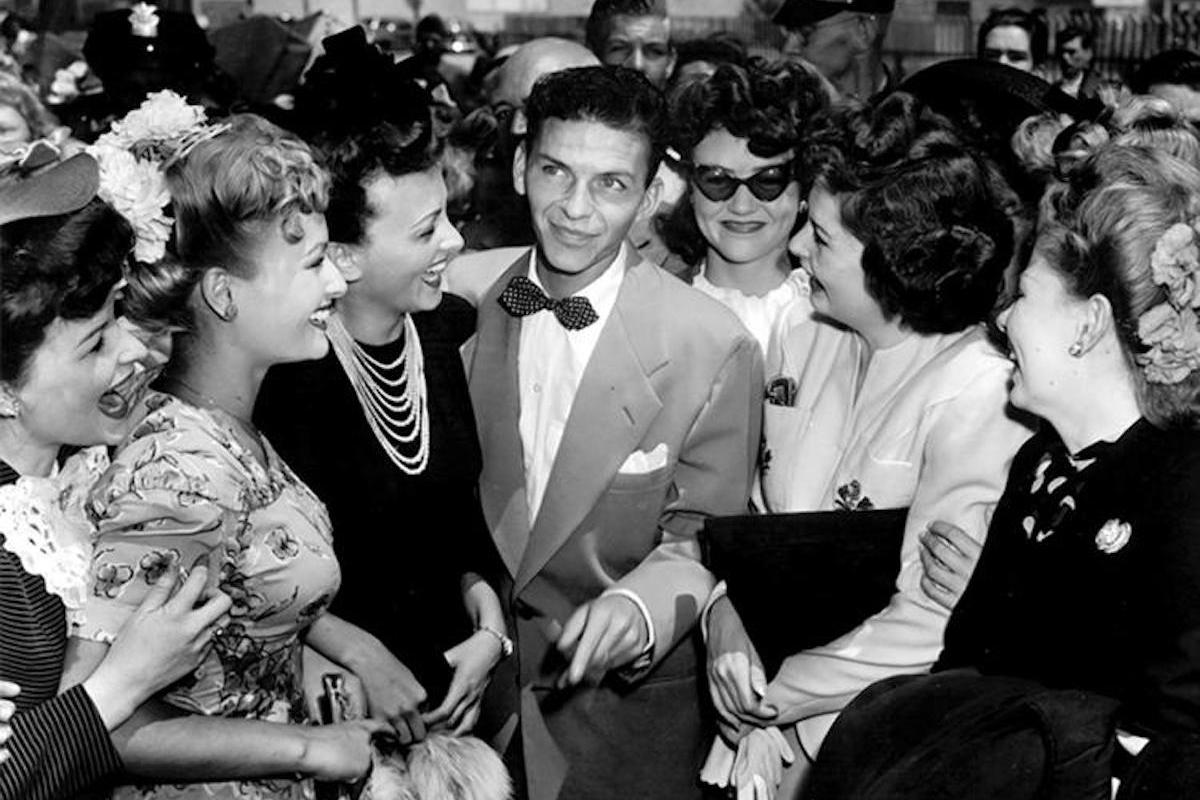
The other element has to do with “the comeback”. Much ink is spent on describing press accounts of the day and how little respect reporters had for Sinatra. They made a concentrated effort to tie Frank to communist causes, to the mafia and to draft-dodging. All of this – and Sinatra’s own behaviour – precipitates his downfall. But what Kaplan’s text really made clear to me was the idea that Frank Sinatra had to totally reinvent himself. His early successes were – despite the sublime singing – very close to “fad” and he was much a personality that simply fit with the times considering it was wartime and the young girls and lonely wives loved his romantic music. But that all dried up in the late Forties when the yearning particular to the war years went out of fashion.
Therefore, in the early Fifties, Frank had to change and he “changed” just as much as he “got better”. It occurred to me while reading this book that it wasn’t all about FS improving. He made changes – record label, arrangers, etc – and this spurred his voice on to greatness. In other words, the really big thing I discerned from The Voice is that the Frank Sinatra of pre-1953 is simply a totally different artist than post-’53 Frank. Early Frank did flame brightly but then sputtered and died; THAT Frank Sinatra was done as a performer. The swingin’ Sinatra of Capitol Records was a wholly new thing. This, to me, reduces somewhat the grandiosity of “the comeback” – though he still certainly returned from the depths, it’s just that it was not with the same techniques simply being reevaluated.
The Voice provides almost a day-to-day accounting of Frank Sinatra’s failing fortunes. A Sinatra date at the Chez Paree sees him sing to a crowd of 150 in a room that holds 1200. Martin & Lewis were pulling down $10,000 a DAY when Frank was making that in a week. At one point “he had no television or radio show, no movie deal, no record label, no concerts, no nothing”. Through the incredibly detailed descriptions of Sinatra’s fall, it is fully brought to bear just how remarkable it is that Sinatra earned the role of Maggio in From Here to Eternity. The fact that he won the Oscar and revived his career is all the more so.
You’ll also get an exceedingly full accounting of Frank’s relationship with Ava Gardner. The book really drives home just how desolate Frank was over Ava and their inability to make things work. It is described also how thoroughly over him Ava eventually became – which was the very point at which Sinatra, the singer entered full-on “torch” mode. The reader will reap the rewards of Kaplan’s excellent detective work particularly where Ava and her abortions are concerned.
“The fact was, Frank Sinatra and Ava Gardner were a permanently unstable compound, and no amount of sexual intercourse, no matter how spectacular, was sufficient to keep them bonded.”
There are nuggets a-plenty in these 700+ pages; though it may be hard for the Sinatraphile to know if he or she is hearing things for the first time, reported on in a different way or neither or both. Bon mots include: we’ve always heard that it was Frank’s grandmama who held the newborn Chairman under running water to bring him squalling to life but Kaplan suggests it was “perhaps someone else” which is a fascinating thing to consider – who might it have been? Also, the “thick ridge of scar tissue” we’ve often noticed on Frank’s neck was from a mastoid operation and not from his forceps delivery, Kaplan describes well Frank’s way of singing with the new-fangled microphone as the “art of projection”, the author shares the story of Baby Nancy’s 12-year-old babysitter meeting Tommy Dorsey, Sinatra earned $840k in 1944 or $10 million in today’s dollars, Big Nancy Sinatra and Lana Turner were chummy, the others in the Hoboken Four used to beat Sinatra up, during a beef Sinatra had with Manie Sacks, Sacks gave Frank both barrels in a letter Kaplan reproduces in its entirety and it is very telling, Frank chose to work with Mitch Miller at first, the idea of songs being considered “standards” can be traced back to Artie Shaw, Sinatra and his supposed connection to communists and the mafia became a symbol of the darker, Black Dahlia era of Hollywood, Frank had approval of songs so “Mama Will Bark” – Kaplan says it was “perpetrated” as opposed to recorded – can be laid at Sinatra’s feet, before marrying Frank, Ava received a detailed letter from a lover of Frank’s and she then threw her engagement ring out the hotel room window (who found it?!) and finally Axel Stordahl filmed Frank and Ava’s wedding with his home movie camera – where’s that footage?!
And a quick word about notes in a book of this size and how to use them. Kaplan will often indicate that there is more info on a certain passage to be found in the back of the book in the Notes section – so, what do you do? Do you jump to the back each time this happens to get more skinny? Or do you wait until you get to the Notes section at the end? If you do the first, you’re constantly hefting the pages of this weighty book back and forth and maybe breaking your reading cadence. If you do the latter, as I did, you’ll be reading notes the context of which you’re unsure of…
“Frank’s entire life seemed to be based on the building and the release of tension. When the release came in the form of singing, it was gorgeous; when it took the form of fury, it was terrible.”
A friend of mine noticed that I was lugging The Voice into work week after week after week and when she asked how it was going I had to admit I was struggling. I had a few misconceptions about the scope and the pacing of the book and I was getting bogged down but when she suggested I take a break from it I thought that was a ludicrosity – I had never before “taken a break” from a book I was reading. But I took her advice and read a book on Presley for Elvis Week and I have to admit I went back to the Frank book refreshed and with a new perspective on it.
That’s just me but I do think you will need to be prepared when diving into this book and it will help to know beforehand what you are getting into. Get ready to set up shop and spend a lot of time poring over the details of some 10-or-so years at a pivotal point in one of the most fascinating entertainment lives of all-time.
 SoulRide
Thank you for your review of this apparently extremely insightful revelation about the “Chairman of the Board.”
With tongue firmly planted in cheek, does this mean we can dismiss everything Kitty Kelley revealed in 1986? 😉
Quite seriously, I found your review of James Kaplan’s tome fascinating.
From the contrast of his extreme generosity and charitable work, to the devious, vengeful retribution for perhaps real; maybe only perceived betrayals, It sounds like Sinatra was the consummate example of compartmentalizing.
Throughout history (my own knowledge primarily focused on the 20th Century), this trait seems characteristic many great men especially political and social leaders. Specifically, several great 20th Century leaders come to mind – men adored by the American public for their virtuous leadership and wholesome lifestyle and values. However, we have subsequently learned of some heinous characteristics and peccadilloes (at the time, known and strictly concealed by family, media, etc.) which have come to light.
While it was and is a disappointment to those of us who placed them on undeserved pedestals, the men themselves simply compartmentalized those contradictory behaviors.
I find myself doing this for some people in my personal life, as well as those heroes I grew up admiring – so that I can still appreciate and applaud their righteous actions, while trying to dismiss the uglier sides and moral weaknesses.
At any rate, thank you for yet another powerful presentation of what sounds like a must-read for us Sinatra fans.
It was actually nice to hear an author speak about this matter-of-factly. Readers shouldn’t be surprised – as you weren’t – to hear about someone who was nice sometimes and mean other times. Shoots, that’s all of us! This book is no fawning account of the benevolent Chairman, neither is it a vindictive exposé detailing all his viciousness.
Your point is well-taken about men in power having two sides to their character. I think power dictates that you have the tools to proceed somewhat ruthlessly and the truly powerful will also have a gentleness about them.
As always, thanks for reading and for your comment.
I was interested in the point about Frank Sinatra’s mother and the Mafia relationships – I’m sure I read somewhere that Mario Puzo had kind of based Don Corleone on his own mother. I’d imagine that the women of that generation of immigrants would have needed a Don’s strength to hold a family together and survive in those tough times.
I have this book but have not cracked it. I feel like I know the Frank basics so solidly, and I mistrust the sordid rehashes of Kitty Kelley or J. Randy Taraborrelli. (I am OK with knowing Frank was uh … well endowed without needing to know certain specifics of what he did with it. I am OK with guessing, and while titillating, it’s just not that interesting.)
Far more interesting than the sordid stuff is the quote in your column about how Frank and Nancy understood each other, but he just wasn’t quite up to her level. I was trying to explain this to my son–seriously–over Christmas. We were listening to a lot of Sinatra. He’s fascinated with “I’m a Fool to Want You,” and I described to him that although he had torrid and sordid affairs, he always had a spot on Nancy’s couch, that she was a respected woman in Hollywood circles who never remarried and carried herself with dignity.)
I think the first bio I cut my teeth on was Earl Wilson’s. I got kind of burned out on Frank bios as rehashes of varying quality, but this sounds promising.
What I really enjoyed were the works focused solely on his voice: Friedwald’s “The Song Is You” (although a lot of it was quite over my head). And Granata’s “Sessions with Sinatra: Frank Sinatra and the Art of Recording.” I’d really like to hear your views on those.
As usual I agree with you. When you’ve reached our level of understanding Sinatra, you do need “other” books. Sadly, sometimes I just have to dive into one to see if it is different as it’s hard sometimes to know ahead of time.
I once owned Earl Wilson’s book and read it. Then, like an idiot, I got rid of it. Back when I was foolishly concerned with having enough room for the books I own.
There a few books MORE essential to grasping an artist’s work than Friedwald’s Sinatra book. You’ve issued me a challenge – as you did with Watertown. I will have to read it again and issue some thoughts.
Aha, I have Kaplan’s “The Chairman.” Thanks to you, I’m ordering “The Voice.” It’s worth the effort.
Opposite with me – I do not own The Chairman. Good idea buying The Voice. You have your own sources but my go-to, Abebooks, has it for $15 and up. I do not receive a kickback. Though I should!
I remember the first line of Earl Wilson’s book on Sinatra:
“I bear Frank Sinatra no malice.”
My book was dog-eared and falling apart, and I finally got rid of it. I gave Taraborrelli’s to the library as I winnowed my collection down. I think I’ll stick with Kaplan’s 2 volumes, plus the volumes focusing exclusively on his music. Plus “The Way You Wear Your Hat.”
PS. I introduced my son to “Pal Joey” a couple of weeks ago. He is mesmerized by this 50s style of moviemaking. He went cross-eyed over Kim Novak. I told him “Picnic” is next on our list.
He of course remembers her as Molly-O in “The Man With the Golden Arm,” but it’s not quite the same.
I probably came down too hard on Taraborrelli’s book. But (sigh) call me a prude, but I want to know a lot without knowing everything. Frank was a lot of things good and bad, but I’m just not sure he’d want me to know the adventures of “Big Frankie.”
I recall little about Wilson’s book; just that Frank was not happy with him afterwards. JRT’s book is…basic. And that’s not a put-down. I still think it is a great bio to start with.
Pal Joey I need to watch again as it has been some time. I’m almost ashamed – as a mid-century guy – to admit that some of the films from the 50s I’m starting to have issues with. I hate to use modern lingo but it is down to the way the big male stars dominated the women in these films. Cocky, macho, lacking in any sort of sensitivity. They kiss the woman – one of those face-smashing kisses – and that fixes everything. I think of this when I think of his character in Pal Joey. I dunno…
“Pal Joey” was based on John O’Hara’s short stories, and was turned into a play before it was a movie.
Joey is a womanizing heel, a second-rate nightclub singer all the women fall for, even though they know better. He’s a bad friend, a user, and a cad, but somehow he is still likable. As he said, “The way to treat a lady is like a dame, and the way to treat a dame is like a lady.”
In the film, Joey is pitted against Rita Hayworth as the sophisticate who keeps him financially, helping him realize his dream of his own nightclub “Chez Joey,” in exchange for certain favors. Kim Novak is the goodhearted chorus girl he tries to bed before he realizes he loves her. At the closing, he rejects Chez Joey, and they walk toward the train station and the next town, happy but poor.
The film is fab for its Rodgers and Hart standards, its Nelson Riddle arrangements, and choreography (the very cool dream sequence) by Hermes Pan who worked with Fred and Ginger.
I ignore the attitudes; they don’t bother me at all. There is Sinatra’s image in the 50s as the irresistible cad vs Ward Cleaver as the perfect dad. In the 30s and 40s Cagney slapped the piss out of women but rarely kissed. (Think “White Heat” and grabbing Virginia Mayo by the back of the hair and bending her into submission, growling, “Say ya miss me, baby, but only say it real slow.”)
“Pal Joey” is a great showcase for Hayworth (who got top billing) and Novak. The scrumptious clothing. The bullet bras. The style. It’s worth 110 minutes. 🙂
PS. My kid is stoned on Sinatra’s Watertown after all these months. He’s also gotten deep into his “Where Are You?” album. And now he’s delved into Nat King Cole. Love this kid.
Seems you’re raising him right! It’s nice, too, when they begin to devour what you place in front of them of their own volition.