“It may be only one man’s story, and it can be read as the simple saga of some vinyl recordings, and the machinery by which those recordings were sent into the air. Yet, maybe in telling the simple story, the more complex one will be revealed. As…young people grew, their musical language grew in depth and significance, darkness, and impact. The one big question soon was, Why should we listen to the people who’ve made a mess of things-our parents, the government, the money-grubbing corporations that support wars, death, and despair? And so they stopped listening. They stopped listening to AM radio too. But before they did, they created a monument-one that will always live in the music of the heyday of Top Forty radio.”
Cousin Brucie: My Life in Rock ‘n’ Roll Radio
by Cousin Bruce Morrow and Laura Baudo (1987)

And suddenly, there were books. Lots and lots of books. During one prolific garage sale and thrifting season, I accumulated all manner of hardcover entertainer biographies thanks in part to my wife who, bless her heart, will scan the book shelves in a thrift store for titles that may interest me while I leaf through the records and CDs. All at once, I realized that my book shelves were beginning to “groan with their load”, as Ring Lardner would say. These titles ranged from books on and by everyone from William Shatner (3 books by the Canadian!), Guns ‘n Roses and Maurice White of Earth, Wind and Fire to Chuck Norris, Ron Howard and family and Lawrence Welk. Sometimes it is a little overwhelming to look and see on my shelves so many books I have yet to read. But then I remember that I will have more time in the future as I am bound to retire some decade and then there is always needed content for my monthly segment Words With Wellsy on Koop Kooper’s Cocktail Nation radio show podcast. Now, let’s get on to the book we’re looking at today, one that fills an essential niche in any pursuit of This Vintage Life.
When it comes to old-time radio personalities, there are a couple of names that sit head and shoulders above a longer list of notable people. Wolfman Jack is one and another is surely Cousin Brucie. New York City disc jockey Bruce Morrow (b. 1935) published this his first memoir in 1987 – for those wondering, this was the same year Morrow worked on and appeared in the contemporary classic film Dirty Dancing. This book, then – sadly – includes no skinny on that adventure. Morrow would release two further books in 2007 and 2009. Bruce’s co-writer here is Laura Baudo who was married to late media entrepreneur Robert F.X. Sillerman. In the late 1970s, Sillerman and Morrow bought radio stations together and later, through his work with CKX, Inc., Sillerman bought an 85% stake in the name, image and likeness of Elvis Presley from Lisa Marie.
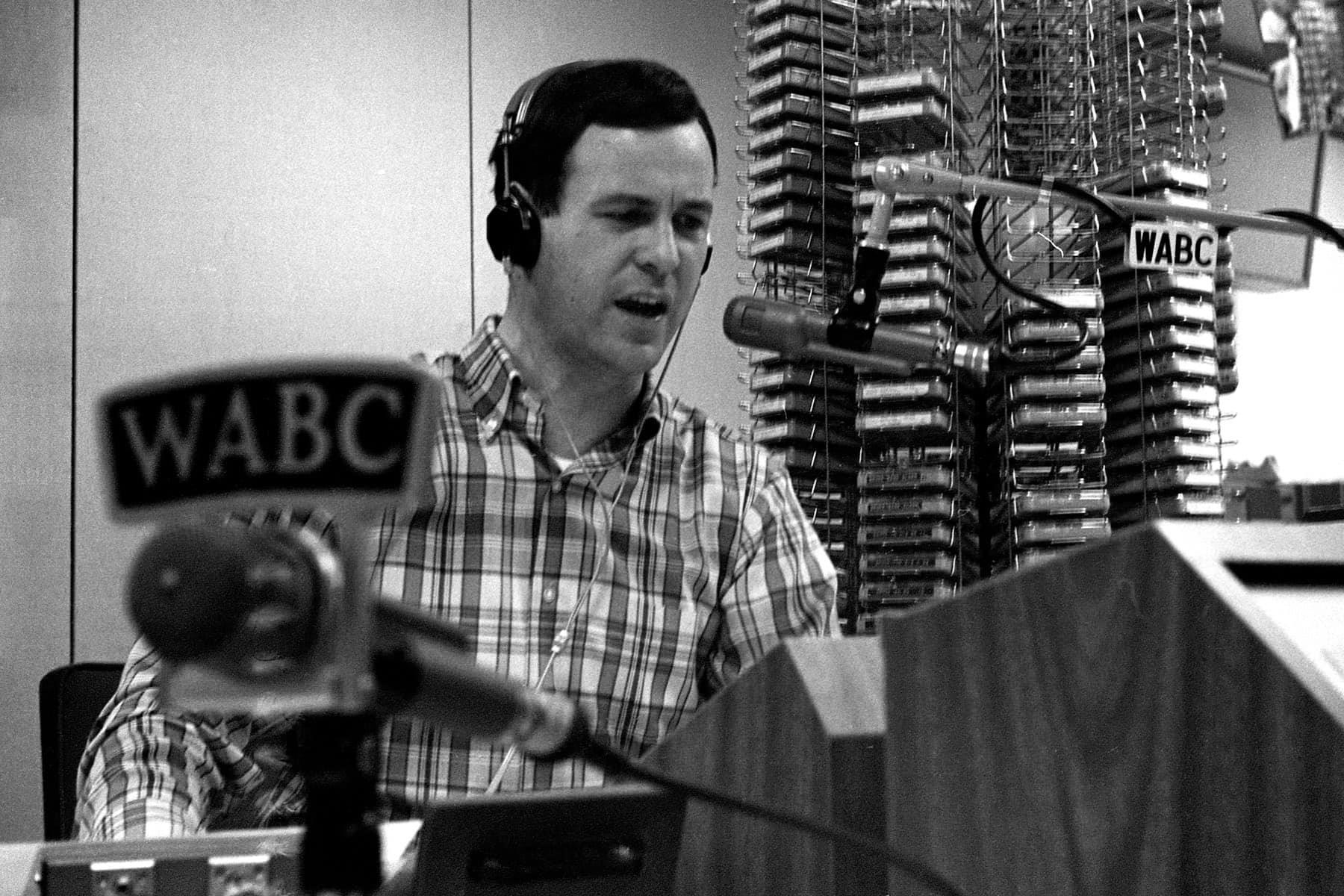
In Cousin Brucie, the reader will get fascinating discourse on radio; on a day in the life of a jock, on the DJ’s place in the lives of his or her listeners and on the timeline of the AM band giving way to FM. Brucie starts with his own origins on the air at his school station where he brought about many innovations due to being “too dumb to be scared” and Morrow shares the tale of his first jobs in Bermuda – of all places – and sunny Miami. Cousin Brucie arrived on the national scene when he landed a prime gig back in his home town at New York’s WABC. The real charm in the Cousin’s memoir resides in the time Brucie takes to describe in detail the many ways he and DJs in general ingratiated themselves into the lives of listeners until they were embedded into the fabric of daily life.
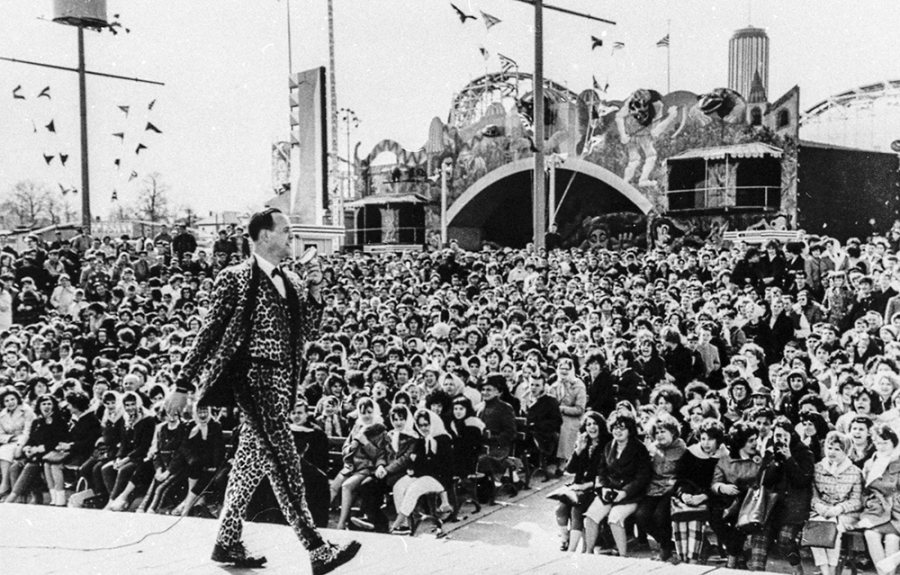
Morrow started with the 10pm-12 Midnight time slot, two hours when his primary audience were done with watching TV and talking on the phone. The last hours of the day were the time to lay in bed and listen to the radio. And what the kids heard was Cousin Brucie talking to them and about them. Brucie says he was a messenger of sorts, playing requests for the likes of Cindy to Danny adding a reminder that Cindy really loves you, Dan. Brucie and WABC also served as a “DMZ”, where “peaceful coexistence” could exist between the generations. Morrow says the parents may not have loved all the music the station played but the parents also felt the on-air jocks were looking after their kids like “trustworthy babysitters”, in Morrow’s words. Brucie also describes some heavy episodes during which the station was called upon to send messages out over the airwaves to encourage kids who had run away from home to return to their concerned folks. All this adds up to a charming and fascinating depiction of life in the 1960s and AM radio’s part in it. And a big part was surely the live outdoor concerts Brucie emceed at Palisades Park. The depiction of these “love fests” that marked the last days of a simpler time hits at the charming, nostalgic heart of this book.
Morrow goes on to describe the corporate changes that occurred in the radio business in the late 1960s that lead to stations being “managed” instead of run on instincts and knowledge of trends among the kids and how many AM jocks began to rebel against the emerging system and rules. He provides excellent comments on the transition from AM to FM and the death of Top 40 radio. FM, Brucie says, emerged as a sort of portal that lead to the underground where all that had gone before was being subverted. He humorously – but somehow sadly – notes that “jocks on AM sounded like they’d love a piece of your bubble gum (while) the rising stars of FM sounded like they knew where you kept your stash of pot”.
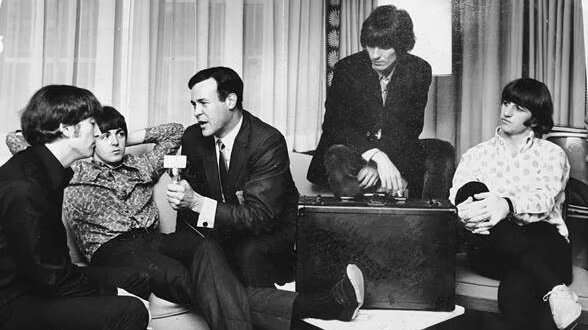
You realize during the second half of this engaging book that Cousin Brucie Morrow is the perfect guy to talk about the cultural changes of the time. He was an inside man with the Beatles and introduced them at Shea Stadium, he can dish on the pivot from AM to FM, from pop to rock, from the Shirelles to the Grateful Dead and he does so in well-written prose. And he doesn’t just riff on the good ol’ days. For example, he discusses being forced – with other voices of AM radio – to suddenly take a stand on wars and the violence at home when all he wanted was to entertain. As various metaphoric and literal flames raged in the late 1960s, being simply a source of entertainment for the kids became increasingly harder to do. AM, CB says, spent some time “ignoring the temperament” of the era, continuing to play fun music, period.
I really give Cousin Brucie points. As a fan of Wolfman Jack, I’ve often felt that Brucie was by comparison boring, safe and white bread but in his book he tells a penetrating tale well; the story of the times that were a-changin’. He sees all of this through the prism of AM radio which when you think about it, may be the most appropriate lens through which to view the vast changes that occurred as the Sixties bled into the Seventies. This is good reading, fine sociological discussion in down-to-earth language. And this brought up something else for me. I and many other retro types may view the changing of past times as sad. This feeling would likely have been intensified by those who had helped create those times. They saw their roles, their jobs and their very lives changed.
By way of illustrating this, Cousin Brucie talks about American Graffiti in his book as Wolfman Jack does in his. Brucie says that the Lucas film’s depiction of the on-air personality did much to change how DJs were perceived. But he also says that the movie’s lament of the end of an era became very real to Brucie in his then current position, bringing it home to him at that point that his days on top may be numbered.
I was clever enough to read Cousin Brucie in September one year. As I was sadly noting the end of another summer, I was reading about Bruce’s last days at WABC and about this distinct end of an era so it was apropos. This was an era of what Morrow calls DJs as nearby friends as opposed to the faraway stars of the radio and the music industries of the 70s and 80s.
After publication of this book, Cousin Brucie went on to own radio stations, teach at NYU and he returned to WABC to host a Saturday night party show even though the station by then had turned to all talk. Later, Cousin Brucie found an appropriate home as a personality on Sirius XM radio.
In his endearing memoir, Cousin Bruce Morrow talks about how it was – what it meant then and what it all means now. Dig Brucie Saturday nights on WABC and check out his Facebook page. Morrow is – as of this writing – the last of the living radio titans and his book provides great reading for those of us chasing This Vintage Life.

 SoulRide
Fascinating on the AM to FM transition and its implications. It happened for us around ten years later, around the end of the 70s / early 80s. The first FM station where I live claimed with great pride for years that the very first song it played was Dire Straits’ Sultans of Swing. The transition here also made a very different statement – AM Top 40 Radio was smug and self-important in many ways (although many of the DJs were great nonetheless), totally in bed with record companies and sponsors and very unimaginative in their playlists. (And profitable, it has to be said). FM was different from the start – aside from the stereo sound, it was all about the music, not the DJs’ own ego, and the (FM announcers) never talked over the intro or outro of the tracks, (a great thing for taping songs off the radio :)). Suddenly obscure album tracks were being heard, and entire albums played track by track, and things like ‘an hour of Neil Young’, or a prog rock band. It would play tracks like the whole 11 minutes of CCR’s Grapevine, or the full 14 minutes of Dire Straits’ Telegraph Road, unheard of on AM stations. It’s funny because some of the AM announcers got very sniffy about FM, said the FM announcers had no personality and mediocre talent, it was boring and would never take on. I think within about 5 years FM dominated and the AM stations were reformatting every five minutes in panic.
It’s not the same now, FM radio has reverted to all the worst, ego-driven excesses of the last days of AM dominance.
But in the end it probably doesn’t matter now, because the relationship with the music fan is different, the DJ is no longer the only link with the artists and songs we want to learn more about. A few years ago I was lucky to meet one of the pioneering announcers from our original FM station, SSA-FM, and I asked him if it was as much fun from the inside, if they appreciated it at the time, and if it really was as good as we remembered it. The answer was yes.
As usual, you offer penetrating analysis.
It’s almost apples to oranges though they are basically the same, AM and FM – radio bands. AM was perfectly suited to some while others were more at home on FM. Sure, the AM jocks were fast-talking wheeler-dealers and that made for some charming transmissions. To listen now is really a portal to how things were in the past. It was almost a part of the nature of the business, to be in cahoots with the record companies; part and parcel of the whole thing. But it also often seemed, I guess, like the music was only a small part of the broadcast; swirling in now and then between patter and endless adverts.
You could say FM was more cerebral. After all, hit singles only scratches the surface of record releases while the bulk of music released was closer to “filler” and “other” statements. This programming certainly called for different personalities. Here is yet another example of one thing not necessarily being “better” than another; just different, each with their own merits.
I should have noted that Brucie mentions that Wolfman Jack came to town to provide competition but then soon left having been whupped. Wolf in his book says he stayed in NYC until leaving to tour with the Guess Who for bank. Wolf also mentions going out to dinner with Brucie and helping to broker a deal for a job for the cousin – something Morrow doesn’t mention.
The Wolfman connection is also fascinating – and one thing I forgot to mention, the Cousin Brucie book cover seems reminiscent of a Beach Boys album or single cover, but I couldn’t find it online. I thought it might have been Rock and Roll to the Rescue, or That’s Why God Made the Radio. Maybe I dreamt it!