Priscilla (2023)
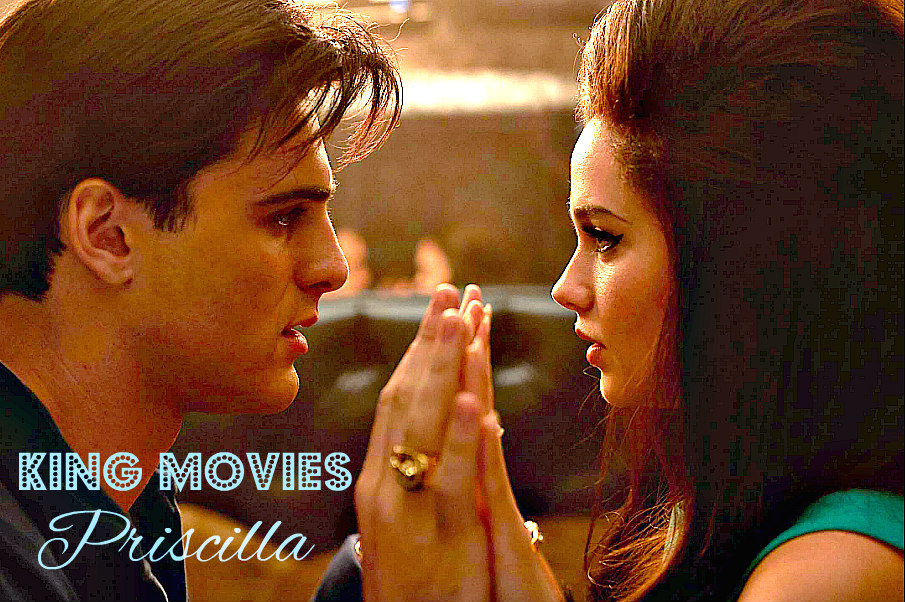
Cailee Spaeny and Jacob Elordi
Director Sofia Coppola
American Zoetrope/The Apartment Pictures (113 mins)
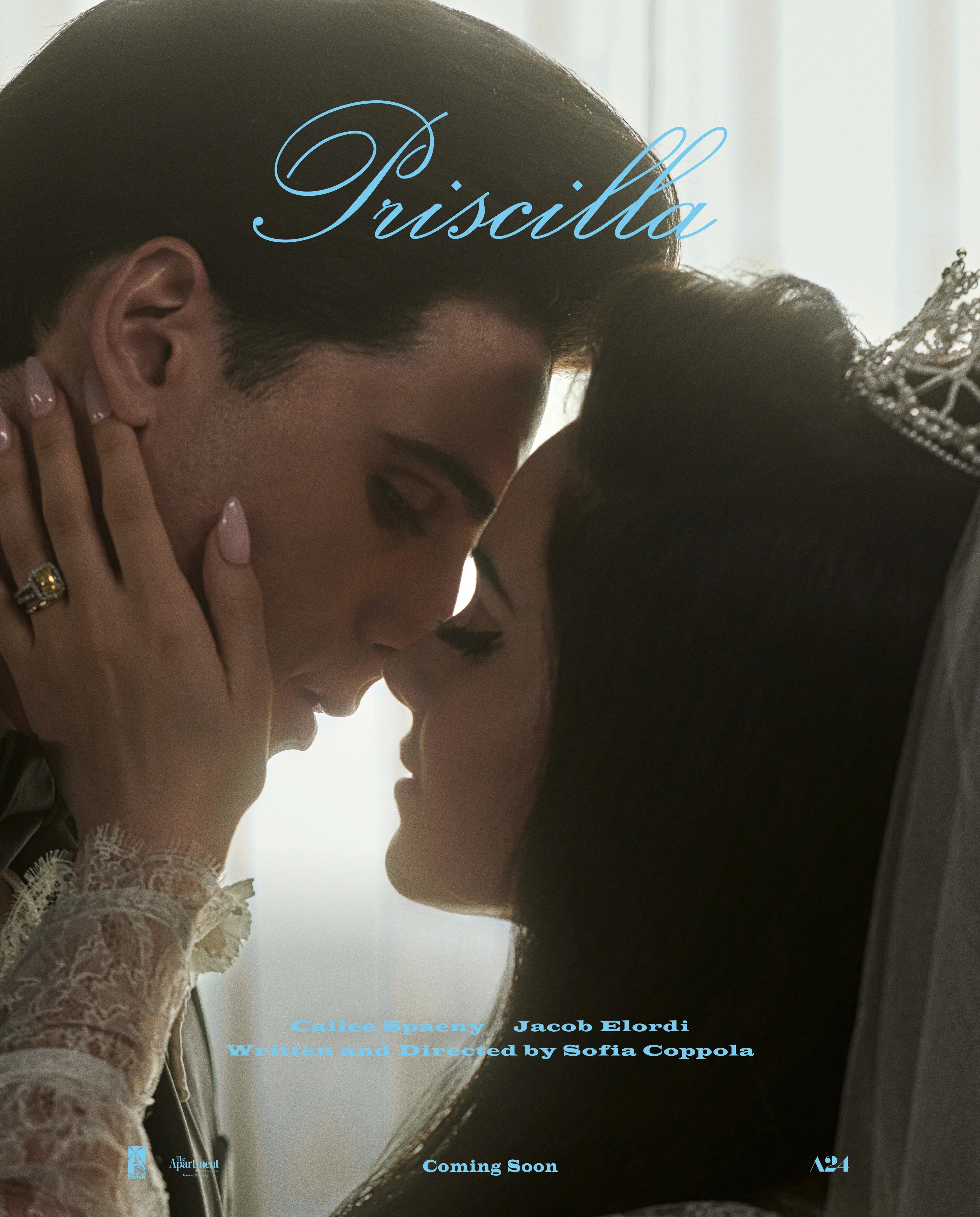
It seemed funny from the get-go. On the heels of Baz Luhrmann’s wildly entertaining film Elvis from 2022 comes what seemed to be its companion piece telling the other side of the story – that is, the story of Priscilla Presley, wife of the King and mother to his child.
Perhaps in most viewer’s minds, then, when they went in to see Sofia Coppola’s movie was the memory of Lurhmann’s spectacle. This in and of itself may challenge the viewer to connect with Coppola’s more sedate companion. A few minutes in to Priscilla and you will realize that this is no companion to Elvis. In any way, shape or form aside from its subject matter. Though it is hard to discern that the two films are about the same people.
I had to ask myself “why?”. Why make this film? Why base it on a 30-year-old book and a fairly tame one at that? I could understand a “rebuttal film”; as in here, now, is the other side. But this is not that. I worried I would have to steel myself against a very modern – as in “with today’s sensibilities” – telling of this story of Elvis and his child bride. But this is not that. Maybe Cilla endorsed this film because it was an especially heroic depiction of her life. But this is not that. Maybe the filmmakers would take delight in slinging mud at Elvis and his predilections, his excesses. But this is not that, either. So, what, you may be asking yourself now, is this? It’s nothing. This film is nothing. Nothing.
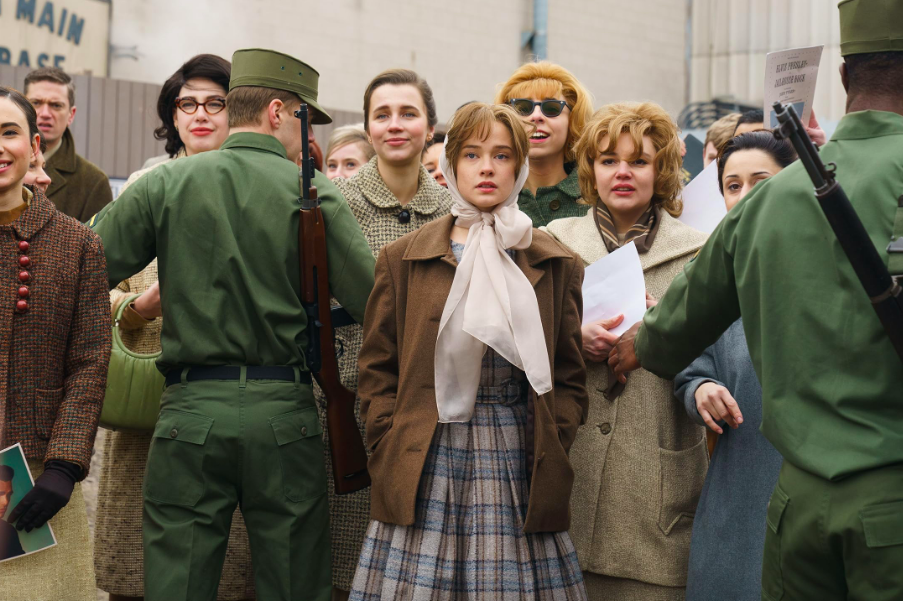
The story you know; Priscilla met Elvis when he was stationed in Germany. She was 14 and he was 24. To say “they fell in love” is too easy and doesn’t begin to tell the story. Elvis certainly saw in her his other half and she was naturally enchanted. But not only was he an old school southern man, he was also The King of Rock & Roll and he was never going to be faithful to any one woman. But there is no denying that she was an incredibly singular presence in his life. As this film is based on Cilla’s own memoir, there really is nothing unacceptable in the presentation or in the various story elements. It is an honest depiction and, I think, very much accurate.
I have read – as you may have – that Lisa Marie Presley, before she died, had read the script for Priscilla and had some grave misgivings about the way her father was depicted. And I get that. And I normally have always gone with what Lisa has said. But I have to say in this case that perhaps she was slipping into the ages-old protection mode that many go into when it comes to the legacy of Elvis Presley. Good for her, doing what she could to protect her father right up until the end of her unmercifully brief life. In spite of her objections, nothing I see in this film is egregious and flat-out wrong. The way Elvis is shown in this film is, I believe from all that has been written over the years, the way he was. And the depiction is not all that terrible, anyways. It’s the presentation of the film that I have a problem with.
This movie is grey. It has a muted look and each scene is played quietly, almost silently. Each brief episode materializes from the mist, plays out its action and then goes away as silently as it appeared. Most of this restraint is tied to the absence of any music by Elvis Presley. And it is very telling – and I’m still not sure what exactly it means – that the filmmakers were not allowed to use any of Presley’s music. This in itself casts a pall over the proceedings. And having an “impersonator” sing Jerry Reed‘s “Guitar Man” is reprehensible. Sofia and the music supervisors – including Coppola’s spouse and his band – tried to spin that not using the King’s music was a positive, that it made them more creative in their music choices. Bosh. I’m pretty sure I heard Hans Zimmer’s “You’re So Cool” from True Romance but I can’t be sure. You’ll hear “Love Me Tender” because it is really “Aura Lee” from the public domain, the quick scenes of Elvis on stage in the 70s include his concert opener, “Also Sprach Zarathustra” but in the boss 1973 version by my man, Deodato which is a nice touch and it’s good to hear “Oye Como Va”.

At a point early in the film – it has maybe just turned to 1960 – we hear the wonderful sounds of “Crimson and Clover” from my main man, Tommy James and his Shondells. This was jarring to me. As anybody who knows anything will tell you, this Number One song was released near the end of 1968; why on earth would it be used in scenes from 1960? Not only is this a full eight years too soon but the sounds of ’68 in rock & roll years are light years removed from 1960. This I would have to have explained to me as, to me, this is nothing less than a flat-out error by people who are supposed to be professionals. “It’s anachronistic” just doesn’t fly in an historical film. And I have read about the incredible poignancy of the final song used. It cannot be only me that thinks it was a cop-out, an easy choice, a generic choice – though beautifully rendered by its original artist – and the most simplistic and maudlin song that could be played at that point in the film.
I must take a moment to note that one of the Executive Producers of this film – along with Priscilla – is Fred Roos. Long a colleague of Francis Ford Coppola’s and long affiliated with American Zoetrope, Mr. Roos has my gratitude forever for having built the incredible cast of one of my Top 25 favourite films, American Graffiti. It was great to see his name up there on the big screen. Also certainly worth mentioning that Priscilla was shot on location in my hometown of Toronto.
Australian Jacob Elordi is sadly miscast as the King. At times, his speaking voice is “right” but generally it is a poor depiction. Only minutes after first seeing him on-screen, Elordi fails at pretending to sing “Whole Lotta Shakin’ Goin’ On”. I was interested to see that the man who first takes Cilla to meet Elvis is referred to as “Terry West”. Undoubtedly, Priscilla was going to have no mention of the real person, Currie Grant, in any film of her life and it could be confusing to some to use the surname “West” in an Elvis tale. Priscilla’s battles with Grant are indeed a tale to be told, one that I will tackle in an upcoming article. And the first night PP and EP meet is shown to be very brief in Priscilla when in reality it was anything but.
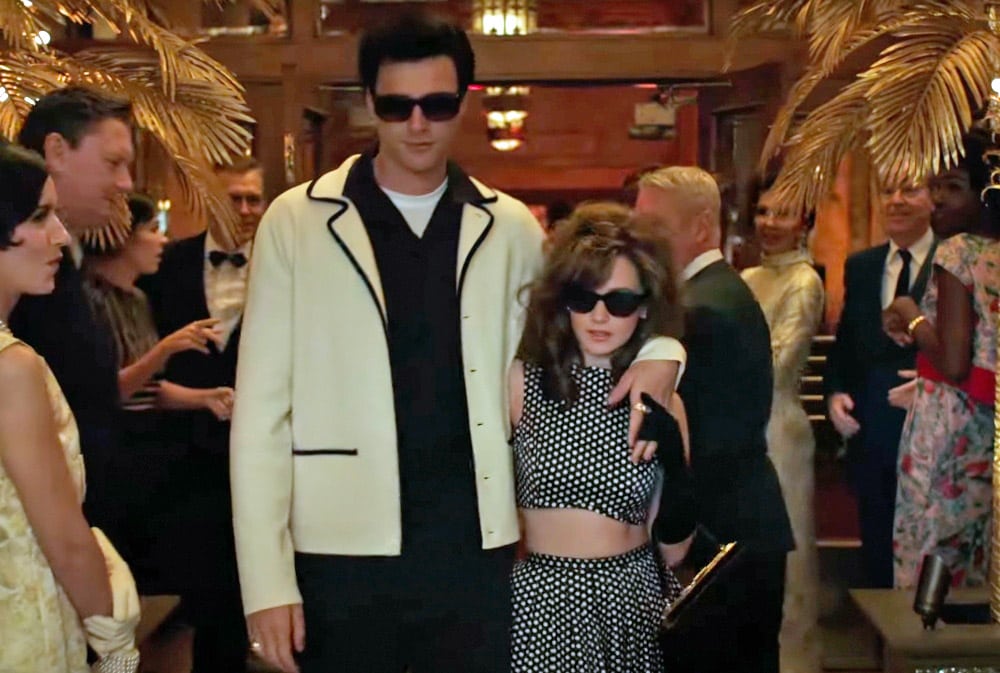
Graceland and the grounds around the mansion never looked this plain and Elvis Presley never dressed as boringly as he does in this film. And Presley’s grandmama, Dodger, played by a short, fat woman? No. Wrong. Mike Stone looks wrong, as well. These little things all add up to a film that looks low rent. And I would expect to have seen more of the difficult situation Priscilla’s parents were put in. I have read that they were either very apprehensive about their daughter spending time with Elvis or that they (Cilla’s mother) became, at least later, very encouraging and quite intrigued by the prospect of someone so famous and wealthy in their midst. We see none or little of this. Nor do we see – as we wouldn’t in a story from Priscilla Presley – Capt. Beaulieu’s later insistence that Elvis “make good” on his promise to make an honest woman out of his daughter.
Your enjoyment and understanding of this film will be helped if you know Priscilla’s book well or if you are well versed in Elvis lore. Otherwise, the uninitiated must see only a series of scenes that lack a cohesive, linear narrative. Priscilla is one quick, drab, grey vignette after another and each one seems as pointless as a day at work. It can’t even claim to be a rebuttal to or a cross examination of any previous film or story of the Presley marriage. It is just the telling of a tale almost in a non-fiction fashion.
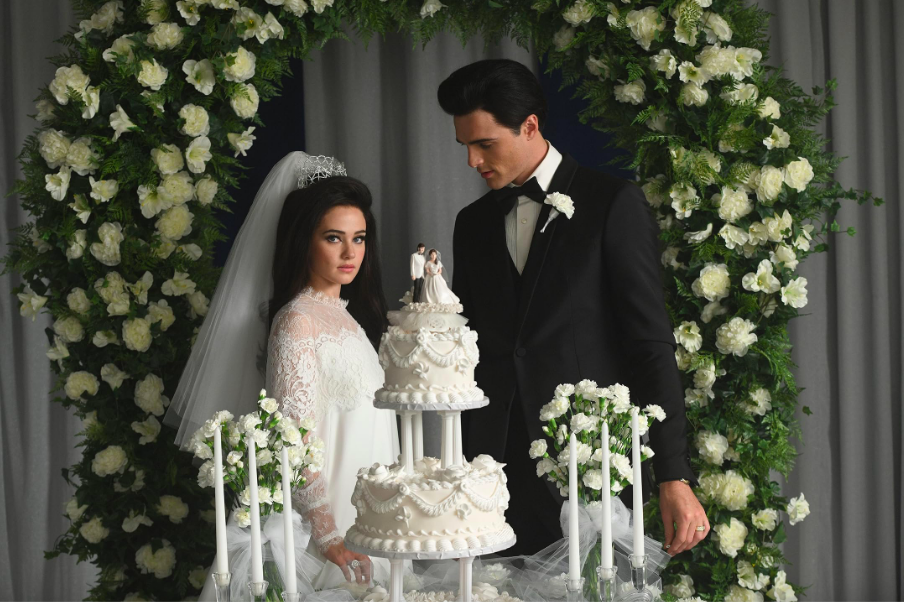
A good example of a scene that would come out of nowhere for an Elvis World neophyte would be the depiction of Elvis, late in their marriage, trying to take Priscilla by force. This is an unfortunate episode that is well known to Elvis People. Elvis tired of everything quickly and easily, including women. He also had an issue with being intimate with any woman who had borne a child. By the early 1970s, Elvis and Cilla had ceased being intimate and this troubled Priscilla greatly. Around this time, she took up with her karate instructor Mike Stone and this got back to Elvis. In a woeful attempt to reassert his manliness and dominance over his wife, Elvis did try to show her what kind of man he was and this is seen in the film.
But it is only AFTER this takes place that Elvis asks Priscilla for the answer to something he seems not to know – “have I lost you to another man?”. In real life, he knew he had lost her and therefore tried to play he-man with her. In the film, he just suddenly pounces on her and those who don’t know the story are probably wondering why. Or worse they are thinking that “the scumbag tried to rape her, too!”. That is disingenuous from a writing – and an editing, perhaps – standpoint. After this, the film stumbles to an unsatisfying ending that includes a feeble and a hackneyed line of dialogue that is as rote as the final song. Priscilla’s understandable desire at the end to leave and claim a life of her own has not been sufficiently developed by the previous 90-plus minutes.
Elvis is excited about the “’68 Comeback Special” and shows Cilla his outfit. She smiles politely and says “you look really good” in the benign way she might employ if she was complimenting a total stranger she has stumbled on trying on clothes in a store. And this is emblematic of additional troubles with Priscilla. Both leads are severely lacking in any sort of charm or charisma. It is depicted well that Cilla is a prisoner, bored stiff and on a tight leash and this is all accurate but neither Spaeny nor Elordi really seem to invest in the characters they are portraying. Very little nuance in either of these two-dimensional performances.
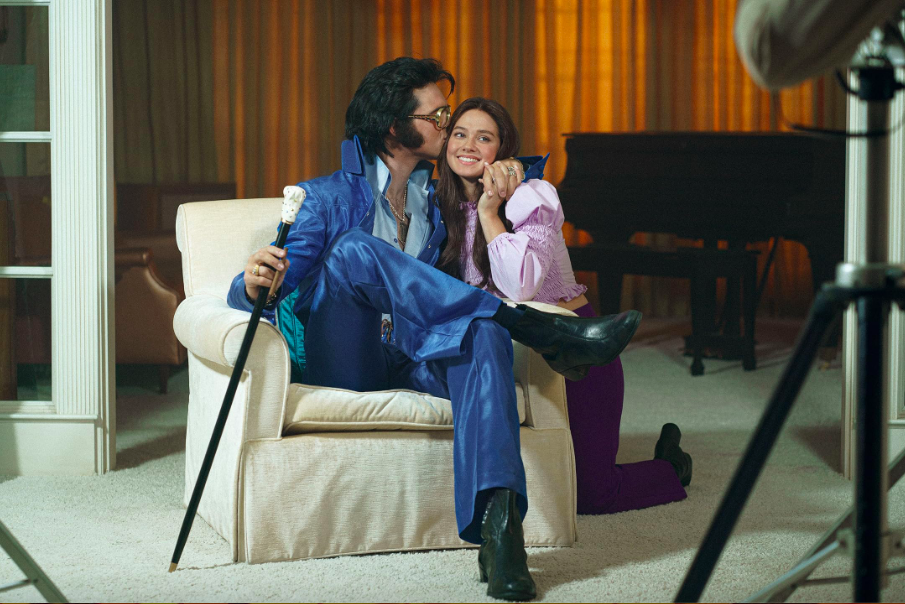
Funny but when I saw this film I was suffering from some pretty excruciating nerve pain. The best thing to come from this movie is that Sofia Coppola got my mind off of my physical agony and gave me a different and even more debilitating torment.
I am a celebrator of film and all vintage leisure. I am not good at being negative and so I avoid reporting on films I do not like. I’m not saying there is no merit to Priscilla; I’m just saying that I did not see it. I found it lifeless and bereft of passion. If part of Coppola’s intention was to make the anit-Baz film, she succeeded and that is fine. I’m still just wondering what the point was. What did she hope to say or to accomplish?
Take a chance. Take liberties, risk being wrong, make me mad but don’t just sit there and bore me to tears. Take a stand, say something, go out on a limb but don’t rob me of my hard-earned money by giving me a flaccid, crawling film. After the nervousness of the impending Lurhmann film, the exhilaration of that movie, the trepidation with which I approached Sofia’s movie and the crushing disappointment of the dud it is, I could use a few years without a movie about my main man, Elvis Presley.
 SoulRide
This was a great read. It was interesting reading a different perspective to that of your sons
I sure don’t like disagreeing with him but, well, sometimes…
Sofia Coppola has said in interviews she chose 6ft 4in E lordi and 5ft Spaney on purpose to show Priscilla who the actress is shorter than has child like. Also Elvis Presley Enterprises and Lisa Marie refused to allow filming at Graceland or use of his music. If you read Elvis and me Priscilla wrote that Elvis bought her a car, she had credit cards with no limit and came and went has she pleased, so much so that Lisa Marie has a baby was closer to her nanny and Elvis grandmother Dodger and aunt Delta. She contradicts herself too much