“For those closest to Sam, his words, his sayings, his drive and determination, that almost invincible optimism and beguiling good humour remain a beacon illuminating their way. His death was something with which many of them were unable to contend but his life and his spirit were a rare glimpse of the kind of enlightenment to which each in his or her own way might momentarily aspire.”
Dream Boogie: The Triumph of Sam Cooke
by Peter Guralnick (2005)
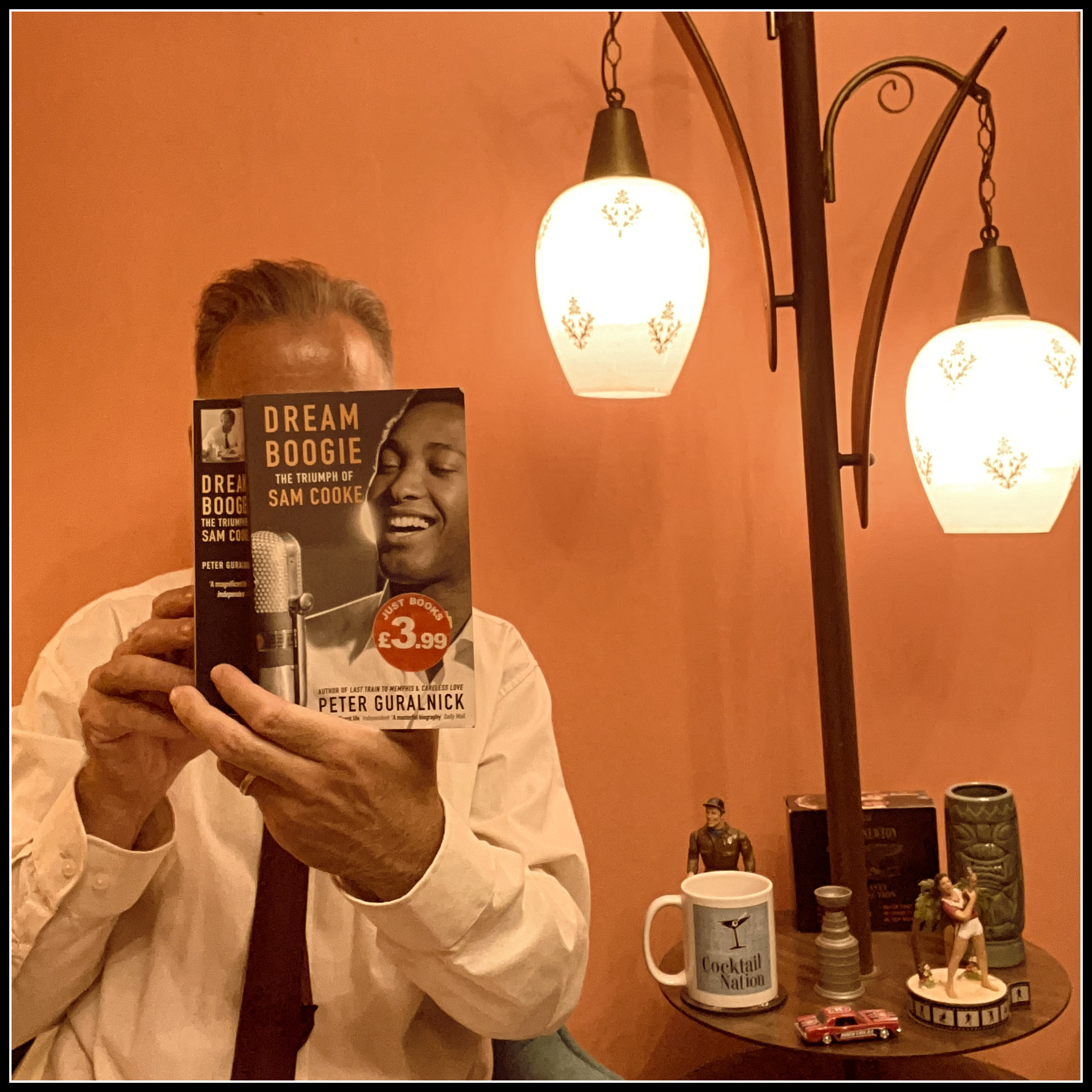
I wrote about Sam Cooke in a well-received piece from 2020 and it was then that I learned of this biography. I was pleasantly surprised to learn that it was written by venerable man of American music letters and Elvis Presley‘s biographer Peter Guralnick. I found it at AbeBooks – the only place I’ve ever bought a book online – and bought it. I was surprised again when it arrived and it took two guys with a forklift to lower it down onto the porch. Not exactly but this book – at almost 750 pages – is substantial. In more ways than one.
It is key to note that Guralnick conducted interviews for this book over the course of many years and so therefore he was able to interview virtually every single significant player in the Sam Cooke story. The players don’t come any more significant than Cooke’s father, his widow and contemporaries and followers like Bobby Womack, Allen Klein, Herb Alpert and many others. We expect nothing less from Guralnick but it is still worth noting that the writer has left no stone unturned in the telling of this tale.
“There was something about him…the infectiousness of his grin, or his unquenchable enthusiasm, or the insatiable nature of his curiosity, he possessed a spark that just seemed to light a fire under everyone he was around.”
The first major portion of the book is a detailed look at Sam’s origins in gospel quartet singing and Guralnick provides much insight into the black gospel scene of the 1950s. The author looks at Cooke’s days with the venerable Soul Stirrers gospel quartet and how his singing was met with derision until he crafted his own style including a trademark yodel. The reader learns of the very day Sam Cooke became a star and how audiences came to clamour for him, screaming their approval. Many around Sam began to wonder – if they are screaming now, what if he was singing songs about love? After a time on top of the gospel world, the possibility of transitioning to pop music began to emerge.
Peter Guralnick goes on to detail Sam beginning to write his own songs until finally taking the plunge, recording pop and scoring a hit almost immediately with “You Send Me”. Soon Sam entered a rarified air in his recordings and club appearances. Guralnick speaks of the era of the “new Negro entertainer” and mentions Sam joining the likes of Sammy Davis, Jr., Harry Belafonte and Johnny Mathis skirting the edges of rock & roll and keeping his sound closer to pop so as to appeal to the largest number. But the author also describes Sam’s vocal style and makes clear his role in the origin of soul music, detailing the creation of the song “Bring It On Home to Me”, declaring it a starting point for the genre.
“‘He had a little aura about him. He was better, dressed sharper than the other guys and had bigger fan response. Sam was the only guy whose voice would sound like an instrument, he made it sweet like nobody had before, and he was so pretty, and so dynamic, that he would mesmerize the women, women would faint, actually fall out, when he would walk down the aisle.'”
– North Carolina gospel DJ Jimmy “Early” Byrd
The reader will learn of Sam Cooke’s many dealings in the music business as a mogul with the creation of SAR Records and of his stable of artists including Bobby Womack – interviewed extensively for the book – and his brothers. Sam became a self-contained artist, one who could write, sing, perform, produce, distribute and promote his own material. You will get the fascinating story of one Allen Klein, a controversial figure who got his start with Sam and who would later feature in the stories of the Rolling Stones and the Beatles. And Guralnick digs deep to tell the story of Sam’s role in the fight for equal rights.
Interestingly, he highlights the different ways black entertainers fought segregation; some, like Jackie Wilson and Harry Belafonte, were nearly militant and combative about it while others like Nat Cole and Fats Domino did not always refuse to play to segregated audiences but instead did their part by simply maintaining a high profile, operating with dignity and being successful, visible and highly paid. Sam initially was somewhere in between but as time went by he began to fight more forcefully. He joined the March on Washington and Guralnick shares how Cooke – inspired by Bob Dylan – decided to make a statement in song by writing the poignant “A Change is Gonna Come”. Dream Boogie then reports in Peter Guralnick’s typically dispassionate way the details of Cooke’s tragic final hours.
“What comes through (in an example of Sam’s singing) is a rare moment of undisguised emotion, an unambiguous embrace not just of a cultural heritage but of an adult experience far removed from white teenage fantasy…(Sam employed vocal effects like) his delicate falsetto, the way he would ride a syllable, elongate a vowel to suggest dimensions of meaning scarcely hinted at in the lyrics, the slight roughening that he could use to suggest intensity of feeling without raising his voice; he employed all of these effects without in any way suggesting, either to the listener or himself, that they were effects, so intrinsic were they to his feeling for the music, to the feelings he wanted to express.”
Nuggets include; Sam met and became “inextricably drawn” to the woman he would later marry, Barbara Campbell, when she was 12 years old and Sam was 17, Barbara soon became pregnant but Sam Cooke fathered many children out of wedlock when he was still a young man; Guralnick notes that these births affected the mothers greatly but didn’t affect Sam at all, Elvis Presley met Sam’s brother once and EP gushed over Cooke’s gospel singing, Sam was after a “broad-based acceptance” and joined the new vanguard of those who were called “living room Negroes”, artists like Belafonte and Mathis who were easily folded in to the televised entertainment beamed into white suburban homes at the time, you’ll get the story of Sam’s record company and his stable of artists, none that really made much of an impact but the company was a place where emerging black artists could go to have access to the highest quality in songwriting, production facilities and promotion, by all accounts Sam was a visionary who was not frightened by the British Invasion but who had already seen it coming and embraced it as necessary progress and the reader will get a ringside seat for Sam’s interactions with Cassius Clay, Malcolm X and Jim Brown (One Night in Miami) and Jimi Hendrix and for reactions – the public outcry and innuendos – in the aftermath of Sam’s death.
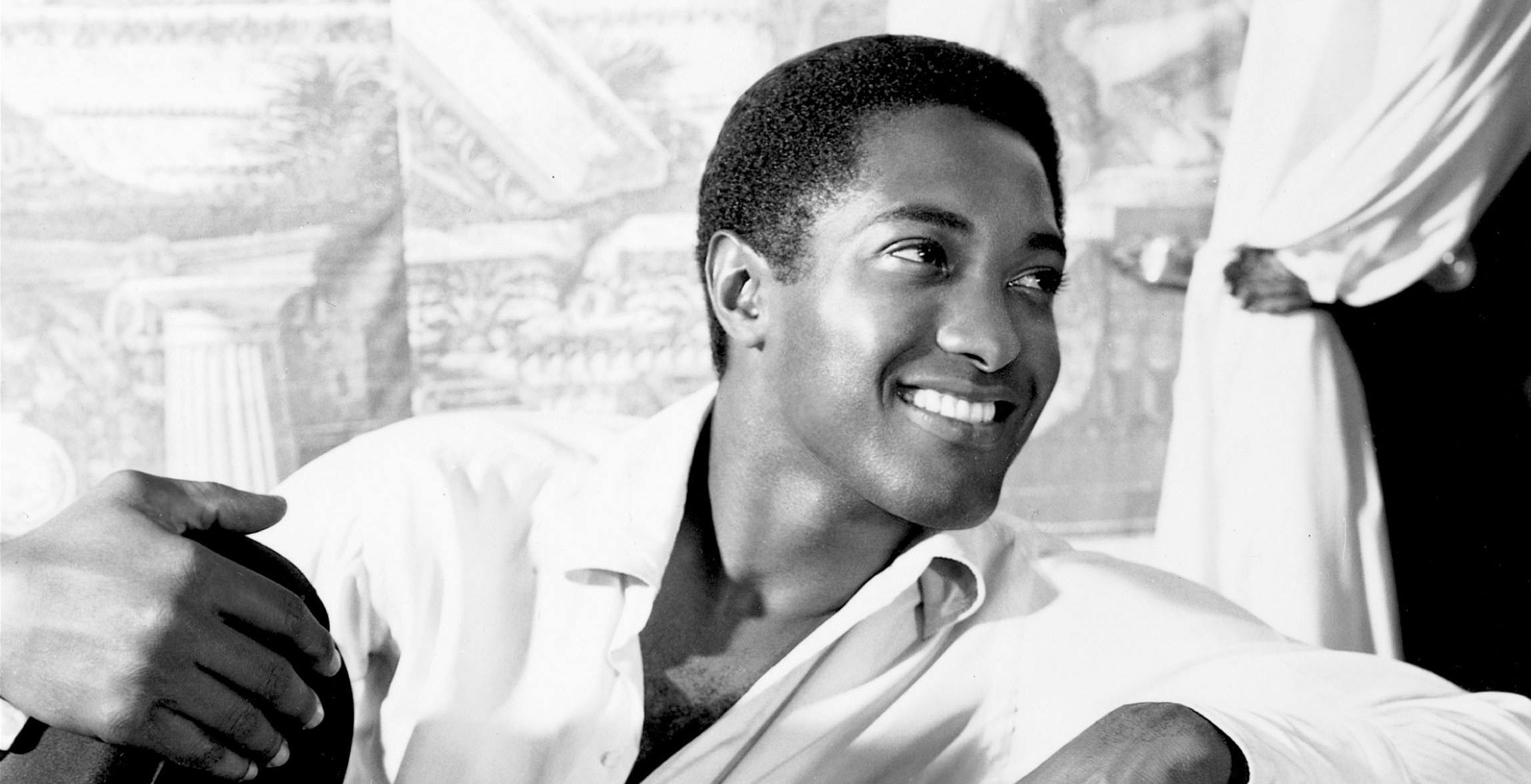
I read Dream Boogie at a pivotal time in my life and the book marked a turning point in my reading life, more specifically. Without getting into that, I will say that this book is long; over 750 pages of incredible detail. It took me longer to read this book than almost any other book I’ve ever read outside of Michener’s Hawaii and this sometimes coloured how I felt about the book. And it has made me reconsider the books I read and how I choose them. While that’s just me, the reader should consider before diving in just how much Sam Cooke they need. Don’t get me wrong; I love Sam and I love Peter Guralnick. But this is a lot and it is a brimming blow-by-blow account and – more challengingly – has as many “speaking roles” as Marty’s The Irishman. I often found it hard to remember who Peter was referring to, there are so many players in this tale. When Guralnick lists the names of those who attended the funeral the reader is reminded of this.
To say this is the definitive Sam Cooke bio is accurate but redundant. You could say that there is no other Sam Cooke bio, really, compared to this. Every, single last thing you could ever want to know about the man, his music his life and times is right here. Just be ready for a long haul.
 SoulRide
Phooey! I thought I posted this comment yesterday. Hope I can recreate my spontaneous feelings after reading your typically insightful and informative book review and blog. I have long been a huge fan of Sam Cooke – quite frankly, long before I even knew who he was. Seriously, there were so many songs of his that I really liked, though most of his music was actually “before my time.” I really only fully realized who was behind that smooth voice after watching the Netflix special about him. It was fascinating, and I feel his was both an exciting and tragic life. His song “A Change Is Gonna Come” really touches me. And I only recently learned that is one of my other favorite singers, Lou Rawls, backing Sam up on “Bring it On Home To Me.” Though I was disappointed to learn of all of Sam Cooke’s affairs and children conceived out of wedlock… well, this is definitely NOT an excuse. But, he was extremely handsome, and my understanding is that too much fame and fortune, too early, often has that negative effect on young men (and probably on young women, too). The book does sound fascinating, and I appreciate your sharing the highlights of that tome. I recently heard of another biography that is supposed to be very good – “You Send Me: The Life and Times of Sam Cooke” by Daniel J. Wolffe. It is only 424 pages – about half as long as “Dream Boogie.” 😉
Thank you again for taking the time to share this great story. As usual, another great blog. 🙌🏻
I think it was during the time four years ago I was writing my article on Sam that I watched that Netflix doc, as well. A real eye-opener; I didn’t know much of what I learned there. Sad. Seems he was so “on top” he never considered the possibility that anything bad could happen to him, that he was invincible.
“Bring It On Home to Me” is stunning, really, though I’ll admit I knew the version by the Animals long before Sam’s. And yes Lou Rawls! That is so…right. Perfect.
Thanks again for reading and your always insightful comments!