
I have always said and I will continue to maintain that Debra Paget was one of the most alluring actresses ever to grace the silver screen. I grew up watching the beauty from Denver in Presley’s 1956 debut, Love Me Tender and when I was older and looked into her life and career I regularly had my breath taken away by her flawless magnificence. I have remarked only half-jokingly that – like the blinding midday sun or a solar eclipse – I cannot gaze directly at her. I must either squint or wear dark eyeshades. Sure I’m kidding – but only slightly.
Deb – born in 1933 and alive as of this writing – comes from a talented and artistic family. Her sisters also acted; Teala Loring was a B movie actress who died in a car wreck at age 84 and pretty Lisa Gaye, an only slightly less attractive copy of her sister, worked on TV and can be seen in a handful of films, Magnificent Obsession and Ten Thousand Bedrooms among them. Ah, but Debra…
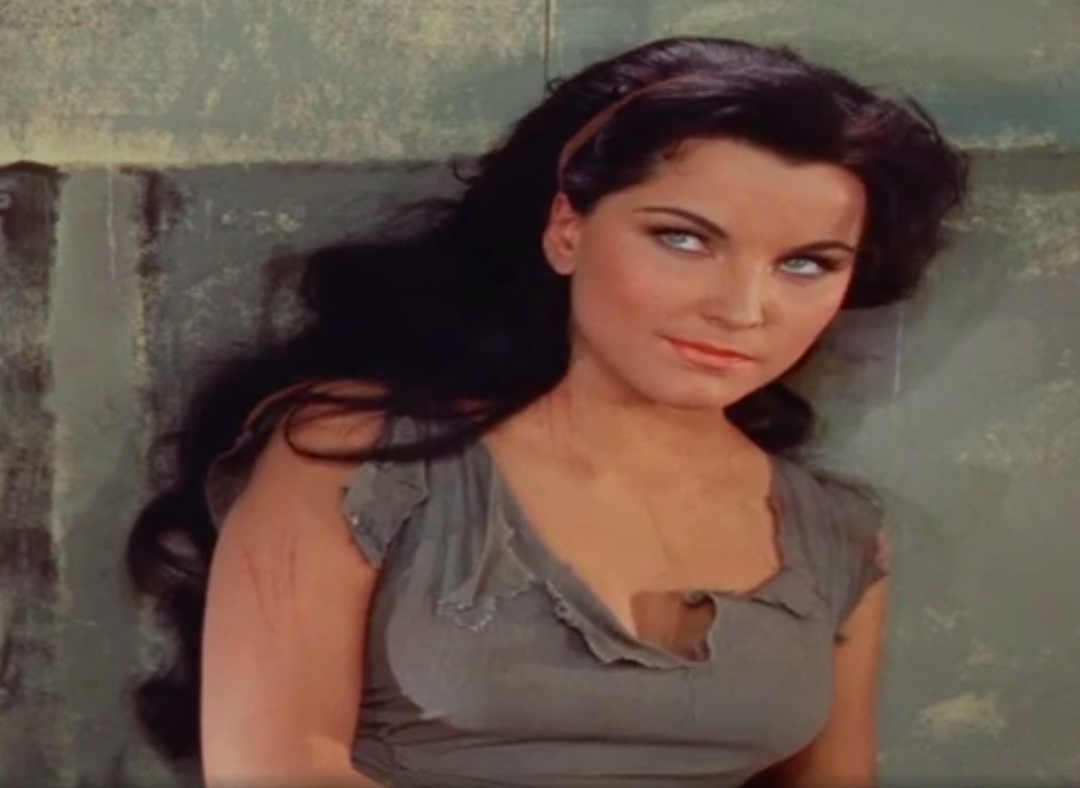
Debra’s film debut came in the excellent film noir Cry of the City. Paget was all of 14 years old when she played the little girlfriend of 38-year-old Richard (“We called him ‘Nick'”) Conte. In 1950, at 17, she appeared notably as Sonseeahray, the Native American maiden who falls in love with 42-year-old Jimmy Stewart in Broken Arrow. She continued to work steadily, sometimes even playing opposite men born in the same century as her, appearing in mostly adventure films like Prince Valiant, Princess of the Nile and Demetrius and the Gladiators all coming in 1954. Then in the same year in which she appeared in DeMille’s epic The Ten Commandments, she became a significant player in Elvis World when she starred alongside Richard Egan and Presley in the singer’s first film, Love Me Tender.
Without digressing too far, Presley was more than enamoured with Debra Paget. Though he was dating two girls from back home and Natalie Wood at the time, Elvis made it clear to friends and press alike that he was totally smitten. Trouble was he could not get to first base with Deb. She, too, had a strong bond with her mother who was vehement in her disapproval of King. For her part, Deb at first thought Elvis something of a hillbilly but soon came to fall in love herself. She found him sweet and charming and Presley was in awe of her fragile beauty and the fact that she was a wholesome girl. While it was not to be, Debra Paget continued to represent the ideal to Elvis Presley with many even noting similarities in appearance between Deb and Elvis’ eventual bride, Priscilla Beaulieu.
None of Debra’s three films in 1957 made much of a stir although From the Earth to the Moon is certainly interesting to see today. It was at this point that she entered the world of ExPat Cinema and agreed to go to India to star in a pair of films by the legendary Austrian director Fritz Lang. But let’s look back a few years and this will lead us to the film we are looking at today. Here we go.


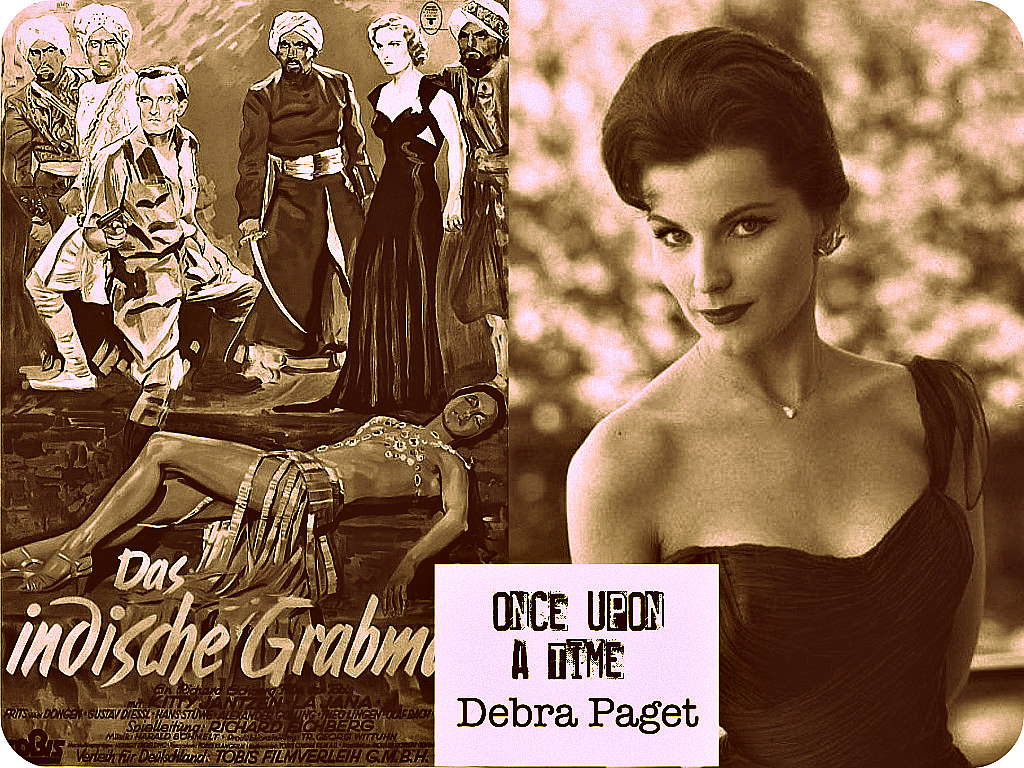
Thea von Harbou (born Bavaria 1888, died 1954) was a child prodigy who turned from piano and violin to writing. In 1918, she published a novel called Das indische Grabmal (“The Indian Tomb”), the story of a German architect who travels to India to build a monument for a maharajah. The German discovers that the monument is to be a crypt for an unfaithful lover who will be entombed alive. The silent film of the same name was released in 1921 with direction by Joe May, a pioneer of German cinema who would eventually emigrate to Hollywood. For this film, May had enlisted Fritz Lang to help von Harbou with the screenplay and the two began a relationship and would marry in 1922. In 1925, Thea turned out another novel, this one called Metropolis and two years later she wrote the script for the classic German expressionist science fiction film directed by her husband. Director Fritz Lang, of course, would have a stellar Hollywood career directing striking films, many in the film noir genre.
Fast forward to 1959 and German producer Artur Brauner, a Polish Jew and a Holocaust survivor who produced over 300 films, won Golden Globes and an Oscar and lived to be 100. In ’59, Brauner approached Lang with the idea of remaking The Indian Tomb and so Lang, who’s career in Hollywood had slowed considerably, agreed to return to Germany to make his “Indian Epic” consisting of two films, The Tiger of Eschnapur and the direct sequel and the film we’re looking at today, The Indian Tomb.


Narration tells the events of the previous film and The Indian Tomb begins with the two lovers, dancer Seetha (Paget) and architect Harald (Paul Hubschmid) being discovered near death in the desert after they had fled the wrath of the Maharajah (Walther Reyer) who is in love with Seetha. They are harboured by nomads but the word goes out from the palace that the Maharajah wants his lady back and wants the head of the German who took her away. Meanwhile, back at the palace, Harald’s sister and brother-in-law show up and are told that Harald has died while hunting tigers. They don’t buy it and know that something fishy is going on. In the background there is much palace intrigue going on with a coup in the works to oust the Maharajah due in part to his insistence to marry the besmirched dancer and have her rule alongside him.
The two lovers are eventually found and returned to the palace. Seetha is told that Harald has been killed and that she will become the Maharani but before this can happen, the priests of the palace say that she must appease the gods by performing a snake dance. Brother, does it work; maybe not on the gods but the men in attendance are surely “appeased”. Soon, Harald is discovered to be alive and chained in the depths of the palace. Seetha agrees to marry the Maharajah in exchange for Harald’s freedom but Harald’s sister and brother-in-law devise a plan of escape that will get the four to safety.
Oh, you know I’m sharing this, I wouldn’t let you down. Dig the first couple of shots of the Maharajah – his look says it all.
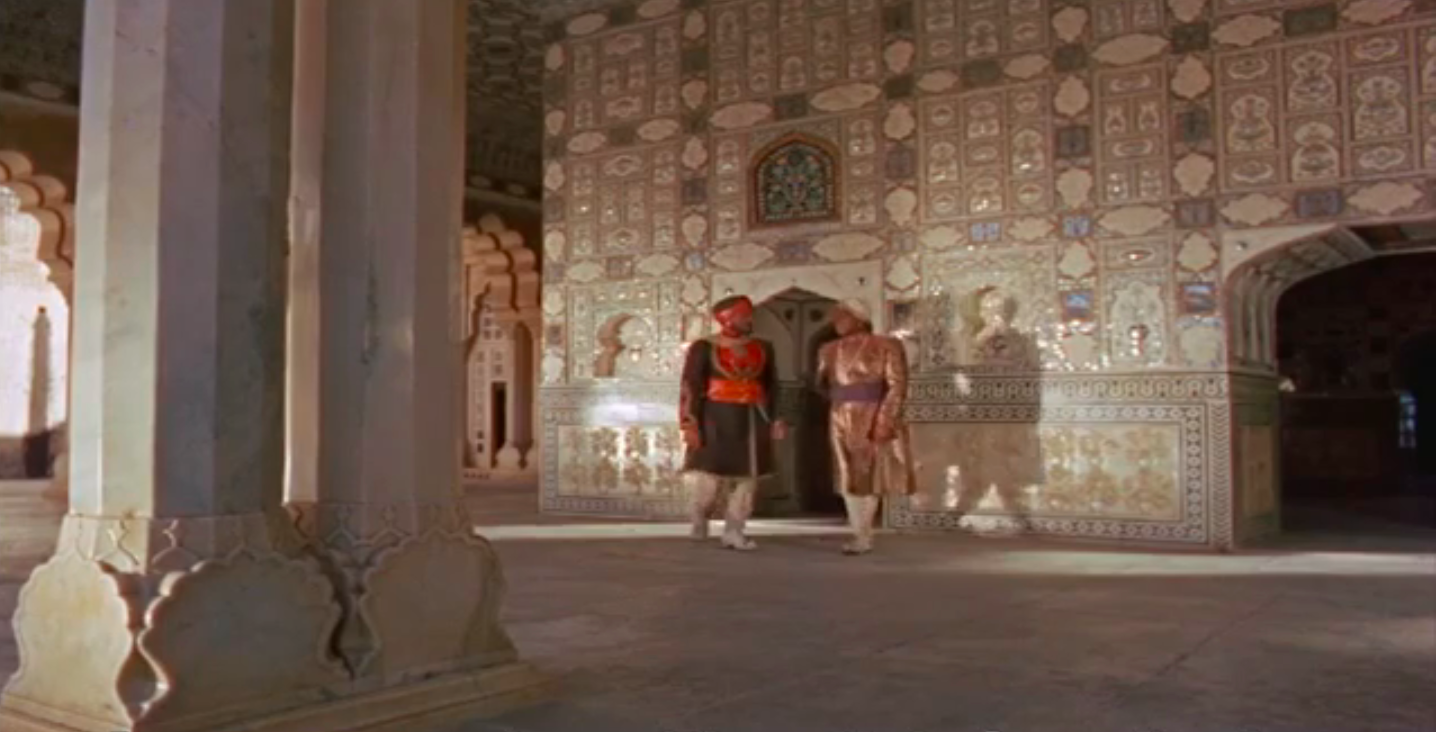
Particularly when taken with the previous film and when considered in a certain nostalgic light, The Indian Tomb is not a bad movie. The plotting and dialogue may be typically lightweight for a film like this released at this time but it is more than watchable. A lot of this is down to the filmmakers having gained permission to shoot in many palaces and temples in India. The viewer is treated not only to these breathtaking sites but also to outdoor scenes that benefit from being shot in India as opposed to the hills outside Hollywood where thousands of westerns were made. Additionally, the cast is more than competent and the set design and costume design are a treat for the eyes. Speaking of which…

Seetha’s snake dance, of course, has gone down as a sensational moment that likely would never have been allowed in a Hollywood film. Little Debbie, an accomplished dancer, is outfitted in the slightest of “wardrobes”; really just baubles pasted on the sensitive areas. Any dancing done thus attired would be provocative but the “Indian snake dance” nature of the choreography adds to the stimulating visuals. It’s remarkable actually; Debra was a wholesome lady but here she puts herself in various positions that make her look almost nude and here it’s 1959. I’ve read that the snake in the scene looks fake. There’s a snake in the scene?
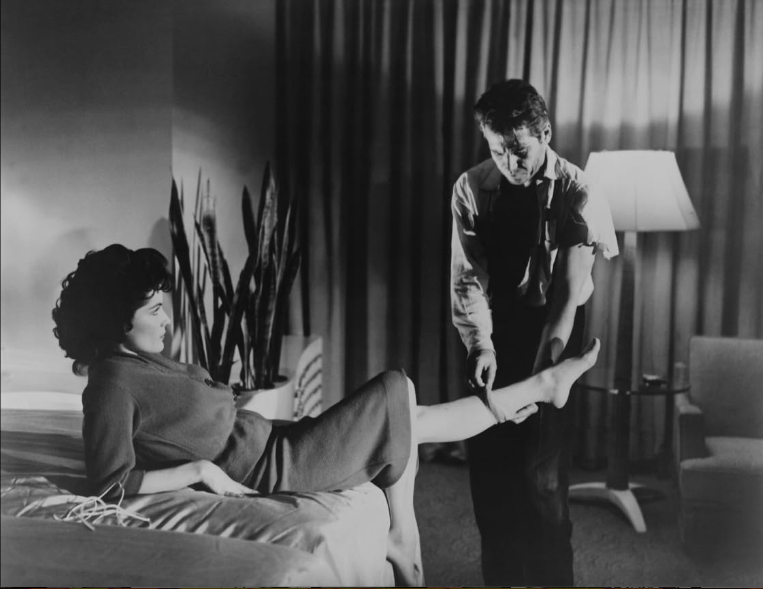
Afterwards, Debra Paget wasn’t long for film or television work. She would appear in two more historical epics made in Italy before hooking up with our boys at American International for a couple notable appearances. Paget looks typically stunning in Most Dangerous Man Alive as a gangster’s girl. This film contains a scene in which radiation-infected Eddie (Ron Rendell) removes Debra’s nylons and it is almost as sexy as the snake dance. She then appeared in vibrant colour in Roger Corman’s anthology Tales of Terror and she may have never looked better.
Like a lot of starlets of the 1960s, Debra Paget quit the business when she married, in her case a Chinese-American oil industry executive. With Louis Ling-Chieh Kung (孔令傑) – the 76th-generation grandson of Confucius – Deb had a son before divorcing in 1980. Paget later found faith in Jesus and could be seen often on Christian television.
In this look at ExPat Cinema, we see that the ladies got in on the act, too, and many went overseas to feature in European productions. Once upon a time, Debra Paget graced German and Italian screens with her depictions of gorgeous dancers and princesses. I’ve always had a soft spot for this beauty and I wish her continued good health.
 SoulRide