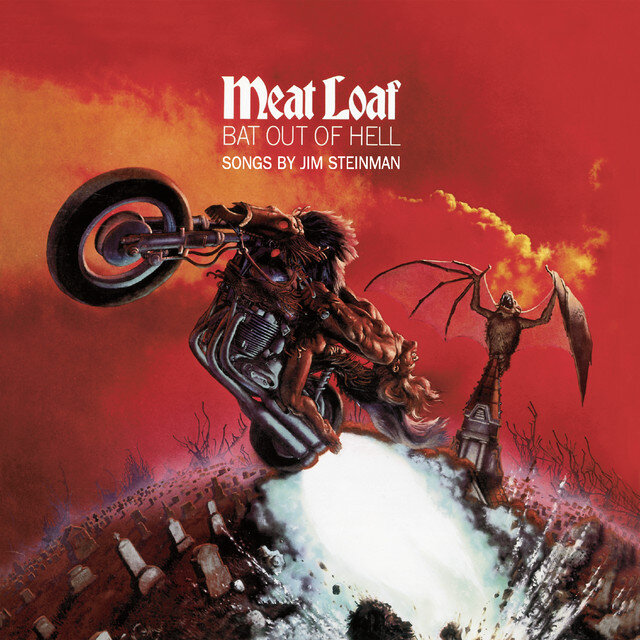
Like you, I have fond memories of the friends I had when I was a teenager. Now in middle age of course I have no friend “group” but instead one single friend. Anyways, back in my heyday in the early 90s, our gang was a little different in that the music we all dug included a healthy dose of Seventies rock or “classic rock”. We all ate up Tom Petty’s excellent solo record Full Moon Fever but we also explored his back catalogue albums like Damn the Torpedoes (“Even the Losers”). Aerosmith’s new album Pump? Yes and also Toys in the Attic. Sweet, Boston, Alice Cooper. All these years later I realize that these 70s albums from our youth are cherished by our older selves just like they are by people much older, by people who loved them when they were new. We dug these records some 15 years after the fact. One record we all loved is the one we’re talking about today.
In the summer of ’89, I was 16 and that year my friends and I were consuming Meat Loaf’s 1977 debut Bat Out of Hell. As a personal aside, my knowledge of the record finds its origins in the previous fall. Long story but I was involved then with an older married woman and her knowledge of the record and her quoting to me the lyrics of “You Took the Words Right Out of My Mouth (Hot Summer Night)” added greatly to the mystique and the forbidden romance of the album. I’ll never forget the following Labour Day weekend. September 4th, 1989 I saw the Rolling Stones at the CNE Grandstand in Toronto with my older brother and his friends. Late that night as I lay in bed, ears ringing, dreading the fact that I would be courting my dad’s wrath by missing the first day of school, I was listening in the darkness to Bat Out of Hell and here the record embedded itself into my psyche. The story of this album, however, finds it’s origins in another long ago September in the sweltering late summer heat of Dallas, Texas and a not-so-little boy everyone called Meat Loaf.
The story goes that when Marvin Lee Aday was born, his skin was bright red and it stayed like that for days. Aday’s father – a former cop who quit to sell his own cough syrup – said his boy looked like “nine pounds of ground chuck” and convinced hospital staff to put the name “Meat” on his crib. Later as a 5-foot-2, 240-pound teen, classmates called him “Meat Loaf” and the name stuck.
Fast forward to 1960s Los Angeles, when Meat formed a band called Meat Loaf Soul. Meat Loaf was possessed of a powerful voice, so much so that at an early recording session he hit a note so high that it blew a fuse on the recording monitor. Success eluded Meat Loaf Soul and the band morphed several times until Meat Loaf left the band altogether to join the touring company of Hair.
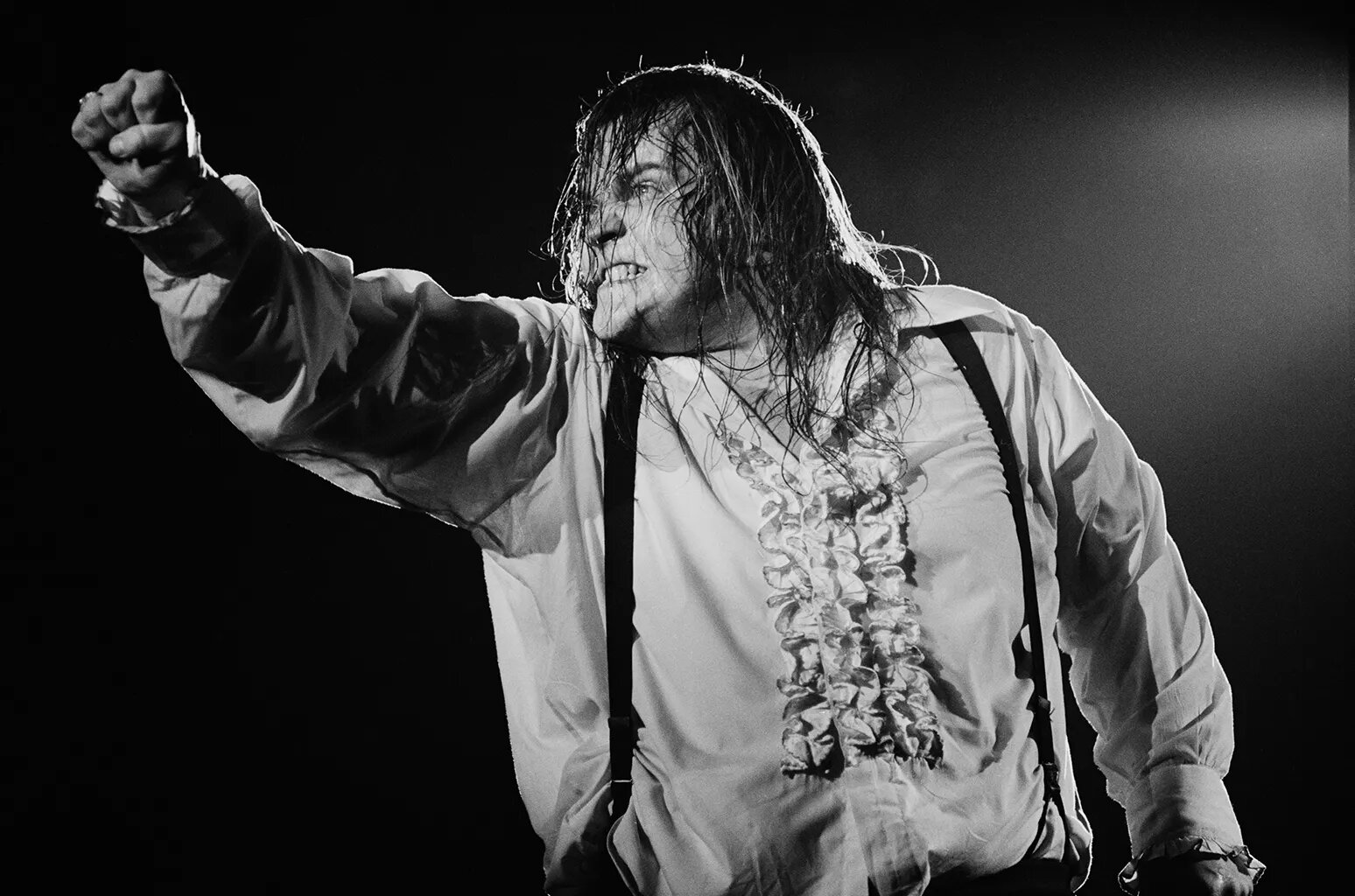
Motown Records came calling and paired Loaf with his Hair co-star Shaun “Stoney” Murphy. “Stoney and Meatloaf” released one album in 1971 but Meat was not happy and broke-up the duo. He returned to the theatre and then in 1973 Meat Loaf met Jim Steinman, a songwriter and a creator of musical visions unlike any other in history, really. Steinman specialized in Peter Pan mythology and fashioned epic compositions that paired Phil Spector with Richard Wagner and celebrated youthful relations between the sexes. Meat won a role in Steinman’s show More Than You Deserve; it was the first of their many collaborations. Later this same year, Meat Loaf won the role of Eddie in the stage production of The Rocky Horror Picture Show and he would reprise the role in the film version. At about this same time, though, Meat Loaf was drawn back towards Jim Steinman and the two set about making a record that would prove to have lasting significance.
Developed out of a musical Steinman had wrote in 1974 called Neverland, a futuristic rock version of Peter Pan, Bat Out of Hell almost never came into existence. Steinman and Meat Loaf toured various record labels looking for funding by performing the album for executives. Meat Loaf remembered it as a brutally soul-crushing experience as the two were shown the door time and time again. Loaf recalled in particular meeting with the legendary Clive Davis at CBS. After hearing the run-through of the proposed record, Davis tore a strip off Steinman: “Do you know how to write a song? Do you know anything about writing?…I don’t know what you’re doing…you don’t know how to write a song. Have you ever heard any rock-and-roll music?” Jim shrugged the rejection off but Loaf was incensed and once they left he screamed obscenities up at Clive’s office from the street.
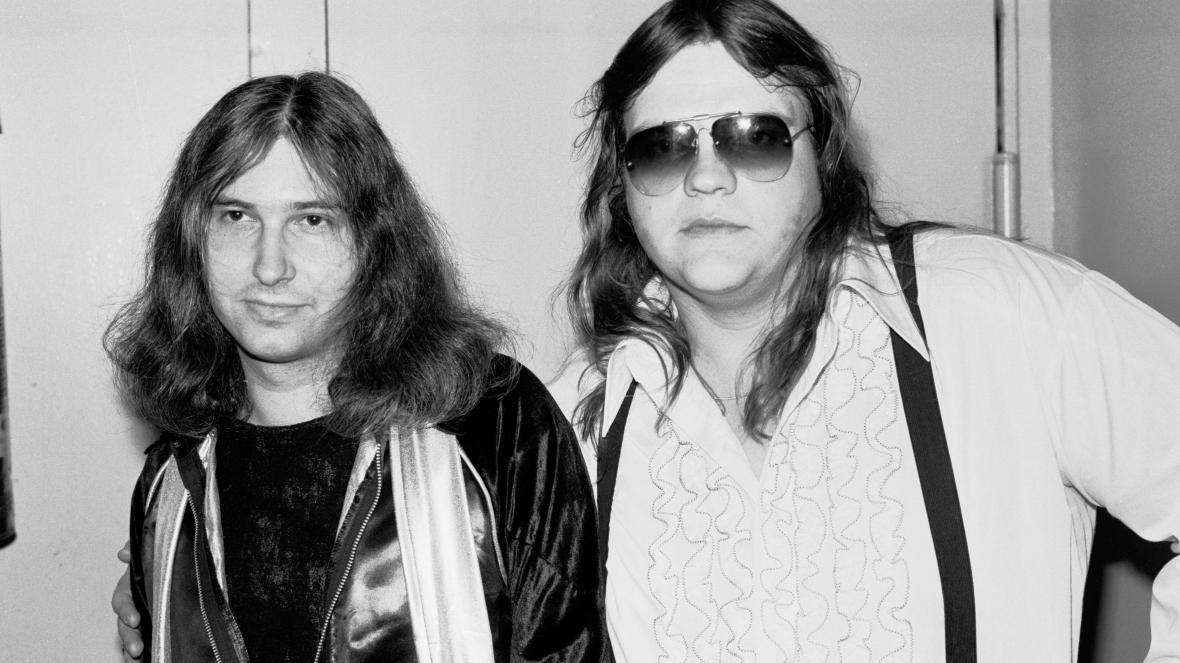
Steinman and Loaf went ahead and hired Todd Rundgren to produce the record. Oddly, when Todd heard the songs, he found them “hilarious” and thought it was half-a-joke and a parody of Bruce Springsteen’s recent record, Born to Run. “I’ve got to do this album”, Todd said, “it’s just so out there”. Interesting to think that Rundgren came onboard while thinking that Steinman and Meat Loaf were only half serious. The two told Todd they were as serious as a heart attack; and they also told Todd they had a deal with RCA. Rundgren was on board.
When Rundgren learned there was no deal with RCA, he began to shop the record using his own connections. Eventually, “Miami” Steve Van Zandt of Springsteen’s E Street Band put the boys in touch with the fledgling Cleveland International record label, a subsidiary of Epic Records. Cleveland’s founder, Steve Popovich, heard just a spoken word intro to one song and he immediately signed the boys to a deal.
Recording got underway in 1975 in Woodstock, New York. One wonders if Loaf, Steinman and Rundgren were aware of the enormity of what they were creating. The music on Bat Out of Hell is honestly like nothing you’ve ever heard. Whether or not the album is your cup of tea, no one can deny that the record stands alone in many ways.
The first 45 Jim Steinman ever bought was Ray Peterson’s 1960 hit “Tell Laura I Love Her”, the epitome of the “teenage tragedy song”. With his song “Bat Out of Hell”, Jim intended to write the “most extreme crash song of all time”. While every critic claims Steinman and Loaf were influenced by Spector and Springsteen’s Born to Run, Loaf says this title track was actually inspired by Hitchcock’s Psycho. The song rockets out of the gates and rolls for almost 2 minutes before a word is sung. The tone of the whole album is set here with Steinman’s preoccupation with the themes of teenage rebellion in dangerous streets into which an innocent girl is thrown, there to redeem the young male protagonist. In this case, into the “blood shot streets” comes a girl about which the singer declares “baby, you’re the only thing is this old world that’s pure and good and right”.
Official Meat – these pioneering videos helped propel the record
Eventually, the ill-fated protagonist suffers the most horrific crash in rock history, the song creating the sound of the motorcycle (Rundgren somehow with his guitar) and crash deftly. The singer is “torn and twisted at the foot of a burning bike” but he feels his soul “breakin’ out of my body and flyin’ away like a bat out of hell”. The tune features stunning piano from “Professor” Roy Bittan and drums from Max Weinberg, both of Bruce’s E Street Band and Port Dover, Ontario’s Rory Dodd on backing vocals. Bittan’s work is truly remarkable and Todd’s guitar is impressive. This is an epic tune with a fantastic final note from Meat.
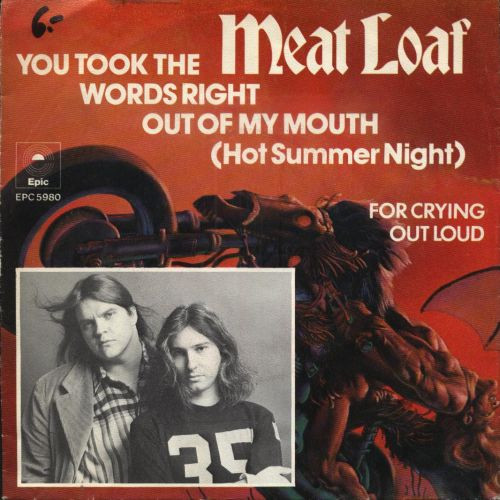
Early on in their relationship, Meat Loaf had asked Jim to write a simple pop song, not a grandiose tune clocking in at ten minutes. When Meat heard “You Took the Words Right Out of My Mouth (Hot Summer Night)” he knew that Steinman “had it” and was ready to begin their musical journey. The famous spoken word intro of course sets this song apart from others. Steinman and actress Marcia McClain share an exchange that is sexual in its ambiguity. The question of the girl offering her throat is certainly sensual and McClain does well depicting her submission. But the intro is nothing compared to this magnificent song that soars with longing and passion while harkening back to the music we’ve listened to all our lives.
Here we learn that Jim Steinman is a fan like us and that he collected the same records we did. Jim and Meat employ the classic Hal Blaine drum beat from the Ronettes’ “Be My Baby” and sleigh bells are prominent; Phil Spector City, Indiana. At the same time, the action is set at the beach, location of so many classic song escapades. The lyrics – “you were lickin’ your lips and your lipstick was shinin’, I was dyin’ just to ask for a taste” – are provocative and the song seems to take on an urgency when we get to “now, my body is shakin’ like a wave on the water…” and the clapping in the a cappella coda is stellar. This is on my list of favourite songs of all-time.
Official Meat
“Heaven Can Wait” may be the only “average” song on the record. It is average on this album but would be the shining star in any other artist’s work. It is only majestic and if anything it is a respite from the sonic and emotional intensity of the rest of the record. But “Heaven Can Wait” has its potency as well and once again, ladies and gentlemen, the Professor, Mr. Roy Bittan at the piano putting on another clinic.
Edgar Winter’s fine alto sax marks the next tune, side one closer “All Revved Up With No Place to Go” with the drummer’s quarter notes setting the pace. I can’t talk about Roy Bittan’s piano work enough and here he shines again and with only a few notes. The second and third time Loaf sings “every Saturday night”, Roy will tinkle a few wonderful notes, especially at the 3:20 mark. Nice modulation up for the “baby, I’m a hunter…” section and this part is very Fifties and features some great ride cymbal right after “…all night long” and after “someone got to draw first”. Not the highlight of the record but still such a solid tune. We really get revved up and peel out for the finale.
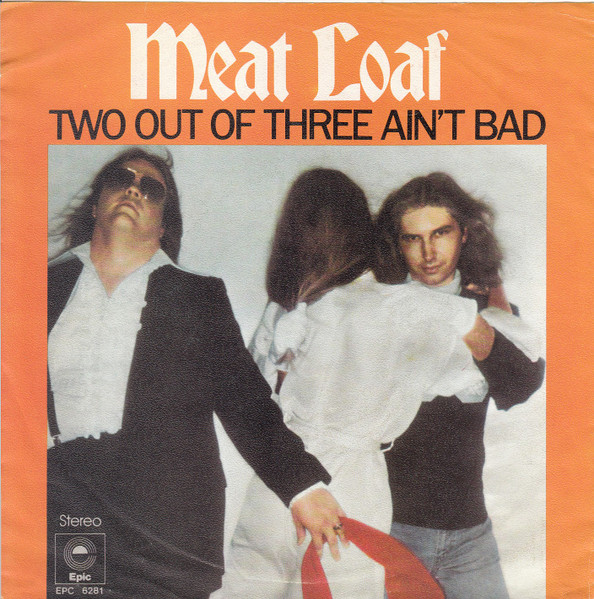
Again, Steinman was urged to write something simple. Just as an old friend was encouraging Jim to not write such complicated songs, Presley’s “I Want You, I Need You, I Love You” came on the radio. Inspired by that tune, Steinman went home and put his own twist on the lyrics of the King tune. “Two Out of Three Ain’t Bad” was a major hit, one that remains Meat Loaf’s second-biggest in the US behind “I Would Do Anything for Love (But I Won’t Do That)”. Wonderfully expressive lyrics on this tune that was a staple of both AM and FM radio. Jim provides cynically comic lyrics that are quite relatable, when you think about it. We perhaps have all had those people in our lives with which everything is perfect – except that one thing and maybe that one thing is that which keeps you from closing the deal or going to the next level. This song is a perfect rock ballad that appeared internationally on rock and adult contemporary charts.
“I poured it on and I poured it out. I tried to show you just how much I care. I’m tired of words and I’m too hoarse to shout. But you’ve been cold to me so long I’m cryin’ icicles instead of tears…I know you’re lookin’ for a ruby in a mountain of rocks but there ain’t no Coupe de Ville hidin’ at the bottom of a Cracker Jack box.”
Next up is probably the most enduring song on the record, “Paradise by the Dashboard Light”. Steinman and Loaf had worked previously with vocalist Ellen Foley on stage and Ellen joins the lads again to duet with Meat on this tune. Not only is the song an impressive musical composition presented in three parts, but it’s also a very clever mini-movie with lyrics that depict a quintessential teenage summer night.
In Part 1: Paradise, the young couple is enjoying a typical good time in the front seat of the car – and, really, the phrase “paradise by the dashboard light” is genius – until the guy suggests they take the next step and go all the way in the back seat. Just like a guy. Then things get funky with a clavinet and we here a radio play-by-play by legendary Yankees shortstop and later commentator Phil “Scooter” Rizzuto. Getting to first base and trying to steal home – “holy cow, I think he’s gonna make it!” – are of course metaphors for what’s going on in the car. The girl as usual has to be the sensible one and pump the brakes. Before they even consider going all the way, the girl, in Part 2: Let Me Sleep On It, wants the guy to promise to love her forever and to eventually make an honest woman of her. Buddy hedges by saying “let me sleep on it…I’ll tell you in the morning”. As in, after we do it. The girl ain’t having it and the guy goes out of his mind and swears his undying love. He says that he’ll love the girl until the end of time. The song wraps with Part 3: Praying for the End of Time with the lovers presumably married now and the guy wanting his freedom.
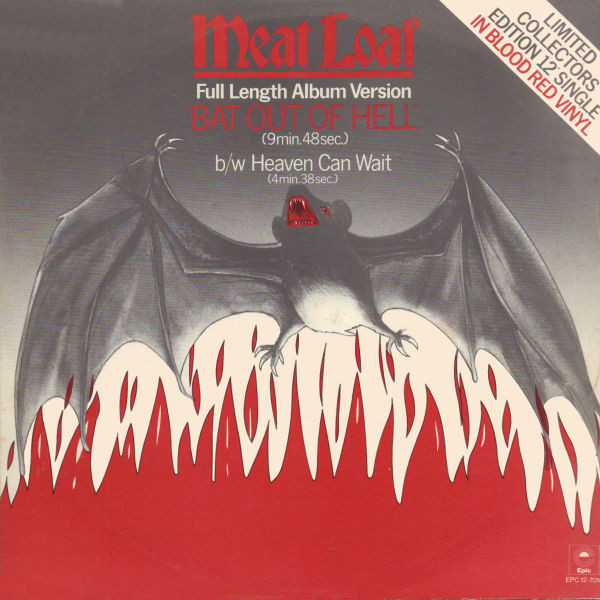
“Paradise By the Dashboard Light” was recorded only after 10 days of rehearsal. Foley – obviously a real pro – recorded her part in one take. The song has been called “rock’s greatest duet” and more daringly “the greatest duet ever recorded”. That’s a bold statement (ever heard “You’re the Boss” by Presley and Annie? Smokin’) but the tune is no doubt an all-time fan favourite, popular at wedding receptions or any other place or time where a good time is being had.
I have talked about “For Crying Out Loud” before. It was really hard for me because this song stands totally on it’s own and has done things to me that no other song has done or could do. I did my best when I included it among my Top 100 favourite songs – you can read that here. There I wrote that it is not Roy Bittan that plays the magnificent piano on the song but musician and arranger Steve Margoshes; well, that was what one source claimed but since then I see that another source places Professor Roy at the keys so I will go with that as it seems right. The piano playing on this song rises up and becomes breathlessly grandiose as does the entire arrangement by Margoshes. And I will go with what I said before; “The emotion – even in the first few notes – is poignantly evident throughout these nine minutes. The recording increases in intensity by the 2-minute mark. The first movement ends at about the 3:20 point and then the orchestra sweeps in. Celestial. And then back to intense. At 4:35 the listener’s control of himself is abandoned. The last 2-and-a-half minutes is another event altogether…” I maintain that it is the most magnificent rock song ever created. And it is the ultimate closer for after this there can be nothing else.
Here we go again. It’s the same old story. I wonder how many of the greatest rock records of all time were actually embraced and totally supported by the record label. This one wasn’t. All the execs at Epic hated it and subsequently Bat Out of Hell was well under publicized. The videos made for the singles helped, though and television in the UK picked them up and that’s where the first groundswell began. Next up was the venerable CHUM-FM right here in Canada. That legendary radio station put the record in heavy rotation and the phones lit up. Eventually, the album overwhelmed the global listening public and vaulted to the legendary status it holds today. It continues to sell roughly 200,000 copies every year and it is estimated that it has sold upwards of 40 million copies worldwide making it one of the biggest-selling and longest-charting records in history. Indeed very few debut albums have sold as well as Bat Out of Hell.
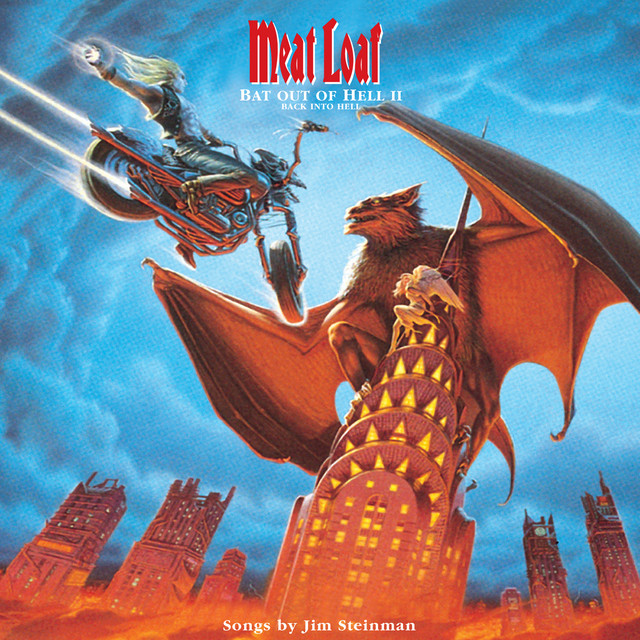
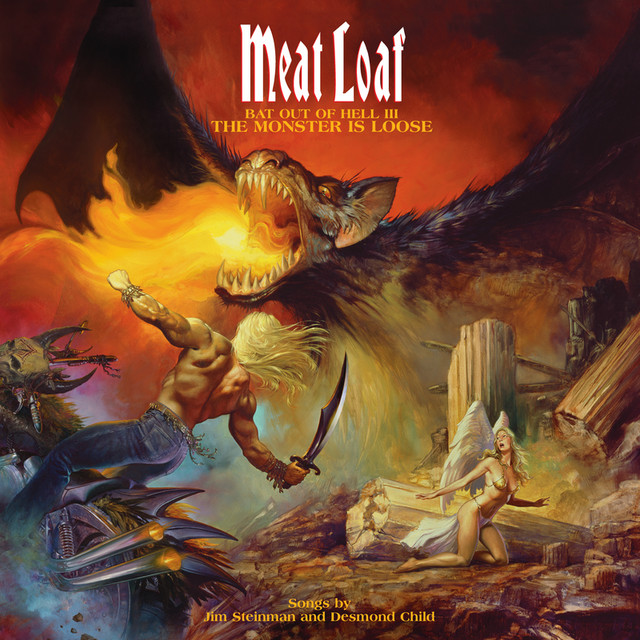
The album launched the careers of both Jim Steinman and Meat Loaf. Oddly, though, Cleveland International never took off as a label, releasing albums by the likes of the Euclid Beach Band? The Iron City Houserockers? Jim and Meat would re-team in 1993 to record and release Bat Out of Hell II: Back Into Hell. It also was enormously successful, selling 14 million copies, reaching Number One worldwide and spawning hit singles including “I’d Do Anything for Love (But I Won’t Do That)”, a Number One song in 28 countries. Sadly, Steinman and Meat Loaf became embroiled in legal disputes – mostly between each man’s manager – which lead to a rupture in their personal and professional relationship and Meat Loaf released the final album in the trilogy without Steinman’s involvement. Bat Out of Hell III: The Monster is Loose was made with Desmond Child – though seven Jim Steinman compositions were used – and hit the Top Ten worldwide though it was certainly a step down in many ways from the previous two records.
Jim Steinman – for a closer look at Jim, check my piece on him here – passed away in 2021 and Meat Loaf in 2022 but their collaborations endure. Bat Out of Hell has long been aligned with the heavy metal genre but I’ve never been sure why. I feel like a lot of it is down to the album cover and the reference to hell in the title; a reference that never really manifests itself in the music. The record is not about hell or even doom – quite the contrary. These songs by Jim Steinman and Meat Loaf’s robust presentation of them speak only of life, of vibrancy and engagement. They speak of pursuing life and love and they elevate romance to monumental heights. The music itself – thanks to players like Bittan and Rundgren – is finely crafted and played with all the exuberance of a Friday night in a teenager’s life. This is a record for the ages. One that goes beyond time and genre and one that really has no peer. It is of the highest quality but still infinitely accessible and loads of fun.
Bat Out of Hell ([PE] 34974 – 1977) – from Epic/Cleveland International Records
Side One: “Bat Out of Hell”, “You Took the Words Right Out of My Mouth (Hot Summer Night)”, “Heaven Can Wait”, “All Revved Up With No Place to Go”
Side Two: “Two Out of Three Ain’t Bad”, “Paradise By the Dashboard Light”, “For Crying Out Loud”
Meat Loaf, lead vocals, backing vocals, percussion // And featuring Todd Rundgren, guitar, percussion, keyboards, backing vocals // Roy Bittan piano, keyboards // Jim Steinman, keyboards, percussion // Edgar Winter, saxophone // Max Weinberg, drums // Ellen Foley, lead and backing vocals // Rory Dodd, backing vocals
Recorded at Bearsville, Utopia Sound, The Hit Factory, Woodstock, Lake Hill and New York City, New York and House of Music, West Orange, New Jersey
 SoulRide