Blue Hawaii (1961)
Elvis Presley, Joan Blackman, Angela Lansbury, Roland Winters, Nancy Walters, John Archer, Howard McNear, Steve Brodie, Jenny Maxwell, Pamela Austin, Darlene Tompkins, Lani Kai, Frank Atienza, Hilo Hattie, Red West, Richard Reeves and Robert M. Luck
Director Norman Taurog
Paramount Pictures (102 mins)

Chad Gates (Presley) has come home to Hawaii after two years in Europe in the Service. His half-Hawaiian, half-French girlfriend, Maile Duval (Blackman) drives his MG to the airport to pick him up. She stays behind the wheel to drive him home to Kahala but he has other plans; “Wiki, wiki. To the beach!” Chad wants to go to the shack he has long shared with his native friends instead of his house to reunite with his parents. He is dreading going home and telling his folks he does not want to work in his father’s successful business, the Great Southern Hawaiian Fruit Company.
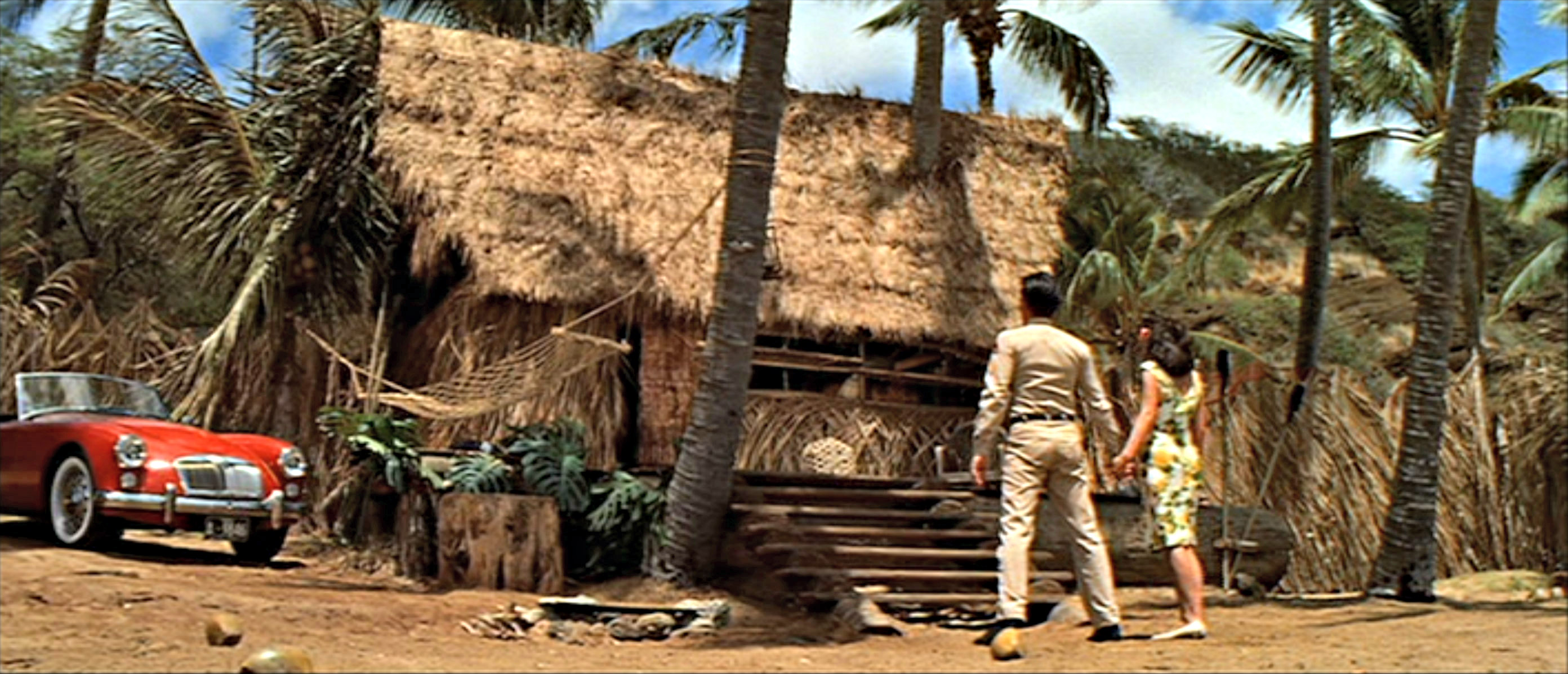
While Chad lives the life, hiding out at the beach, Maile goes back to work at Hawaiian Islands Tours where she works for Mr. Chapman (McNear). One day, Chad’s father (Winters) comes to see Maile at work and asks if Chad is home, as he suspects. When she doesn’t answer, Mr. Gates knows his suspicions are correct. He tells Maile that Chad needs to consider his mother’s (Lansbury) feelings. When Maile gives Chad the news, he reluctantly heads home.
When Chad gets home, he his joyously greeted by his folks and Mr. Gates’s boss, Jack (Archer) who is visiting on vacation. Sara Lee Gates says she wants to throw a party for Chad’s homecoming and Chad hopes Maile and his friends will attend. Mrs. Gates reminds Chad of her expectations for him; she does not approve of Maile nor does she like his friends, “those nasty little beach boys”. She wants him to be respectable – like his daddy – and get a job with the family business. Chad admits he has been home for five days and has his own plans for his life, which are contrary to those of his folks. Sara Lee gets teary and Chad splits.
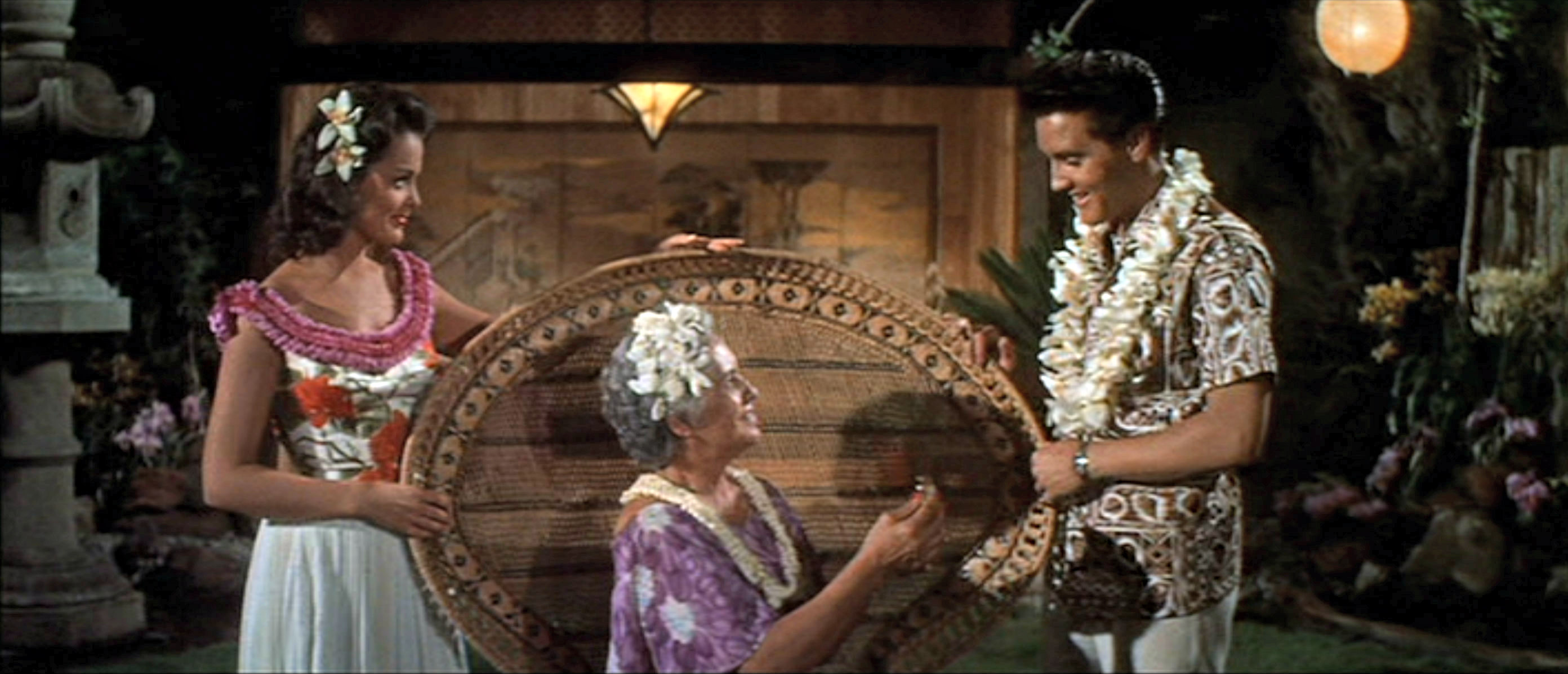
He heads to Haleiwa to attend a party for Maile’s grandmother. He gifts her with a music box he bought in Austria and sings her a lovely song, making a hit with the family. The next day, Chad and Maile meet for lunch and Maile’s job gives him an idea; he’d be a great tour guide. He and Maile go to see Maile’s boss in the hopes of Chad scoring a job. Chad impresses Mr. Chapman who says he will think about it.
The night of Chad’s homecoming party, Mr. Chapman calls Maile to report that a school teacher, Miss Prentice (Walters), needs a guide and Chad will fit the bill. Maile takes Chad to meet Miss Prentice – who they find to be a knock-out – at the Hawaiian Village Hotel. She is pleased with Chad – natch – and the deal is done. Chad and Maile head to his party. Maile endures a cold introduction to Mrs. Gates, Chad knocks ’em dead with a song and the two leave.
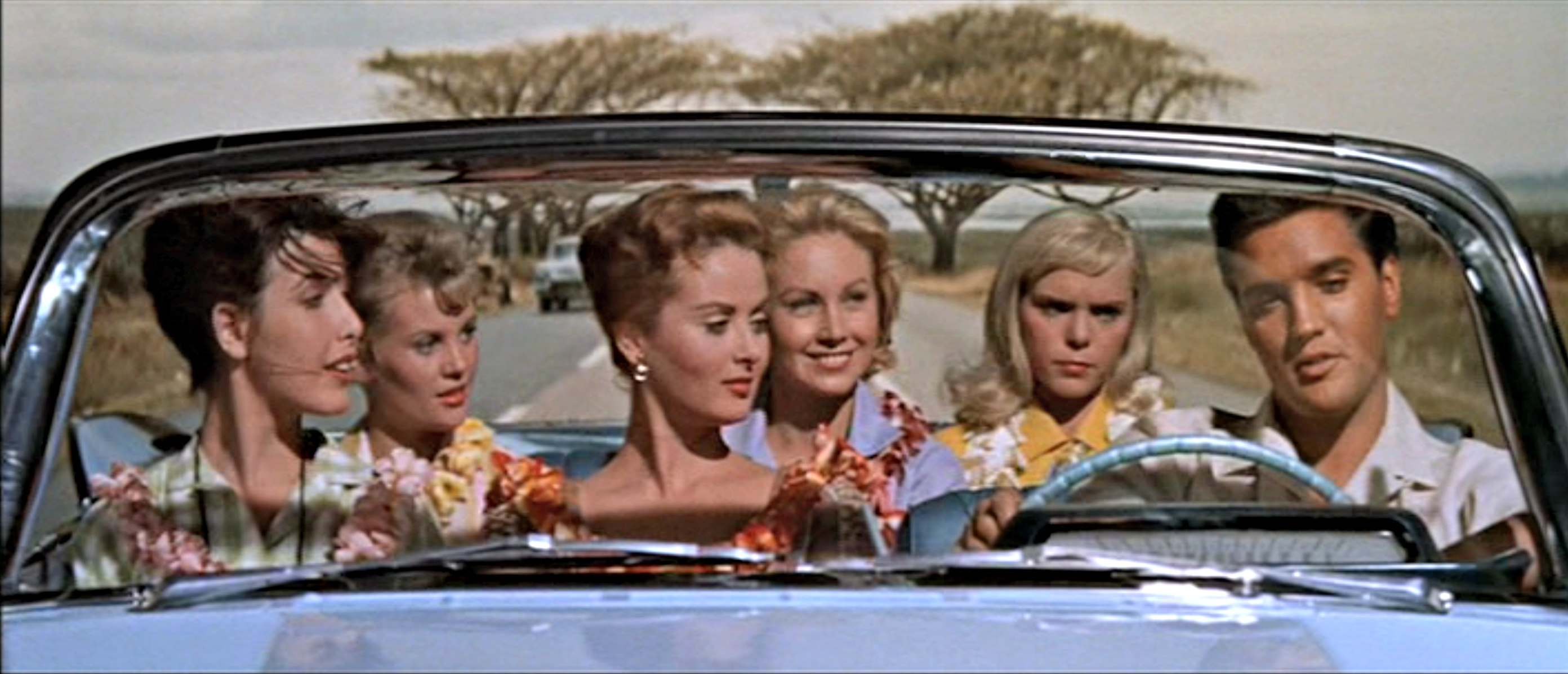
Next day, Chad meets Miss Prentice and the teenage girls she is chaperoning. The tour gets off to a good start, although nothing pleases bratty Ellie (Maxwell). Mr. Chapman tells Maile that Chad is working out; Miss Prentice is quite taken with him. This concerns Maile who decides she better go to the hukilau Chad is taking the girls to. At the fishing party on the beach that night, Ellie makes an aggressive play for Chad who rebuffs her, saying he doesn’t rob cradles.
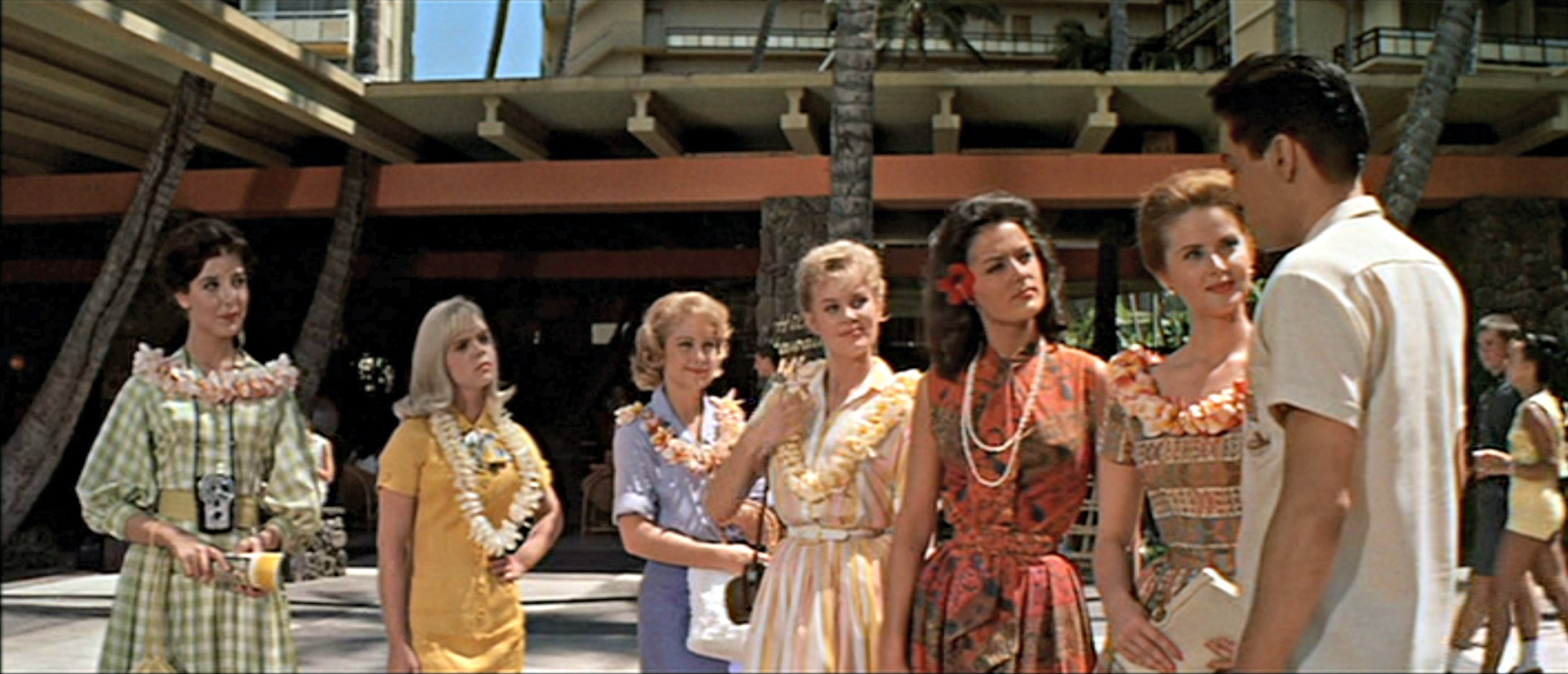
The next morning at breakfast, Chad tells his folks about his new job. Dad Fred is impressed but Sara Lee is mortified; a Gates a lowly tour guide! Jack – a tourist himself – says it sounds like a fun job and he plans to join Chad and his charges on their night out. The group heads to a luau where Chad sings and Miss Prentice and the girls enjoy the show – until other tourists, Tucker Garvey (Brodie) and his gang, show up and Tucker starts flirting with Ellie. She plays up to him, hoping to cause trouble. She is successful and a fight breaks out. Chad and his buddies clean house with Chad punching out Garvey and his red-headed friend. All the boys involved in the fight end up in the slammer. Once Chad gets out, he gets fired, Maile quits and Chad has a row with his parents and leaves the house. Then he gets another idea.
Miss Prentice has given Mr. Chapman an earful about firing Chad and is amenable to Chad’s brokering a deal to continue the tour freelance. Maile sets things up and the gang all head out to Kauai to stay at the Coco Palms Resort. Jack, again, joins the group.
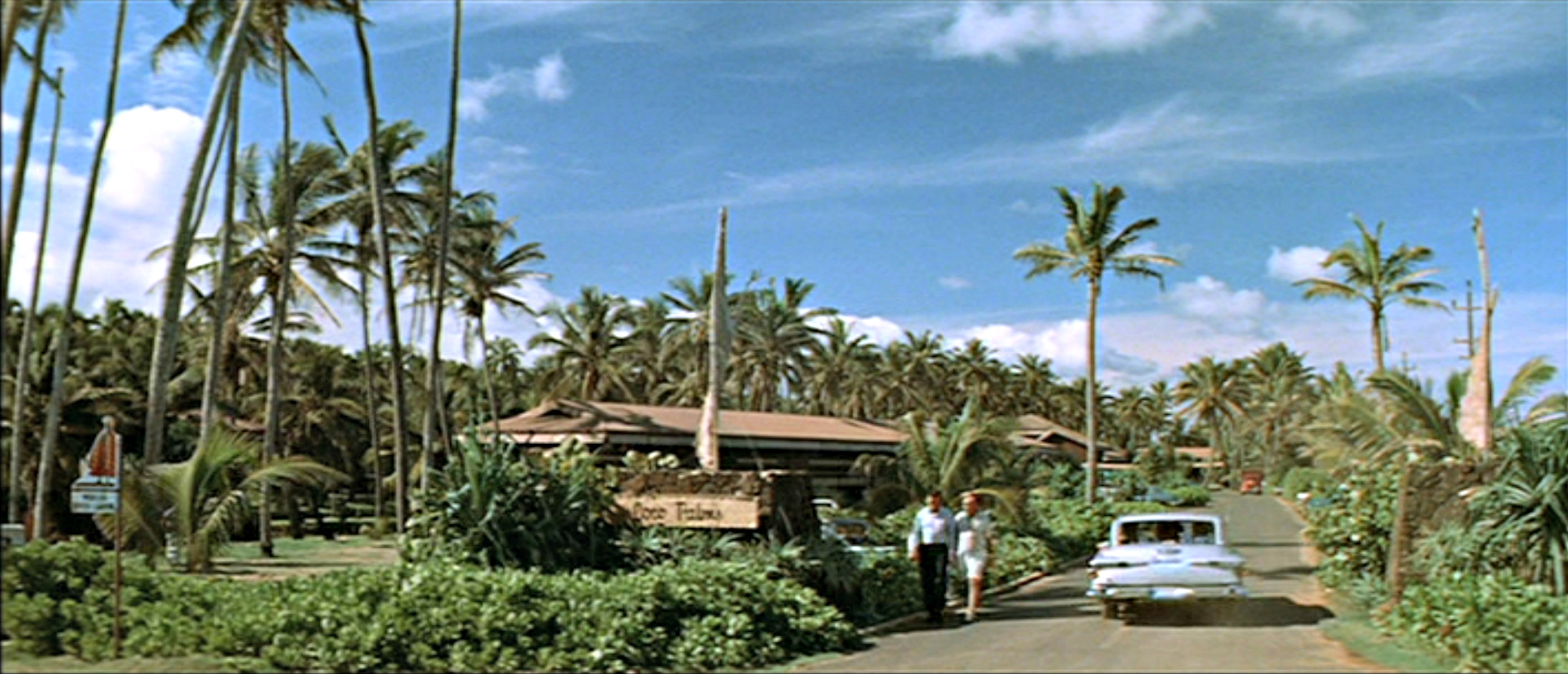
The first night on Kauai, Ellie knocks on Chad’s door after everyone else has gone to bed. She makes herself available to Chad who tries to throw her out but the other girls come knocking, looking for her. Before Chad can get the girls out of his room, Miss Prentice also comes knocking. The girls hide while Miss Prentice explains to Chad that she has finally found romance. It seems Miss Prentice is also making a play for Chad and this upsets Ellie who takes off in a jeep. Maile has also seen Chad and Miss Prentice in an embrace and is enraged. The next day, everything is resolved in a wonderful way that befits the idyllic setting.
Blue Hawaii was Elvis Presley’s 8th film, released by Hal B. Wallis and Paramount on November 22, 1961. It was the fourth movie he made since returning from the Army in early 1960. Of these four, two were made for Wallis/Paramount and two were made for David Weisbart and 20th Century-Fox. These four films served as an exercise of sorts. Presley returned from the Service still with dreams of a serious acting career. In his corner was producer Weisbart for whom King had made Love Me Tender. Weisbart could “see it” in Elvis and wanted to further explore the possibilities of dramatic roles for King. On the other side was Wallis and Col. Tom Parker. Both savvy businessmen who understood Hollywood and public tastes, they felt like Presley’s future lay in lightweight family fare. Wallis had Presley babysitting in both of his two pictures from this time; an actual baby in G.I. Blues and as tourist guide to four teenaged girls in Blue Hawaii. Both films were successful. Weisbart had Presley playing a “half-breed” in Flaming Star and killing a handful of men, savagely beating a couple others. In the excellent Wild in the Country, Elvis portrayed a juvenile delinquent-type who was surly, drank and punched guys out. Also, he had a girlfriend but also toyed with a cousin-type who had a child out of wedlock and with his therapist, an older woman who attempts suicide.
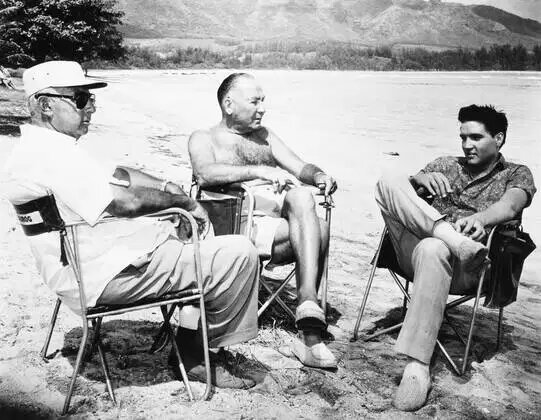
Flaming Star barely recouped its cost and Wild in the Country was perhaps the only King Movie to not make money upon initial release. After the release of the super-successful Blue Hawaii, Elvis Presley was presented with the ledger sheet. Both of the family-friendly comedies – combined with the vigorous sales of the soundtrack albums – had made everyone a lot of money. The Fox dramas were both more gritty and without music; consider that the songs in Flaming Star and Wild in the Country together totalled only five and zero soundtrack albums resulting in “lost” revenue. Blue Hawaii, then, set the template and became the formula for Elvis’ films going forward and audiences forever lost the chance to see Presley grow as a dramatic actor. For this reason, you could be excused for “hating” Blue Hawaii and I would understand if you did. Thing is, this movie is nothing less than perfect and it is my overall, number one favourite film of all-time. For me, the problem lies not with this movie but the decision of some that this should be the only type of movie King would make going forward. This formula was duplicated time and again and that’s sad. The same, really, could be said for First Blood or Die Hard, even Back to the Future. These first films in their franchises are spectacular but that they continued through the years to tell the same story with some differences over and over again puts a stink on them. I’d like us to look at Blue Hawaii in some isolation then and not concern ourselves so much with what the success of this movie and its soundtrack means in Elvis World.
Our script comes from Hal Kanter who had written and directed Loving You, Presley’s second and would later serve as writer for the Academy Awards telecast until 2008, if you can believe it, when he was 89 years old. Think about that – he wrote the screenplay for 1952’s Road to Bali and he worked on the Oscar broadcast that honoured, among others, No Country for Old Men. Kanter also created Diahann Carroll’s sitcom Julia, “the first weekly series to star an African-American woman in a non-stereotypical role”. The director of Blue Hawaii is, believe it or not, Norman Taurog, director of nine King Movies. We’ve talked about him before.
Let us make note of cinematographer Charles Lang, Jr. While he does have the gorgeous Hawaiian Islands as a back drop, Lang achieves stunningly brilliant photography that makes every scene a feast for the eyes. Lang has over 150 credits to his name, from Tom Sawyer in 1930 to Bob & Carol & Ted & Alice in 1969. Lang won an Oscar for 1932’s A Farewell to Arms and would be nominated a total of 18 times; no cinematographer has been nominated more.
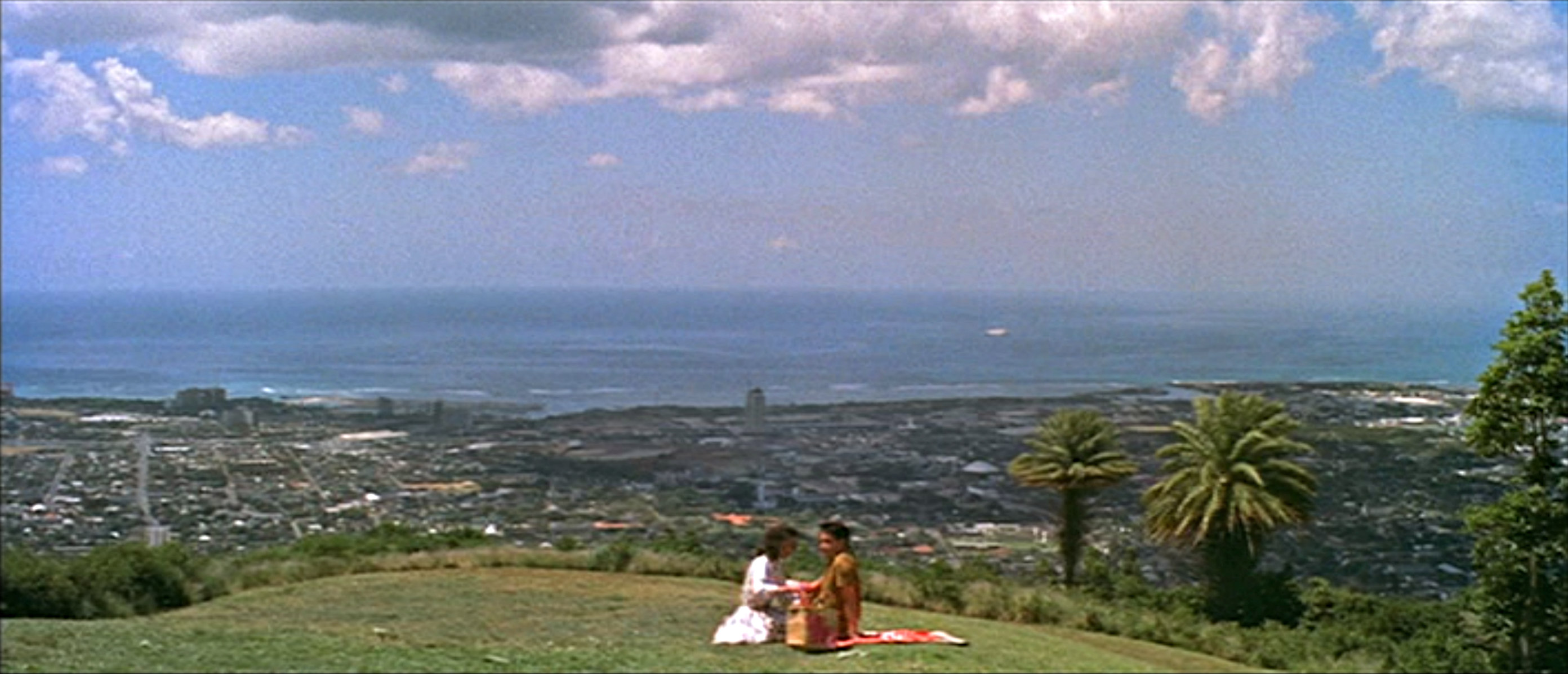
Joan Blackman (b. 1938) is a delight as Maile Duval. She achieves the rare feat in King Movies of being – acting and looking – exactly right for a guy that looks like Elvis. Their relationship is well-defined. They seem really in love and they seem to be best friends, besides. She is gorgeous and fun to watch. Somehow, Joanie did not forge a successful career in Hollywood. She would work again with Elvis in the excellent Kid Galahad (1962) in which she did not look nearly as good; they got her hair wrong. Earlier, she had appeared opposite Dean Martin and Tony Franciosa in Career (1958) and she would go on to co-star with Richard Chamberlain and Claude Rains in his penultimate film appearance, 1963’s Twilight of Honor. I was absolutely floored to see Joan Blackman’s name among the credits of Canadian David Cronenberg’s disturbing Shivers from 1975. Joan is listed as playing “elevator mother” – in a brief scene, a daughter and her mother are harassed in an elevator. It looks so unlike Maile Duval I had to rewind several times. I’m still skeptical. How on earth did she get cast in this film shot in Montreal? Watching it again, I’m convinced it’s not the same Joan Blackman. Joan was married twice, both times notably. She was married for three years to fellow player in King Movies, Canadian Joby Baker, he of three Gidget films and Girl Happy. In 1968, she began a two-year marriage to another fellow actor, Rockne Tarkington who I know and love as Black Samson (1974). The couple had two children.
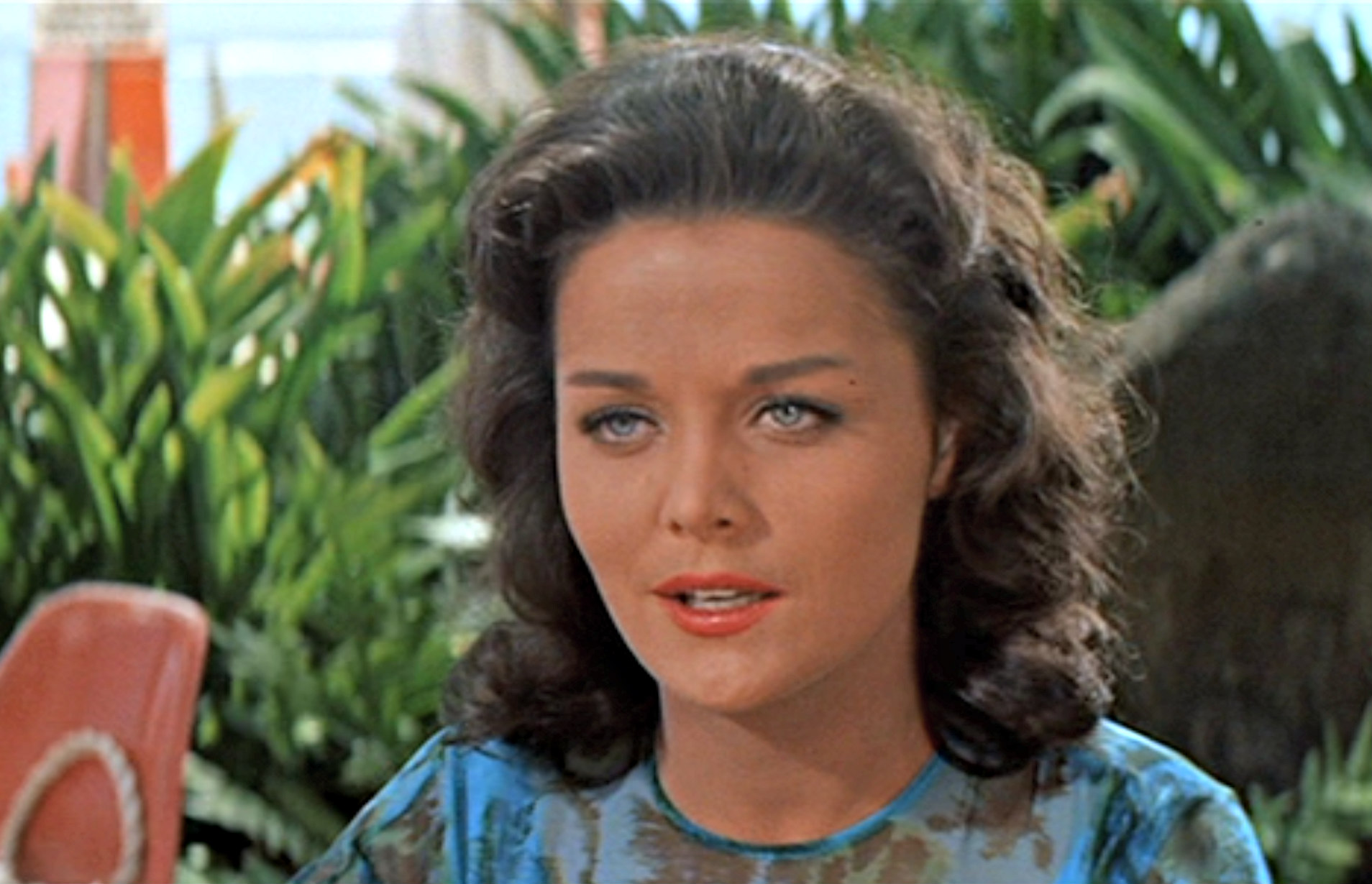
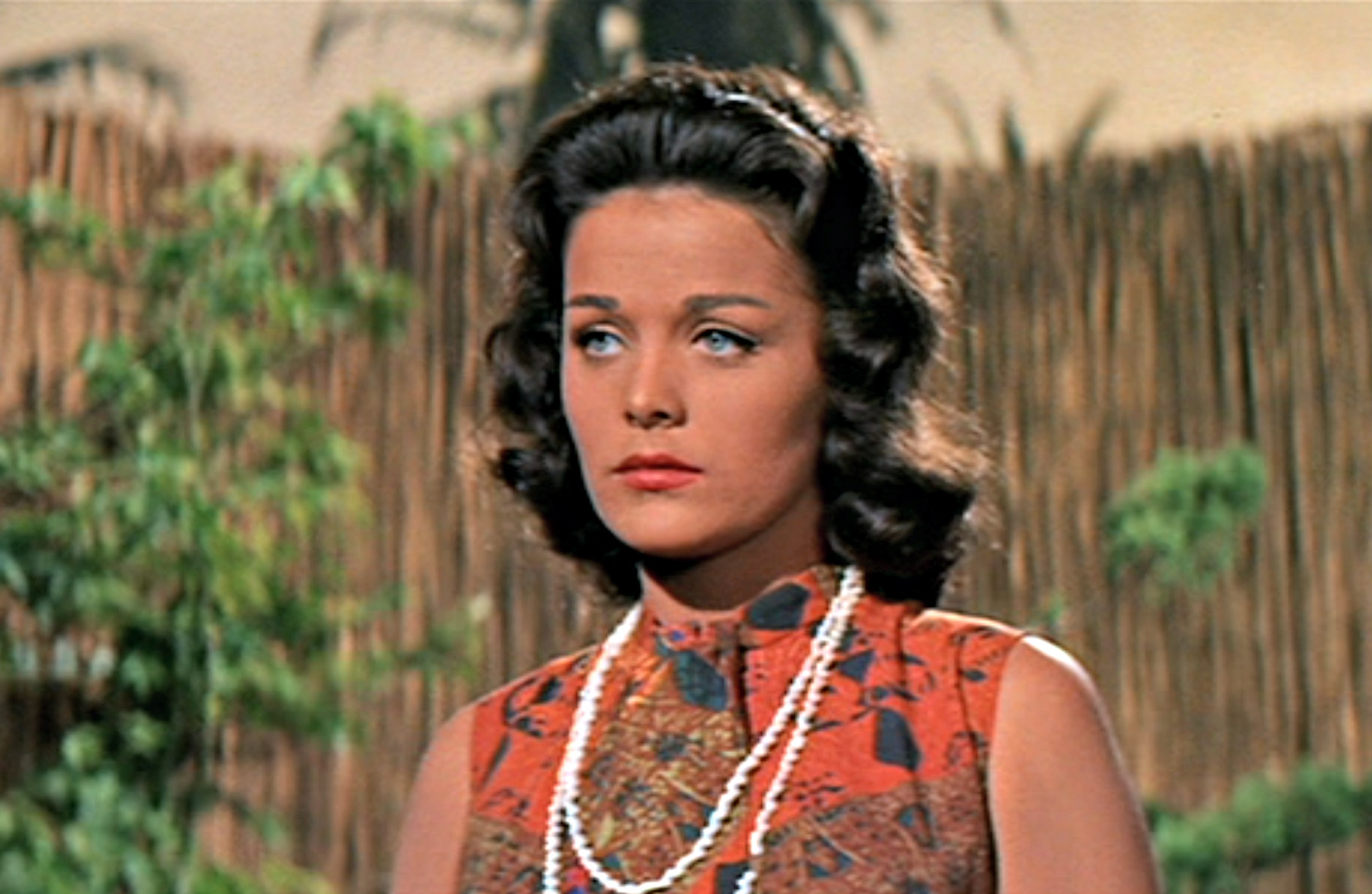
When my Old Hollywood friends are celebrating the many and varied accomplishments of venerable actress Angela Lansbury, I love to trot out the fact that she played King’s mama in Blue Hawaii, though she was born a little over 9 years before Presley. Beautiful Nancy Walters (1933-2009) plays Miss Prentice, the school teacher who doesn’t look like one. Born in Mount Plymouth, Florida, Walters was a model who turned to acting and had a small role in Bells Are Ringing with Dino. Then she married Lt. Paul Warren Payne, a US Navy jet pilot, in Las Vegas at the Little White Chapel at 10am on March 10, 1962. Shortly after Nancy appeared in 1966’s The Singing Nun with Debbie Reynolds, her husband was killed in Vietnam and she left Hollywood to become a minister. She later remarried and moved to Wyoming. In 2003, she began appearing at Elvis conventions and hoped to get back into acting. She said she hoped her agent could find her a role as someone’s aunt but it was not to be.
Roland Winters had a father born in Austria and a mother born in Germany – which made him an obvious choice to play Chinese detective Charlie Chan. Winters took over for Sidney Toler and played Charlie for six pictures. Winters is excellent as Chad’s dad in Blue Hawaii and was similarly compelling in his next picture, Follow That Dream also with Presley. Winters would make only one more feature. For the record, Roland Winters was 31 years older than King, the perfect age for playing his dad. Big, strapping John Archer is Anne’s dad; Anne Archer is the fruit of John’s marriage to gorgeous Marjorie Lord. The cornfed Nebraskan Archer was in White Heat (1949) and High Lonesome (1950) but he might be best remembered for his starring turn in George Pal’s Destination Moon, also from ’50. He worked in films only sporadically after our movie and focused more on television.


Recognizable Howard McNear appears in three Elvis movies. He had a prolific career in film and more so on television where he cemented his place in popular culture playing Floyd the barber on The Andy Griffith Show. As if Steve Brodie appears in two of my favourite films. Brodie – also in The Falcon’s Adventure (1946), one of my Top 25 – is a familiar face in films noir of the 1940s. Again he was obnoxious, again he was egged on by his wife and again King beat on him in Roustabout. He only made a half-dozen films after that.
The girls are played by pretty Pamela Austin (b. 1941) in her film debut as Sandy. Austin had gained fame by appearing in many commercials heralding “The Dodge Rebellion” and she would again dress up a King Movie when she appeared in Kissin’ Cousins. Austin is billed as “Kirk” here. Patsy is played by Darlene Tompkins (1940-2019) who was born Darlene Perfect – then her parents divorced and suddenly her family wasn’t. Darlene – who can also be seen briefly in Fun in Acapulco – quit movies to raise a family and then tried unsuccessfully to get back in. She did later do stunt work on Starsky & Hutch – cool. These two girls have but 17 feature film roles between them.
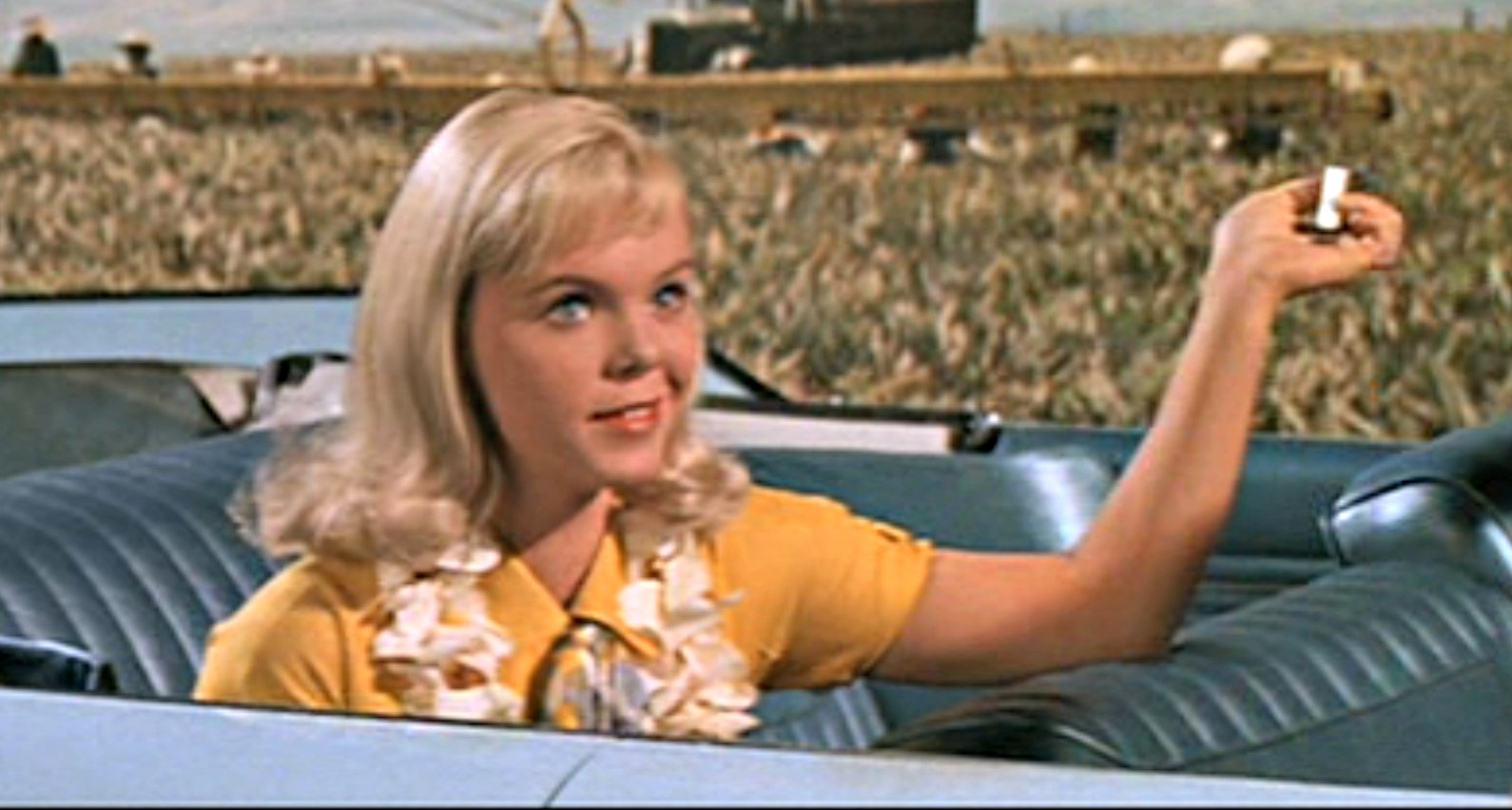
The bratty “duchess” is played ably by Jenny Maxwell, a distant relative of Marilyn Monroe’s. Poor Jenny deserves her own post. Not much for Hollywood, she married her second husband in 1970, when she was 29 and he was 50. Their marriage was a rocky one that lasted until 1981 when both Jenny Maxwell and her husband were shot and killed in a supposed botched robbery attempt in the lobby of their Beverly Hills condo. A book that came out in 2021, written by Maxwell’s cousin, claims that the LAPD had investigated the crime from the standpoint of Maxwell’s husband arranging to have her killed to facilitate divorce proceedings, an attempt that went wrong and resulted in her husband’s death, as well. Read more here.
Hilo Hattie appears in Blue Hawaii. It makes sense that this icon of the islands portrays Waihila, a woman apparently everyone knows and who welcomes Chad and an anonymous passenger to Hawaii. The legendary singer and comedian became known the world over and was an ambassador of aloha. She later loaned her name to an authentic brand of clothing; I own three of her Hawaiian shirts, two right from the Islands. The guy Waihila welcomes home is played by Robert M. “Lucky” Luck. Luck was born in Waco (IMDb claims Missouri) in 1918. He joined the Marines after Pearl Harbor and was stationed in Samoa where he became so proficient in the Samoan language that he was made an interpreter. Luck was so enamoured of the island lifestyle that he settled in Hawaii after the war. There, he became a popular disc jockey and the first on-air personality to speak in pidgin English on the air. Much like Hilo Hattie, he became a fixture of the islands. Though not much for film acting, he was called upon later to appear in Kona Coast (1963), shot in O’ahu, a 1973 episode of the Shelley Fabares series, The Little People, a show filmed in Hawaii, an episode of McCloud from the following year that was shot in Honolulu and Luck was used regularly in Hawaii Five-O. This hidden and unique personality also released a lighthearted vocal record on Mahalo Records in 1962 called Have Fun With Lucky Luck.
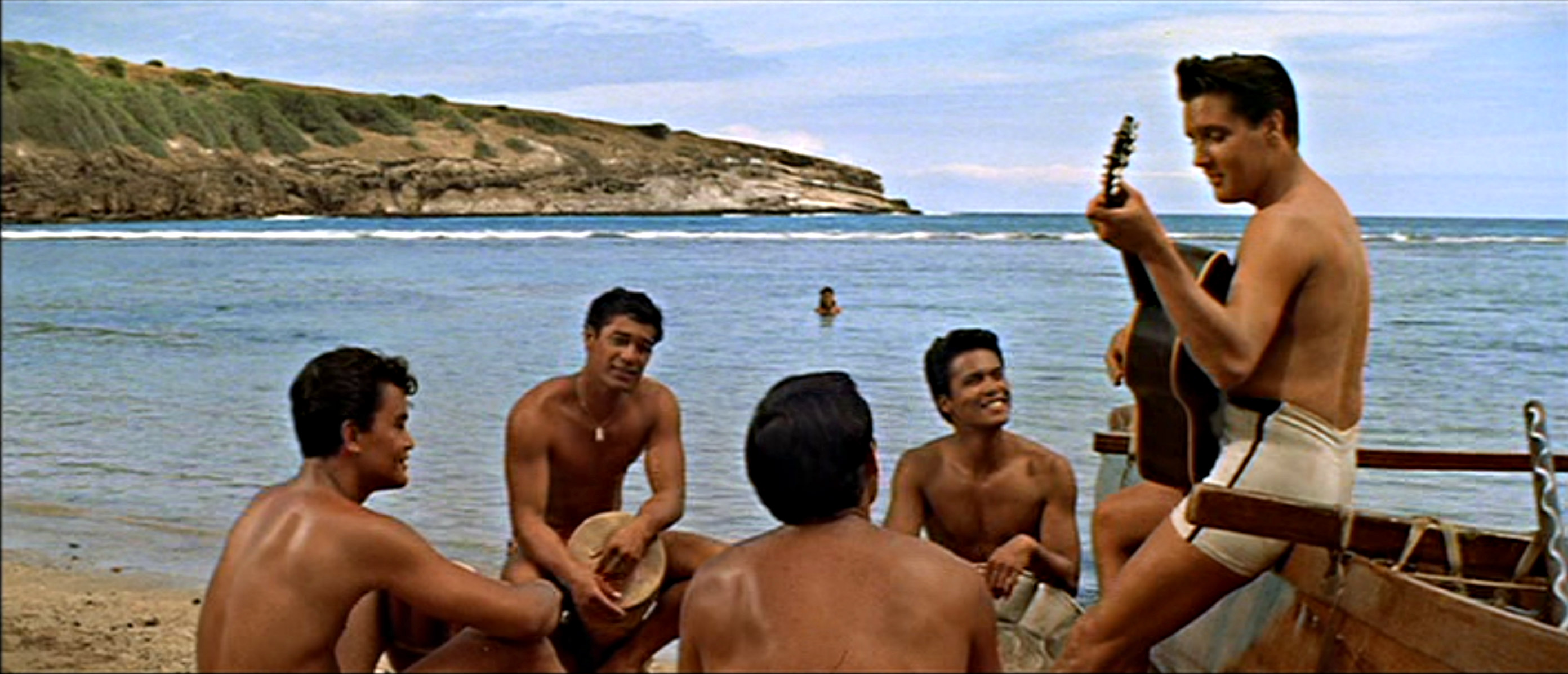
Wrapping up the cast, we have Lani Kai who also was a singer and was a regular on Adventures in Paradise starring my man, Gardner McKay and Frank Atienza who plays Ito and who can briefly be seen in Girls! Girls! Girls! – it took me years to spot him. Familiar face Richard Reeves blows harp and punches Steve Brodie in Blue Hawaii; he was often seen on television and shows up in five other King Movies.
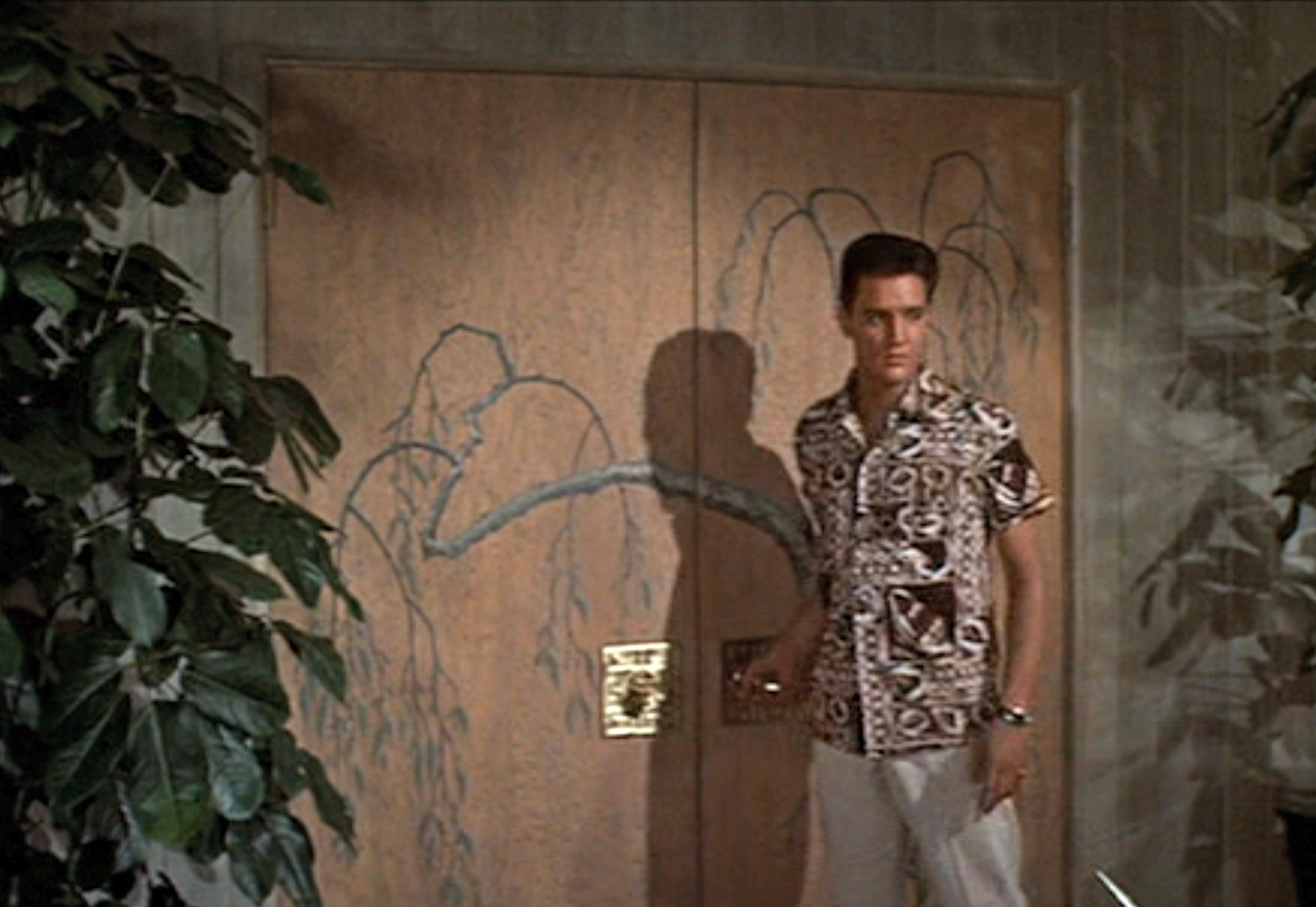
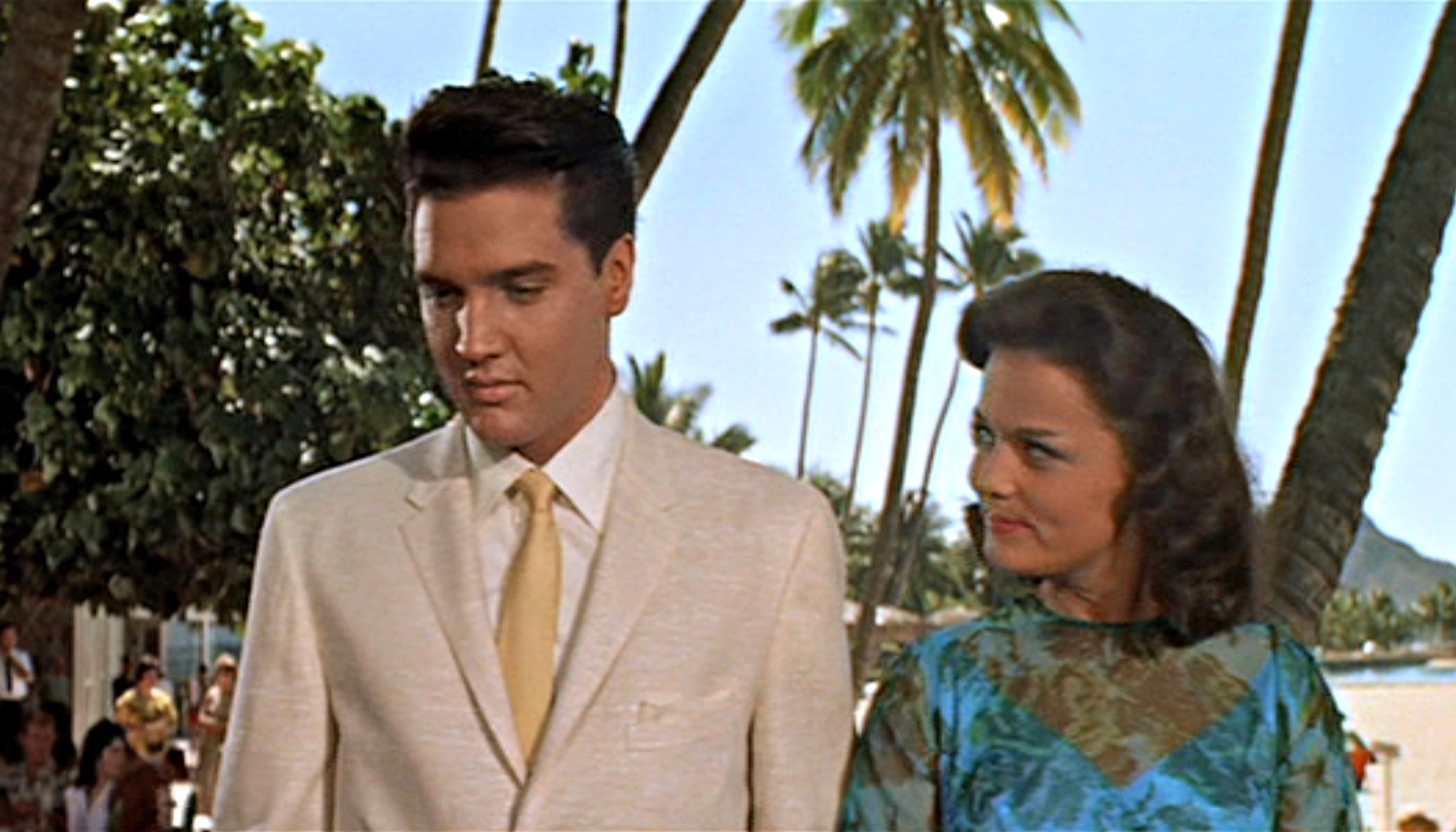
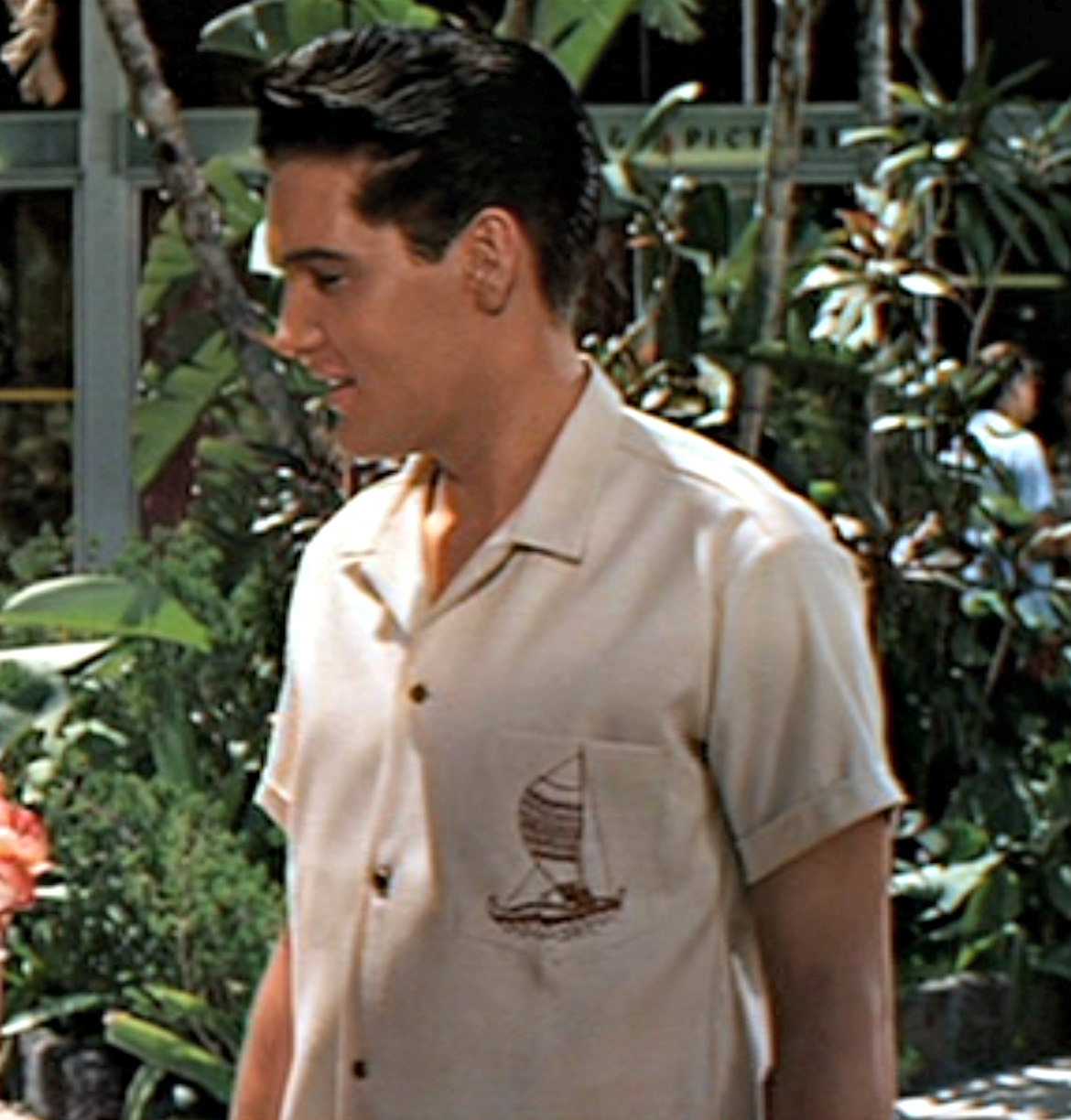
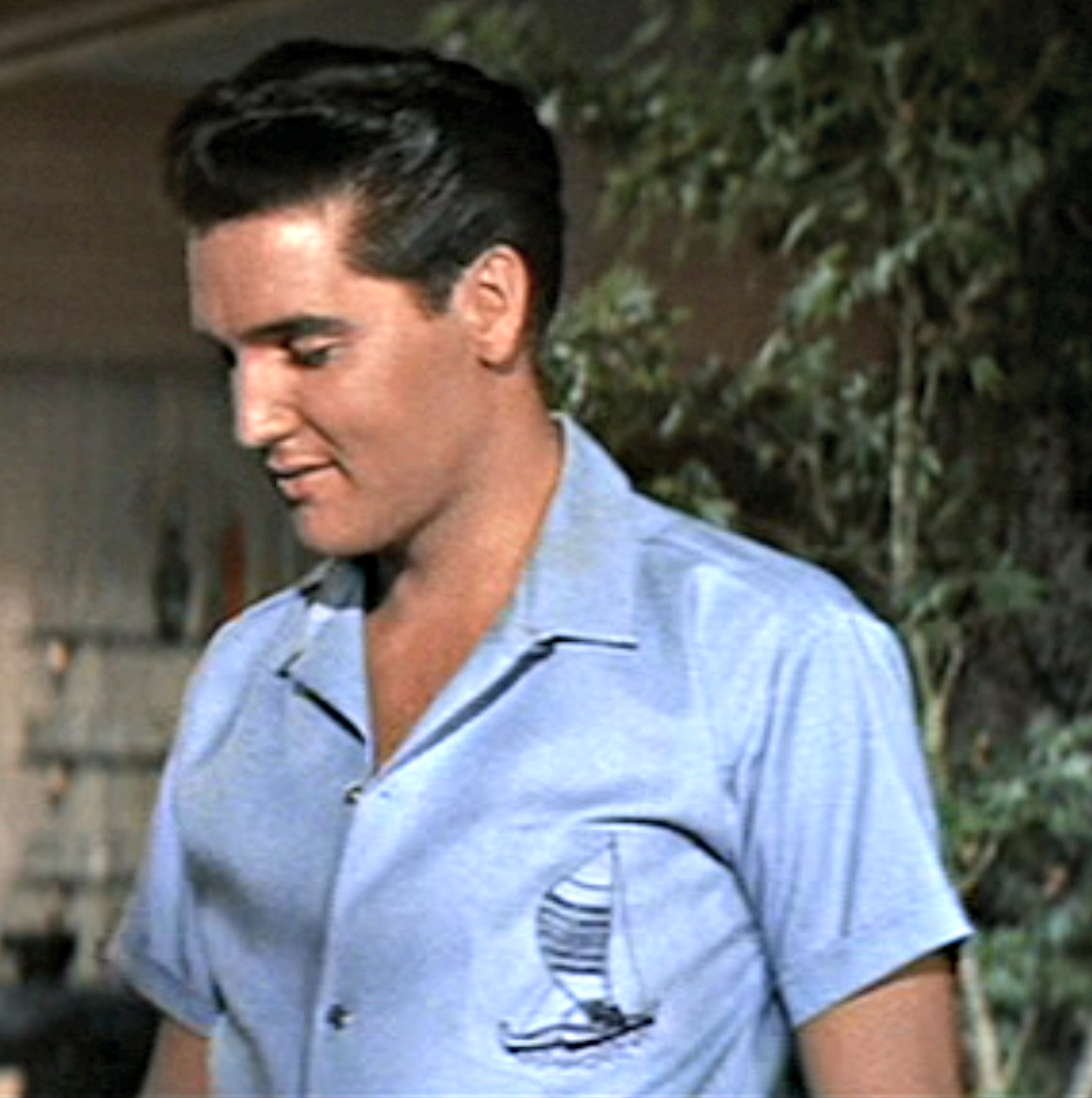
The Look: There may be five stages of Elvis Presley’s physical appearance. 1954 to 1959 could be the first stage followed by 1960 until, say, 1963. You could argue that he began to look like Hollywood Elvis with Kissin’ Cousins. Blue Hawaii was, of course, made during this second stage and King looks marvellous, as he did throughout this time. It is a tamer look than the previous era but dazzling still. And in this film we have the magnificent Edith Head to thank for some of the finest looks the King ever displayed. His Aloha/Hawaiian shirts are to die and how about the white jacket and yellow tie he wears to the shindig his mama throws? All. World. Throw in the blue and brown “work” shirts with the catamaran on the breast pocket and this is about as good as he’s ever looked. He has looked as good as this but never better.
King Moment: Dang, there are so many. The way he says “Wiki, wiki! To the beach!” or “The G.I. Bill of Rights says I get my old job back. This is my old job. Ha!” Most of his great moments come in the way he delivers a line as certainly one of his gifts as an actor was light comedy as seen here or in G.I. Blues, for example. For this film’s King Moment, I will go with his interaction with Ellie at the pineapple fields. And credit to Jenny for her part. She explains she is bored and – though just 17 – has seen much of life. Her parents have married and divorced multiple times and as a result she has “two mothers and three fathers” to which Chad responds, trying to be funny, “oh, you must come from a very rich family” and he chuckles. Actually, the back and forth between these two in this scene is excellent all the way through.
The Music: “Blue Hawaii”, “Almost Always True”, “Aloha ‘Oe”, “No More”, “Can’t Help Falling in Love”, “Rock-A-Hula Baby”, “Moonlight Swim”, “Ku-U-I-Po”, “Ito Eats”, “Slicin’ Sand”, “Hawaiian Sunset”, “Beach Boy Blues”, “Island of Love”, “Hawaiian Wedding Song”
And here is the rub. There are some lovely songs in Blue Hawaii, some outright classics and there are some typical examples of unfortunate “plot device songs”. Additionally, there are so many songs; 14 of them. If you can believe it, there was a 15th song that was cut. “Steppin’ Out of Line” was obviously to have been sung at the luau when Ellie “steps out of line” with Garvey. In the first 17 minutes of this film, Presley sings 4 songs. Four songs. Seventeen minutes. Bad, right? And yet…
“Blue Hawaii” is basically a standard that was written for Bing Crosby to sing in 1937’s Waikiki Wedding. It has been covered countless times and King’s version is divine. “Almost Always True” is pleasant and “Aloha ‘Oe” is traditional Hawaiian and then come two of the finest movie songs Presley ever recorded. “No More” is based on a popular Spanish song called “La Paloma” that was adapted for this film partly by Don Robertson, a legendary songwriter who would pen over a dozen songs for Elvis, most of them wonderful. The gentle “Can’t Help Falling in Love” was co-written by three men, two of them were Hugo Peretti and Luigi Creatore. Cousins Hugo & Luigi from New York were a prolific songwriting and production team that worked for RCA for many years. The song hit Number 2 on the US Pop charts and went to Number One on the nascent Adult Contemporary listings. But more than that it has become truly iconic and one of a dozen or so songs inextricably linked with Elvis Presley. He closed all of his shows in the 1970s with the song as a dedication to his audience. Subsequently, it was the last song he ever sang live in concert.
The energetic “Rock-A-Hula Baby” was co-written by Ben Weisman, the man who wrote more songs for Elvis Presley – 57 – than any other songwriter. But many were movie songs, so… Also helping write the song was Dolores Fuller. “Dee” would write other songs for the movies and she was also an actress and one-time girlfriend of Ed Wood. She’s in Glen or Glenda (1953) and was portrayed by Sarah Jessica Parker in Ed Wood (1994). Another wonderful song is “Moonlight Swim”, a song that had been released as a single by actor Anthony Perkins.
The second side of the album does not fare as well. There are three atmospheric tunes that celebrate island life and a couple of songs that are barely acceptable in the context of the screen story. At a luau, Elvis sings fully three songs. The finale comes with another venerable Hawaiian melody. Charles E. King was an educator and a prolific songwriter who, in 1926, wrote a love song called “Ke Kali Nei Aua” (Waiting There for Thee). Later it was re-written, becoming “Hawaiian Wedding Song”, a hit for Andy Williams and recorded by many others.
The album went to Number One in both the US and the UK. And it is delightful but typically for Elvis brief – 32 minutes, 14 songs – an average of 2 minutes and 17 seconds each. Songs like “Blue Hawaii” and “No More” are the epitome of the finest of the movie songs and no matter where or when you hear them, they can transport you right into this idyllic film world. But conversely, a song like “Beach Boy Blues” is sadly emblematic of the depths to which an artist the calibre of Elvis Presley could be plunged into. The soundtrack – like the film – is paradoxically provocative.
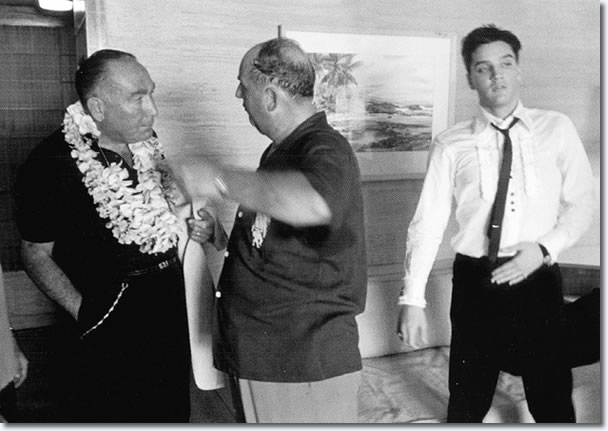
Meanwhile in Elvis World: It was the mad swirl, the first glowing blush of the Elvis in Hollywood machine. The pop songs he was recording were selling well and making the charts but it was the beginning of the time when making movies would take precedence. Elvis was dating – telling Anita Wood that the 15-year-old girl writing him from Germany was just a star-struck kid – and balancing concert appearances with shooting schedules. Col. Tom Parker was in his glory, in full wheeling-and-dealing mode.There was a concert for charity that would be staged in Hawaii to benefit the memorial being built to honour the men killed on the USS Arizona during the attack on Pearl Harbor. At the same time, Colonel was going head-to-head with Hal Wallis, renegotiating Presley’s movie contract to the tune of upwards of $200,000 per picture for the next five films. Simultaneously, Parker brokered a deal with MGM that would lock Elvis in to films until 1965 and one that would see him paid $500k per with an additional 50% of the profits. This landmark deal cemented Elvis Presley in the pantheon of Hollywood stars. The Presley profile had changed fully now from sinister, dangerous rock & roller to smiling through motion pictures made for the whole family.
Blue Hawaii remains Elvis’ most financially successful film. Though playing for only the last five weeks of 1961, it was that year’s 10th top-grossing film and it was 14th on that same list for the following year. The nature of the film’s action and the charm of Presley’s characterization – combined with the contract machinations instigated by Parker behind the scenes – started the cycle that would imprison Elvis Presley in similar films and in a public persona until at least the fall of 1967. Again, we see the paradox; wonderful film, terrible ramifications.
Blue Hawaii as a film needs little explanation, even for those few unfortunate souls who have never seen it. Suffice it to say that it is the very epitome of the “Elvis movie”. It was shot and set in a beautiful and tropical location, it featured many gorgeous women, it did not feature another male actor who would divert the audience’s attention, and it was a respectable, light comedy that included many songs. That it was immensely successful set the standard for all King Movies to come. I will say that it was also “typical” in that it contains certain cringe elements that us Elvis People constantly have to defend but at the same time it is packed with charm and is a hundred minutes of great classic movie fun, no worse than many other films of the time.
And there you have the nuts and bolts of Blue Hawaii, the business elements; the plot, the cast, the soundtrack, etc. But to be able to grasp fully the soaring majesty, the sheer beauty and the unbridled exaltation of the movie we need to take it slow and look at it carefully. What we’ve talked about here is important. But there is a buoyancy that comes when you watch this film. A joyous escapism that can only be appreciated if we take it scene by scene. Few films will get this treatment here at Vintage Leisure and only one – Diner – has ever received it before. But like Levinson’s classic about nothing, nearly every minute of Blue Hawaii deserves to be looked at closely to fully glean its glory. Stick around for Part Two, coming soon.
 SoulRide