
Many moons ago I issued a guide to various winter movies I enjoy watching through the snowy months of January and February. The basic idea being that – unless you’re the outdoors type – the first two months of the year offer little for us to do except hunker down in our homes and read books, listen to music and watch movies. When it comes to movies, I have often enjoyed watching others navigate the cold. It serves as reassuring in a way to see that it can be done; life goes on in the winter. A “winter movie” will show you what there is to do in the winter – without making you feel you have to get up and do it yourself. It will also show you things like winter fashion, the aprés ski scene and the glories of hiding out by the fire. I just like to see others put up with it like I have to.
So, here’s another batch of winter movies to be enjoyed during the first couple of months of the year. These films just “go good” with the snow and the cold outside your door. Maybe watching these movies – and looking forward to doing so year after year – will help take some of the sting out of winter. If you are a snowmobiler or live in a warm climate – well, you’ll just need this list a little less than the rest of us do.
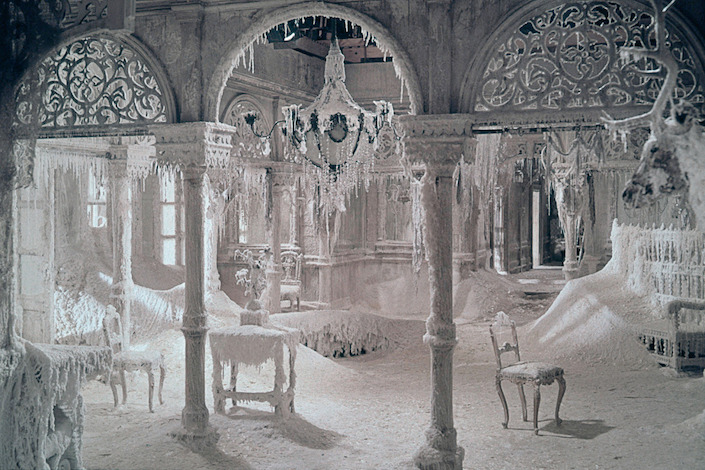
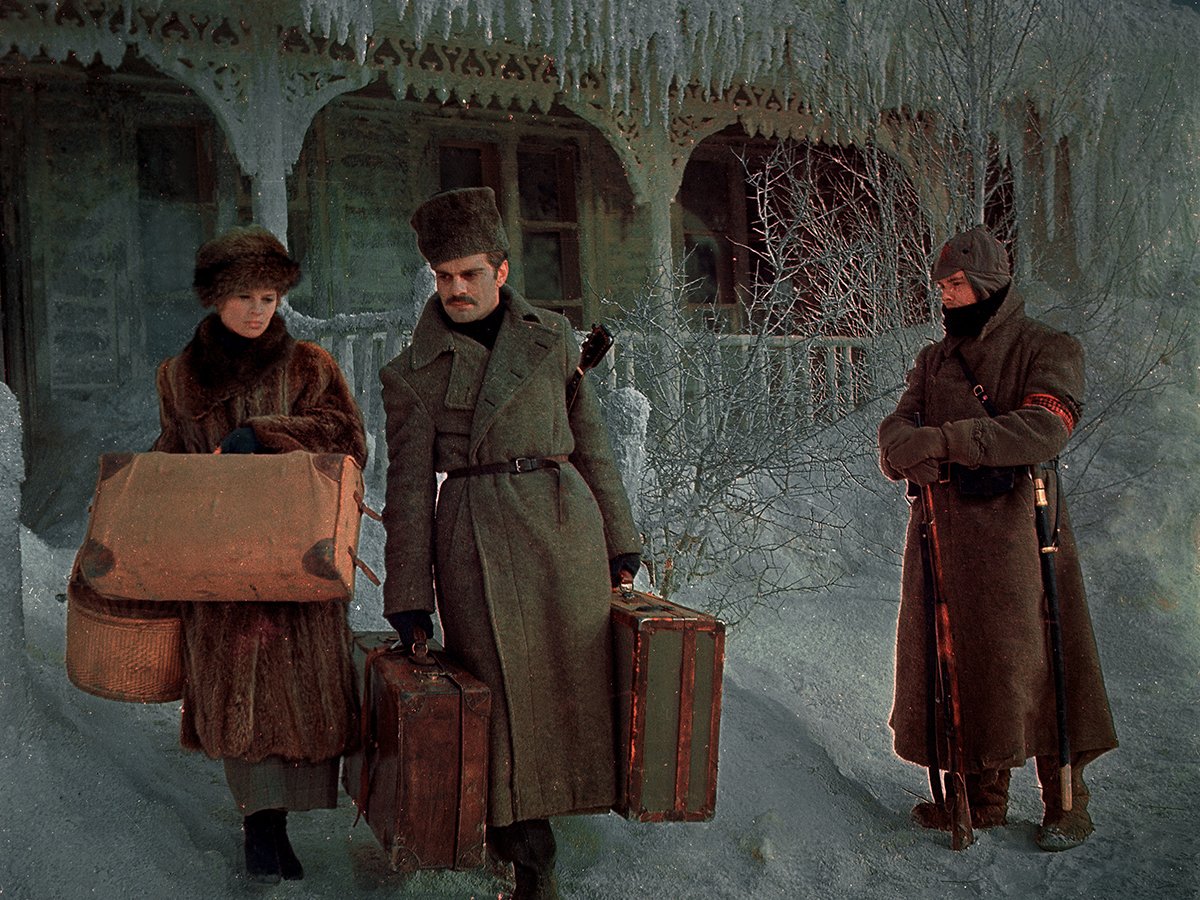
Doctor Zhivago (1965) // Perhaps the greatest of all winter movies. Master filmmaker David Lean had no doubt a battery of location scouts hard at work on this film shot around the world. Many places in Finland were utilized and the Lean company also traversed the Great White North. The long shots of the frozen house were taken in Morley Flats, Alberta. This area of Canada is marked by the existence of drumlins. These “ridges of unusual linearity” are “elongated hill(s) in the shape of an inverted spoon”. Dang, the things you learn. For the uninitiated, Doctor Zhivago takes place in Russia during World War I and that country’s revolution. For depictions of winter hardships and cold, you need look no further. The train ride across country is particularly compelling but winter finds its clearest expression here in depictions of the aforementioned “ice house”. Never mind the trickery and ingenuity of the crew and the Oscar-winning efforts of set designer John Box also disregard the fact that some winter scenes were achieved during summer in Spain; this is, indeed, winter at its most harrowing. Marble dust, cellophane, dripped wax, salicylic acid powder and soap flakes were used to achieve a chilling effect. Not only does the house look absolutely frozen into the landscape, the aspects of abandonment and isolation will also send a shiver to the viewer. There’s a certain horror evident here and watching this in the basement on a Sunday afternoon in January, one feels like they are living in the ice house while outside an unforgiving Siberian winter rages.
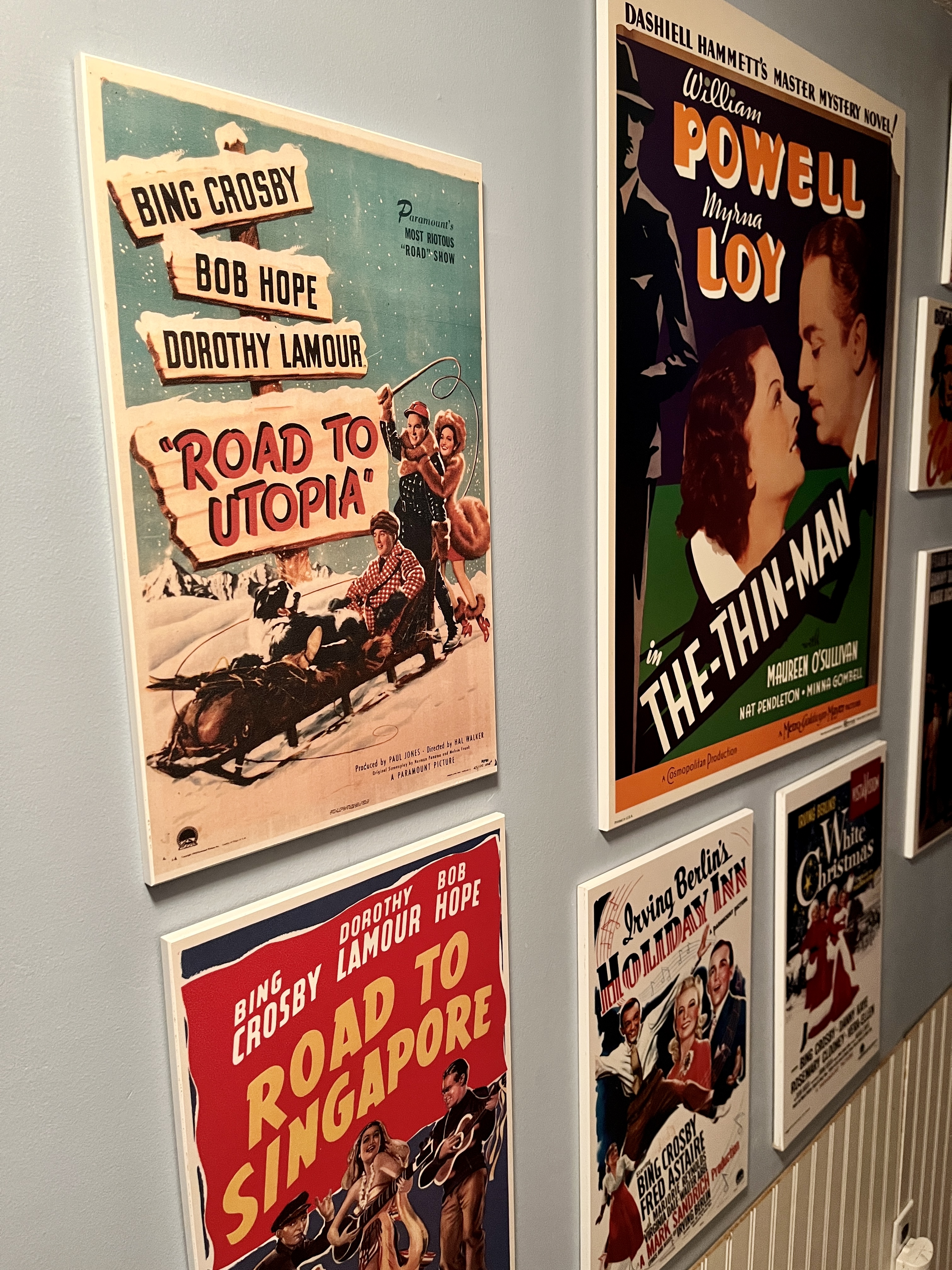
Road to Utopia (1946) // Somewhat on the other end of the spectrum from our previous film is this fourth “Road” picture starring Bing Crosby and Bob Hope, a wildly successful series from Paramount stretching from 1940 to 1962. Each of the films was basically a showcase for fun and gags and breaking the fourth wall as each satirized a different film “type”. Road to Utopia was the series’ take on the “Alaskan adventure” picture and this sees the boys forced to lam it to – you guessed it – Alaska after one of their many cons goes awry. There are songs and laughs, dog sleds and blizzards and a cheeky – and quite racy – ending. It’s also the origin of the oft-heard Johnny Burke/Jimmy Van Heusen tune “Personality”. Road to Utopia was filmed in early 1943 but not released until 1946. Co-star Dorothy Lamour has suggested that this was done so as not to distract the Academy from Bing’s serious turn as Father O’Malley in 1944’s Going My Way and it likely helped as Crosby took home the Oscar. This was all filmed on the Paramount lot but no matter – it’s another great film to watch while sprawled on the couch, dozing in and out of an afternoon nap.
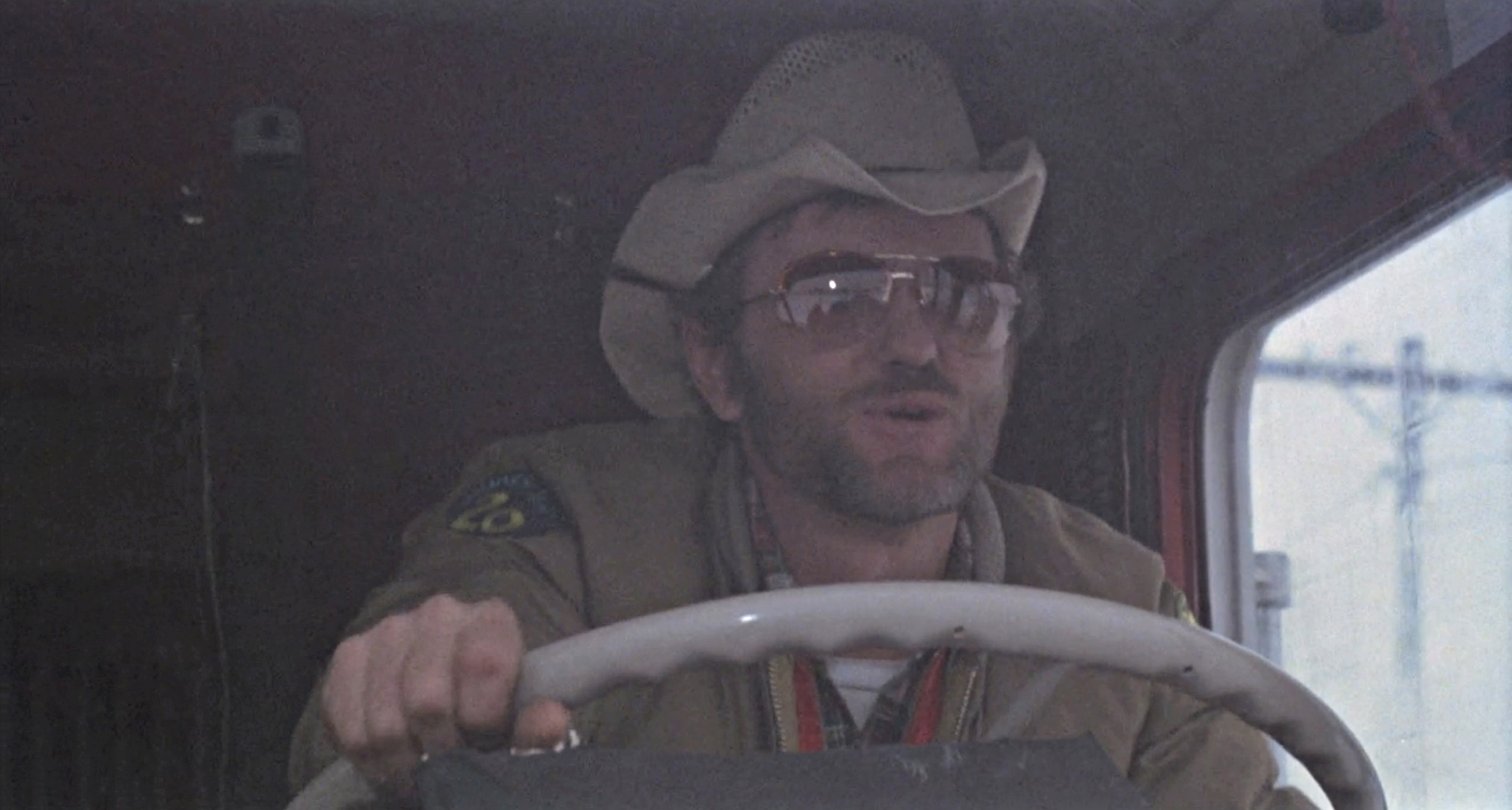
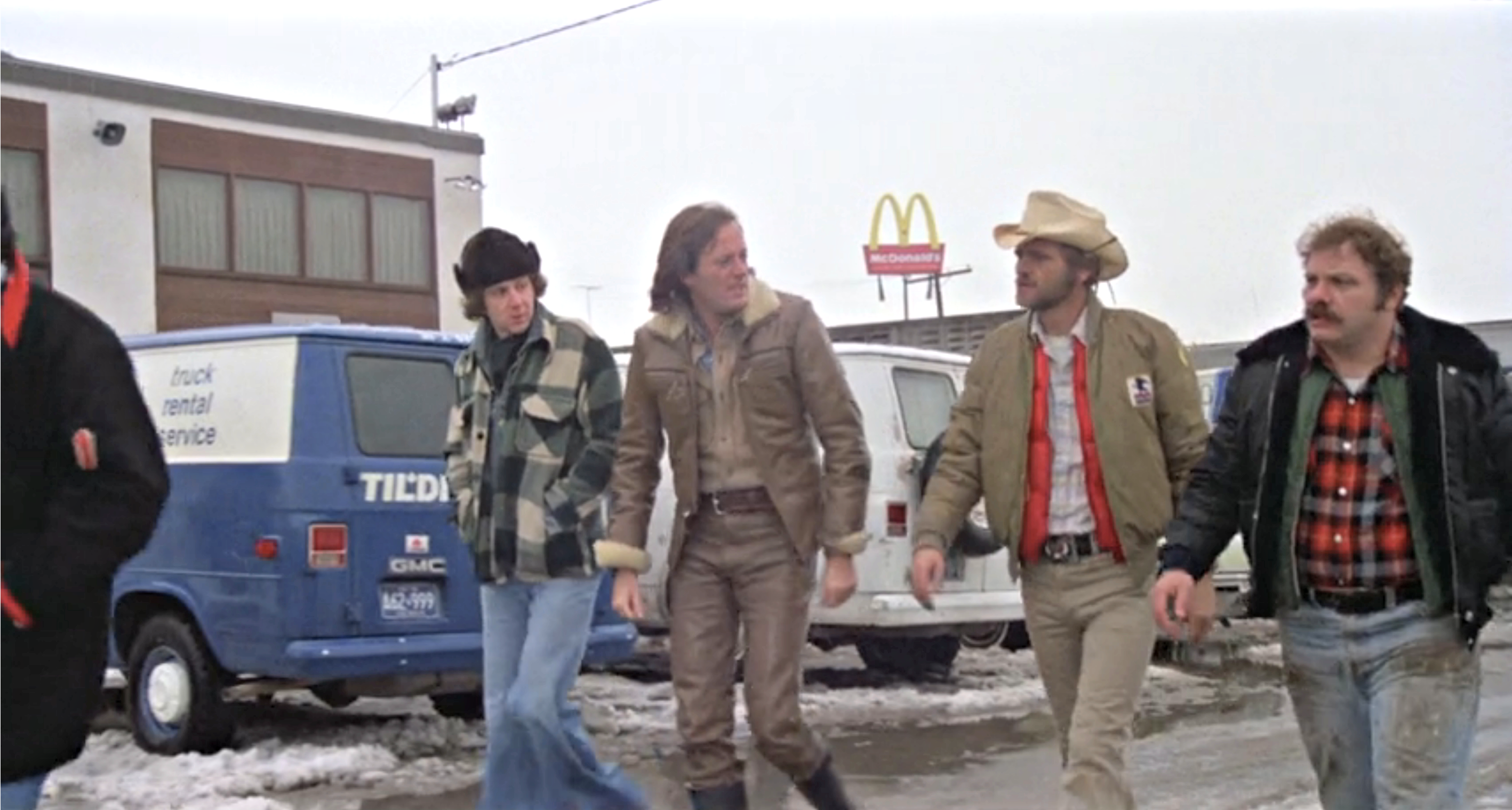
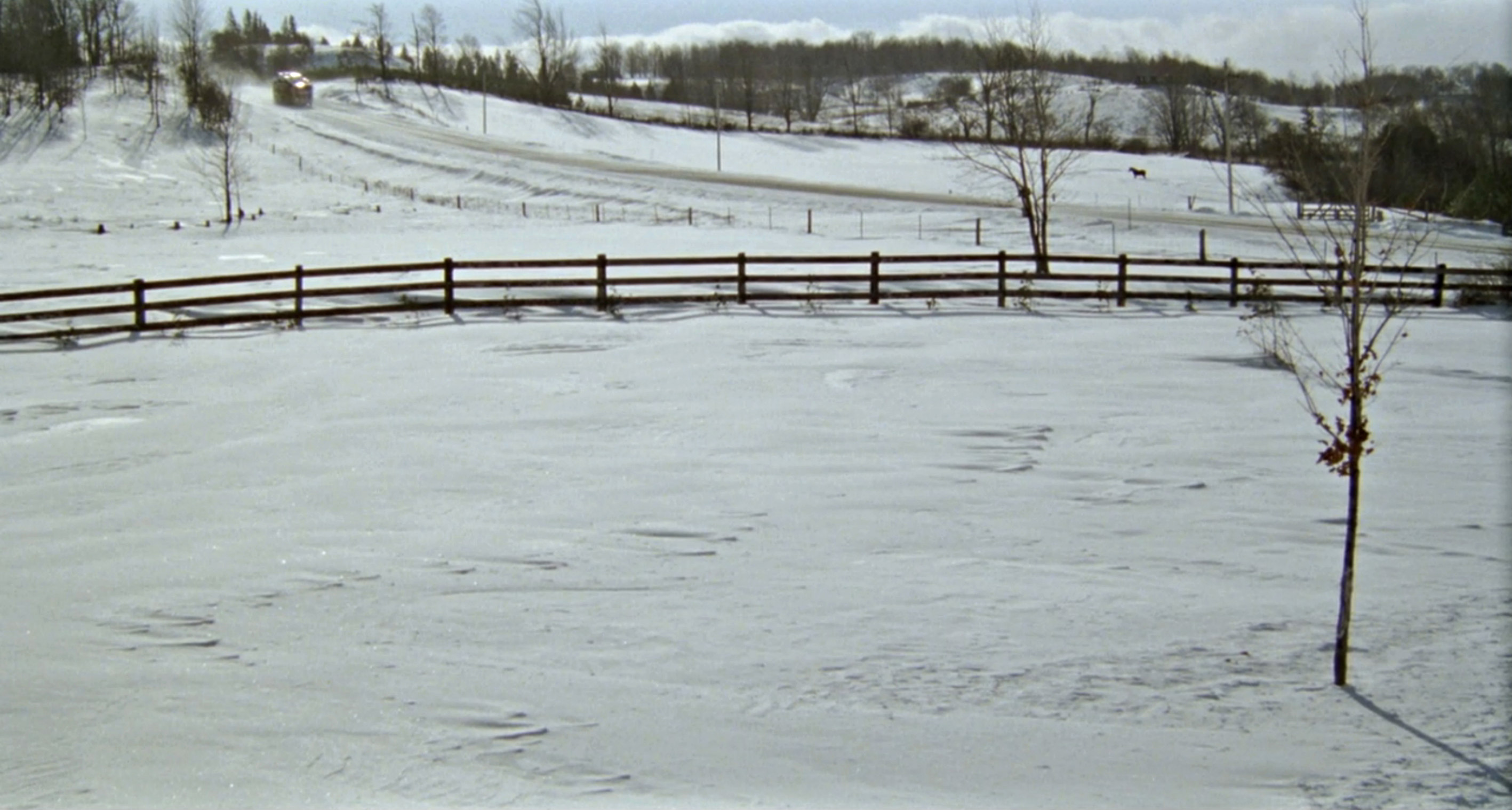
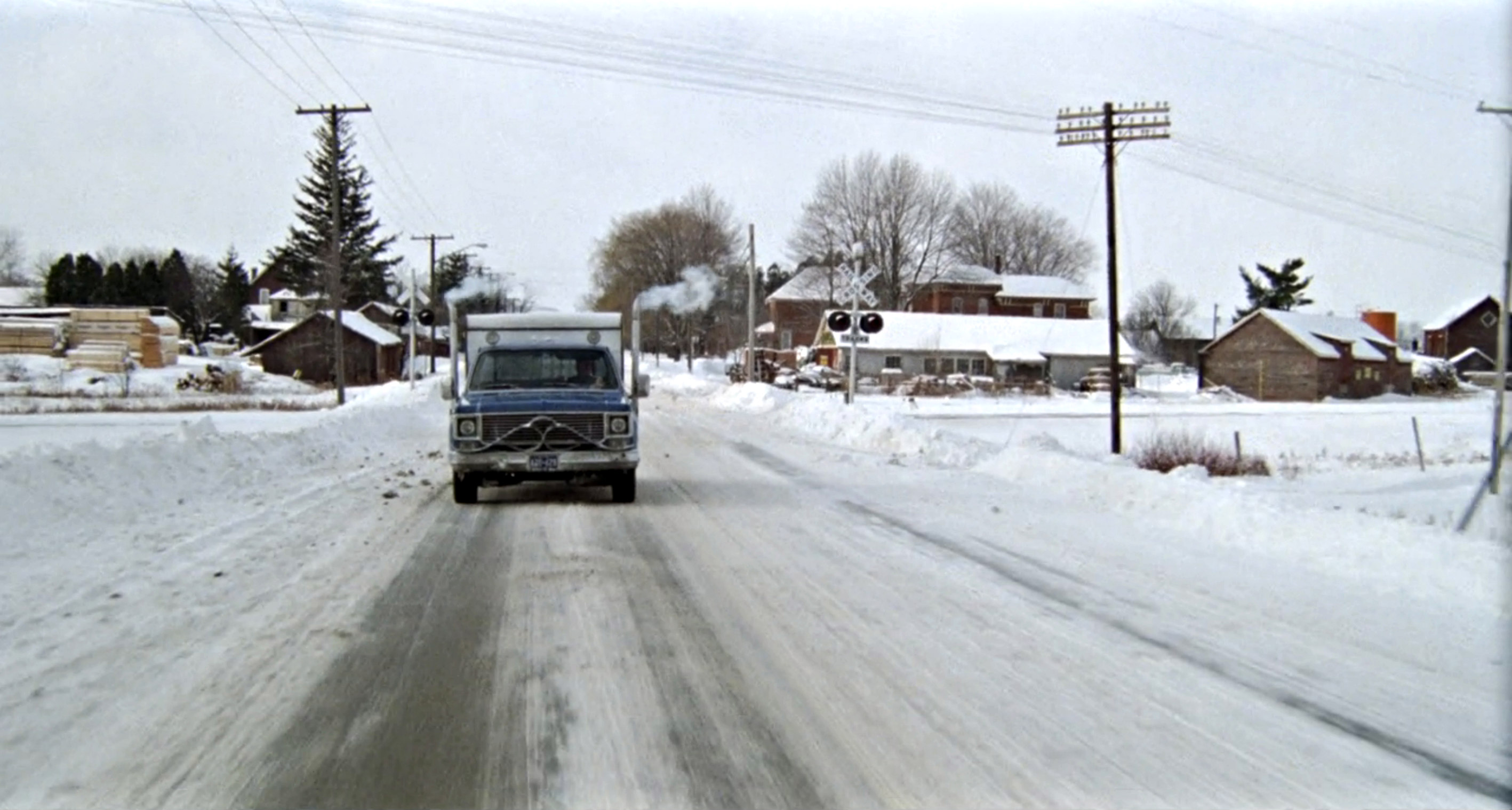
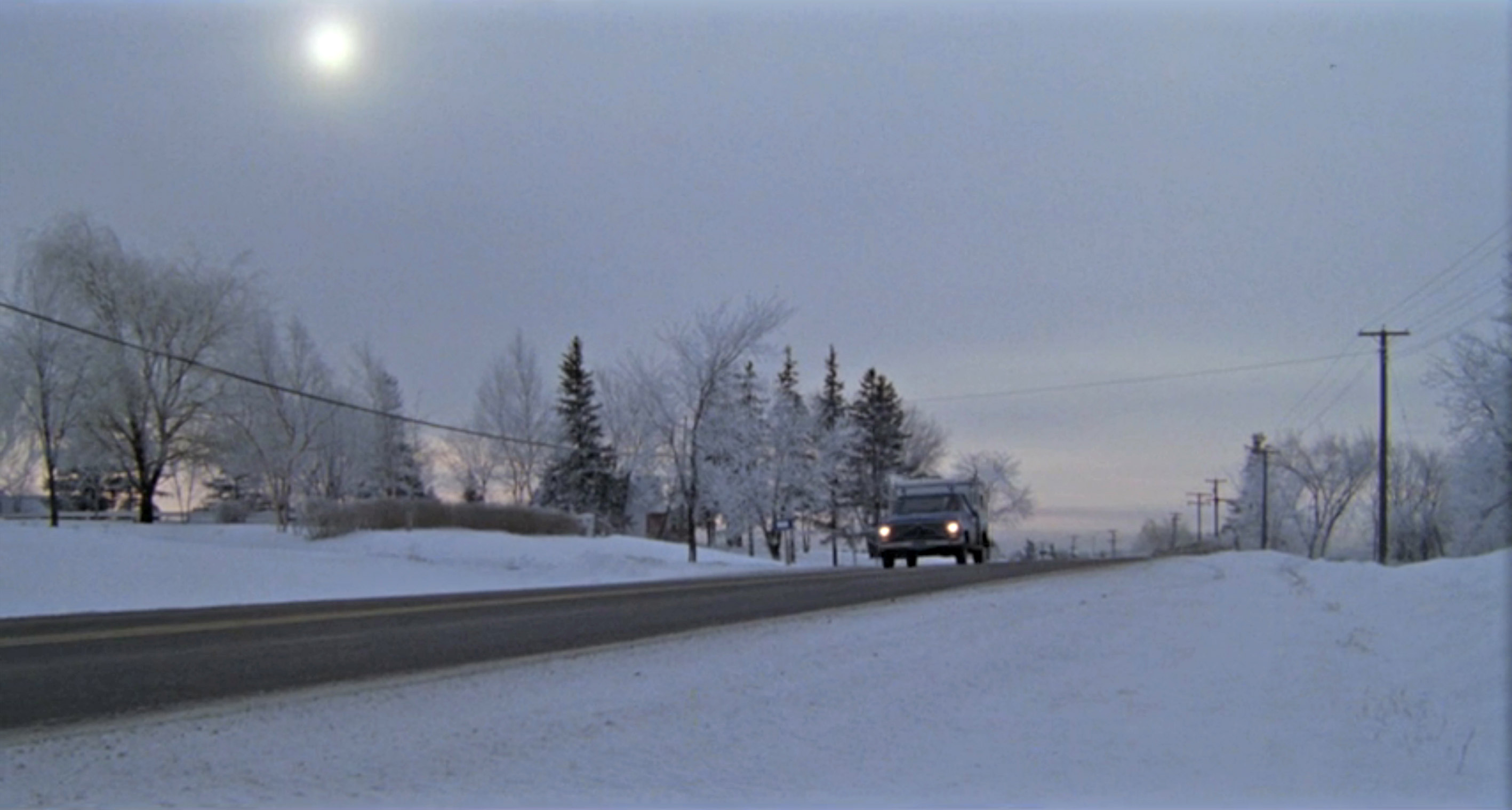
High-Ballin’ (1978) // This one I recognize. In this updated western, two “throttle jockeys” who independently own and operate their trucks run up against the local truck boss who wants a monopoly on all the transport in the area. And its the area that is so recognizable to me. All of the action was shot just south of me in and around Vaughan and Milton, Ontario. So when I’m watching these guys drive dangerously down country roads bordered by high snow banks and through countrysides covered in snow, I think of all the times my friends and I have done the exact same on virtually the same roads. Weird to see my man Jerry Reed up here in the tundra as he goes so much better with sultry Georgia afternoons but he does look right driving a semi and jawing on the radio here one year removed from Smokey and the Bandit. There is something to be said for the inherent realism in any winter movie and this is seen nowhere clearer than in the area of fashion. The people in these movies dress functionally as opposed to aesthetically; heck, its cold and you need to dress for warmth. And High-Ballin’ in particular ain’t no glossy Hollywood escapism – here’s some hard working boys facing a stiff challenge from nature as well as from humans. This film brought to you by American International.
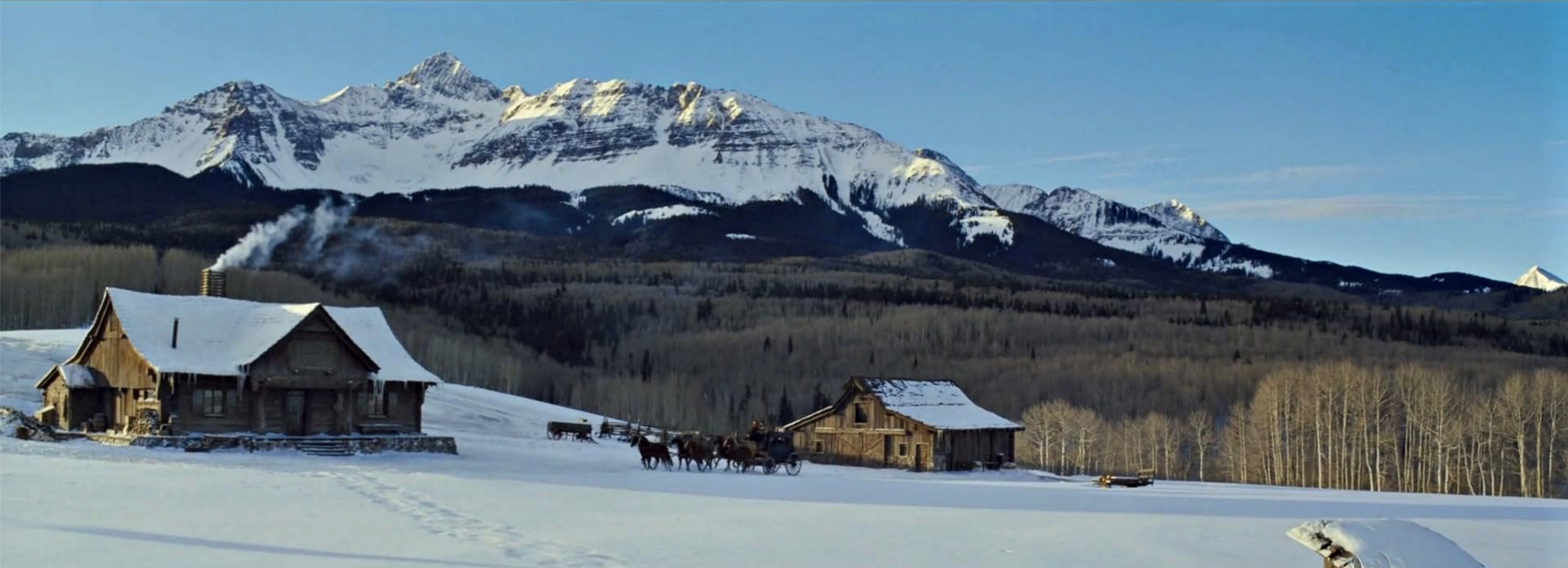
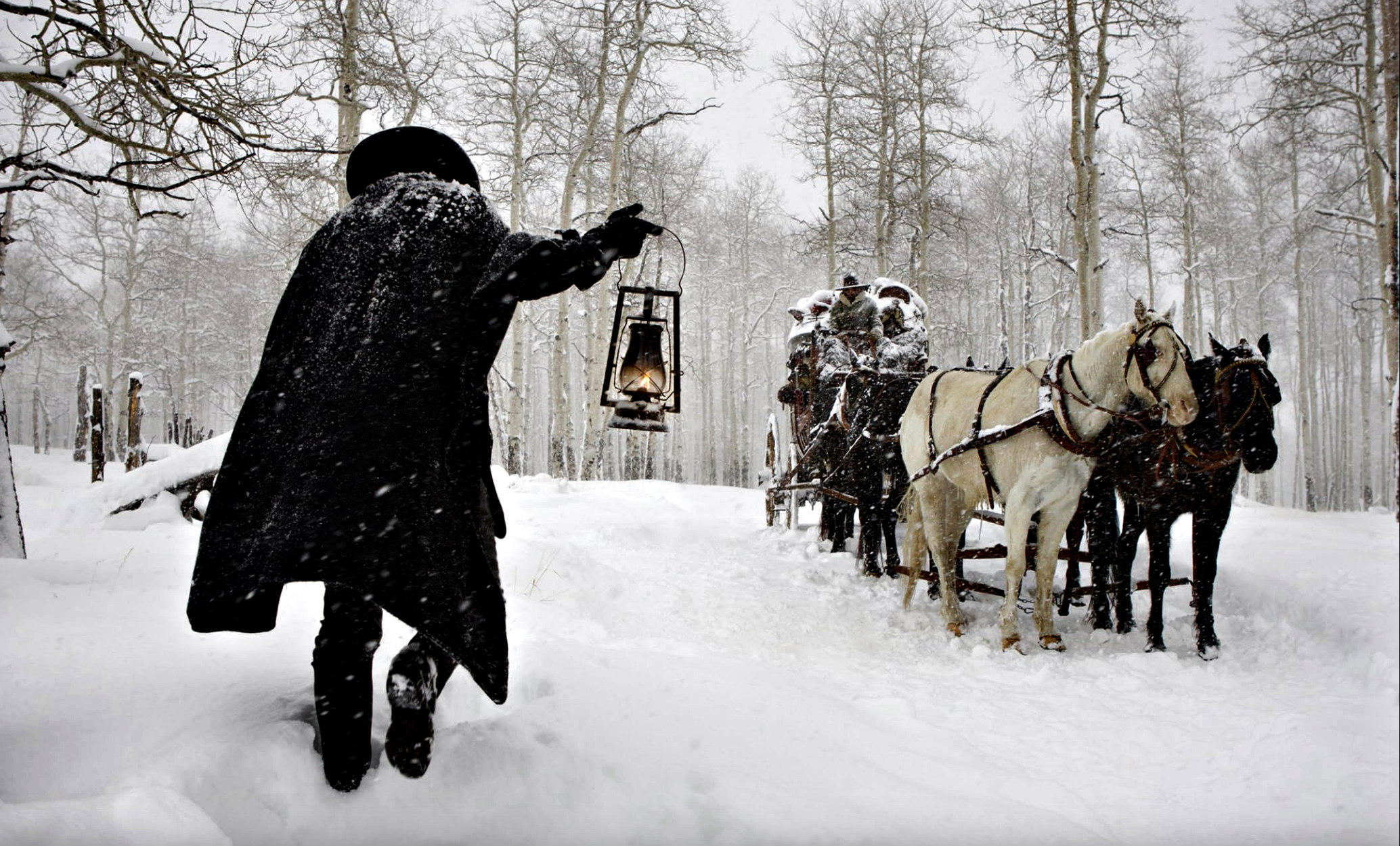
The Hateful Eight (2015) // Perhaps the grandest and most majestic winter western of them all. I suppose the action of Tarantino’s film could have taken place another time of year but the unbridled ferocity of the winter weather certainly matches the violence on screen. Maybe no other film better exemplifies the helplessness of humanity when conditions become this unrelentingly dire. When conceiving the tale for his 8th film, QT brought to mind the western television of his youth and the tendency of various shows to occasionally present an episode depicting its heroes taken hostage and confined in claustrophobic conditions with others of dubious character. So, he created a story with “no heroes, no Michael Landons. Just a bunch of nefarious guys…together in a room with a blizzard outside, give them guns and see what happens”.
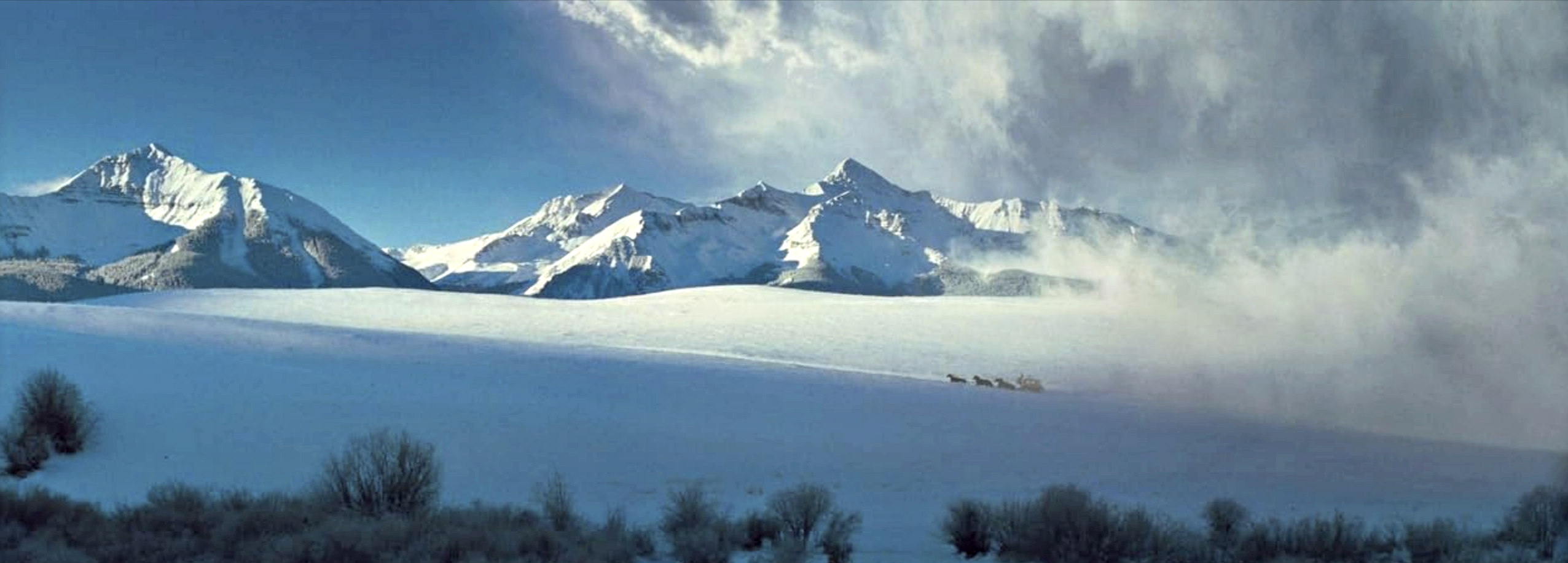
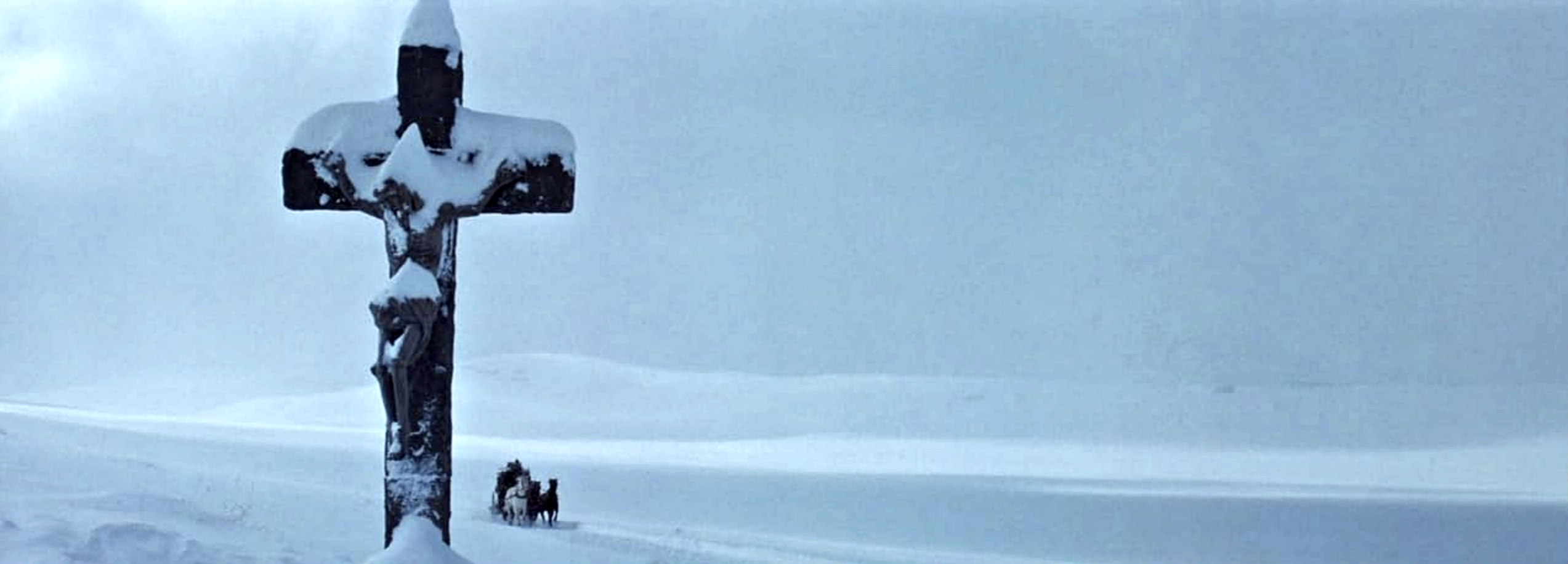
What happens is photographed by legendary cinematographer Robert Richardson in a massively magnificent widescreen – “Ultra Panavision 70” – format reminiscent of the epics of the 50s and 60s. Tarantino and Richardson present lyrical images and the location certainly plays its part. Here we’re treated to amazing scenes of Telluride and Wilson Mesa in the San Miguel Mountains of Colorado. Shooting partially took place on the Schmid Family Ranch, a centennial farm that has been in operation since the family homesteaded in 1882. Today, you can hold your corporate event or wedding there or book a hunting package and a cabin. Check them out here. Adding to the awe-inspiring atmosphere is the stunning score by the maestro Ennio Morricone who helps to create almost unbearable tension as the players stare each other down while sharing pages of dialogue resulting in quiet moments broken by explosive action. Morricone’s music bears appropriate titles like “Snow”, “White Hell” and “Blood and Snow” and is as of 2025 Tarantino’s only film to have a score. Working with Quentin has marked comebacks and high points for many including Il Maestro – Morricone won his only competitive Oscar for his score for this film. Few other narrative films contain such stunningly majestic shots of winter landscapes. On a smaller scale, watch for the scenes in the stable, the way the light hits the crystals of snow floating through the air. What else you see, though, like in any good western is a cabin shelter from the storm, a lot of warm clothes, coffee, stew and a raging fire in a massive stone fireplace. Well, ol’ Mary Todd is calling so I guess it must be time for bed.
Misery (1990) // Rob Reiner was on a roll in 1990. Between ’86 and ’92, Meathead directed, in sequence, Stand By Me, The Princess Bride, When Harry Met Sally…, Misery and A Few Good Men. Kathy Bates won an Oscar for Misery, Reiner’s second Stephen King adaptation after Stand By Me (from the novella “The Body” in King’s Different Seasons, a collection that also contained “Rita Hayworth and Shawshank Redemption”) and this takes place in Silver Creek, Colorado but the exteriors were shot in February in Genoa, Nevada, a town who’s population in 2020 numbered just north of 1,300. In the early scenes, James Caan’s author Paul Sheldon leaves a lodge after finishing his latest novel just as a blizzard hits. Watching Sheldon navigate his 1965 Mustang through the dangerous conditions while Jr. Walker blasts on the radio will bring to mind all the sketchy morning commutes you’ve lived through. Conditions worsen and Paul panics, committing the driving sin most Canadians know not to make; he locks up the brakes. This sends him off the road in a horrific crash that results in compound fractures of both legs. His number one fan, Annie Wilkes (Bates) pulls him out of the wreck and keeps him prisoner in her home. In an unsettling scene that’s almost as hard to watch as Paul’s winter drive, Annie “hobbles” him so he won’t be able to leave. Tense film balanced by lots of pleasant shots of Annie’s home as the gentle snow falls and of the snowy streets of Genoa posing as Silver Creek.
Pale Rider (1985) // The “last” western before the last one. Legendary Clint Eastwood gave the world The Outlaw Josey Wales and then waited nine years to revisit the genre with Pale Rider. He would wait another 7 years before he was ready to get back in the saddle with one of his crowning achievements, Unforgiven. Pale Rider may be the “least” of these three oaters but it has much to offer. It bears a classic plot type, this one concerning a mysterious “preacher” riding into a settlement and helping the simple prospectors fight the powerful local mining baron.
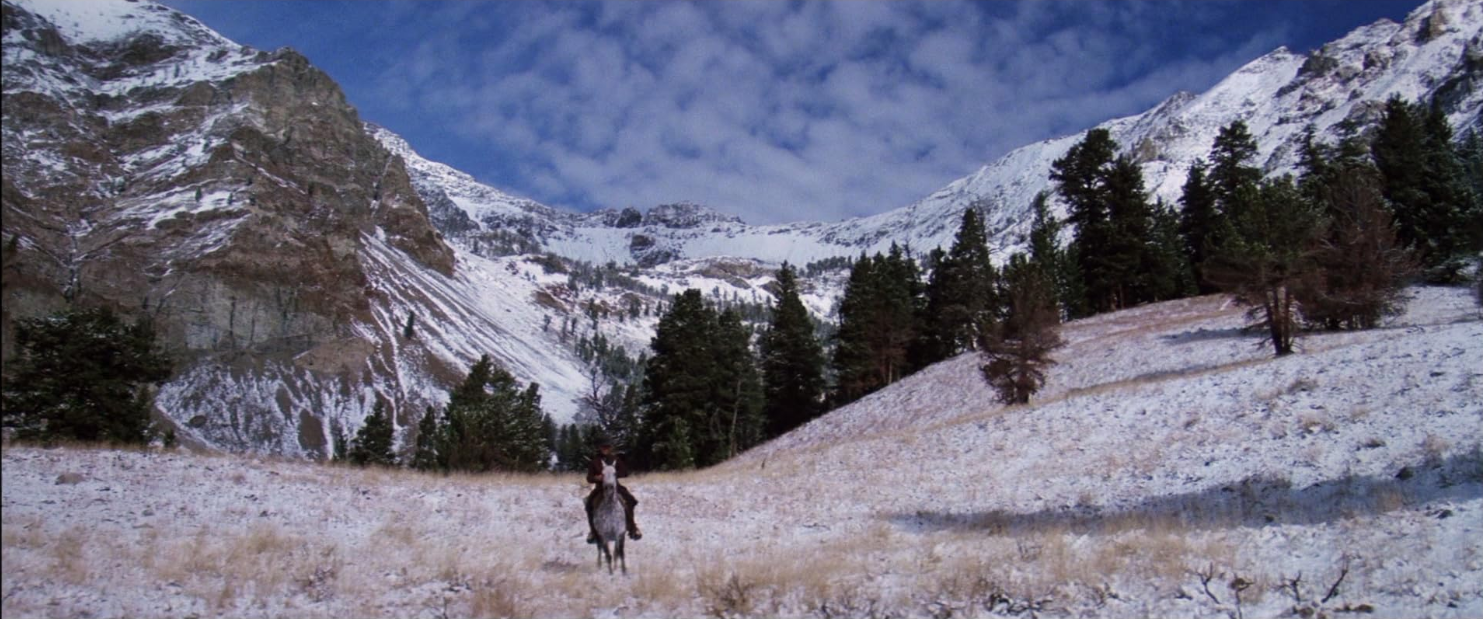
Director Eastwood took his trusty cinematographer Bruce Surtees and the rest of the team to Idaho and to Sawtooth National Recreation Area and Sun Valley to capture the majestic mountain vistas in the area. You get that thing you love from a western from Clint or from anyone – the joy of watching a simple, quiet man with power in reserve call on skills from his past to help out innocent victims. And this film in particular includes a stirring final showdown that takes place in the town’s muddy streets. Film noir veteran John Russell plays a character as compelling as Clint’s preacher; the icy leader of a gang of cutthroats – including creepy Billy Drago – in long rider coats who the mining baron hires to clean house. Eastwood gives us a satisfying finale before riding off to the snowy mountains with young Megan yelling after him “Shane!” — er, I mean “Preacher! Come back!” Great movie.
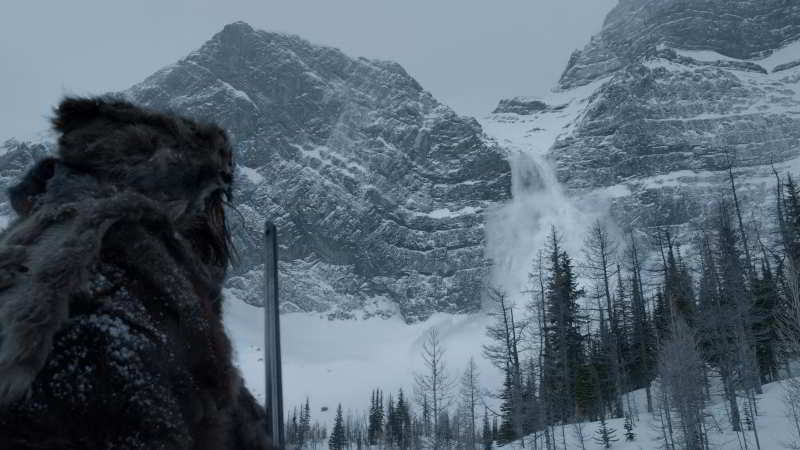
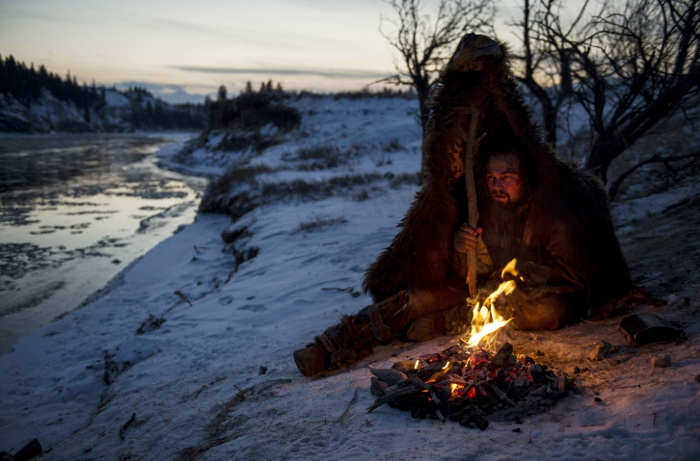
The Revenant (2015) // Savage; “fierce, violent and uncontrolled; aggressively hostile, very great and severe, wild-looking and inhospitable” This film is perhaps the most savage movie ever made. This epic western from filmmaker Alejandro G. Iñárritu goes where vintage westerns dared not. A realistic telling of 19th-century fur traders in the present-day Dakotas, the movie depicts the most brutal of conditions and the frontiersmen who navigated them. The viewer is subjected to trips through frigid cold waters and blizzard-shrouded mountains while also being shown the relative comfort of shelters lit with fires ignited in the very belly of the earth. The photography, the camera movement and the natural lighting make for a visually stunning presentation. Leonardo DiCaprio won his Oscar – in part for what he endured during shooting – and he and mush-mouthed Tom Hardy embody the sturdy stock that could survive such ferocious conditions. Shot extensively through Canada in British Columbia and through oft-used Alberta featuring majestic and aptly-named Fortress Mountain and the equally breathtaking Kananaskis mountain range. The finale was shot in Argentina. The bear attack? Forget it; you’ll be writhing in your seat. The worst winter you’ve suffered through – times ten – cannot compare to what’s on display here. Good to watch while you curl up in your blankets like DiCap does in the hollowed-out horse.
Slap Shot (1977) / The Rocket (2005) // It has long been a conundrum for me. Saturday night is prime real estate when it comes to watching movies. It’s been a long week and often Friday night finds you spent, running on fumes. Sunday you can’t help but be aware of Monday morning looming like a dread beast. But Saturday you’ve had the whole day to yourself and it is easy to slide into a Movie Night come 7 or 8:00. A problem, though, that Canadians face in winter is that Saturdays are also time for the venerable institution Hockey Night in Canada. So, what do you do? One answer is to watch hockey and then power through a late show starting at 10:00. Another option is to put in a movie about hockey.
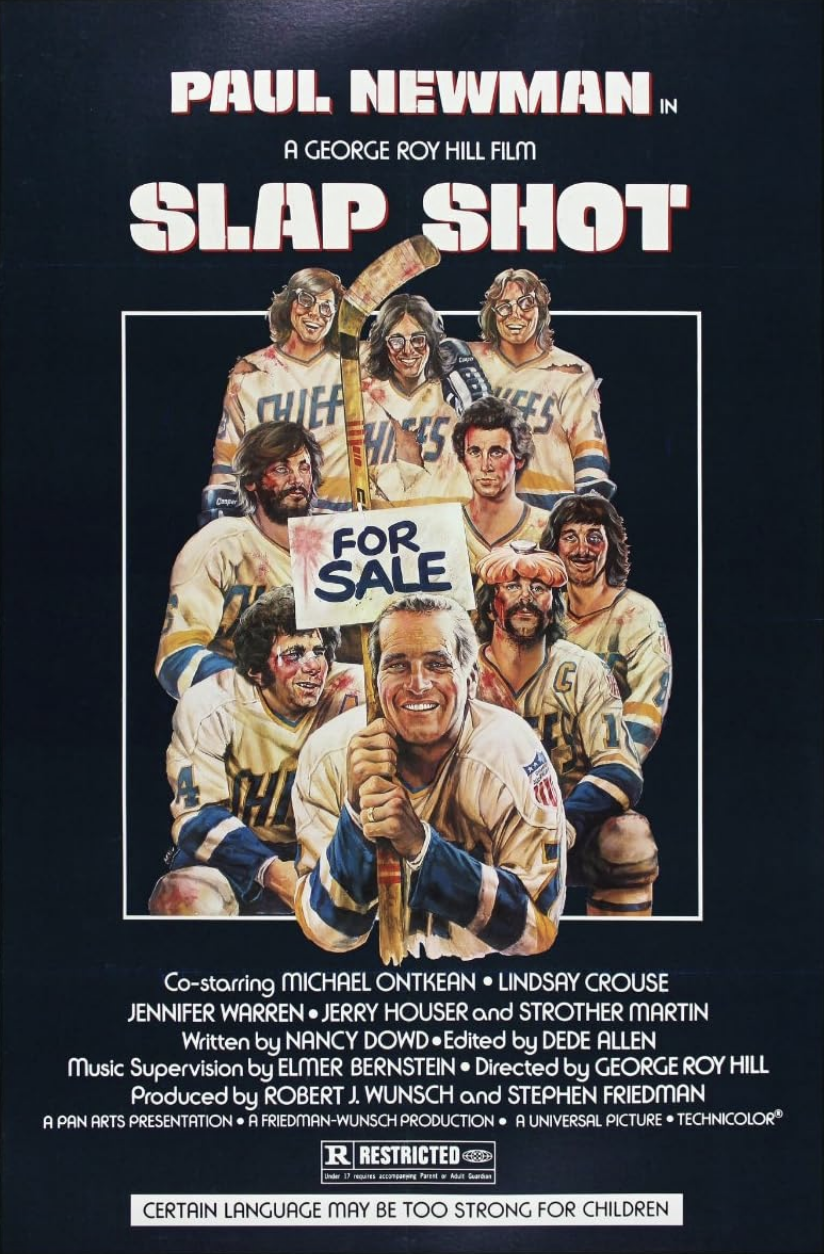
Everybody knows of Paul Newman’s iconic hockey film Slap Shot from ’77. Set and filmed in Pennsylvania, Newman, director George Roy Hill and screenwriter Nancy Dowd give a pretty accurate depiction of the hinterlands of minor league hockey at the time and will put some in mind of the old World Hockey Association, the NHL’s bold short-lived rival. But what’s hockey talk without a little Canadian content? Sneaky good is The Rocket, a biopic of venerable Canadian and Francophone legend Maurice “The Rocket” Richard. Few can rival the Rocket’s contributions to the game in the 1950s but, thing is, there is much more going on with him than his ferocity on the ice and his booming slap shot.
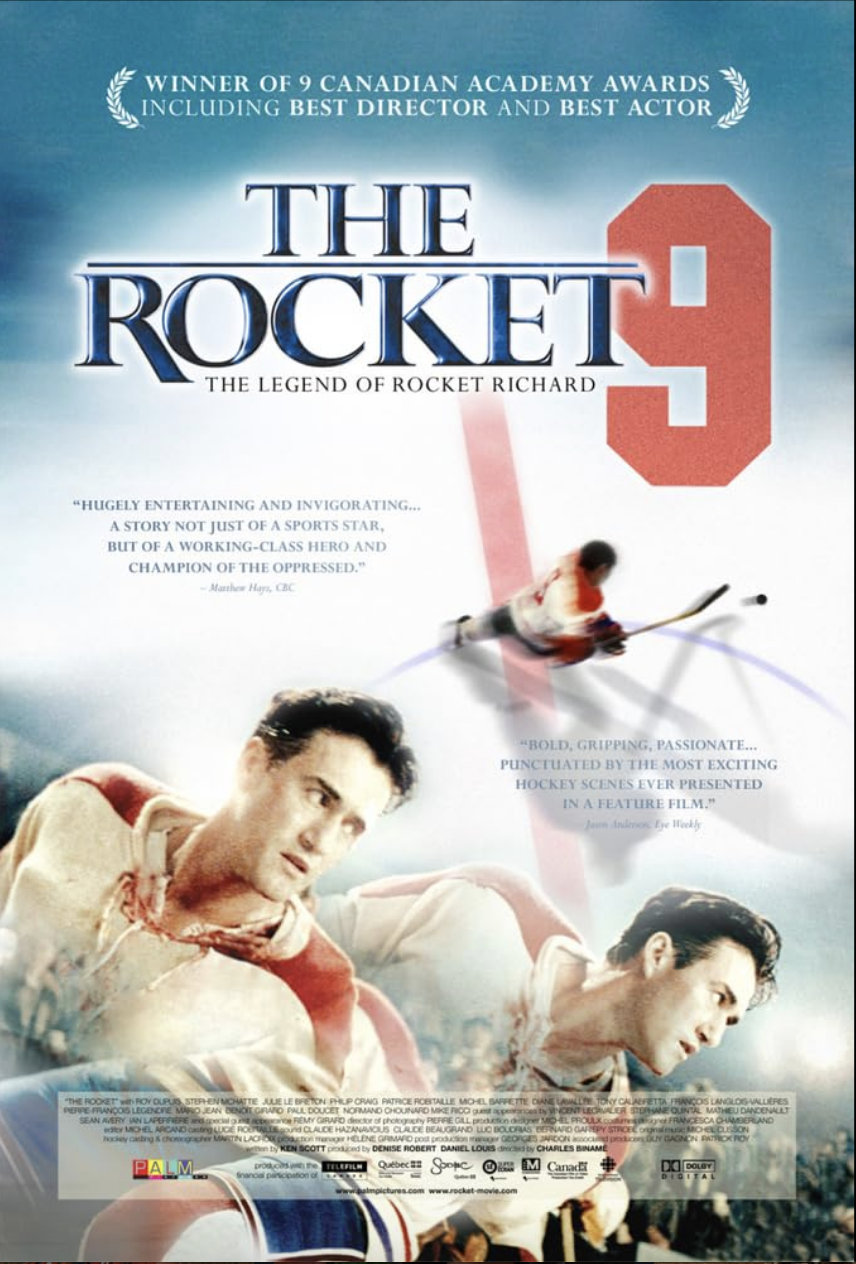
Richard was also a revered cultural icon in Quebec as seen in the reaction to a time when he was suspended from play late in the 1954-55 season. OK, granted, Rocket was involved in an on-ice incident in which he struck a linesman; can you imagine a player of any sport today hitting a referee? So, yeah, he was suspended for the play-offs which resulted in the fabled Richard Riot, a mythical event in the history of the province that some say lead to the Quiet Revolution, “a significant period of socio-political and socio-cultural transformation in French Canada”. Needless to say then there is a lot of story told in this Canadian film. Worth it for hockey fans to check out.
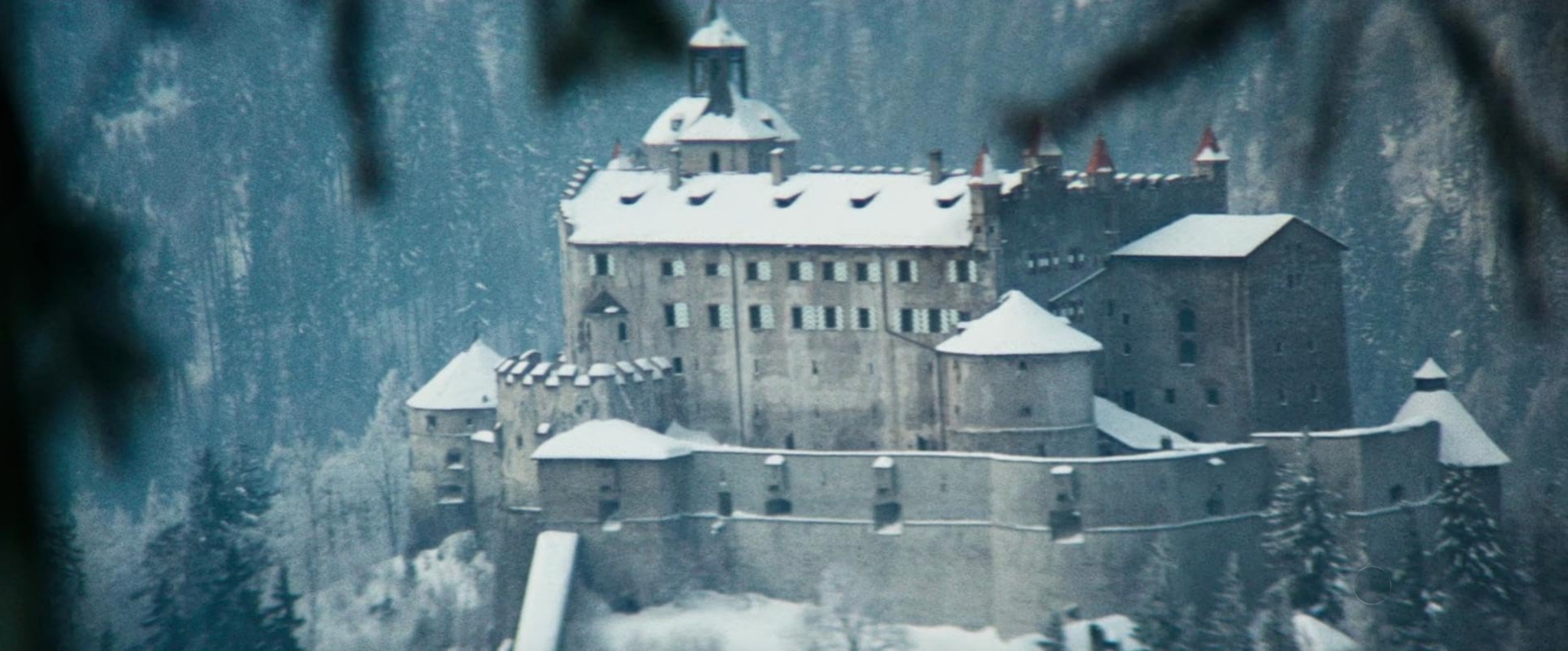
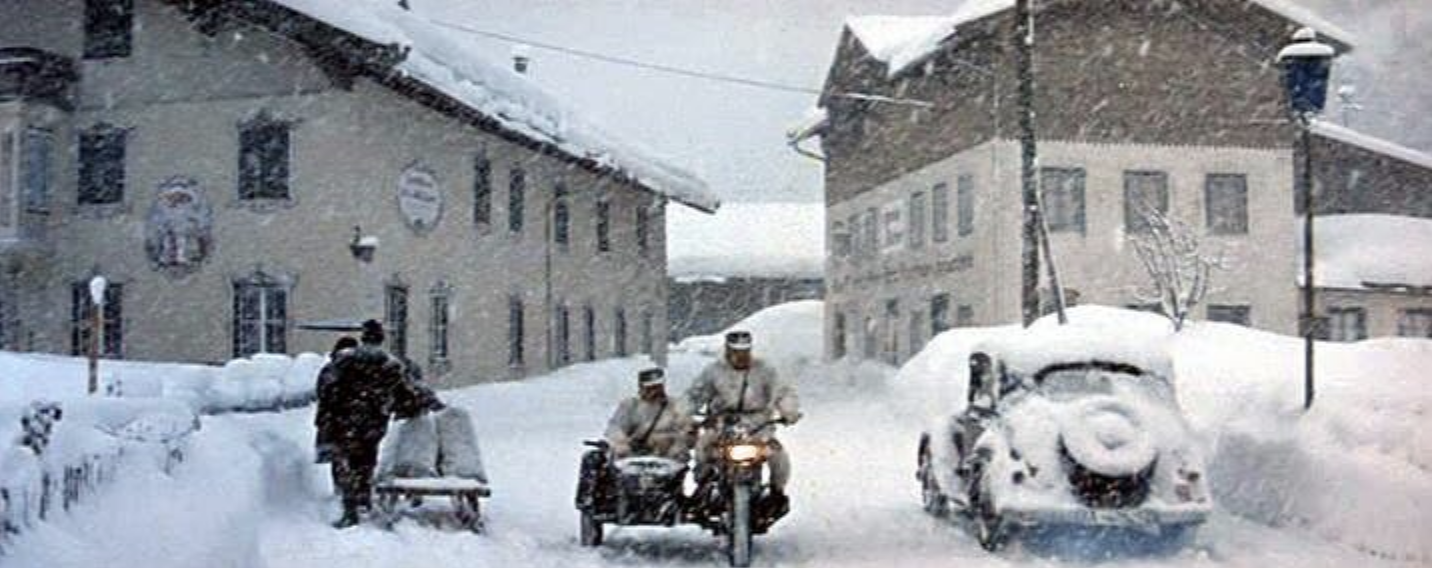
Where Eagles Dare (1968) // Here is a magnificent film regardless of what season of the year it may depict. Eastwood this time joins Richard Burton to play U.S. Army Ranger Morris Schaffer and English Maj. John Smith respectively. They are tasked by MI6 to rescue a U.S. Brigadier General being held captive. Where? High atop Schloß Adler, “an alpine mountaintop fortress in Bavaria, accessible only by cable car”. Set in Bavaria but shot in Austria, this is another film on this list that is of the highest quality. Like The Bridge on the River Kwai and The Guns of Navarone, Where Eagles Dare is what I call an excellent “mission” film. Watching Burton and Eastwood execute their mission is harrowing and exciting and highly enjoyable. Masquerading as German soldiers, our two heroes navigate the snow covered streets in the village at the base of Schloß Adler as they infiltrate the fortress. As an added bonus, the climax of the film features a tidy little twist, the type of plot point that elevates a movie like this to the upper echelon.
Island in the Sky (1954) // This film based on a true story has that quintessential John Wayne masculine rep and is the type of film that is a favourite of men of a certain age. William Wellman’s film tells the story of a pilot and his crew who are forced to crash land on a frozen lake on the Quebec-Labrador border. A great cast executes tense scenes as those on the ground speculate where the plane went down and how to send out search planes. As for the crew of the plane they also draw the viewer in as they face the dangers of an emergency landing and the dire circumstance they find themselves in when they make it down. Then the viewer will have no choice but to place themselves in the frozen boots of the men and at times like this I always like to wonder what I would do in the same situation.
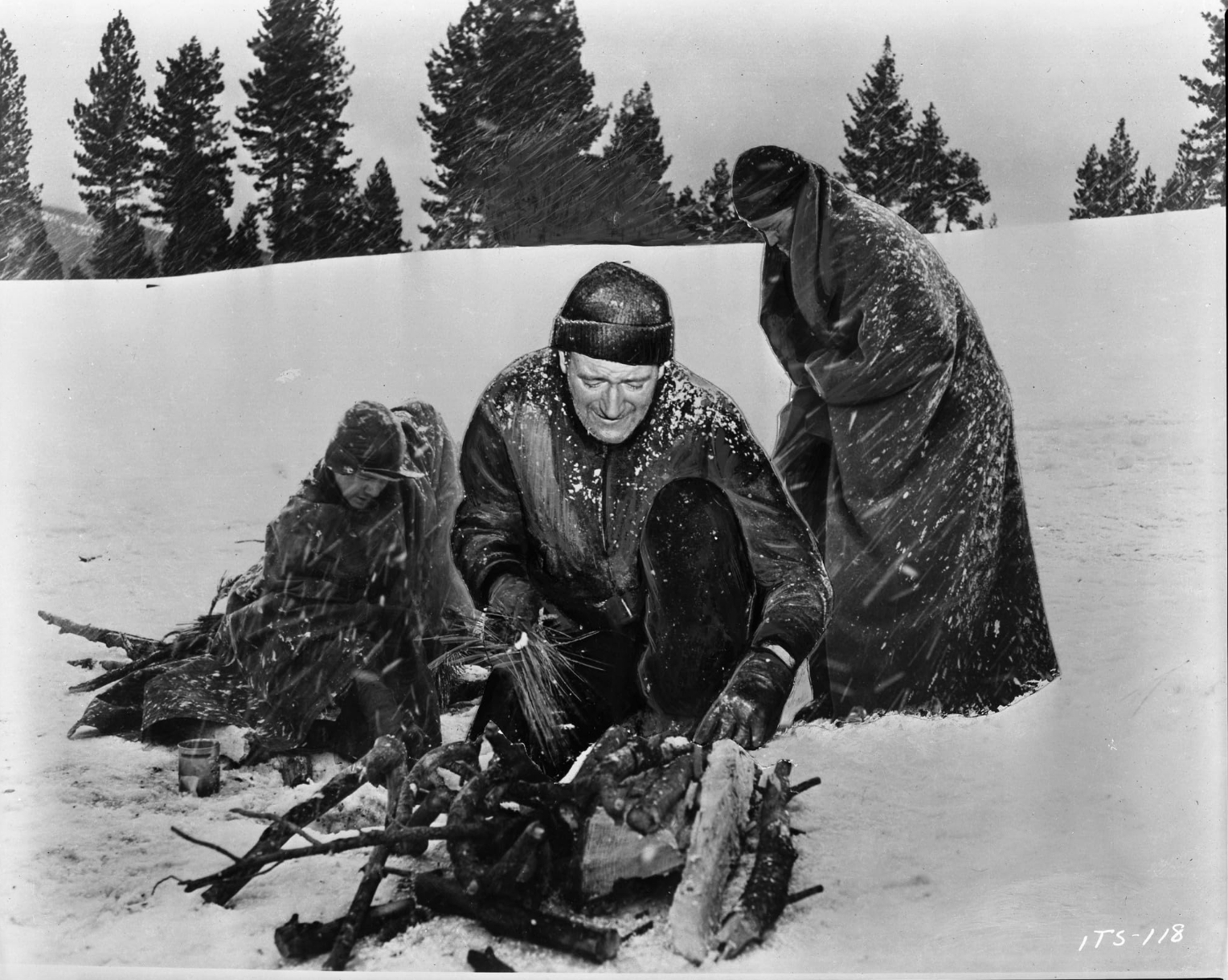
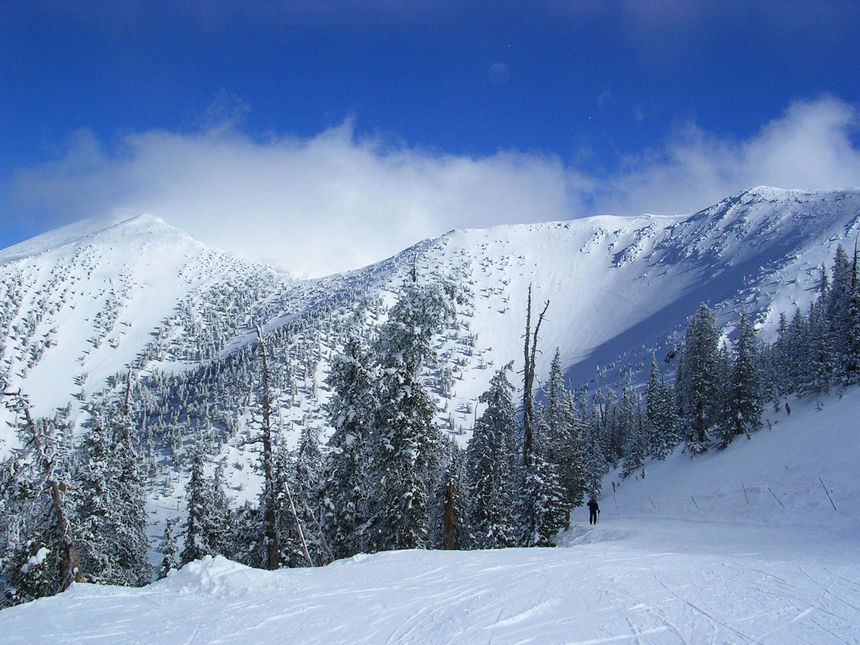
Filmed around Mount Baldy and the White Mountains of Arizona, Duke and Wellman & Co. depict the desperation quite well. The thing I like about Duke’s performance is that it deviates from the regular portrayals you’ll see from Wayne and men like him in this era. Normally, the lead is a bar of iron, macho and unfazed by the spot he finds himself in. But Wayne here plays it well; he becomes desperate and actually frightened by the predicament he find himself and his men in. It’s a real, authentic performance and to see the big tough guy worried makes the viewer wonder if everything really will work out or not. And I love the idea of military men who continue to apply their training even in these desperate circumstances. Island in the Sky really draws you in and you suffer along with the downed crew as they get colder and colder. The winds begin to blow and the men dig holes for themselves to burrow into. It is particularly harrowing to watch Lovatt as he gets separated from the crew and stumbles around lost in the blizzard. To think of a man being so tired and cold that he just lays down in the snow… This is one of those movies that shows how perfectly healthy men can be pummelled and crushed by the weather.
Avalanche (1978) // I was turned onto this film by my man over at BAMFStyle – and now he owes me! Made in the wake of the disaster films of the Seventies, Avalanche is Roger Corman’s contribution to the sub genre. He was betting that the star power of Rock Hudson and Mia Farrow would bring the people out but sadly the film is not good. What is good is the locations and that is mostly what we’re concerned with here anyways. As far as I can tell, the Tamarron Lodge was part of a condominium complex in Durango, Colorado. By the spring of 2014, the lodge had sat vacant for a long time and condo owners considered it an eyesore and referred to it as “the corpse”. Plans were set in motion by TACO – Tamarron Association of Condominium Owners – to demolish the lodge. I like to imagine what the interiors were like some 40 years after this film was shot there.
Avalanche features some excellent skiing and other outdoor footage but the appeal here is the “eyesore” itself, the once wonderful Tamarron Lodge. Its that aprés ski scene that always looks so charming and has appealed to me ever since The Pink Panther. This is Seventies Style but it still looks inviting. Its cold outside, you’ve been out in the snow all day. Then you get cleaned up and dressed up and head down to the bar and grill to hear the band and have a bite to eat. Here there’s swimming pools and hot tubs and a reminder that the indoors in winter can be just as stimulating as the outdoors in winter. Fun film but a stinker.
A Fine Pair (1968) // Ten years previously, Rock Hudson had made this other fun winter movie though you may not notice him – because Claudia Cardinale is in this. And she’s wet. I reported on Ruba al prossimo tuo in our Once Upon a Time series and you really should check that out here. It’s worth revisiting, though, this slightly goofy film that features not only the beautiful Ms. Cardinale but also many great shots of winter in New York City and more importantly Austria. It was full-on winter in November of ’67 when this was filmed in Tirol and Salzburg and the snow is plentiful. Austria is photographed nicely showing countryside and streets laden with their wintry burden.

From the lovely Hotel Braun and the quaint little hole-in-the-wall hotel room to the grand castle and through all the wintry lanes and snowy terrain, this film is insubstantial but still fun to watch thanks to Claudia and a score by Il Maestro, Ennio Morricone.

Jeremiah Johnson (1972) // Robert Redford was in his mid-to-late 30s at this time and he never looked better. For this story of a man who decides to live off the land in the mountains, Redford dragged Sydney Pollack out to Bob’s adopted home state of Utah. Did the company take up residence in one lonely spot to shoot their film? They did not. Instead art director Ted Howarth traversed some 26,000 miles to find locations. Did he narrow it down to a half dozen suitable spots? He did not. Instead the film showcases almost 100 different locations including the aptly named Snow Canyon State Park, Sundance Resort, Zion National Park and many other substantial places.
It’s one of those films that does well depicting the challenges of the life of a mountain man, particularly when the temperature drops. One thing I enjoyed that I had never seen in any other film was sleeping in the wild over a bed of warm coals. That’s quite brilliant – if its done right. Jeremiah Johnson shows the brutal terrain, frigid waters and – like other films we’ve talked about today – the fact that cold can kill you. Take Hatchet Jack. The late mountain man is featured in this clip that shows much of the hardship we’ve been talking about. I’m uncomfortable watching Jeremiah fumble around in the water – so, not only cold but now wet – and we see how the conditions can even conspire against you lighting a fire. Listen to the wind; ominous, deadly.
Maybe you feel me when I say that I’d like to think that I’m made of the same sort of stuff that Jeremiah Johnson was. That I can adapt, improvise and put up with another winter. Maybe. But when the thermometer hits minus 20, instead of seeing how I stack up against the elements, you’ll more likely find me basement camping. Under a blanket, electric fireplace blazing, eating popcorn, drinking a Dr. Pepper and watching one of these films.
 SoulRide