Purple Haze (1982)
Peter Nelson, Chuck McQuary, Bernard Baldan, Katy Horsch and Bob Breuler
Director – David Burton Morris
From Triumph Films

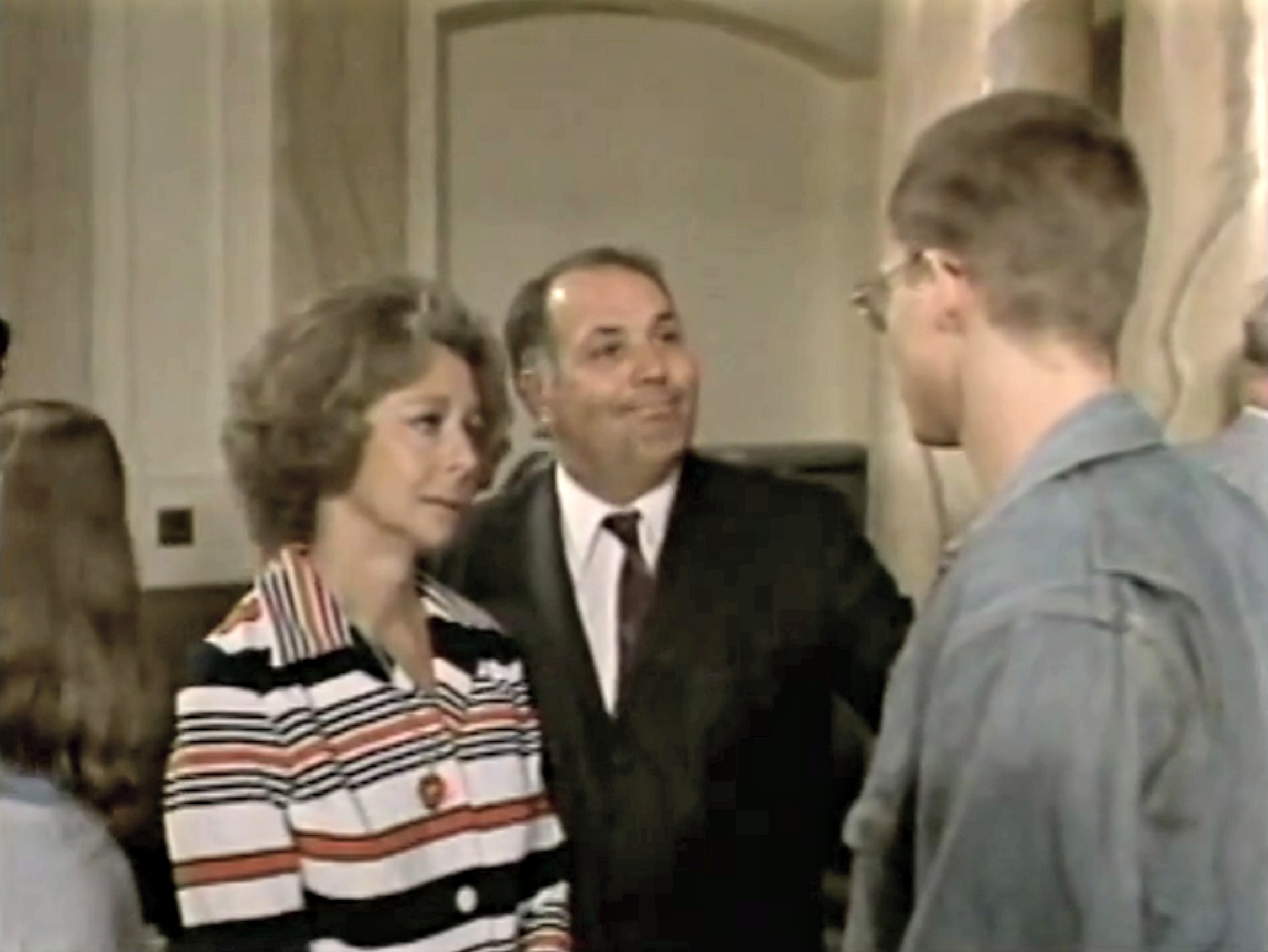
Princeton, Spring, 1968. Matt Caulfield (Nelson) and his buddies on campus are watching TV and getting high. They are thrilled to hear that LBJ won’t stand for re-election but it is a decided buzzkill when the dweeb next door rats them out to the fuzz. Caulfield is kicked out of school and hitch hikes back home to St. Paul, Minnesota. His kid sister, Phoebe (Horsch) is thrilled to see him. His dad (Breuler) not so much and Mom doesn’t have much to say. Mr. Caulfield makes it clear that no long-haired loafer is going to be staying under his roof and Matt, realizing he’s not welcome here, goes off to the party at the country club to see his girlfriend.
But she’s not anymore, really. Matt skulks off where he meets another cast-off, his old buddy, Jeff (McQuary). Jeff is no longer obese but he is certainly neurotic and drug-addicted. Jeff says Matt can crash at his pad but first there is a party to hit. The party is at the home of Derek Savage (Baldan), an old friend who is now the local hero DJ who spins the latest underground sounds.
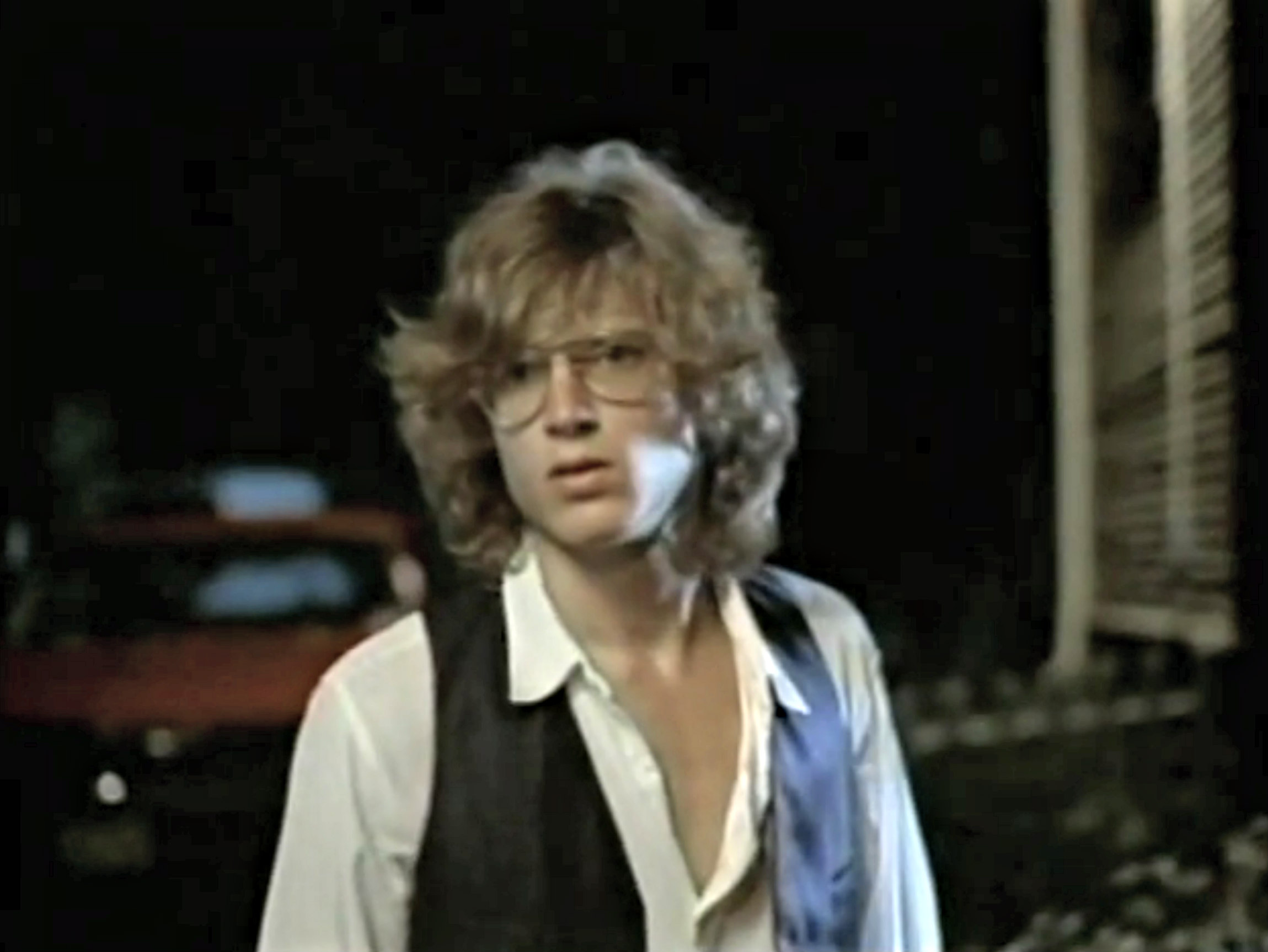
Sister Phoebe is a talented pianist who is offered the chance to attend Julliard; but the old man shoots it down. She ends up on Matt’s doorstep and Matt promises that he will get her to the school no matter what their father has to say. The draft is looming like a dark cloud carrying torrents of rain. With his expulsion from school, Matt has moved to the head of a different class – he is 1-A, a prime target for the draft. Jeff has a doctor who has written him a note running down all of his infirmities. The draft board laughs at it; the good doctor has been writing similar notes for months. Jeff is in.
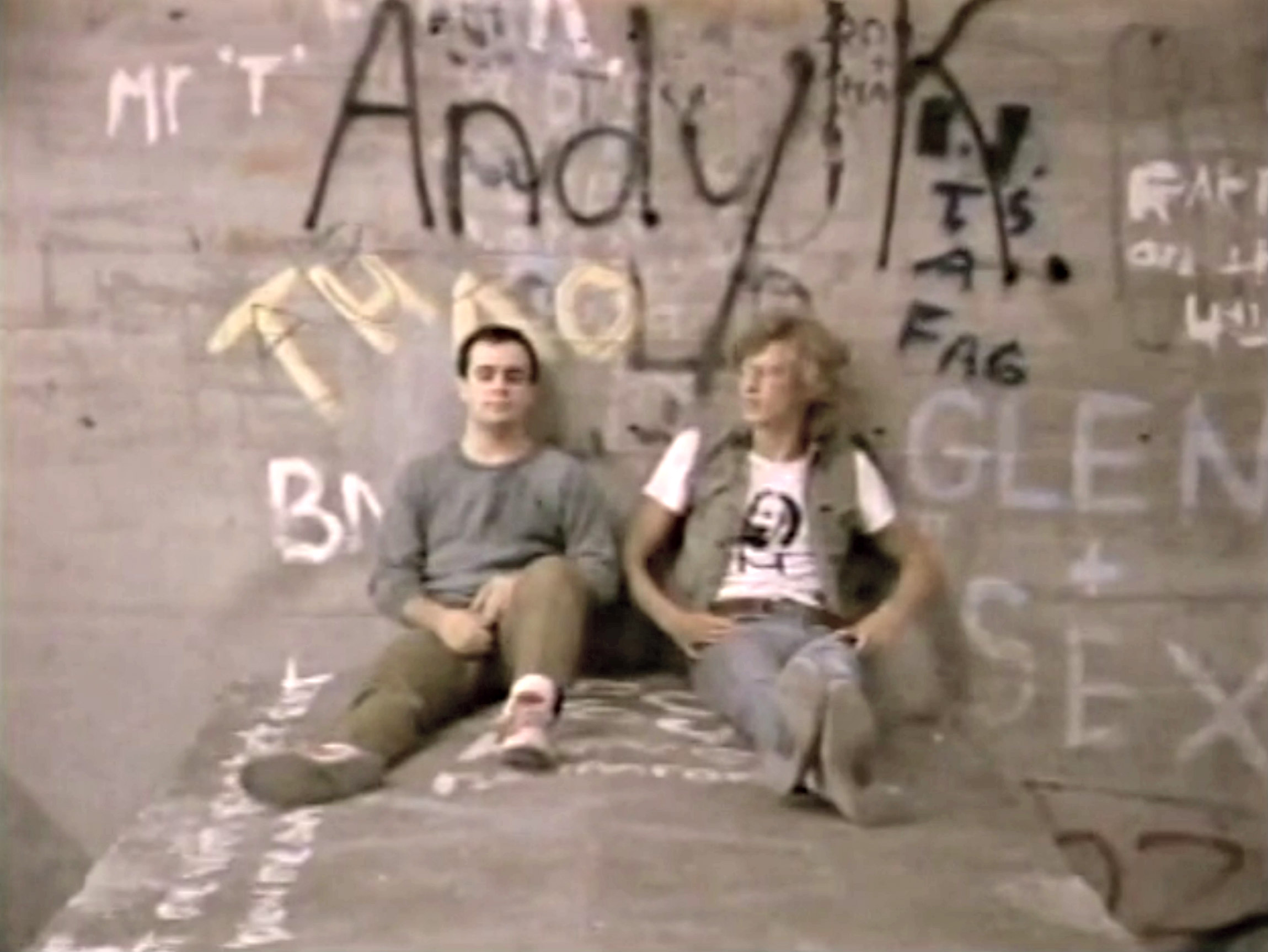
Matt ponders his situation. He has zero prospects, Uncle Sam is on his way and his best buddy is headed for the jungle, an unlikely soldier, ill-suited to the life he has just entered. “Aww, the hell with it”, Matt says and he bolts for the bus taking Jeff to boot camp. I’ll be right behind you, Matt tells Jeff who is enormously relieved. But then tragedy strikes.
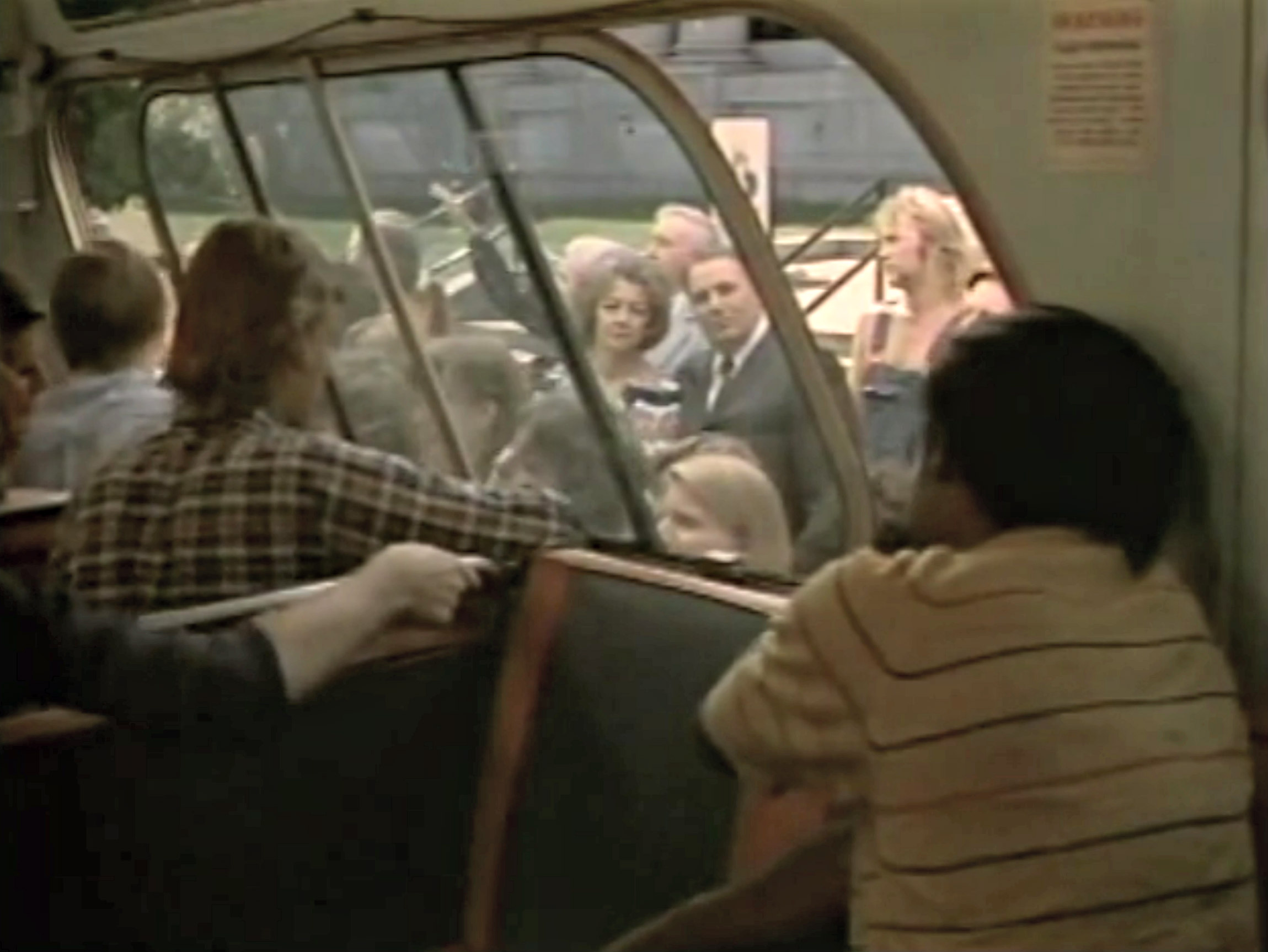
Matt finds himself on a bus headed for basic training. Realizing it is all pointless, he makes a desperate move.
Out of the haze of my own past comes this most buried of all the films we have talked about here at Vintage Leisure. Sure, we like to stick a shovel in the ground and dig up some rarities like Valentino Returns but, heck, that one had the guy from Apocalypse Now in it. The one we’re looking at today? Its a deep cut.
This one comes to us…well, from totally out of nowhere. The husband-and-wife filmmaking team of David Burton Morris and Victoria Wozniak were both basically just getting started in the business when they decided to make a statement of sorts. The two saw parallels between the late 1960s and the political climate in the Conservative Reagan era of the early 80s when there was potential of American involvement in a war in El Salvador. As a cautionary tale aimed at kids in the 80s, Morris and Wozniak wanted to tell of another time when war was imminent and young people sought the truth about what was going on around them. Wozniak would write our film and Morris directed.
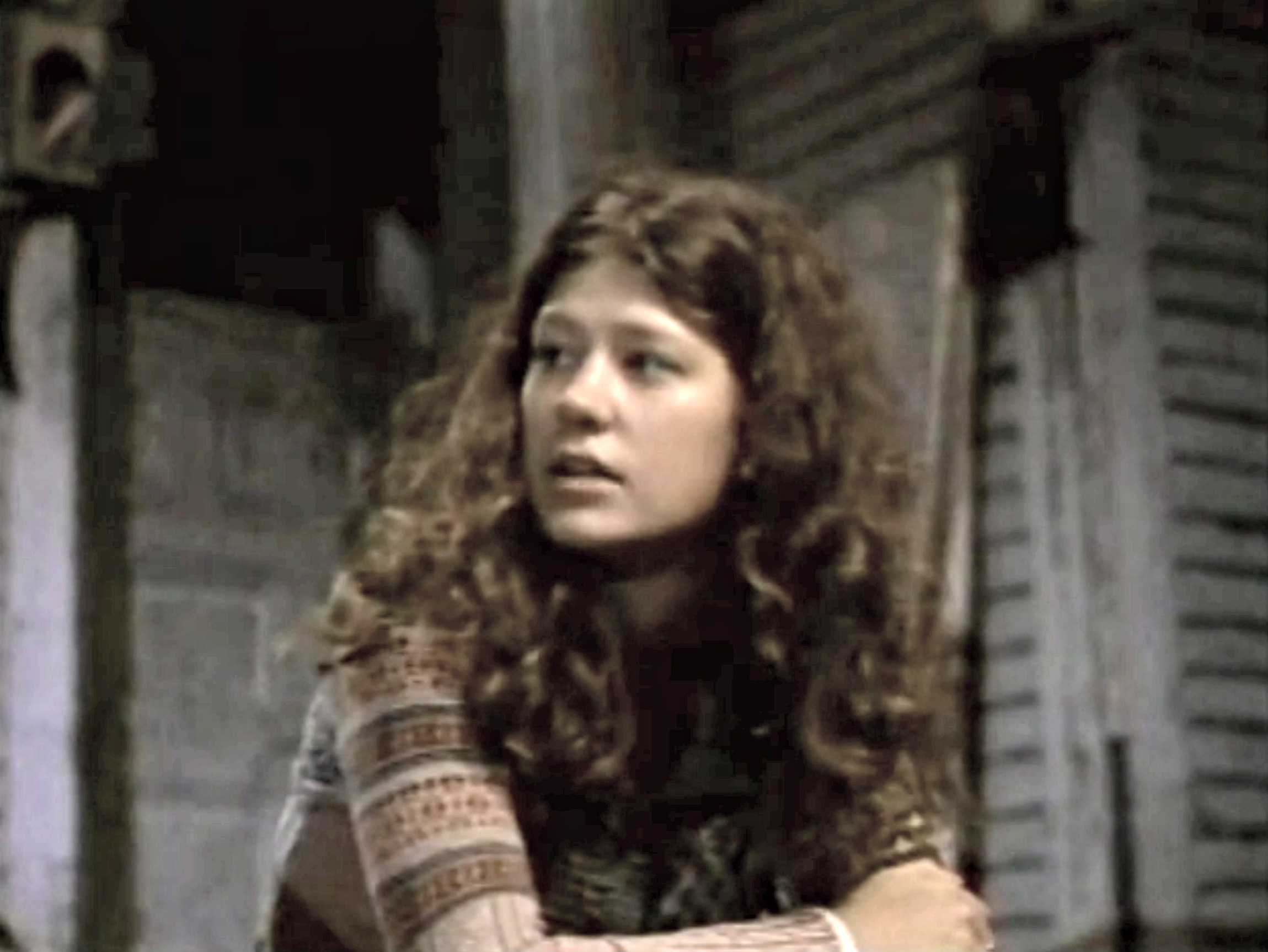
What perhaps makes this movie such a deep cut is the relative obscurity of the filmmakers and added to this is their decision to use actors who were not already members of the Screen Actors Guild; so, “nobodies”. They simply could not afford a union shoot but more than that what resulted is a cast of unknowns that stayed unknown. What I so like about this is that I can watch this movie and engage with each character without thinking of them as actors as I have no other point of reference for them. For me, Peter Nelson is Matt Caulfield. Speaking of Nelson, he was the only one of this cast to really go on to do anything. He played Thompson – you know…Thompson? – in Die Hard 2 and he featured as evil youth leader Brian in the popular NBC miniseries V and its sequel. As of 2018, Nelson was apparently an exec at Sony Pictures. I kept looking at Katy Horsch because I thought she looked like Daphne Zuniga and the dad seemed familiar, too but…nope.
Don’t get me wrong, none of this matters. As I’ve said, its always truly special when I watch a movie with a cast full of actors I don’t know from any other film or TV show. It allows me to consider what I’m watching as somehow more real, to the point where I can actually make myself believe that I’m watching a documentary or somehow I have been given a chance to view the actions of real people doing real things, if you know what I mean.
Years had gone by since I used to watch this regularly and I always remembered this film that I had taped off TV. Through the years, I have had to go through my archives, my mementoes and consider what I wanted to keep and what I could part with. Some of you may know what I’m talking about. Often it was about room; with a growing family, you simply run out of room in your home to keep stuff. The video cassette with this movie on it I foolishly discarded during one of these purges. I feel like Rainman and a Charlie Chan movie were also on the tape. Anyways, I threw it out. Pirate sites have enabled us to see many or all films from the past but Purple Haze always proved elusive. Then one day I decided to really hunt and wasn’t it sitting right there. I must shout out the Internet Archive; “an American non-profit organization founded in 1996 by Brewster Kahle that runs a digital library website, archive.org. It provides free access to collections of digitized media including websites, software applications, music, audiovisual, and print materials. The Archive also advocates a free and open Internet. Its mission is committing to provide ‘universal access to all knowledge’.” I’ve read books at this site and here I was able to find a decent print of Purple Haze that was uploaded in the summer of 2023. Under “topics”, it says “rare film, obscure film”.
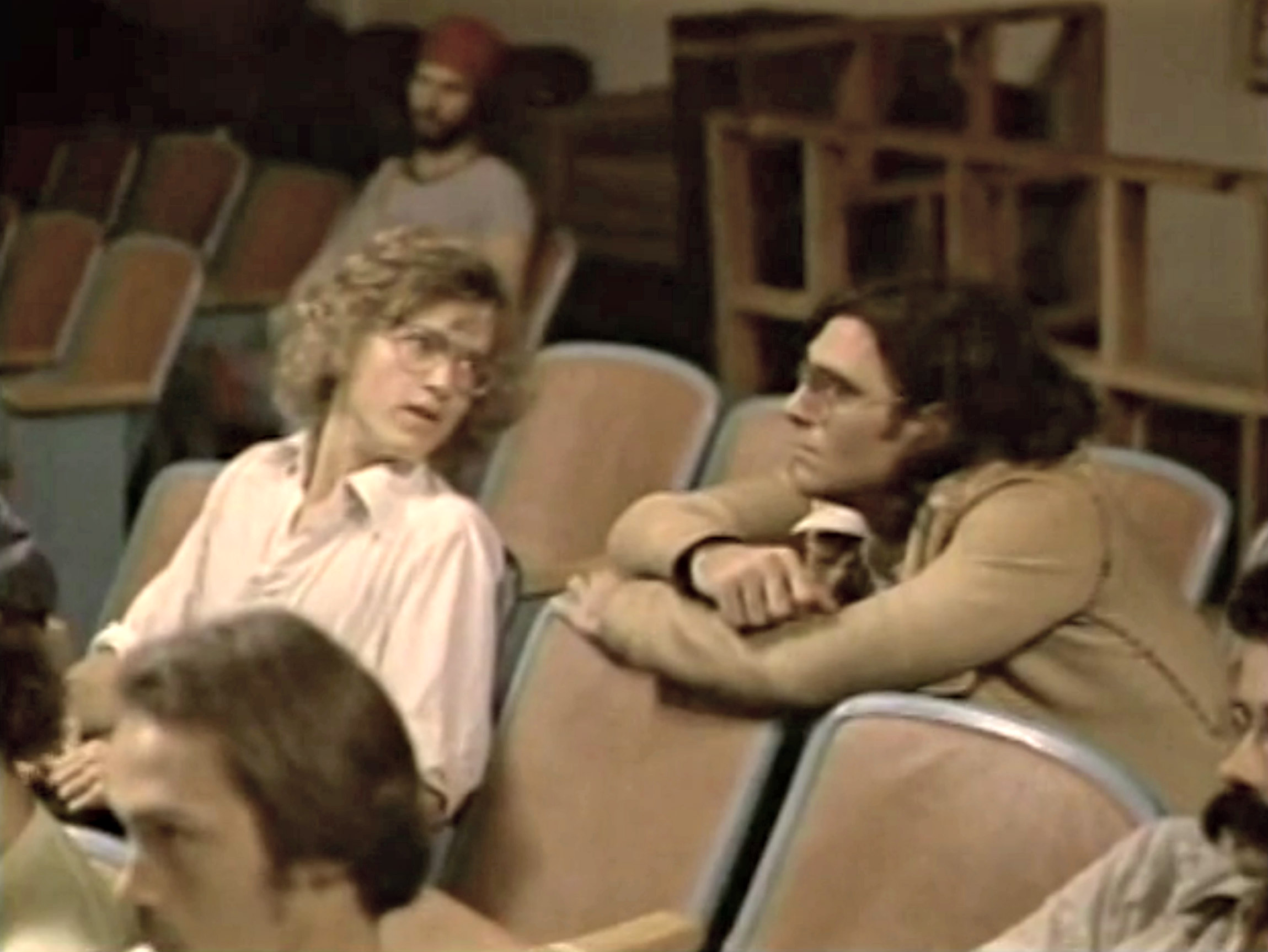
Couple notes; Purple Haze was filmed on location in the filmmakers’ hometown of St. Paul, Minnesota. Matt goes to the theatre to see The Graduate and he comments on it afterwards. Benjamin Braddock in that classic film is in much the same predicament that Matt Caulfield is in our film. Speaking of “Caulfield” – that is the protagonist’s name in the classic book The Catcher in the Rye and that Caulfield had a sister named Phoebe just as Matt Caulfield does. Some reviewers thought that made this film an updated telling of The Catcher in the Rye but the filmmakers had no such intention and even said that afterwards they regretted using those names to lead to this connection. There’s a great slow motion shot showing Hippies hanging out along Cedar Street. The call had gone out for extras in hippie clothes and lots of free help showed up for the shoot.
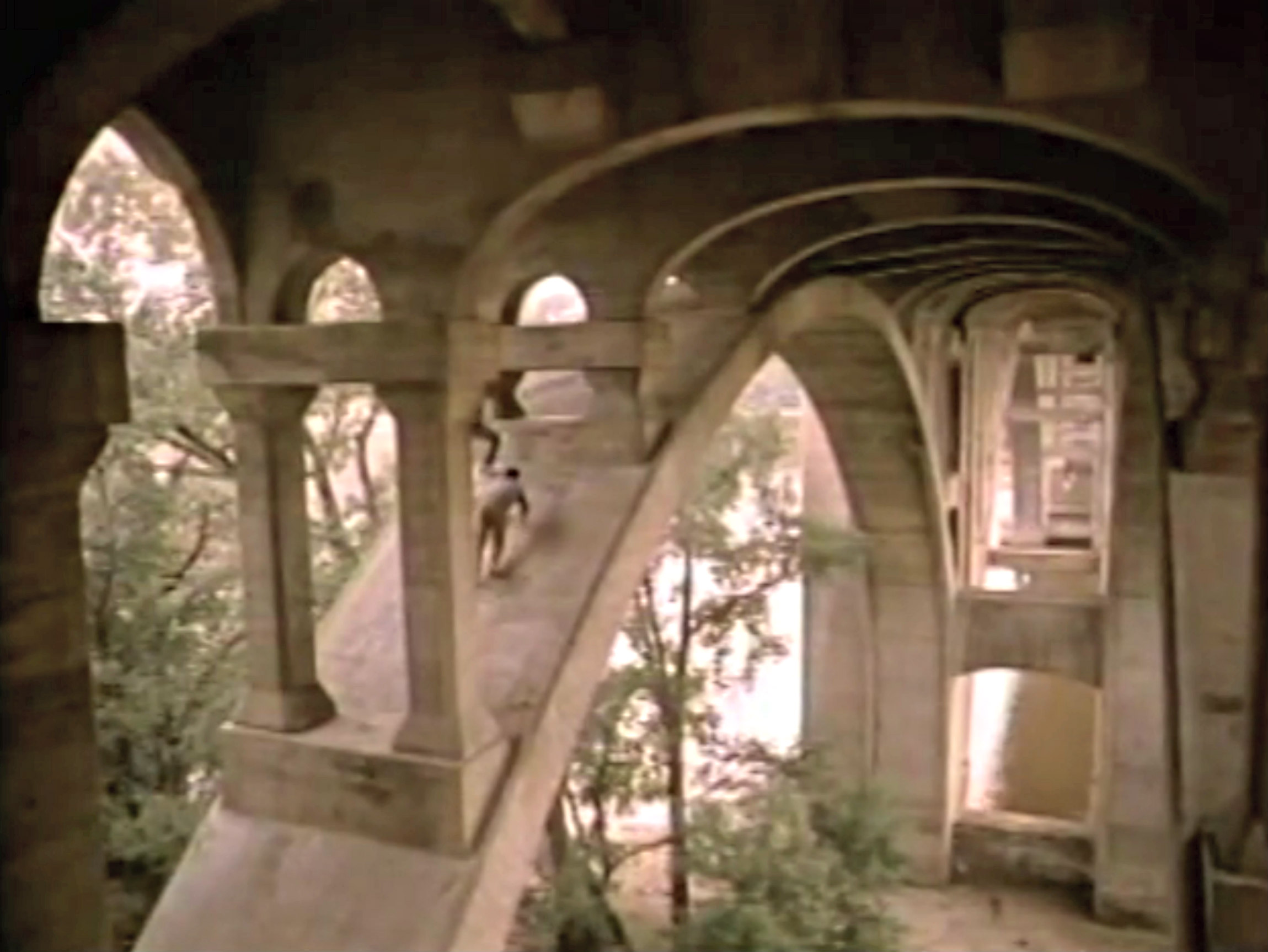
The film made some noise when it was released. Roger Ebert was an early booster of the film and he was on the panel that awarded Purple Haze a prize at the 1983 US Film and Video Festival, an event held in Utah that would, 8 years later, become the Sundance Film Festival. What helped the film to stand out was its soundtrack. Films that were loaded with classic rock were still relatively novel in the early 80s and a distinct tone is created in the film not only by “using old songs” but by using remarkably appropriate and poignant ones at the right times. It became de rigueur throughout the 1980s to name movies after old songs and our film may have been one of the first but the title I’ve never been crazy about as it is a little too obvious a choice. And the soundtrack is Jimi Hendrix-heavy, using four of his tunes. There are a few songs really chosen well like “White Rabbit” by Jefferson Airplane, “Darkness, Darkness” by the Youngbloods and Neil Young’s “Expecting to Fly” from Buffalo Springfield.
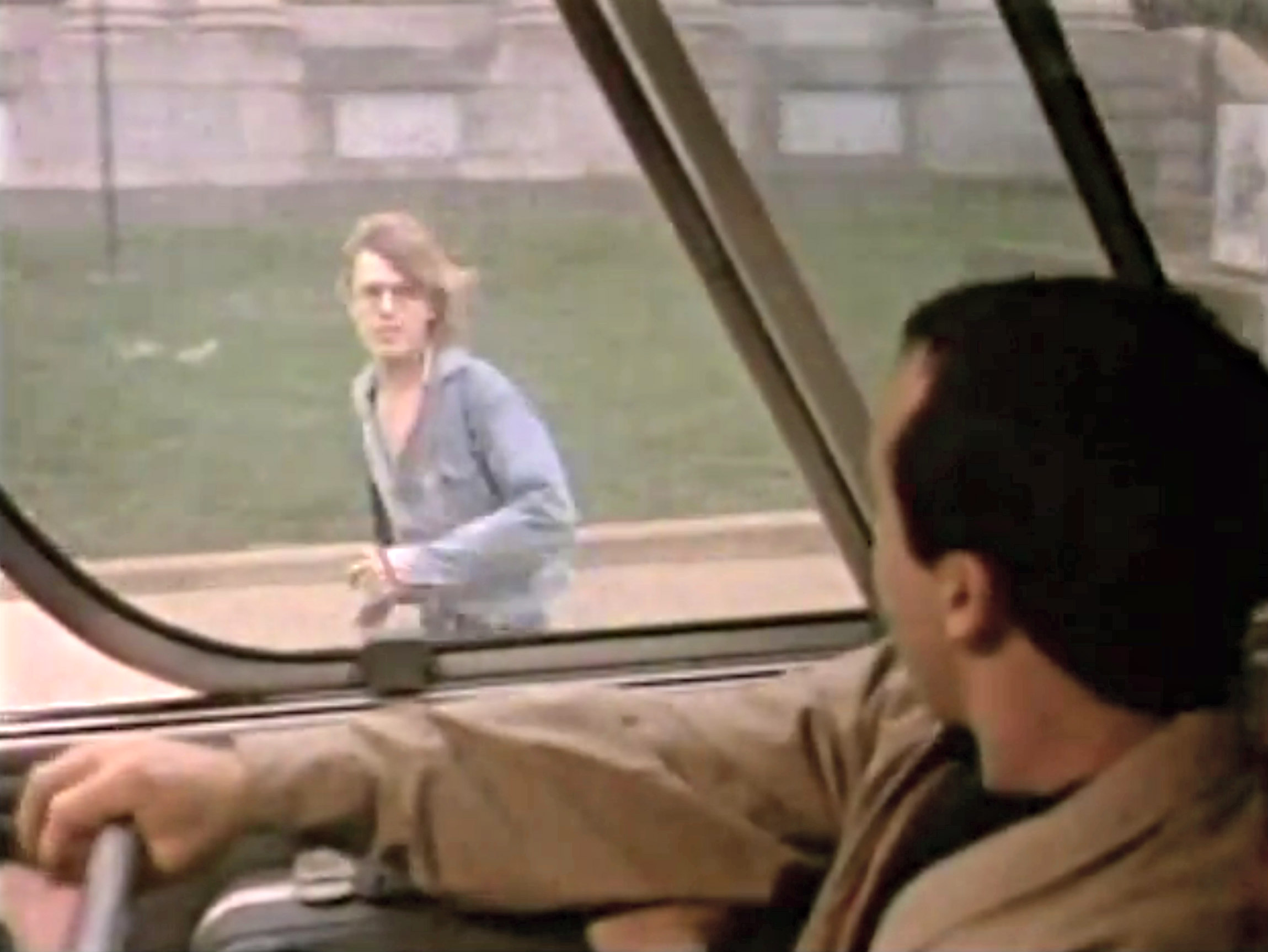
The opening strains of that group’s “For What It’s Worth” I have always found particularly striking and hearing them never fails to transport me to the time and world represented in this film. To honour a fallen comrade, Derek Savage stops the record already playing on the air and notes that the next selection will be for a departed friend and hearing this song begin is significant. Later as the camera pans slowly (Morris does pans well) over a graveyard we hear the dramatic opening of “When I Was Young” by Eric Burdon and the Animals and one is reminded that, with such seriousness going on in the world in 1968, some really serious music was made. This particular tune I find very cinematic. And there is even a touch of horror in hearing Procol Harum’s eerie “A Salty Dog” during the scene when Jeff comes back from seeing the draft board. This song puts me in mind of Giorgio Moroder’s music for Scarface released at the same time as our film. A soundtrack album for Purple Haze would have seemed a no-brainer but it never happened.
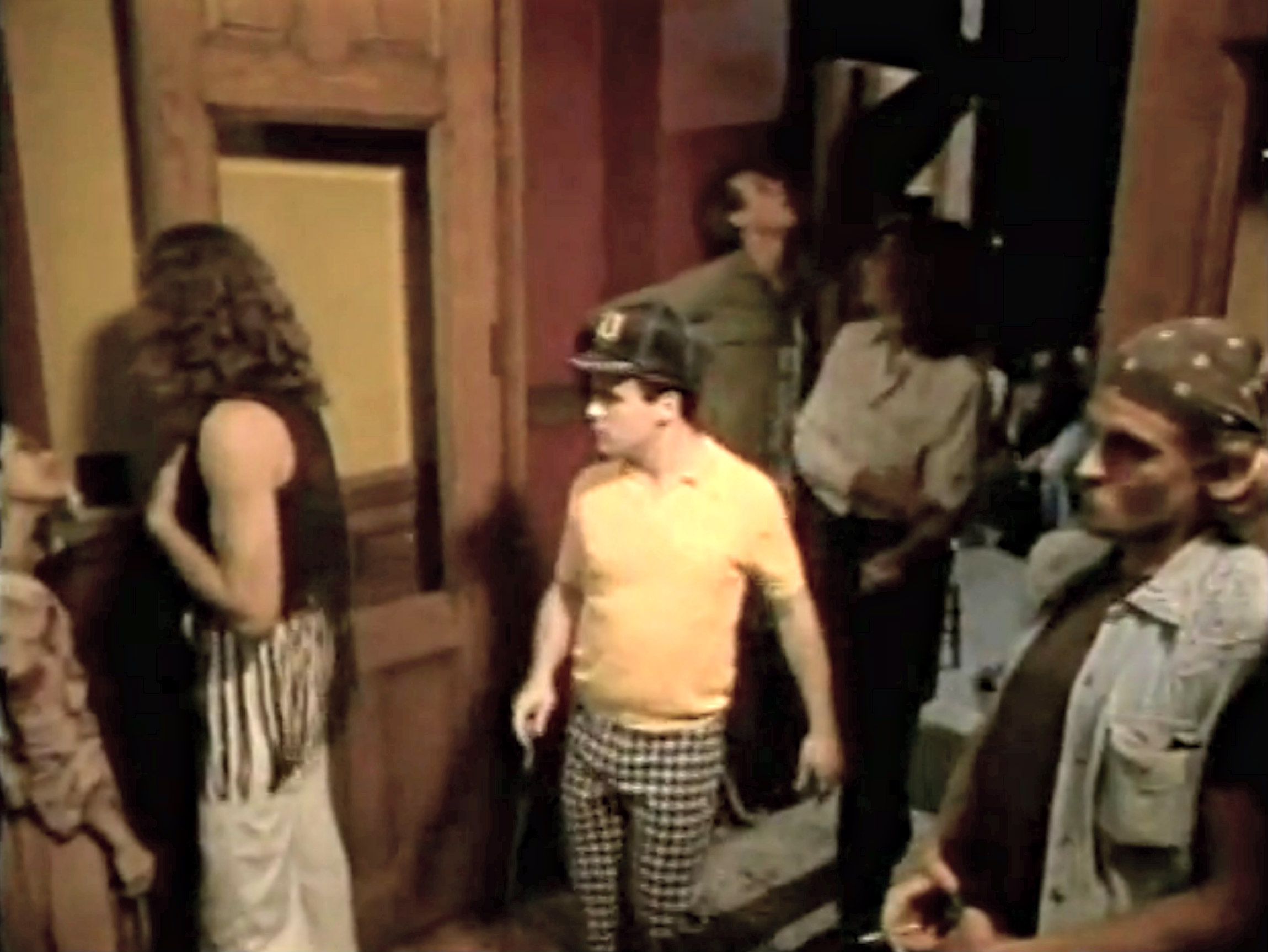
These dramatic tunes suit well the action of the film. I find it terribly real in that there is little levity in the story. There are few light moments but there is one I’ll mention. At the party at the country club early on, Jeff falls into the pool and must find a change of clothes. He is a member here and so he goes to his locker. Cut to the drug party at Derek Savage’s place with hippies looking like hippies – and Jeff comes in looking like Chi Chi Rodriquez in golf clothes complete with putter and shoes with spikes. Nice touch.
But beyond that there is very little light in Purple Haze, very little optimism. This drives home the feeling that must’ve pervaded among the young people at the time. Jeff is a hopeless case from the beginning. He has only recently reconciled family issues after years of therapy but he is still unsure of himself and his physical health is showing the effects of his drug use. His tragic and senseless end is emblematic of the whole era.
Matt was smart enough to get a scholarship to Princeton. But he soon lost his way at school and is bounced and this makes him a prime candidate for Selective Service. The reception he gets at home is particularly depressing. Its coloured a little obviously in a way you’d expect but the fact remains that his father is unrelenting in his disdain for his son. It irks me, too – as it always does – that the depiction is of practicing Catholic parents who fail to show Christian love to their own flesh and blood. The mother is an undeveloped character but she doesn’t really commiserate with or provide her son with any surreptitious support. It doesn’t help that Matt is not good at verbalizing his feelings or making them see what he’s going through. He even loses a bit of the love his sister feels for him when he enlists and therefore cannot help her get to Julliard.
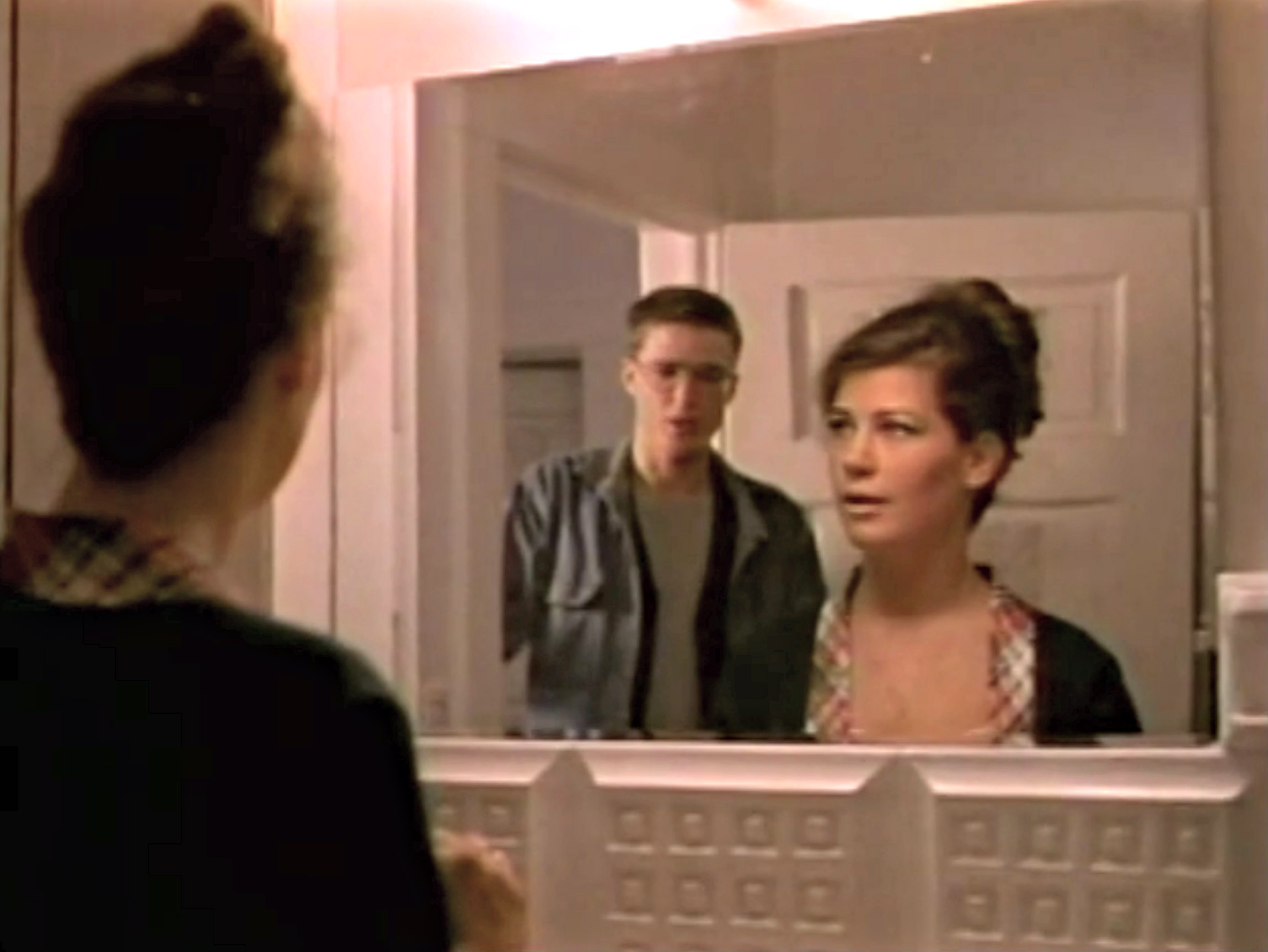
And the viewer knows that this is not going to end well. There is a foreboding apparent throughout. Jeff getting drafted is going to end up badly for both Jeff and for the US Armed Forces. Enlisting before the inevitable call up and getting his hair cut still doesn’t really please Matt’s dad; you should have talked to me about it, we could have gotten you a preferred position of some type, his dad says. As if Matt ever felt he could talk to his dad. And saying goodbye still doesn’t break the ice; neither Matt nor his parents can break through to share a proper farewell.
Matt’s feelings are well displayed in the excellent and bold final moments. His rash decision to act on the bus is completely understandable – and cheered by the other passengers – but the audience knows he has really done it now. But that feeling is as it should be. There was a pointlessness to the Vietnam war and a general feeling in society of betrayal by the government. It seemed there was no chance for these young people of being left alone to live the life they chose and death seemed imminent. Purple Haze does well depicting this hopelessness. Viewers today can really empathize with those who lived through that time when they see the action and feel the tenor of this film.
I watched it recently with a bit of a jaundiced eye. I wondered if, with the experience as a consumer of film that I have gained since I last saw this film, I would detect that most dreaded enemy of period pieces like this, cliché. I worried that the film would lose points for what I perceived to be a too-common look at the late 1960s. Its a very fine line, actually. Something you might think is cliché is simply an accurate take on the way things were back then, be it hair or language or practical settings. My verdict is that Purple Haze avoids cliché. Matt’s hair is legit and his parents looked appropriate to the time. The underground radio is presented accurately and Derek Savage makes sense and while he does play some predictable tunes there are lesser know tracks thrown in. The decor is not too obviously Sixties and so I think it all works.
Do yourself a favour and head to Internet Archive to view this film. And you know what else I discovered? Most every listing at IMDb has an accompanying video or two. One of the videos at director David Burton Morris’s profile is actually the entire film. This movie stands out as an early entry about Vietnam and one that was loaded with music before that became common. Its a legit, coldly honest and authentic bit of time travel that doesn’t really fail in any respect.
Sources
- “Eighteen and Anxious: David Burton Morris and Victoria Wozniak on Vietnam, Dissent, and Purple Haze” – Kelsey Bosch (2018) Walkerart.org
- Roger Ebert gave the Sundance Film Festival a boost in its early stages – Chris Hicks (2013) Deseret.com
- “Movie set in 1968 Twin Cities, ‘Purple Haze’ screenings feature local creators” – Kathy Berdan (2018) Web.archive.org
- Purple Haze (1983) – Internet Archive (2023) Archive.org
- David Burton Morris – IMDb.com
Please help us maintain our page quality by reporting any dead links
 SoulRide