
First, though, she was Frank’s Girl.
Nancy Sinatra was the first child born to Frank Sinatra and his first wife, also named Nancy and often affectionately known as Big Nancy. Little Nancy entered the world in Jersey City in 1940. She grew up as Daddy’s Girl and eventually followed in his footsteps, beginning her music career in 1961 on Pop’s label, Reprise. Her first releases were innocuous, innocent jingles like “Cuff Links and a Tie Clip”, “Like I Do” and Spector’s “To Know Him is to Love Him” and she continued with saccharine treatments of little love ditties like “Tammy” and “True Love” into 1965 when the times they were a-changin’. How many singers would’ve lasted at any record label after 4 years and 11 singles without one charting at all in the US? And even though her dad ran the company, Nancy Sinatra was on the verge of being dropped by Reprise. Imagine; who would’ve been the one to tell Francis his daughter was a dud? Enter Barton Lee Hazlewood.

Born in Mannford, Oklahoma – the Striped Bass Capital of the World – in 1929, Lee was the son of a wildcatter oilman and a mother who was half Creek Indian. Lee served in the Korean War as a disc jockey with the AFRS and continued after the war at KCKY in Coolidge, Arizona where Lee began to notice a 16-year-old kid hanging around the station hoping for free records. Hazlewood took pity on the earnest young guitarist named Duane Eddy and stole many records from the station’s library to give to the kid. Soon, Lee had begun to write songs and started his own publishing company and record label. For rockabilly artist Sanford Clark, Lee co-wrote and produced “The Fool”, a Top Ten US Pop tune that Presley would take on in ’71. Then Lee took Eddy under his wing and began to work in earnest with the guitarist with the twangy sound. Hazlewood hit pay dirt with Duane Eddy when the two wrote and Lee produced the seminal rock & roll recording “Rebel-‘Rouser”, a hit for Eddy in 1958 but more than that a truly iconic recording that is emblematic of the era.
Jimmy Bowen needs some love – cat shows up in many stories in the Vintage Leisureverse. In this case, the Reprise record producer was in the right place at the right time; living next door to Hazlewood and dating Nancy Sinatra. Jimmy reached out to Lee and told him that Nancy had the chops but just needed direction. For reasons lost to the mists of time, Lee wasn’t interested. Then, the Chairman took a hand. As he often did. Sinatra the Elder buttonholed Lee Hazlewood and gave him an assignment; fix my little girl. Lee looked Frank in the eye, blinked his heavy lids and said “OK”.

To his everlasting credit, Lee knew where to start. Aside from her pedigree, Nancy Sinatra and her recordings had been no different from any other female singer of the time. So, Lee went to work. And come to think of it, maybe Lee Hazlewood can be credited also with creating the “extreme makeover”. At the end of 1965, when Lee and Nancy got together, Lee took one look at her and told it to her straight. You’re going to have to drop the sweet and innocent routine, he said. You’re a 25-year-old divorced woman, not a little girl. Stop looking like one and stop acting like one. He had her dye her hair platinum blonde and trade the ballgowns for mini skirts. Pitch black mascara and heavy false eyelashes. And I want you to sing in a lower key, more serious and mysterious. Lee pulled no punches. He wanted her to be a tough, little broad and to – get ready – sing “like a 14-year-old girl who screws truck drivers”. And I’ve got just the song to get us started.
It was Frank again. There was a line from his 1963 western 4 for Texas that said something about “them boots ain’t built for walkin'” and Lee created a song out of the line. He had wanted to record it himself but Nancy said that, coming from a man, the lyric was cruel but from a chick? The track was laid down on November 19, the week before Thanksgiving 1965 and utilized various members of the Wrecking Crew. The song was one of the biggest of 1966 and topped the Pop charts in the US; and not only Stateside but it also went to Number One in 10 other countries worldwide. A promotional video made for the song did much to publicize it and no doubt helped to promote the single. It contains indelible images that help define the 1960s.
Imagine; this film played on Scopitone video jukeboxes
So, the first time Nancy & Lee worked together they scored and it was with a song that gave Nancy Sinatra, girl singer, the upper hand. It was no wallflower song but one of defiance. Like Lesley Gore‘s “You Don’t Own Me” from three years previous, it was a statement issued from a position of power. It’s been called “the finest bitchy kiss-off in pop history” and we should think about it in context of the time. To have a woman tell a man to hit the skids and to declare that he is not enough for her was certainly unique at the time and the song has gone down in history in part because of this early feminist message.
An album was inevitable. The title, as well. Boots was Nancy’s debut LP issued in March of ’66 with Lee Hazlewood producing. Interesting to note that the album contained songs by the Rolling Stones (the opener, “As Tears Go By”), the Beatles (two; “Day Tripper” and an album cut, “Run for Your Life” that served as Boots‘ closer) and Bob Dylan (“It Ain’t Me, Babe”). In addition to the hit single, “Boots”, Hazlewood provided “So Long, Babe” which had actually been released as a single before “These Boots are Made for Walkin'” and had been Nancy’s first charting single in the States reaching #86. An excellent B side written by Lee that didn’t make the album was “The City Never Sleeps at Night”.
Next up was How Does That Grab You?, an LP that boasted the Hazlewood-penned title track, “How Does That Grab You, Darlin?”, that was another Top Ten for Nancy reaching #7. But there were two other significant tracks on the record. Only three months previous, another maven of the LA recording studios, Sonny Bono, had cut a version of a song he had written for his then-wife Cher called “Bang Bang (My Baby Shot Me Down”). You can hear the drama on Mrs. Bono’s version with its almost Middle Eastern flavour but Lee made a brilliant move by using Nancy’s orchestrator, Mr. Billy Strange. From Long Beach, Billy was a guitarist who played with the Wrecking Crew and appeared on scores of songs from significant acts throughout the Sixties. Guy wrote “Limbo Rock”. More importantly, with Mac Davis, he wrote “A Little Less Conversation”, one of Presley’s best and he scored two King Movies, Live a Little, Love a Little and The Trouble With Girls and he would eventually arrange and conduct every one of Nancy’s Reprise records. Anyways, Lee tells Billy he’s got an idea for “Bang Bang” and the two came up with a stark guitar sound that Billy played heavily drenched in tremolo. The cinematic atmosphere of the recording is stunning and it is nothing less than Nancy Sinatra’s finest solo recording and a legendary record. It later received the Tarantino Stamp when QT used it to great effect at the outset of Kill Bill Volume 1.

The other significant tune was “Sand” and this one gave the world the first Nancy & Lee duet. It was also the debut of Lee Hazlewood’s “psychedelic cowboy” sound and here is where we first heard the aura and what Lee did best. There is a decidedly Nabakovian theme that runs through the duets of Nancy & Lee. Lee is the grizzled old cowboy who has been around several blocks, several campfires and many saloons. He is the character seen in westerns, grizzled, quiet, containing multitudes behind his leathery visage. He is a Louis L’Amour man of action, ready to do what must be done but essentially good. And even though he is getting long in the tooth he still has a man’s eye for femininity. Nancy is the fair-skinned, shiny, golden young woman. Wide-eyed and open to the world and open to experience, innocently welcoming. A life novice, she seems to know what treasures she owns and she seems to know that men covet these treasures. She will not be victimized but she is willing.
In “Sand”, the Cowboy comes upon the lady and her fire, asks to share it. Nancy’s vocal here seems to be heard through some distortion and one wonders if the Lee character in the song is at such a desperate point in his life that he is only imagining a young woman at his fire. The guitar solo mid-song I think is being played in reverse, a George Martin trick that as producer of his little band, he would employ this same year of 1966. This sort of studio trickery by Hazlewood goes a very long way to providing the psychedelic side of his work with Nancy.

Next up was the LP Nancy in London. It featured four Hazlewood compositions including the dramatic “Friday’s Child”, a song who’s lyrics speak of self-deprecation and a feeling of unworthiness; “Friday’s child, born a little ugly. Friday’s child, good looks passed her by. Friday’s child am I”. But a harbinger of the music to come was there at the end of Side One.
Again, there is a gentle orchestration utilized on “Summer Wine” but there is something discordant about it. There is certainly an odd storybook nature to it and Billy Strange’s score for the strings is unsettling. The Cowboy strolls into town, spurs a-jingling and this time it is he who seems innocent and susceptible. The Golden Woman spies those spurs and invites the Cowboy to set a spell. He does so and removes his spurs, leaving himself wide open. When he awakes, the Golden Woman is gone and so are his spurs. Her summer wine, you see, is made from strawberries, cherries and that special intangible – an angel’s kiss in spring. This intoxicant robs the Cowboy. Her summer wine is, in fact, not in a bottle to be drank but it is her own galvanizing aura.
They look to be singing live
“Summer Wine” is considered psychedelia but not in the same way as, say, Jefferson Airplane. There is a more literary sensibility to the Nancy & Lee duets and the psychedelia in them comes by way of the storytelling, the abstract imagery and the underlying themes.
Released at the same time – and before and after – was “Sugar Town”, another Hazlewood composition. “Summer Wine” was on Nancy in London, then was the B side of “Sugar Town”, then charted on its own after “Sugar Town”. Anyways, “Sugar Town” was written by Lee as an equivocal allusion to sugar cubes dipped in LSD. The kids understood but the squares and the jocks who spun it didn’t catch it; but honestly, the lysergic acid connection is a bit of a stretch for me even if Barton Lee confirms that was what he was up to. “Sugar Town” – title track of a really disappointing album – gave Nancy another Top Ten hit.

Next came the Number One duet with her father, “Somethin’ Stupid”, a song that topped many charts the world over. Written not by Lee but by Carson Parks – older brother of Van Dyke – the Sinatras’ recording was produced by both Frank’s and Nancy’s guys – Jimmy Bowen and Lee. Some wiseguys at the time referred to the song as “The Incest Song” but the duet is handled differently than most as father and daughter are not really singing to each other. One shadows the other, both taking the lead with Nancy singing the harmony line.
I must take a second to mention Nancy’s theme to her dad’s film Tony Rome, one of my all-time favourite movies. Lee wrote and produced this fun track that starts with a buoyant marimba and that was released the same year as Nancy’s theme to You Only Live Twice, making her the first American to sing a Bond theme. Also worth noting is another loose Lee song that Nancy released as a single in 1967 – it helped bring the total of singles Nancy released that calendar year to TEN including two film themes, one chart-topper and 6 Top 40 hits. “Lightning’s Girl” is “My Boyfriend’s Back” going sideways. Nancy sings that she is Lightning’s girl and you better leave her alone. The way she describes what Lightning will do to one who trifles makes this mysterious returning boyfriend seem absolutely savage. Reflecting this savagery is Billy Strange’s discordant string chart that erupts in violence mid-song. And “Lightning” is another great Louis L’Amour name that Lee gives one of his characters.

The day before Frank’s 52nd birthday, Movin’ With Nancy aired, a clever one-hour collection of prototype music videos that was shown in prime time and presented by RC Cola. Little Nancy may have taken the easy road by having as guests her father and his buds, Dino and Sammy. The music, of course, was supervised by Lee who appeared with his muse in a clever skit for “Jackson” but there was another of Hazlewood’s songs featured that made an indelible impression that has lasted until the present day.
“Some Velvet Morning” is the epitome of the unique psychedelic cowboy country rock sound that Lee created for himself and Nancy. It is another ethereal travelogue that depicts an esoteric dream-like episode between a wandering man and a dusty roadhouse nymph who seems to float in and out of the Cowboy’s consciousness. Cleverly, Hazlewood and Billy Strange created a musical landscape that had individual pockets for each of the participants; Lee’s part is presented in 4/4 time and with its own musical colouring while Nancy’s segments are in waltz time and befit her role as the Golden Woman.
One day, the Cowboy says, I am going to tell you a tale about a girl. But the story is such that the time has to be right; it must be a certain morning and I must have my mind right. My name is Phaedra, the Golden Woman says, and she invites mere mortals to gaze upon her and her kind. We will not connect in the physical realm but we will share our wisdom; “flowers are the things we know, secrets are the things we grow. Learn from us very much, look at us but do not touch”. This girl, the Cowboy says, is undefinable – she is the beginning and the end. She gave me life and she also made it end.
The song is inscrutable, to say the least, something that Hazlewood himself has acknowledged. Him not revealing – or not even really knowing – what it is about leaves it open for all of us to interpret, adding to the enjoyment of the track. Apparently, it was recorded without the use of overdubbing but played live in the studio while Nancy and Lee recorded their vocals which is quite a feat considering the changes in the composition. Credit once again must be shared by Billy Strange for this track that was in 2003 called the Greatest Duet Ever by the UK’s Daily Telegraph.
It was inevitable that Sinatra and Hazlewood would record an album of duets and Nancy & Lee hit the racks in March of 1968. The album starts out with an understated and effective version of “You’ve Lost That Lovin’ Feelin'” and then segues into a song I’ve written about here at Vintage Leisure. “Elusive Dreams” is a venerable country song that has been recorded by many and tells a sorry tale of a couple who is forced to travel around unable to gain a foothold because the guy can’t find work. To learn why the song frustrates me so, click here. Incidentally, Nancy has related that Elvis once played her recording of the song over and over for her, telling her how good it was. It was his approval that convinced her that a song she hadn’t cared for did indeed have a certain quality.

“Summer Wine” is up next with that fantastic Billy Strange orchestration – listen to the final moments in particular with those four, Bond-like brass notes – and then there is a gentle song co-written by Chip Taylor and Billy Vera. “Storybook Children” laments the loss of innocence and the desire we all have felt to return to a time when life wasn’t so difficult. I keep coming back to Billy Strange; Lee’s dramatic “Sundown, Sundown” benefits from another great treatment by Billy and a cinematic lyric. “Sometimes in my dreams I hear…” Here again the Cowboy seeks to commune with the Golden Woman though he only hears her voice in dreams. And I like the idea that it seems the singer’s name is actually Sundown. Vividly graphic, this song.
Another highlight that Nancy and Lee trade verses on is “Lady Bird” featuring Strange’s shimmering strings suggesting soaring; “Lady bird, come on down I’m here waiting on the ground…”. Also present on Nancy & Lee are the previously mentioned “Jackson”, “Some Velvet Morning” and “Sand”. The album is fantastic and has a character and an ambience not really found on any other album of its kind from the time.

Nancy and Lee then went their separate ways somewhat. Lee released his own quirky albums – 4 in ’68-’69 and he worked in Europe, something he would do until the end of his life – and Nancy released Nancy in 1969 with production by Billy Strange though she would never again reach the upper reaches of any chart. The two would then reunite – this time at RCA – for Nancy & Lee Again that was issued in 1972. The highlight is Lee’s “Paris Summer” that contains all the imagery and wordplay you expect from these two. But close behind and just as compelling are “Arkansas Coal (Suite)” that begins the album and continues where Lorne Greene’s “Fourteen Men” left off, the devastating indictment of “Congratulations” that sarcastically lauds an unnamed entity for robbing a young man of his vitality, his hopes and dreams and is no doubt an anti-war comment and Dolly Parton’s “Down from Dover”. Brave Dolly released this originally in 1970. The bold lyric tells of a young woman who is pregnant out of wedlock and waiting for her boyfriend to return to her. But it looks like he has shunned her as have her parents and her hometown. The ending of the song is ruthless. After this darkness, the record ends with some typical Hazlewood lyrical chicanery and Nancy & Lee Again may not have the rep of the first record but it is an appealing companion.
In 2004, over thirty years later, the man with so many bonkers album titles on his resumé reunited with Nancy for an album they christened…Nancy & Lee 3. The record is a fascinating appendage to this notably historic pairing. The music retains some of the character of the first two albums but of course the sound is updated. This can always be challenging for us fans of music from the past. Because part of what we like about this music is the fact that – well, it sounds like the past. Here is the same pairing but in a modern setting. The album features work from Duane Eddy and was produced by Nancy and Lee “with” Billy Strange and it seems to have been a fairly homegrown affair. Both singers naturally sound like they are 30 years older because they are but Nancy sounds good and Lee’s voice retains much of the character it always had even if it has dropped an octave and gained the gravel that many old voices acquire. The highlights are “She Won’t” and “Strangers, Lovers, Friends” and it is interesting to note the covers on the record; Humperdinck‘s “After the Lovin'” is an interesting choice, “The Hungry Years” works as a reminiscence of things lost forever and there are takes on Roy Hamilton’s “Don’t Let Go” and “Save the Last Dance for Me”. It may not be great on its own but it is a good album and essential to hear if you’re going to know the whole Nancy & Lee story.
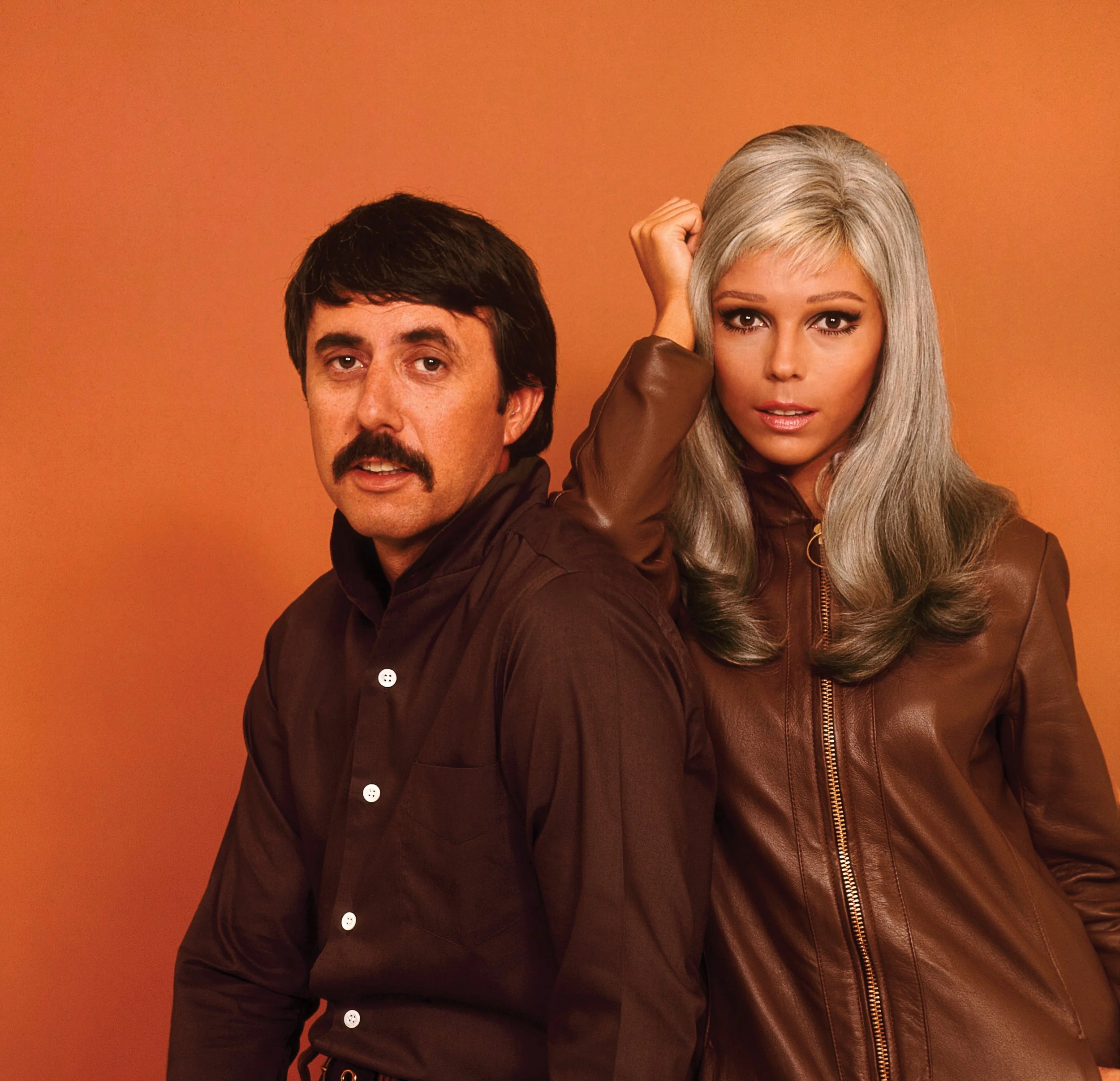
Nancy Sinatra took much of the Seventies off to raise her children and Lee Hazlewood spent years in Sweden where as an unlikely Swedish cowboy he forged a second act to his career, avoided US tax problems and kept his kids out of the draft. Both artists almost concurrently enjoyed a reappraisal of their work separate and together in the 1990s and onward. She was heralded as a pioneering feminist icon and he as a heroic if unsung legend of underground rock and he was rediscovered by alternative music artists. Sadly, in 2005, Lee was diagnosed with renal cancer and, in spite of his declining health, he hit the road to promote his last album Cake or Death, released in 2006. The album includes a new recording of “Some Velvet Morning” in a duet with Lee’s granddaughter. And incidentally, Phaedra is her name. Phaedra Dawn Stewart. Lee Hazlewood died in Henderson, Nevada on August 4th, 2007. He was 78.
It may very well be that Nancy Sinatra was endowed with a pleasant voice but was only ever an average singer. Consider that the recording she is most known for – “These Boots Are Made for Walkin'” – does not feature any real vocalizing nor did the song call for any. In spite of this, she cuts a unique figure in music history and much of that is – let’s face it – down to her being Frank Sinatra’s daughter. But, because of Lee Hazlewood, she did have a successful singing career. And when she duets with Lee, her voice takes on a definite character. Indeed, the songs they sing together are very cinematic and she “acts” them well. That being said, I think I am left to declare that Nancy Sinatra’s best work remains the songs she sang with Lee – every one of her Top 40 singles was either written, produced or both by Lee.
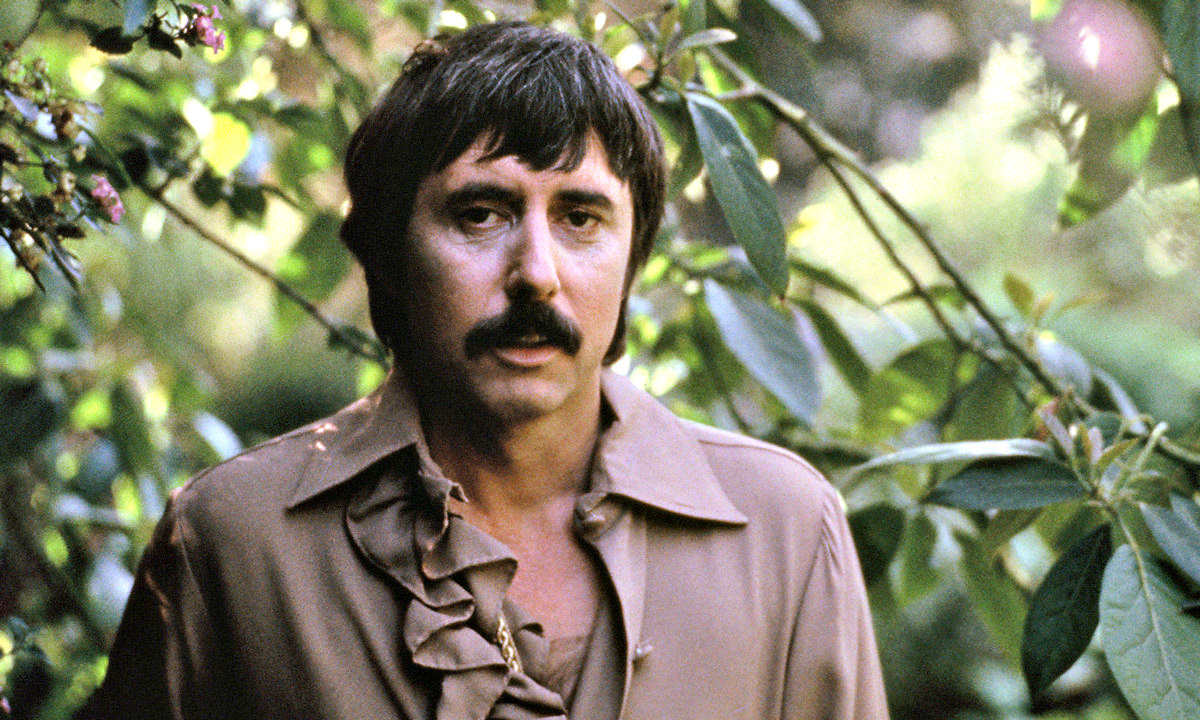
And Barton Lee on his own was too out there for any mainstream acceptance and much of his solo output makes Mike Nesmith‘s albums seem flat out conventional and Lee was not easily appreciated by the average listener. But Lee has earned his reputation and he does deserve a spot alongside other producers like Sonny Bono, Jan Berry, Jimmy Bowen and Snuff Garrett as a respected figure of the day who knew how to “play” the studio. I even read somewhere that Phil Spector would watch Lee work for pointers but I cannot confirm.
Lee has a place in history based mostly on his work with Nancy and partly because together they created the “Nancy Sinatra” that we know and love and for bringing to life a pioneering and iconic feminist anthem in “Boots”. For her part, Sinatra worked to earn the right to be considered outside of her father’s formidable shadow and her sense of style and her longevity has made her an archetype of the Sixties and an ambassador of Southern California in general.
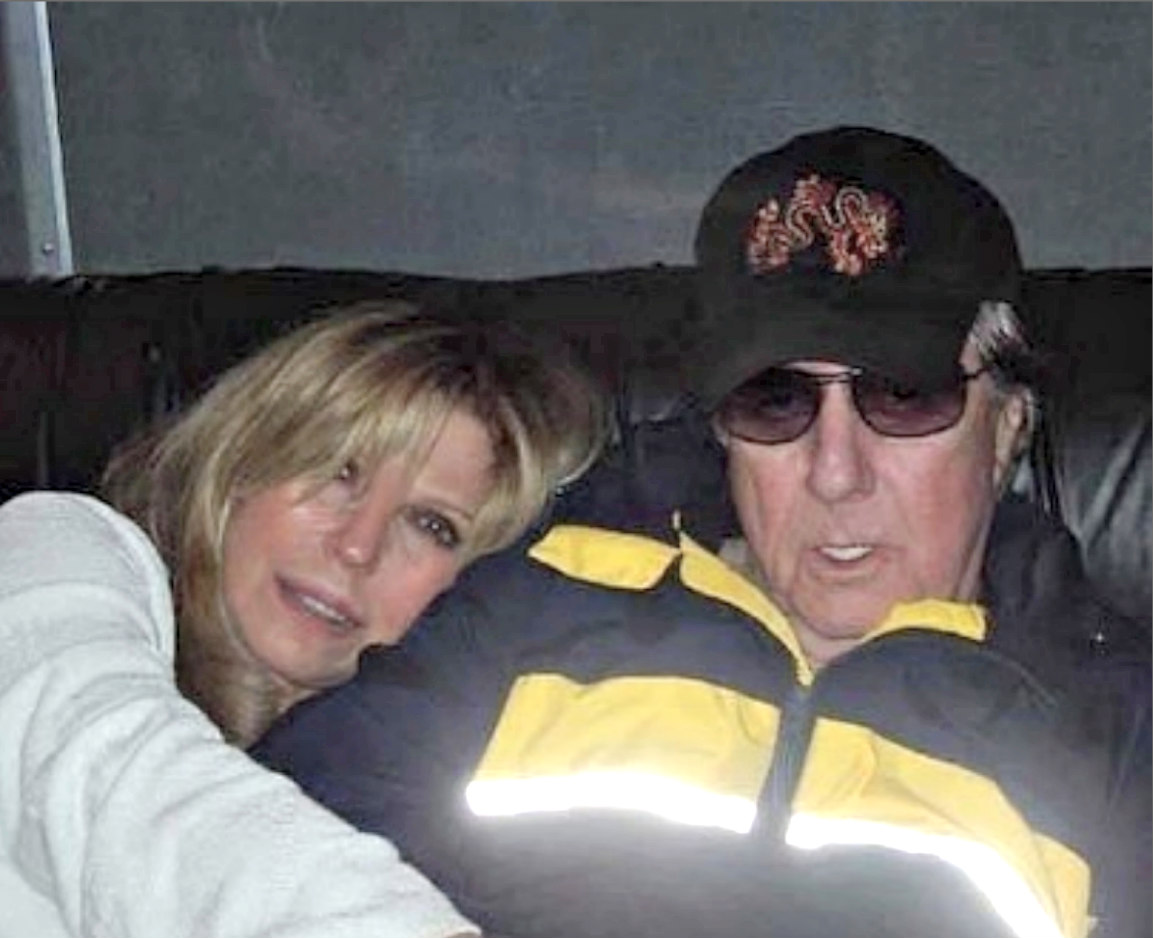
But together they are another story. Together they took it to another level… In the realm between the abstract and the absolute, in the dim light between sleeping and waking. On the side of the road in a dusty backwoods nothing town southwest of Bakersfield, venturing out into fields of wildflowers. By campfires under a sky as dense and as black as ink, when night is over and the sky begins to change from purple to azure. In a trailer parked in desolation and littered with dirty dishes, full ashtrays, notebooks, pocket novels and a beat up Gibson. And when drink alters perception in a regular old honky tonk in a forgotten section of Los Angeles and down in the blazing afternoon sun baking the sidewalks of Sunset Blvd where the sexy, bright, California flower girls walk and laugh and keep guard on their treasures…
…there you’ll hear the sound. In the caverns of your memory where you keep shadowy, fading visions, flickering black-and-white images and crackling record albums…there you’ll hear the ballad of Nancy & Lee.
Sources
- Lee Hazlewood – Irish Independent (2007)
- Lee Hazlewood – Biography of Lee Hazlewood
- “He’s the Real Deal” – Jim Bessman (2007) Billboard
- Some Velvet Morning by Lee Hazlewood and Nancy Sinatra – The Music Aficionado (2016)
 SoulRide