“Reclusive and gregarious, cocksure and cryptic, primitive and urbane, solemn and witty, canny and reckless, uncompromising and mercurial, contradictory and unequivocal. Dora was surfing‘s most outspoken practitioner, charismatic prince, chief antihero, committed loner and enduring mystery. He wanted it that way. Except, of course, when he didn’t. This much is certain: Miki Dora’s is the greatest surf story never told. It’s all about surfing and it’s not about surfing at all. Loner. Rebel. Outlaw. Wanderer. Legend.”
All for a Few Perfect Waves: The Audacious Life and Legend of Rebel Surfer Miki Dora
by David Rensin (2008)

There’s an adorable little town near where I live and we often drive through it going other places. But we’ll often stop in this town and spend some time. They have an all-world bakery and a cute little thrift store-book store combo. The book store is no joke and they have robust online sales. One fine day I was gobsmacked to find the book we are looking at today. Seemed a real unique find to me as Miki Dora is an underground surf hero that I would often spot as an extra in the background of my beloved beach party movies. I always found it hard to reconcile his rebel standing with his appearances in these goofy films. This book explained it all – and so much more.
Miklos Sandor Dora III was born in Budapest but raised in California and he came to be perhaps the most significant surfer on the west coast in the 1960s. But more than that he came to epitomize the rebellious nature and outsider aspects of surfing and took commitment to the lifestyle to a whole other level. Author David Rensin wrote an article on Dora for California Magazine in 1983 and after Dora passed in 2002, those entrusted with Miki’s legacy recalled the veracity of that article when Rensin suggested he’d be the man to write Miki Dora’s life story. Once Miki Dora, Sr. gave Rensin his stamp of approval, Rensin got to work assembling the research material he already had and began plans to conduct further interviews. Rensin had been published often in Playboy and had interviewed scores of notable people. He would go on to write and co-write books on Louis Zamperini, Yanni, Tim Allen and Chris Rock.
“Dora took the royal aspects of surfing’s Hawaiian origins, the individualistic bravado of pre-World War II watermen/surfers, the Beat era/free speech/free love/tune in-turn on-drop out rebelliousness of the 1950s and 1960s, and the me-ism of the 1970s (way before the ’70s), and, combined with his natural ability and riveting persona, wrapped it into one tantalizing package that at some point, while he was still alive, slipped beyond even Dora’s ability to control. Did the myth transcend the man? You will always find those who think Dora should have made more of his potential, who say ‘if only’ he’d been more honest, less self-indulgent, more focused, less willful, willing to have a job. ‘He could have been anything, done anything.’ Dora would have enthusiastically agreed. In fact, that’s just what he did: anything. That was the whole point.”
Rensin’s book is an oral history, presenting verbatim the scores of interviews he has conducted over the years and as a side note, I personally was thrilled to see, buried deep in the Acknowledgments, Rensin’s blunt statement that a book on a subject I love was his “original inspiration”. The author calls Edie: American Girl “the ultimate oral history” and I’m inclined to agree about this book on my girl Edie Sedgwick that I have discussed here at SoulRide.

David Rensin begins his book taking great pains to try to describe Miki Dora to the reader – he no doubt had as much trouble as I did in the paragraph above. He does well, though, and trots out a plethora of comparisons to other legends of popular culture; Muhammad Ali, Kerouac in board shorts, Jack Nicholson in Cuckoo’s Nest, Andy Warhol, Bob Dylan, “Dora was Elvis, James Dean, Marlon Brando (or they were him)”, John Cassavetes, Sid Vicious meets Cary Grant and even Charles Foster Kane. The reader gets the picture, though there may be some doubt that one man encompassed all that. But read on.
Rensin sets the stage well by referencing the Beach Boys’ “Caroline, No” as a way of describing what happened to Dora’s beloved Malibu in the wake of the Gidget phenomenon and this “paradise lost” aspect is where the story of Miki Dora effectively begins. The introduction is lengthy but, taken on it’s own, it serves as an essay spelling out Dora’s life path and what got him started down his road.
“In the wake of stateside assassinations, Miki’s deepening paranoia, political and financial shockwaves – and crowded surf – he was increasingly uncomfortable in the United States. Home no longer felt like home.”
The author details Dora’s birth in Budapest and his family’s move to Los Angeles. Also key to the story is his parents’ divorce and his mother’s remarrying an avid and notable surfer. Miki then becomes a man and rubs shoulders with many notable LA people through his father’s restaurant and this helps to make this book more than readable. One interviewee relates the fashionable parties he and Miki would crash and how Miki could talk his way into or out of any situation. At a party in Bel Air where the Beatles were in attendance, Miki & Co. talked their way in with phony press passes. They stood watching John Lennon talk to Groucho Marx and Miki held Ringo’s coat while Ringo went to the bathroom. Dora promptly lifted Ringo’s cigarette case to keep as a souvenir. I particularly wanted to hear about Dora’s participation in the beach party movies and I wasn’t disappointed. Miki was involved with the couple who were getting ready to produce Ride the Wild Surf and the reader learns how Miki almost starred in the film before the role went to Fabian.

Miki Dora then turned his back on the United States and began to adopt attitudes akin to one who sees conspiracies everywhere. He wanted to be left alone to travel but this often proved problematic and costly necessitating Dora’s credit card fraud and forging of passports; Miki would steal people’s passports, leaving them in “heavy jeopardy”. The reader then has to contend with the dichotomy of this “legend” becoming a small time crook and having to always look over his shoulder to keep one step ahead of the law. The reader learns the FBI – Miki Dora’s FBI file eventually swelled to 800 pages – looked for Miki all over Europe and his ability to elude them causes some speculation that he is actually a snitch for the Feds. Dora finally gets busted and federal charges of passport fraud and credit card fraud are brought against him and he spends time in jail. Many people interviewed bring up the film Catch Me If You Can as being a perfect example of the way Miki Dora lived through the 1970s.
His life story in and of itself is fascinating but there are many other themes at play here and Rensin, through his interviews and his own insight, brings to light so many thought provoking elements of not only the way Dora looked at life but also the paradoxes of life as a surfer and indeed all of our lives and the way we choose to live them. Miki absolutely loathed the surf culture that emerged in the early 1960s and hated the capitalistic nature of the surf industry – he hated money but he needed it. He hated the surf magazines but sold them his stories. He did not want to compromise and fought all his life against doing so – but sometimes he had to play ball.
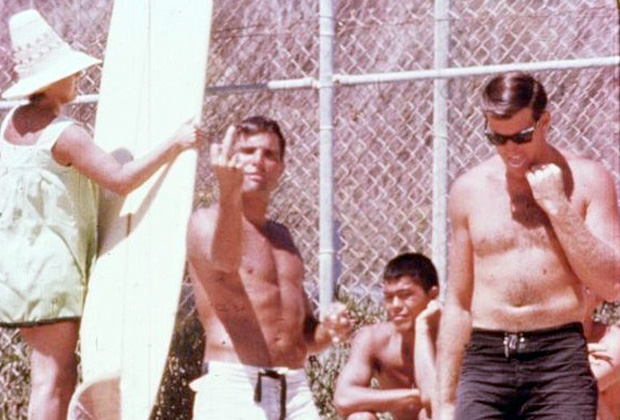
You’ll learn about the co-optation of surfing into the mainstream and advertising in particular with Rensin noting that no sport practiced by fewer people has ever had the influence surfing has had on American style. One of those interviewed says he would argue with Miki that making money from surfing is not the abhorrence Dora made it out to be. Miki was a purist and hated to see surfing tainted in any way but he also got paid to appear as an extra and a stunt double in Hollywood films, submitted articles to magazines for publication and loaned his name to a custom surfboard made by Greg Noll that provided Dora with income for 30 years. Many readers would likely say that if someone is willing to pay you to do something you love, then you’ve got it made. Another contributor mentions many heavy hitters in surfing’s history who were able to straddle the line between monetizing their lifestyle and still being able to live it and stay true to themselves and not “sell out”. At one point in his life, Miki made a case for being owed reparations. He rightfully claimed to have been a major part of surf culture right from the beginning and the surf industry had made millions from this lifestyle of which he was a pioneer and a leading practitioner. It is also described how Dora eventually found himself in a conundrum; he could make money to sustain himself and finance his travels but to do so he had to sell out to an extent and – more damagingly – pull back the curtain on his mythos.
“Men are enmeshed in the cancerous discipline of ‘security,’ and in the worship of security we fling our lives beneath the wheels of routine – and before we know it our lives are gone”.
– this quote from Sterling Hayden’s Wanderer is used in All for a Few Perfect Waves as it applies to a main theme of this book
Early on, Rensin lays out the significant theme presented above, poignantly saying we all “wear the mantle of restraint and resignation without knowing it’s there”. He says that to break away from family and responsibility is hard and I took some solace in this declaration. Yes, we all – myself included – want to follow our muses and chase our dreams and we inevitably need to ask ourselves what it is we really want and what are we willing to do – to give up – to get it? This really resonated with me. Miki Dora danced to his own tune like few other people ever have. But what did he give up to do so? And what did it cost him?
This story is so full. I was greatly thrilled to see so many notable surf people present in the book, not the least of which is one of my favourite filmmakers and a surfer himself, John Milius. Big John was quoted often and at one point touched on the cost of living the life you want by saying that to selfishly pursue your passions can easily lead to contributing nothing to the world and being nothing more than a bum. I was fascinated to learn about Johnny Fain, with Miki and others, one of the original “four aces of Malibu”. Fain also can be seen in the beach party movies and had a more prominent role in Milius’ Big Wednesday. For many and varied reasons, Fain became Dora’s nemesis and was openly heckled in trade ads for Dora’s Da Cat signature surfboards and suffered Miki’s chicanery during contests. Poor Johnny says he was often left feeling “demoralized”. Later in life, Dora reached out to Johnny to bury the hatchet but by then Fain was not having it. After Dora was gone, Fain says that he regretted not getting together with Miki and admits that just being around Dora and being pushed by him made him a better surfer. And the book is all the better for the original approval and the constant commentary of Miki Dora, Sr., Miki’s father. Throughout the book, Dora the Elder chimes in with his unique insight into his son’s life and his is a significant presence. He also provides one of the saddest passages of the book; “but I have to be honest: Beside (his skill on a board), I think my son wasted his life. This is the father talking. Still, he was my son and I always loved him”.

Also on hand, having been interviewed by Rensin, is the previously mentioned Louis Zamperini, the incredible championship runner, POW, motivational speaker and evangelist, subject of Angelina Jolie’s film Unbroken. Louis’ wife was a dear friend of Dora’s and arranged the first meeting between Miki and the author of this book. And lastly, how about this? Miki Dora had a penchant for hyperbole and contrivance and you couldn’t necessarily always believe everything he said. But one of those who was interviewed shared a story that Miki had told him about Charles Manson. Miki claimed that Manson and his crowd were hanging around Malibu and were looking and acting threatening. To get on their good side and avoid any trouble, Miki told them about a party going on at a house where the Manson gang could make out well; drugs, cash, women, etc. Miki told this friend that the Manson gang went up there and did make out well, including stealing cars. Turns out the house was owned by one of the Beach Boys. Miki said he sent the gang up there in part because he wanted “to get back at” the Beach Boys for their part in selling surf culture to the masses. I paused when I read this. If what Miki told his friend is true then is it possible that it was Miki Dora who inadvertently introduced Charles Manson to Dennis Wilson? We all know how that ended.
All for a Few Perfect Waves is a long book but it sustains your interest with not only the tale it tells but by the use of many different voices. You will get the incredible story of Miki Dora and also a look at surf culture of the Sixties with a lot of international intrigue thrown in. You will also get a thought provoking thesis on the balance of life choices and the cost of doing what it is you really want to do.
“Waves are the ultimate illusion. They come out of nowhere, instantaneously materialize and just as quickly they break and vanish. Chasing after such fleeting mirages is a complete waste of time. That is what I chose to do with my life.”
– Miki Dora
Please help us maintain our page quality by reporting any dead links
Further Studies
- Tell Me Everything – David Rensin website
- Book Talk – Edie: American Girl – Vintage Leisure
- Check This Out: Edie Sedgwick – Vintage Leisure
- The Beach Boys – Vintage Leisure
- A Leisurely Look @ Gidget – Vintage Leisure
- The Flickers: Big Wednesday – Vintage Leisure
 SoulRide