
Often here in our looks at ExPat Cinema we deal with some lesser known American actors and the work they did abroad. This time, we look at one of the biggest stars of the 1970s, Charles Bronson. Charlie Buchinsky was another Vintage Leisure player to be born in Pennsylvania and he was from tough, Lithuanian coal-miner stock, one of 15 children who had to sleep in shifts. Incidentally, Bronson and I share a birthday, November 3rd. By all reports, Bronson was stoic and just as granite-hard as the characters he portrayed. He fought long and hard for recognition in the USA and subsequently was somewhat embittered by the experience. As an introvert who maintained his suspicious nature, held grudges and hated with a passion to give interviews or to let anyone see behind the curtain, he was taken in not one bit by the Hollywood scene. Tellingly, one critic noted poignantly that, unlike other actors who projected menace, Charles Bronson also seemed violent in person. Not one to trifle with.
At the outset of his career, Bronson appeared – often billed by his birth name – in 25 movies in 6 years. Then in ’58, he got a bit of a break but on the small screen. Charlie starred for two years as the Man With a Camera, a crime drama in which he played a former combat photographer who utilized his skills to assist the police, insurance companies and regular people. Also that year, he became yet another Hollywood player who was given an early chance by the late great Roger Corman when he was given the title role in Machine-Gun Kelly. He then began a run showing up notably in other people’s films, some of them legendary ensemble pieces. Bronson added much to Never So Few (1959) and 4 for Texas (1963), both with Sinatra, and Kid Galahad with Presley in ’62. I remember reading that Bronson was not at all impressed with King and the boys practicing their karate between takes. No doubt Charlie could’ve taken them all. At once. Now, consider this; Charles Bronson was part of the cast of The Magnificent Seven, The Great Escape and The Dirty Dozen, classic films all of them.

Finally, in 1968, Bronson, frustrated with how his career was going Stateside, joined the list of Americans who made the move to Europe. He started – perhaps not surprisingly – with a western, a French production with Anthony Quinn called Guns for San Sebastian and featuring a score by Il Maestro, Ennio Morricone. That same year saw him working in France with Alain Delon (Adieu Ami) and appearing as Harmonica in one of the greatest films ever made, Sergio Leone’s Once Upon a Time in the West. In 1970 he made the outrageous Lola and worked in France again on Rider on the Rain. Bronson would stay abroad through 1971 when he made three films including the one we’re talking about today, the French crime drama, Quelqu’un derrière la porte or Someone Behind the Door, shot in Folkstone on the English Channel and co-starring Anthony Perkins and Mrs. Charles Bronson, Jill Ireland.
Jacques Robert (1921-1997) was a writer born in Lyon and he was the only western journalist to be granted access to Hitler’s bunker in Berlin in May of ’45. He would go on to be a prolific author and screenwriter with many credits in French cinema. His novel, Quelqu’un derrière la porte, was adapted for the screen by Trenton, New Jersey’s Mark Behm who, interestingly, fell in love with France when he was stationed there during the Second World War and eventually made his home there living as an expatriate. Behm (1925-2007) co-wrote the Beatles’ film Help!, concieved the screen story that became Charade and his novel The Eye of the Beholder was filmed twice.
Co-writing the screenplay and directing our film is Hungarian Nicholas Gassner (1931-2023) and Gassner has some interesting credits to his name. He wrote (with Behm) and directed 1967’s The Blonde from Peking with Edward G. Robinson, Sharon Tate’s last film, The Thirteen Chairs also starring Orson Welles, then later in the Seventies he directed The Little Girl Who Lives Down the Lane, an infamous film with cult status starring Jodie Foster, Martin Sheen and Canadian Alexis Smith (the film was shot in Quebec) and in 1980, Gassner got Tony Curtis and Louis Gossett, Jr. to star in It Rained All Night the Day I Left, another one shot partially in Quebec. So, Gassner had a brief run during which he made a couple notable films.

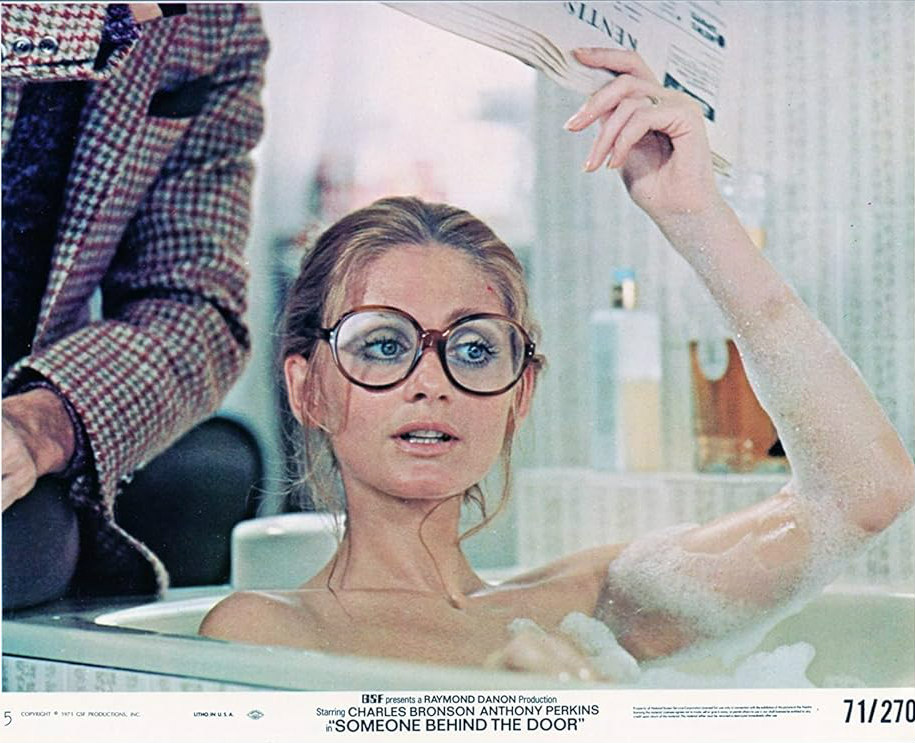
At the beginning of Quelqu’un derrière la porte, a disoriented man (Bronson) is brought to a hospital by a cabbie who found him wandering aimlessly. Just finishing a long night shift at the hospital is neurosurgeon and psychiatrist Dr. Laurence Jeffries (Perkins) who seizes the opportunity to take the amnesiac man home where he gives him a sedative and sends him to bed in the guest room. The doctor then goes upstairs where his wife, Frances (Ireland), is just waking. Their conversation reveals their mutual suspicion and Frances leaves on a trip to visit her brother. Dr. Jeffries knows, however, that she is carrying on an affair. Alone now in the house, the man he has brought home from the hospital emerges from his room and Dr. Jeffries begins to put his plan into motion.
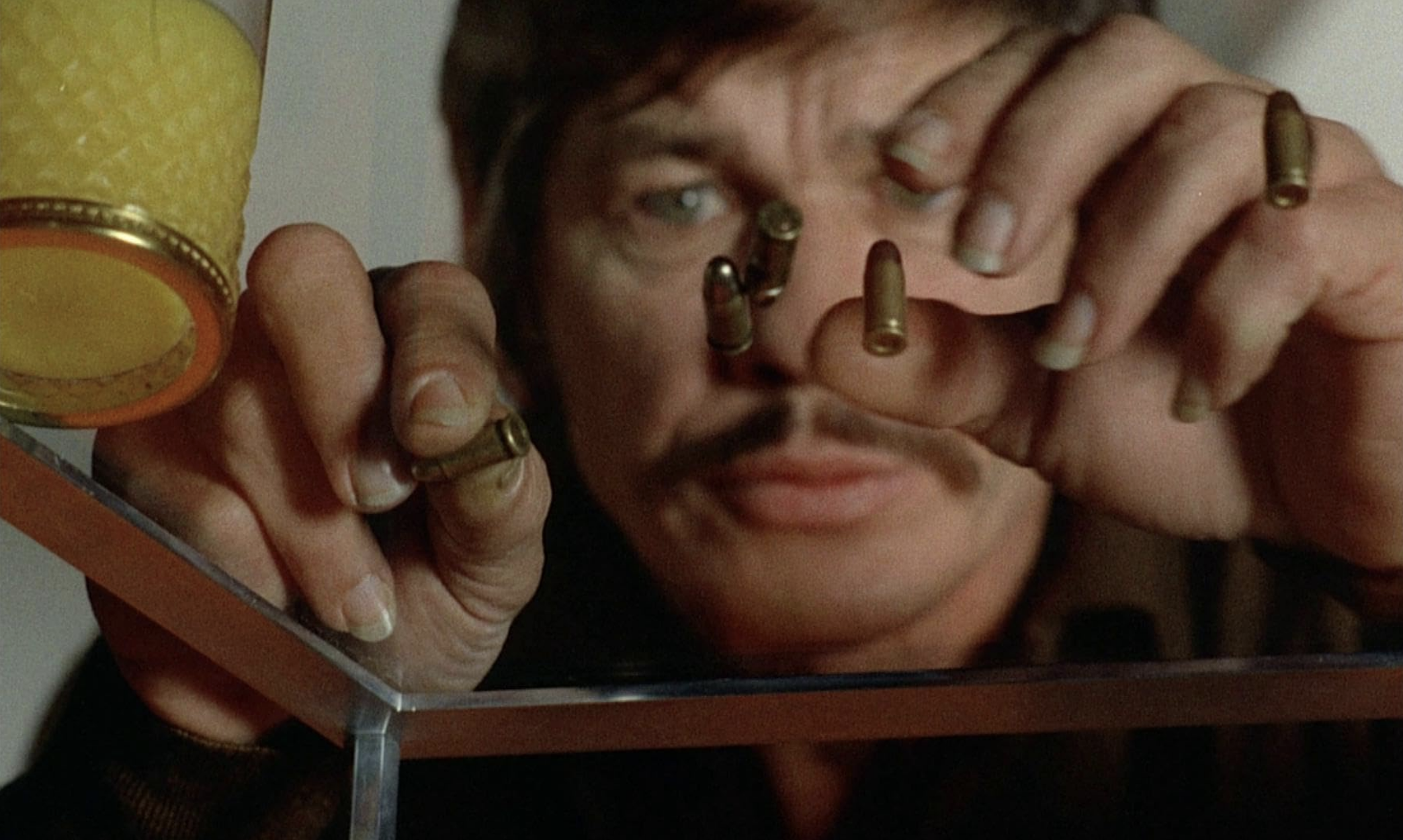
Quelqu’un derrière la porte is a well-paced, taut crime-drama. Early on, the viewer is uneasy sensing the obviously devious intentions of Dr. Jeffries and waits to see the scheme roll out. What is striking about this film is today’s subject, Bronson himself. Here we see him acting, really playing a character and to see the sturdy Bronson we know now so well portraying someone so vulnerable is fascinating. He is essentially bullied and bossed by the doctor and, in his helplessness, is trusting and subservient which is quite a change from the take-charge character Bronson would play throughout the 70s and 80s. He may err on the side of playing the character as a simpleton in the early going but – as the doctor’s manipulations increase – so does Charlie’s agitation and he becomes more animated and determined to decide his own fate. This represents a gallant effort on Charles Bronson’s part. Anthony Perkins was coming out of a bit of a funk in his film career and would go on to more substantial films made Stateside. Mrs. Bronson, Jill Ireland, though a beloved figure in film history, made no real splash on her own in movies or on television and all of her notable films starred her husband; they appeared in 16 together. My mom met her once when Jill was taking her garbage to the curb at her home in Los Angeles. Most will know that Jill gallantly battled breast cancer becoming an advocate for the fight of the disease and succumbed in 1990. This is a pretty good film and was shot in an interesting home in Folkestone.
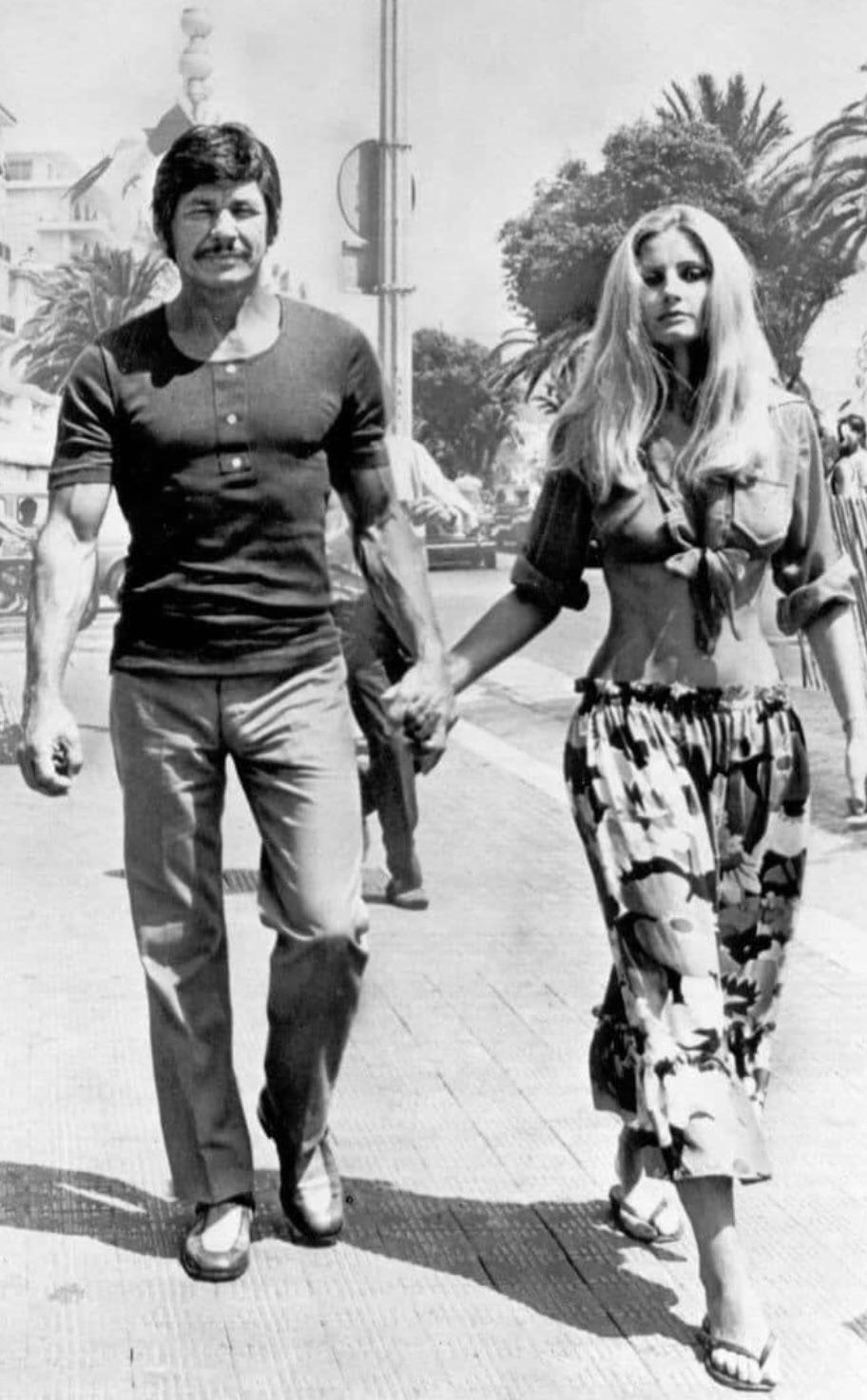
Perhaps though the most fascinating thing about this film has to do with Bronson’s feelings towards the director, Gassner. Almost a year after the release of the film, Charles Bronson was on The Dick Cavett Show and Dick brought up the many rumours of Bronson being violent on film sets. “Most” of the rumours, Bronson said, were false. But he did refer to this film and its director when he admitted to taking Gassner by the lapels and giving him a shake because, Bronson felt, Gassner had “ruined the whole picture” and his wife, Jill, also on the show that night, concurred that the director was “a bit thick” and she also though gives testament to Bronson’s volcanic temper. Seems yes, indeed, Charles was definitely not one to trifle with.
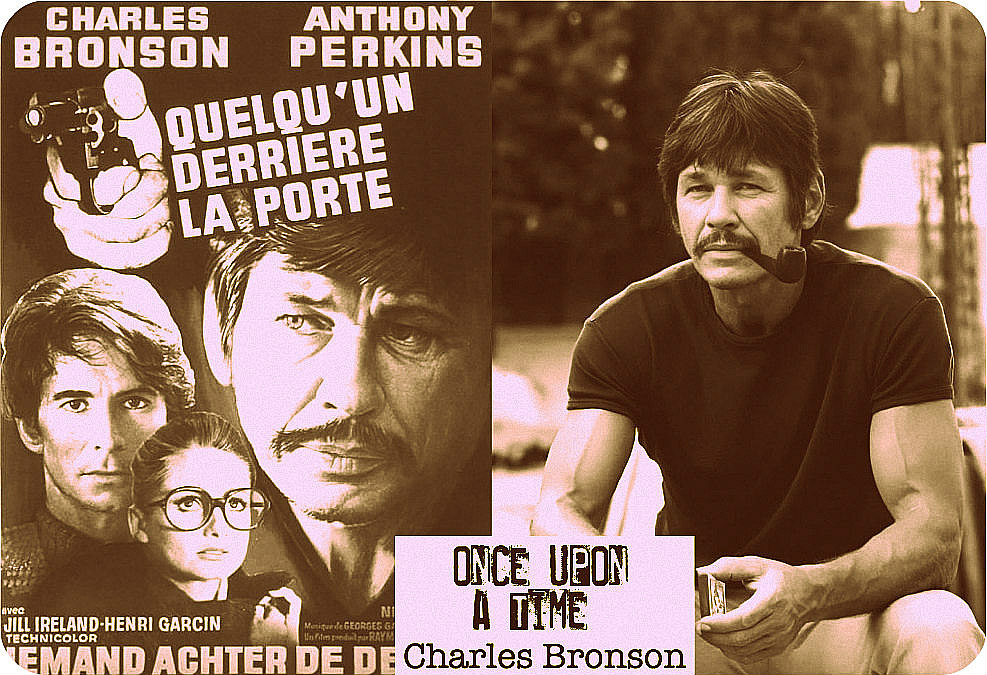
Quelqu’un derrière la porte was released in the States on September 15, 1971 and on that same date Charlie’s western Red Sun with Toshirō Mifune and Alain Delon premiered in France. Then the next year saw Charles Bronson embark on a prolific run of successful films, many of which cemented his status – at long last – as one of the biggest stars in movie history. But between 1968 and 1971, Bronson worked on his craft in Europe putting in some fine performances in at least a few striking films.
Further Studies
- Jill Ireland on Dealing With Charles Bronson’s Temper – The Dick Cavett Show – YouTube (October 3, 1972)
 SoulRide