
I suppose it would be hard to explain the significance of Bryan Adams to anyone who did not grow up in Canada in the 80s and 90s. But it should not be difficult to understand that he was a seminal figure in music at that time in that country. He could be heard on the air on radio stations that played many different formats and many of his songs rated high on Canadian charts. Not to wax overly poetic but he became an ever-present figure in our lives; at our shoulder in the pizza joint urging us on as we played Galaga, facilitating our unions with the opposite sex during the slow dance portions of the teen dances, becoming the fifth man in the car when we were out looking for kicks on a snowy Saturday night, an always welcomed friend coming out of the radio speaker in the dark of our rooms. It is also hard for non-Canucks to really understand the reverence we afford “Summer of ’69”, a song that means so many things to so many people up here. “Summer of ’69” and “Tom Sawyer” are our second and third national anthems.
He garnered a following few had achieved and scaled heights in Canada that few had reached, even gaining recognition worldwide. Sadly, though, we eventually lost him. Bryan Adams was the neighbourhood kid who made good. And moved away.

Our boy was born in Kingston, Ontario, the birthplace of many Canadian heroes such as Gord Downie, Don Cherry, Doug Gilmour and our first Prime Minister, John A. Macdonald. In ’74 when Bryan was 15, the family moved to North Vancouver and Adams got involved in the music scene eventually joining Sweeney Todd after they had their hit, “Roxy Roller” (Number One in Canada). Adams had left the band and struck out on his own when, in 1978, he met Jim Vallance at the Long and McQuade music store in Vancouver. Vallance had been the drummer and principal songwriter for the Vancouver-based rock band Prism but he had quit to focus on studio session work and songwriting. Bryan Adams and Jim Vallance would form a partnership that would define both their careers.
Herb Alpert’s A&M Records first signed Bryan and Jim as songwriters and then signed Adams as a recording artist. His self-titled debut was released in 1980 to little fanfare. It was his second album, though, that set the signature sound that Adams would adhere to – with exceptions we’ll talk about later – for the next 40 years. You Want It, You Got It was a tasty rock & roll record recorded live in the studio that helped break Adams in the US after DJs in Upstate New York started spinning it. Bryan was soon on tour with the likes of the Kinks and Foreigner.

It was only years later, after I finally owned Bryan’s next album, Cuts Like a Knife, on cassette, that I realized it is a fantastic album. We all knew and loved the title track but it was a nice surprise to learn that the whole album was stellar with no really weak tracks. Fully eight of its ten songs were released as singles with six of them charting in the US, three in Canada. “Straight From the Heart” may be considered Adams’ break out song certainly in the US where it went to Number 10 US Pop and was eventually covered by Bonnie Tyler landing on the B side of “Total Eclipse of the Heart”. “This Time” and “I’m Ready” are great examples of what Bryan Adams does best and the title track may be the single greatest recording of his career. Its substance and quality were paid tribute to in the fact that it has been performed live by Bruce Springsteen. The record’s closer, the sincere “The Best Was Yet to Come” was written about Canadian model Dorothy Stratten (Star 80). Cuts Like a Knife put Bryan Adams on the map and reached Number 8 on both the Canadian and US album charts.
So, as 1984 dawned, Bryan Adams was huge. What would he do next?

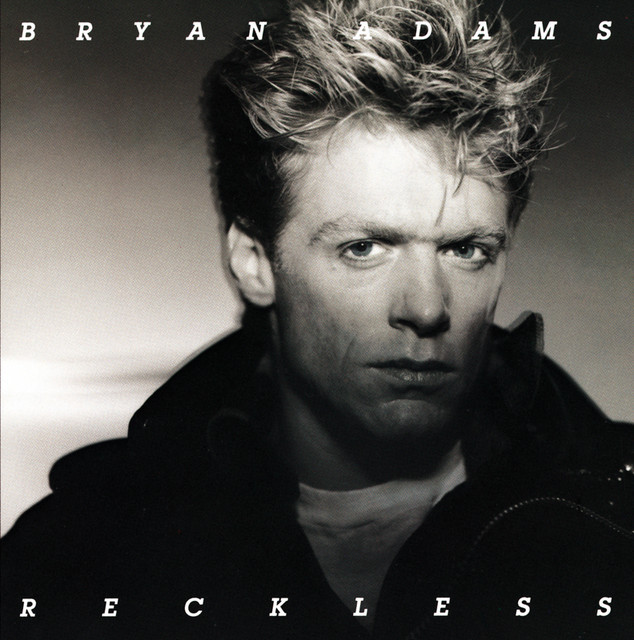
In March of 1984, Bryan and Jim Vallance took the songs they had written together to Vancouver to work once again with producer Bob Clearmountain who had produced and engineered works by Kool & the Gang and Sister Sledge, Herbert Laws and Maynard Ferguson, the Rolling Stones and the Ramones. Bruce Springsteen, Huey Lewis and the News, David Bowie, Hall & Oates and on and on. The team emerged with Reckless and it was an album for the ages. “One Night Love Affair” starts things off and it is one of those pleasant songs with gentle chord changes. Next up is “She’s Only Happy When She’s Dancin'”, a real crowd-pleasin’ bar song that tells a relatable tale. Our girl punches a clock all week and – like so many of us – can’t wait for the weekend when she hits a dance club called The Ball & Chain. There she lets soar “her heart and her soul and her fantasy”.
The third song Jim and Bryan wrote and offered to both Blue Öyster Cult and .38 Special but both bands turned it down. “Run to You” has a drama and an energetic chorus and the version on the record is apparently Take 1. And, yes, my friends and I would sometimes sing “I got the runs for you”. Bryan and Jim wrote “Heaven” while Adams was opening for Journey and the song is inspired by that band’s “Faithfully”; the recording even features Journey’s drummer, Steve Smith. Bryan Adams was not the first Canadian artist to have a Number One song on the US charts, not by a long shot, but he was the first to top that chart three times and then four times. “Heaven” was his first chart-topper Stateside. In this country, it is the quintessential slow dance song but honestly it lacks a bit of depth. “Somebody”, another great mid-tempo, sing-along rocker and another chart hit, closes Side One.
I’m not sure if I can accurately get across the significance of “Summer of ’69”. It will have to suffice to say that the song was a major hit, charting in the Top Ten on charts the world over including reaching Number 5 US Pop. Today, it features on many listings of the best songs of all-time including ranking high on specific listings like being voted “best driving song among Canadians who sing in their cars”. Bryan and Jim have said that the main goal was to create a song about summer and one about the joys and pains of being a teenager, starting a band and growing up in general. They achieved that goal in spades. “Kids Wanna Rock” is a quintessential fan favourite about rock & roll being the lifeblood of youth. This went over very well in concert and it contains cool lyrics; “Turned on the radio, sounded like a disco. Musta turned the dial for a couple of miles but I couldn’t find no rock & roll. This computerized crap ain’t gettin’ me off. Everywhere I go the kids wanna rock”. It was an excellent dramatic choice to keep the dead air between this song and the next to a minimum.
Just as Bryan’s voice fades on “Kids Wanna Rock”, a ballsy rock guitar riff starts off “It’s Only Love”, a song on which Bryan duets with Tina Turner. As a teenager, Bryan had been influenced by attending concerts by Led Zeppelin, Elton John and Turner and Tina had just begun her victory lap with the hugely successful Private Dancer released the year before. It is an inspired pairing, one you may not have thought of yourself. Adams considers it the most memorable of all his collaborations and that is saying something. The song’s dynamism is well captured in the music video and it is exhilarating to watch the two perform. Yet another highlight of this album.
Sneaky Peter Bryan hid another gem late on the record. “Long Gone” is a groovy little number that I came to late. I always love to find the hidden gems that hide in plain sight on popular albums and this beauty qualifies. It was a deep cut feature of one of my legendary mixed tapes back in the day. The only average song on Reckless is the closer, “Ain’t Gonna Cry”. Its a little too aggro, too Surf Punks for my ears but no matter. By this point, you are so enthralled with the record that it doesn’t detract one bit.
To date, Reckless has sold in excess of 12 million copies and has been embraced by an entire generation particularly those of us who came of age in Canada in the late 80s and early 90s. Seven of its ten tracks were released as singles and ALL charted. They were all Top 15 US Pop and Top 20 in Canada, “Heaven” (#1), “Run to You” and “Summer of ’69” went Top 10 US. “Run to You” and “Somebody” went to the top of the US Mainstream Rock chart.
Bryan Adams was huge at this point and we were proud of him. He still seemed like ours. We were prouder still when he wrote and sang on Canada’s answer to “We Are the World”, “Tears Are Not Enough” and it was nice to learn that Bryan understood Christmas. His wonderful single “Christmas Time” was released during Christmas of 1985 and Bryan contributed a dynamic version of Chuck Berry’s “Run Rudolph Run” to A Very Special Christmas, the first – and only really good – edition of a series of Christmas records to benefit the Special Olympics.
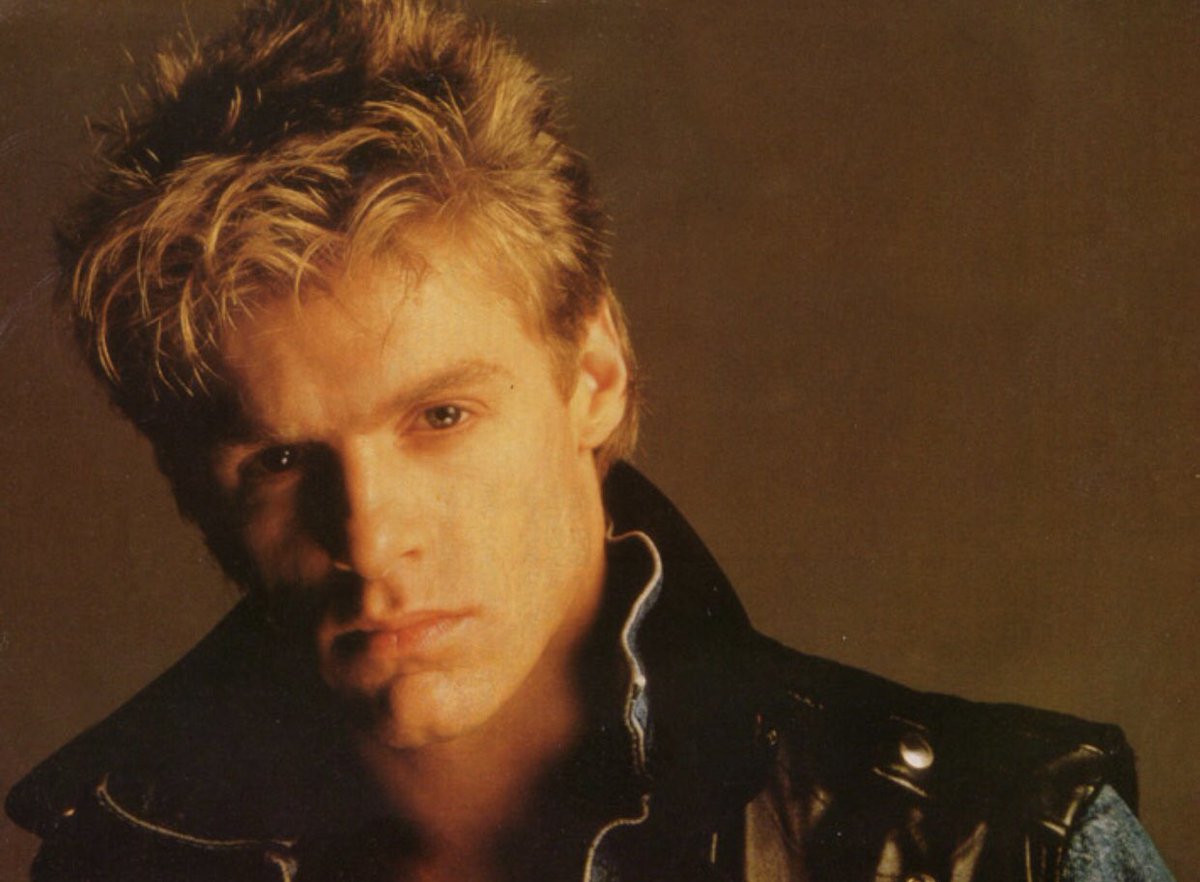
Perhaps feeling a certain amount of pressure, on the 9th anniversary of the death of Elvis Presley, Bryan and Jim & Co. convened at Bryan’s home studio in Vancouver to record the follow-up to Reckless. The album, Into the Fire, was a good one, one that I had a personal liking for though it was not as accessible as its predecessor. Part of that was down to the more serious or mature sounds on the record perhaps a result of Bryan having been a part of a multi-city Amnesty International tour. It was viewed as a “commercial failure” but you know how records can get painted as such when they are compared to other more successful works; Adams would’ve been hard pressed to have created an album considered an improvement over Reckless. Bryan scoffed at the bad press saying “some songs…were slightly different (and) more exploratory…Vallance was up for the songwriting challenge of not repeating Reckless”. The album peaked at Number 7 Stateside and spawned one Top Ten single, the intense “Heat of the Night” and four others that made the upper reaches of the Mainstream Rock chart. “Victim of Love” and “Hearts on Fire” are two of my faves and the respectfully significant “Remembrance Day” I listen to every November. It is quite striking. Back in the day, I would jokingly point out that, for this album, Bryan and Jim borrowed many song titles from other tunes; “Victim of Love” from the Eagles, “Another Day” from Wings, “Only the Strong Survive” from Jerry Butler, “Rebel” from Blue Rodeo and “Hearts on Fire” from Steve Winwood.
And then in 1989 Bryan Adams and Jim Vallance broke up. The inevitable strain set in when they attempted to recreate the magic that was Reckless and here again its the old story; relative lack of success and the disappointment of the record company paints a fine record like Into the Fire a “failure”. But on top of this pressure and the results of the follow-up album was the fact that Vallance started a family at this time. He was a new father and his priorities had shifted. Adams also bristled somewhat at Jim dividing his time working with Glass Tiger and Aerosmith. Jim complied with his old buddy’s request to focus on Adams/Vallance but after a time both realized they had run out of gas as a team.
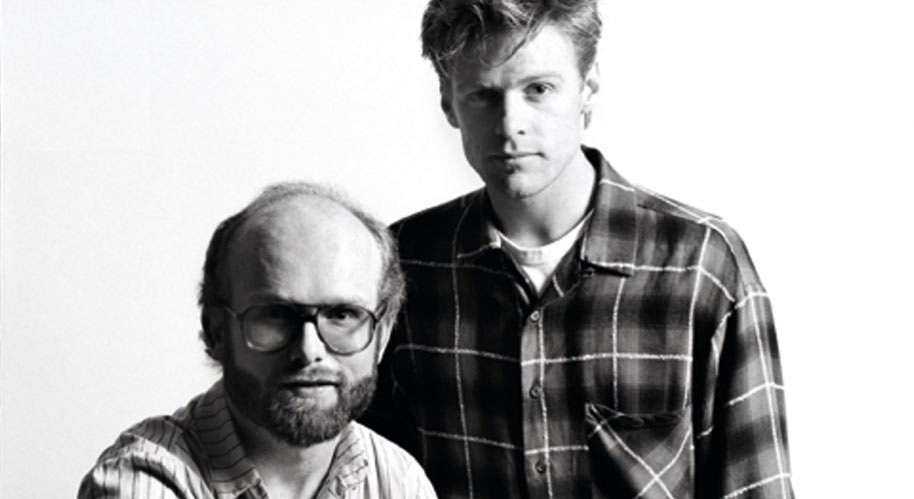
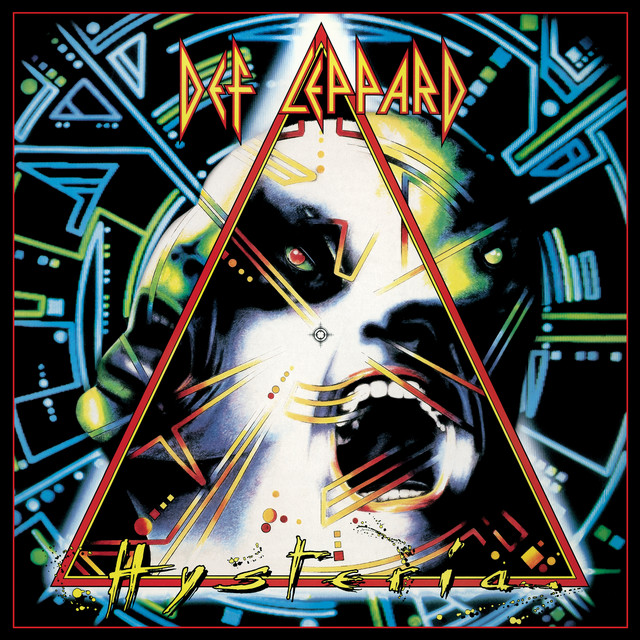
Then Bryan went to England. He began looking for a new collaborator there and came into contact with one Robert John “Mutt” Lange, someone who warrants his own dedicated discussion. A South African who grew up in Durban with German parents, Mutt made his name producing records for AC/DC, first Highway to Hell (1979) and then the second best-selling album ever, the best-selling record to never reach Number One on Billboard‘s album chart, Back in Black (1980). He then worked on albums with Def Leppard, most significantly, 1987’s Hysteria, another of the best-selling albums ever, this one racking up sales in excess of 20 million units.
And then, Hollywood. The late film composer Michael Kamen was working on the score to a film then in production, Robin Hood: Prince of Thieves and sought out a singer for the film’s theme. It was originally written to be sung from the perspective of Maid Marian and so women were contacted like Annie Lennox and the inexplicable Kate Bush. When it was decided a male singer was needed, Kamen contacted Peter Cetera who wrote a theme that Kamen considered “too pretty” and he went looking for a vocalist with a rougher edge. In walked our boy, Bryan. He got together with his new collaborator, Mutt and – in 45 minutes – they knocked out “(Everything I Do) I Do It for You”. The studio wasn’t crazy on it as they had wanted a song more period specific – lutes, etc. – but Adams and Lange wouldn’t change it so the film’s producers took it and buried the song in the film, halfway through the closing credits. I distinctly recall one long weekend event at our local drive-in. Robin Hood was the finale of a triple feature that also included Don’t Tell Mom the Babysitter’s Dead and Richard Grieco’s If Looks Could Kill. My friends and I were waiting to hear the Adams tune and were surprised that it only showed up as the final 5 minutes of the 143-minute film. And by then it was, like, three o’clock in the morning.
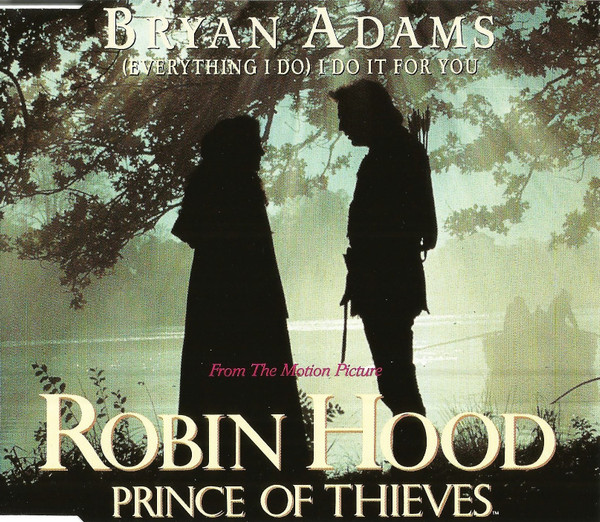
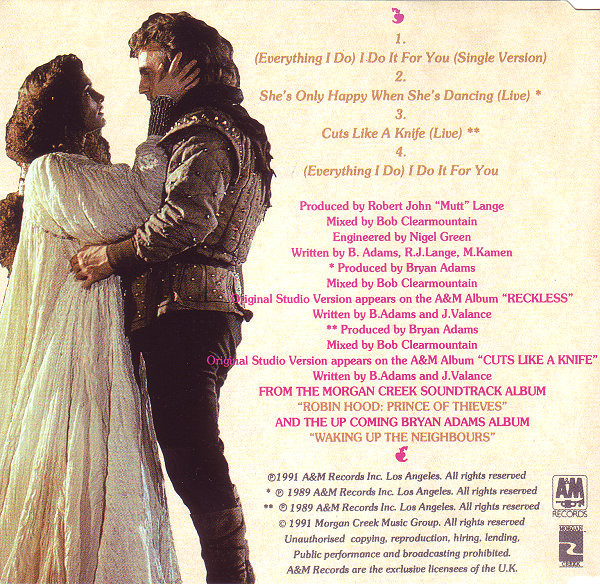
Where it played during the film ended up mattering not one iota. The song was an enormous success, reaching Number One on charts in 19 countries worldwide including the US (for seven weeks), Canada (9 weeks) and in the UK where it still holds the record for consecutive weeks at Number One where it stayed for 16 weeks – that’s four months. It broke the previous record of 11 weeks held by – wait for it – Slim Whitman. It remains by far Adams’ most successful song and in fact one of the biggest-selling singles of all-time. All this is great and good for our boy. But the problem is that then and now – and this is something my friends and I grumbled about at the time – the world now knew Canada’s Own Bryan Adams but it was not through the endearing “Summer of ’69” or the muscular “Cuts Like a Knife”. It was through a tender, gentle – and somewhat rote – romantic ballad. But to paraphrase Adams and Vallance, the worst was yet to come.
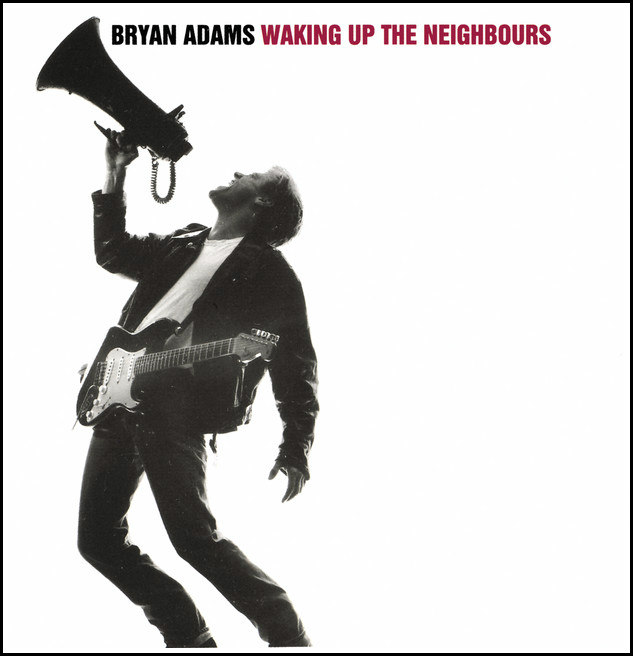
On the heels of this success, Adams and Mutt hit the studio and emerged – after well over a year due in most part to Lange’s perfectionism – with Waking Up the Neighbours. Here’s a rarity at SoulRide; in this instance, I can actually provide a contemporaneous account of an album’s impact on fans, at least on the fans I hung out with. To put it in no uncertain terms, we were severely disappointed and the problem had to do with Def Leppard. My friend group was well aware of that band’s 1987 mega-hit album Hysteria, an epic, unwieldy and elongated at over 62 minutes record that hit Number One in the US and UK and spawned 7 – count ’em, 7 – hit singles. Much like with Into the Fire, there had been a lot riding on this album as its predecessor, Pyromania, had been Def Leppard’s commercial breakthrough. They had initially tried working with my man Jim Steinman but Jim was aiming for a stripped-down rock record while the lads in Def Leppard wanted more of a “pristine pop sound”; interesting considering the band’s rep as a hard rock band. Enter Mutt Lange. He put the boys through their paces with recording taking three years, the lengthy duration including the hiatus that resulted from drummer Rick Allen’s car accident. On New Year’s Eve, 1984, Allen was in a wreck that threw him from his Corvette while his left arm stayed behind entangled in the seat belt.

I digress into Def Leppard Land to make this point; Mutt Lange had a sound. Whether or not it is a good sound or a bad sound is up for debate but he definitely had his own stamp and he pounded it onto the lads from Sheffield. Understand that, going into sessions for Hysteria, Lange wanted to make a “hard rock version of Michael Jackson’s Thriller”, hoping all of the tracks would be hits as singles. Many of Def Leppard’s diehard fans were extremely disappointed with the album and it’s heavily programmed, pop sound. But that was the Lange sound and the results moved the band away from hard rock and into a Top 40 sound that resulted in massive success.
Mutt did the exact same thing to Bryan Adams and his bar band, fully check-it-out-tasty rock style. All my friends and I arrived at the same conclusion when we first heard Waking Up the Neighbours – it sounded just like Hysteria! We weren’t concerned too much with the Mutt Lange Sound as much as we were sure that Bryan had “cheated” and hoped to have some of Def Leppard’s success with a copycat record. While that was not really Bryan’s intention, that is exactly what happened. Waking Up the Neighbours is ridiculously long at almost 75 minutes and many of the songs, some instrumental passages and especially some of Adams’ vocals and the vocal harmonies and layering sound almost interchangeable – I’m talking identical – with Joe Elliott’s vocals on Hysteria and it is severely overproduced; maybe not a bad thing in and of itself but glaringly obvious and somewhat detrimental in the wake of Reckless and Into the Fire. The album is bloated and boring. I always liked “Touch the Hand”, though.
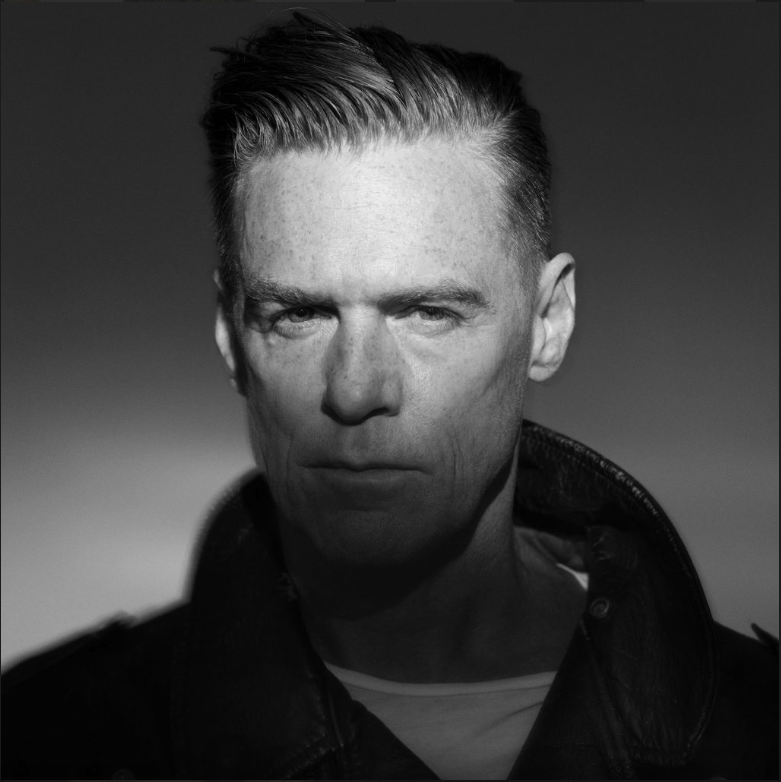
Maybe I should just shut up though. Because Waking Up the Neighbours went to Number One in several countries worldwide including Canada and the UK. It’s seven singles included five Top 40 US Pop hits and it has sold over 16 million copies. But it seemed to us that Bryan had compromised his own brand of guitar rock for a slick sound that was sure to prove popular and make him a millionaire several times over. We felt like the kid from the neighbourhood had moved away. Sold out, even.
The CRTC was inclined to agree. “Canadian broadcasting should be Canadian” declared the Canadian Radio-Television Commission in 1970 and Canadian content or “CanCon” rules continue to moderate what is played on the radio in this country so that we would not simply be “mouthpieces” for American “entertainment factories” but also be a home where Canadians can be heard. A certain percentage of what is played on the radio had to be CanCon and, in 1991, for purposes of radio play in Canada, there was criteria in place for a song to qualify as Canadian Content and Bryan’s songs from Waking Up the Neighbours met only one of the four criterion; he was Canadian. But the songs weren’t totally written by Canadians (co-writer Lange being from Zambia) nor were they recorded in Canada but in England. So, the CRTC said, Adams may be a Canuck but he is not plying his trade in such a way that benefits the industry in Canada. This added to our feeling that Bryan had left his roots behind. But he of course bristled and called the situation ludicrous, even calling for the dissolution of the CRTC. Bryan Adams and Waking Up the Neighbours lead to changes in the CanCon regulations to allow for up to 50% of the creation of any given song be provided by non-Canadians. Many music fans rolled their eyes at all this. Many felt Bryan is a Canadian so his content is Canadian, full stop. But a point had been made and then conceded; if you are a Canadian citizen should you be guaranteed airtime in this country even if you work and even live abroad and make music with those from other countries?

I originally conceived this article over five years ago and with one, sole premise; when Bryan Adams dropped his old partner and sold his soul to Mutt Lange. As we’ve seen, it didn’t really roll out that way. But it is dang close and the implication of the statement is basically the truth. For additional corroboration of this, one need only gaze at the golden bare midriff of a lovely Canadian lass name of Shania Twain. In 1993, after she had released but one underperforming record, Lange reached out to Shania and the two began working together, eventually marrying. Their first record together was The Woman in Me, a record that sold 12 million copies and spearheaded the shift of 90s country music towards a pop sound. Their second collab was Come On Over, a record that sold a staggering 40 million copies worldwide and one that the Guinness Book declares the best-selling studio album by a solo female artist. 2002’s Up! only sold 11 million copies making Shania the only female to have three consecutive records sell 10 million copies or more in the US. So, Mutt Lange had done it again but this time not with a hard rock band like Def Leppard or a rock & roller like Adams but with a country singer. But was it country at all? Or more of the Lange sound in a different guise? I say all that to say all this; a point can be made that Hysteria, Waking Up the Neighbours and The Woman in Me are pretty much the same record. They are Mutt Lange creations sifted through various prisms and musical styles.
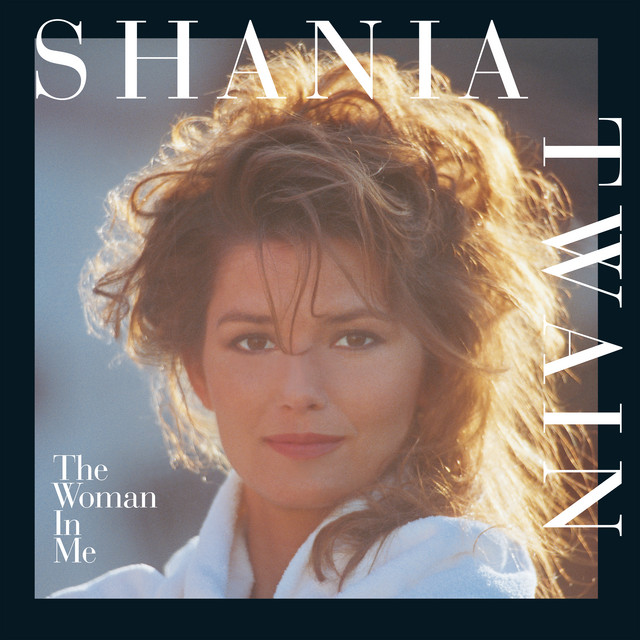
I have to add that Mutt Lange must be a madman. He gets Shania Twain – 17 years younger and much better looking than him, mind you – to marry him and then cheats on her. With her best friend. How did Shania react? By marrying that former best friend’s former husband. Bam.
Bottom line is this; Bryan Adams sounding like Def Leppard sounding like Shania Twain is not cool. But the Bryan Adams of Reckless was our best friend. Maybe he didn’t kick Jim Vallance to the curb and maybe he didn’t sell his soul to Mutt Lange but…he sure changed. After the Neighbours album, he scored a huge hit with another soft rock love song, “Please Forgive Me” co-written and produced with Lange and then another big, sappy love theme from a movie, “All for Love” with Rod Stewart and Sting from The Three Musketeers, another worldwide Number One song Bryan wrote with Lange and Michael Kamen. Y’want another syrupy movie love theme? Bryan’s got one, “Have You Ever Really Loved a Woman?” from Don Juan deMarco, another Adams-Lange-Kamen worldwide Number One/Top Ten song. So, you see? It was different. He was different.
But here’s the thing. It doesn’t matter. Bryan Adams was there for us when we needed him. He gifted us with some great music, music that is part of the fabric of our lives. Then we had to share him but he made us proud. When he was working abroad, scaling the heights and selling millions of records, we could still claim him as one of our own. We’ve always been able to say that Bryan Adams is Canadian.

Ten from Adams
- This Time
- Cuts Like a Knife
- Summer of ’69
- It’s Only Love (with Tina Turner)
- Long Gone
- Christmas Time
- Victim of Love
- Remembrance Day
- Into the Fire (live)
- Touch the Hand
Sources
- The Story of… ‘Everything I Do (I Do it For You)’ by Bryan Adams – Tom Eames, SmoothRadio.com (September 18, 2020)
- Bryan Adams Fan Club / Netherlands – JimVallance.com (February, 2004)
- Robert “Mutt” Lange’s Patented ’90s Sound Ruined Def Leppard and Bryan Adams, Which He Eventually Morphed Into Shania Twain’s Multiplatinum Success – Harold Caine, Reddit (2024)
 SoulRide