“In reality…I was conflicted. On one hand, it was the most amazing time. I was young, celebrated, with plenty of work. On the other hand, it was a Faustian deal. No matter how you try, you are commodified. Whether you are a competent actor, or an artist, is incidental. The main business is, you are a product. I had a hard time steadying myself against that stuff.”
Robert Redford: The Biography
by Michael Feeney Callan (2011)

The second week of July, 2025, I found myself in a thrift store in Eastern Canada called Au Comptoir that supports a French non-profit. There wasn’t much for me there so I drifted to the books and saw many of them were in French. I was pleasantly surprised to notice two that weren’t – Dean and Me by Jerry Lewis and the one we are looking at today with Robert Redford’s handsome smiling mug on the cover. I took these two to the counter (au comptoir translates as “at the counter”) and the lady told me that books are gratis; free books! Mais oui. C’est bon. I did wonder when I would ever read the Redford book until September 16th of that year when Sundance went off to meet Butch Cassidy. I found it interesting that a mere 8 weeks after I bought this book, Redford died and I began to consider some of his films that I had never seen. Then I remembered this book on my tsundoku shelf and, well, here we are.
You might think it’s a no-brainer; “Robert Redford? Yeah! Just read the book”. But as much as I have always liked Robert Redford, he has also always seemed unknowable to me and, well…unremarkable. Ridiculously handsome, yes, and a straight-up Seventies fashion icon. But aside from his admirable patronage of independent film with the Sundance Film Festival what really makes him stand out? What makes him worthy of a 400-page biography? Well, let’s find out.
But let’s start with the author. Dublin’s Michael Feeney Callan (not the same as actor/dancer Michael Callan) is a writer, poet, painter and sculptor who has written bios of Julie Christie, Anthony Hopkins, Richard Harris and a highly rated book on Sean Connery. As a film producer and director, he has issued works on the Beatles, the Beach Boys (The Beach Boys Today documented the final touring days of the Carl Wilson-lead band) and 80-year-old Perry Como’s final concert that took place in Ireland. Callan spent years interviewing scores of people for what has to be considered the absolutely definitive look at Charles Robert Redford, Jr.

Going a long way to defining Robert Redford is Callan’s excellent and concise family history that in part describes the great dichotomy between Redford’s father’s and his mother’s families. It was his mother who was most important to him and as she nursed him through a childhood bout with polio, Bob says she opened him up to experience and instilled in him a desire to do and to be something. It will perhaps be surprising for the reader to learn about Redford’s delinquent youth but cool to read of his immersion in the Beats, in jazz and even in a bit of the “tea” smoking that went with it. And you can add Robert Redford to the list of those who were influenced by Elvis Presley. Redford actually discovered Presley during an early failure; the future king’s bum gig in Las Vegas in 1955. While I was reading all this I found myself quite fascinated as I realized that I was learning these things about Redford for the first time and I felt myself filling in the huge gaps in my knowledge of him. This made for a unique reading experience.
“He’s the most unbendable actor I know. He sticks to his principles when all about him are shedding theirs. He is unbribable by fame. He’d sooner starve than conform”.
– Natalie Wood
I also had no idea that Bob was an artist. He began sketching as a young man, took art classes and eventually went to Paris to study art. While in Europe, Redford began “deconstructing himself”, suffering hallucinations and a nervous breakdown as he began feverishly to figure out his life and to learn what would be his path forward. Oddly enough, he didn’t think that path included acting though he considered it a good Plan B; “I didn’t want to be an actor. I wanted to be Modigliani”.
The book charts Redford’s first marriage to Lola Van Wegenen, a Mormon girl from Utah, with whom Bob had his children, including one who died a devastating crib death. The author notes Bob’s many TV roles and how they helped to pay the bills and support his young family and details Redford’s successes on stage. But he knew that his future as an actor was to be found on the big screen; “I felt, and still believe, that theatre is the centre of the universe for actors. It’s intimate and therefore it’s a force for honesty…But I was a realist as much as I was an idealist. I knew I wouldn’t be able to feed my family on the scraps thrown me by (theatre wages)…So I had to move on”. Redford’s early goals, though, were not to become a renowned movie actor but just to make enough money to enable him to build a family home in the mountains. Robert Redford notes that, at the outset of his film career, he hoped to make only serious art films but again he had to discard his lofty ideals for the fiscal practicality of the Warners soundstage.
“I didn’t expect to fall so much under his spell. Looks apart, the first attraction was his humor. I was too much into myself to relax and he drew me out because he was funny. Beyond that, I found echos of myself in his darkness…my feeling was that he was bound for stardom. At the same time I saw a schizophrenic side: that he wanted this acting life while all the time resenting it…”
– Jane Fonda
Starting with Inside Daisy Clover, Callan goes into detail describing the origins of each of Bob’s films and charts the journey through the project including Redford’s intense efforts to invest much of himself into each of his movies. But he also presents yet another tale of the movie actor, the artist, husband and father devoting himself to his art while the wife and mother is left to the daunting business of running the home and raising the children. Here you’ll also see a tale of an actor who longed to escape; at the outset of his career, Redford and family fled to Europe until it was apparent that the work that paid was in Hollywood and later the Redfords would flee to the wilds of Utah. Redford’s is another story of the actor being almost resentful of the necessity to work. Acting was fine; having to do it as a job was another thing. This battle is seen to come to a head in the description of a trip that the family took to the Mediterranean. Redford was happy and content living the simple life and could happily continue to do so. But he came to the realization that he must work and earn for the good of his family and so he heeded the call to return to Los Angeles to reprise the role of Paul Bratter he had played on Broadway in the film version of Barefoot in the Park.
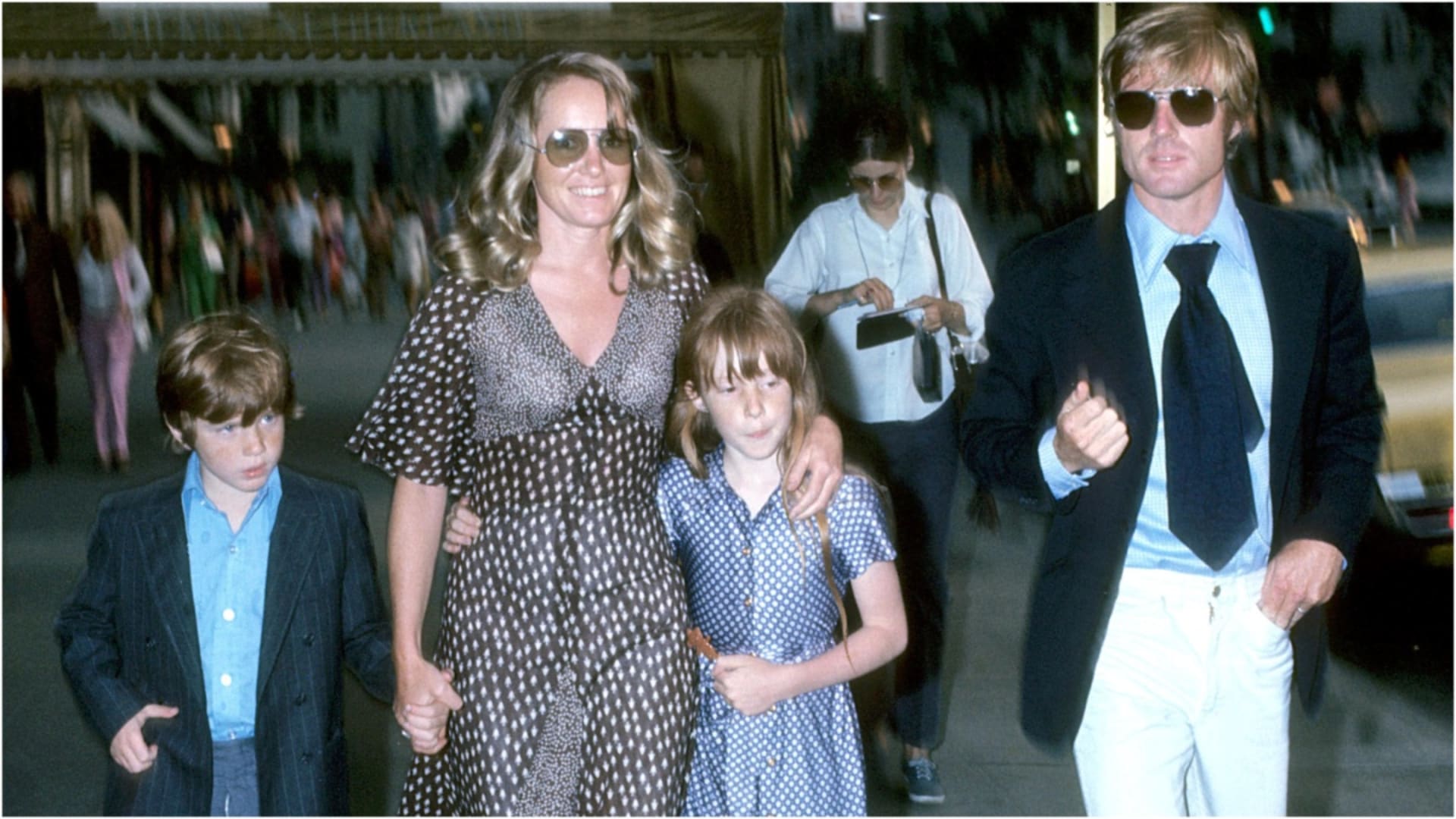
A large part of the Robert Redford story is of course independent film production and Callan does well explaining Redford’s origins here with Downhill Racer. The reader learns that Redford was indeed one of the first actors to be in control of his own career and to do it his way and in many respects the Robert Redford story is also the origin story of independent filmmaking. For ever after, though, Robert Redford would have to maintain the challenging balance between indie filmmaker and “romantic adventure boy”. Between grit and glamour.
“The danger of success is that it forces you into a mold. I prefer independence.”
“He was going to make Hollywood movies to pay for Sundance” Not surprisingly, much ink in The Biography is spent telling of Redford’s life in Utah, of his purchase of tracts of land and his formation of the Sundance Institute. He stumbled upon the area while taking a shortcut home from classes at Colorado University and quickly fell in love. Initially there was a revenue-generating ski resort and cabins to rent or own and the reader will learn of Redford’s struggles with the locals as well as city hall as he competed with nearby resorts. Incidentally, you will also hit long sections of the book that deal with Redford’s eco-activism that may, depending on your bent, test your mettle. Then there is a detailed description of Bob’s desire to combine a film festival showcasing independent film with an arts community, a commune-type laboratory where aspiring filmmakers could further hone their craft working with some of the best writers, directors and technicians in the business.
Nuggets include;
- through his mother’s family, Redford as a child found himself in close proximity to Hollywood players like his mother’s cousin, Robert Young, who was the first person to hold baby Bob and Zachary Scott, with whom Bob’s mother had a close friendship or perhaps even a love affair.
- Redford was a blue baby due to a lack of oxygen in his mother’s blood and almost died shortly after birth.
- co-star John Saxon cites Redford’s film debut in 1962’s War Hunt as his “baptism” into independent film. The film was made by the Sanders brothers, Denis and Terry, as the studio system crumbled and this was fascinating for me as it was Denis Sanders who directed Presley in That’s the Way It Is. Nice to hear that the brothers “saw it” in Bob and basically gave him his break.
- Michael Feeney Callan provides a breathtaking paragraph that describes the western like I’ve never heard it described before.
- two of Redford’s female co-stars, the unheralded Karen Carlson from The Candidate and mega-star Barbra Streisand were so taken with Sundance that they actually became a little unhinged while working with him.
- speaking of unhinged, Robert Redford had a stalker who would hide in the bushes, rifle through his dressing room and even walked on set while Bob was shooting a scene for The Sting. Spotting the crazed woman, Newman knew something was amiss and screamed in terror for security.
- and speaking of Newman and The Sting, Paul was offered a fee to appear in the film but no percentage of the profits, something he refused. Remembering the support he had received from Newman earlier in his career, Redford gave his percentage points to Newman. When the film was a success, Newman earned a fortune; “millions and millions of dollars. I told him later that it pissed me off, but I forgave him”.
- Redford’s keen interest in the Watergate articles in the Washington Post influenced Bob Woodward and the book All the President’s Men was “compiled” side-by-side with Bob’s plan for a film.
- Robert Redford had reached an “Olympian position” by the time he made The Great Waldo Pepper in 1975 and his contract reflected this; “he had approval of director and all costars; he was covered for living expenses if he was more than fifty miles from home, charged at $1,000 a week; five first-class air tickets were to be supplied to him to travel to and from all locations; he had the use of chauffeured limousines throughout filming or related work; sole-star billing above the title was guaranteed, as was health insurance, the use of a personal makeup artist and costumer…right to approve all publicity images, and one 16 mm print of the movie for personal use. He also received a percentage of the gross box office earnings, without deducting costs”.
- after the release of All the President’s Men in 1976, he had a serious panic attack and was forced to take a break from filmmaking; it had been 13 films in the seven years since Butch Cassidy and the Sundance Kid.
- much time is spent discussing Redford’s films and relationship with Sydney Pollack. The careers and the personal lives of the two had been intertwined as they made seven films together plus appearing together in Bob’s first, War Hunt. All of Pollack’s popular films had starred Redford until Tootsie. Then the relationship hit bottom when the two stopped talking to each other while finishing Out of Africa.
- I was fascinated to see Brian Wilson thanked in the acknowledgments and Timothy White’s Beach Boys book, The Nearest Faraway Place, that I have reviewed here, in the bibliography.
I don’t think I have run across another biography that can so thoroughly lay claim to being definitive. It is key to note that Michael Feeney Callan spent fifteen years interviewing 300 people for this book. What’s more, Sundance himself spoke at length to Callan and opened up his archives to the author, giving him access to Redford’s diary and journals that he had kept up for most of his adult life. Does this make this work authorized in the sense that the subject would not let anything negative make the final product? No, I don’t think so and mostly because it does not hesitate to point out Redford’s mistakes and flaws and – truth be told – there is very little dirt to dish about Robert Redford anyway.
“In the disarray of failures – of marriage, friendships and films – one constant remained for Redford: Sundance. Here the ground stayed beneath his feet and the frontier air unfailingly reminded him that all was still possible, that endurance was what mattered most.”
And that is mostly down to the fact that Redford was, for lack of a better way of saying it, a fine person, a high-functioning intellectual, a man of high ideals, great intelligence and artistic ability. He never played a family man on-screen but he also never played a true villain and audiences loved to see him as the romantic adventurer. He rarely compromised and when he did, like he did with Indecent Proposal, he scored a hit and then tempered and offset that image with a movie like A River Runs Through It released around the same time. He was so ridiculously handsome and dashing that his acting skills were sometimes left in the shadows of his physicality and his charisma. His smile. I mean….dang. His later directorial efforts like the Academy Award-winning Ordinary People, Quiz Show and The Horse Whisperer added much late career lustre; as if he could stand any more.
“It’s a deal with the devil. He will always be thirty, blonde, perfection. There will be moments when smart critics will cut through it, but even the best of them want the idealized actor. They want the continuance, because no one wants the death of fantasy, no one can stand too much reality.”
– Sydney Pollack
Much of my enjoyment of this book came from my ignorance of Robert Redford. I understand that many of you are not as in the dark as I was about him but I feel confident in suggesting this book to anyone, regardless of how well versed you are on Ol’ Sundance. May he rest in peace.
 SoulRide