Summertime – the living is easy and so are the movies. Time to hit the drive-ins of yesteryear. Take a device out onto the porch or collapse in the cool basement after a day in the sun. This summer, let’s look at films that go great with those long, hot days – and nights!
White Lightning (1973)
Starring Burt Reynolds, Bo Hopkins and Ned Beatty

On a lonely stretch of bayou swamp, two teenaged boys are bound and gagged in a rowboat. In another boat is a man with a badge on his shirt. This man shoots the boys’ rowboat and the teenagers are left to drown. Meanwhile, moonshiner Gator McKlusky (Reynolds) is in lock-up over in Arkansas. One day, affable Gator receives a visitor. It’s his cousin telling him his brother – one of the two boys in the rowboat – is dead. Gator is in shock as Donny was a straight arrow who had never ran afoul of the law. Gator vows to break out of stir and find out what happened.
Eventually, Gator puts forth a suggestion to the warden and a federal agent is brought in. The feds strike a deal with Gator – he will be let out to return home to Bogan County to gather evidence on corrupt sheriff J.C. Connors (Beatty). Also, though, the feds want any and all info Gator can provide on any moonshining activities in the area, activities engaged in by Gator’s own friends and family.
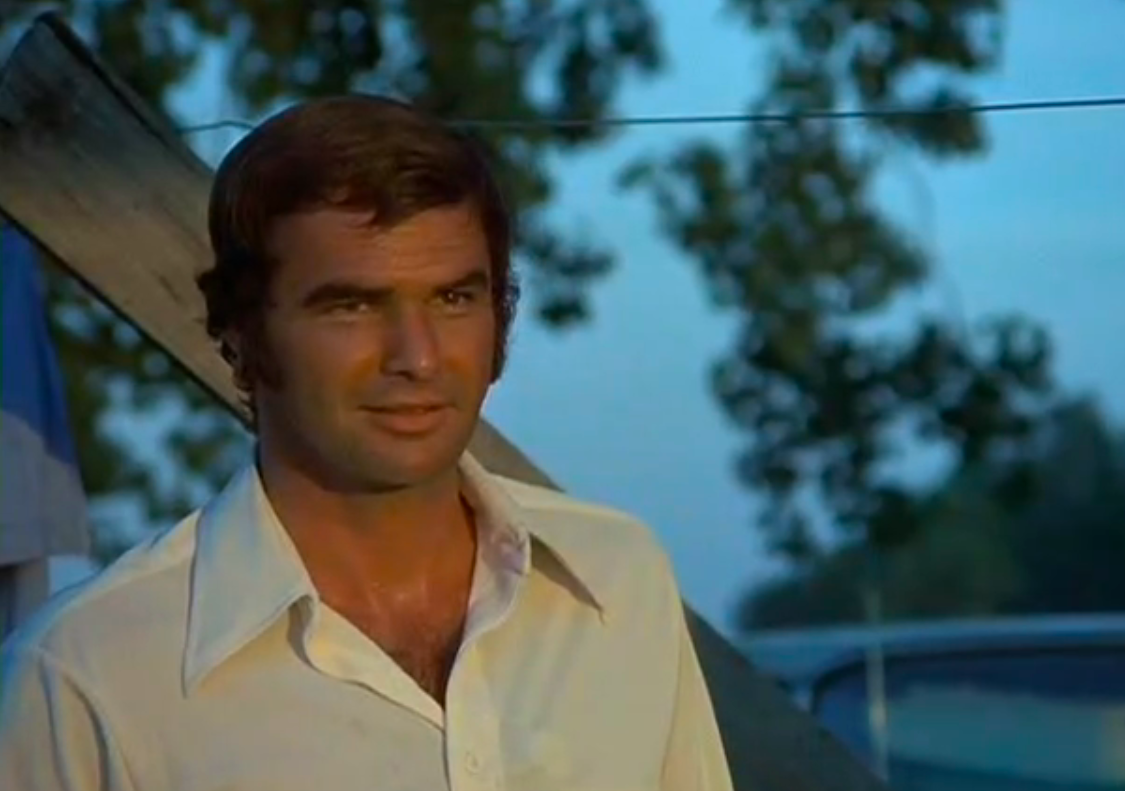
Gator arrives back in his hometown and hooks up with Dude Watson (Matt Clark), a local stock car racer and low-level whiskey runner. While Gator seems more interested in revenge against the sheriff than gathering intel, he does gently probe Dude who bristles, citing his intense fear of Sheriff Connors. Dude then introduces Gator to the infamous “Rebel Roy”, big-time shine-runner Roy Boone (Hopkins). Gator and Boone team up and travel the sticks making deliveries with Boone’s squeeze, Lou (Jennifer Billingsley) along for the ride. Boone and Gator fall out after Lou throws herself at McKlusky. Gator gets banged up by the sheriff’s muscle and – once he recovers – he lights out to settle the score with Connors.
Levy-Gardner-Laven – producers of White Lightning – also was the production company behind The Big Valley and a dozen or so films, including Presley’s Clambake. The script for this film – originally to have been titled McKlusky – was written by Bill Norton. A fascinating character, I talked about Norton when discussing his son, B.W.L. Norton, and the film More American Graffiti. See that article here. Early in production, a young director decided he would make White Lightning his first theatrical film. Steven Spielberg had made three TV movies and signed on to direct our film. After two-and-a-half months of work, during which he met with Burt, cast much of the film and selected the locations, Spielberg decided he wanted to make a more personal film as his debut. He left the production to make Sugarland Express. This is when director Joseph Sargent, four-time Emmy Award winner, stepped in. He would the year after White Lightning score with The Taking of Pelham One Two Three and later in 1977 with the biopic MacArthur starring Gregory Peck. Sargent’s career would coincide with that of Spielberg’s again when Sargent helmed Jaws: The Revenge in 1987.
Burt Reynolds has said that White Lightning was “the beginning of a whole series of films made in the South, about the South and for the South. No one cares if the picture was ever distributed north of the Mason-Dixon line because you could make back the cost of the negative just in Memphis alone. Anything outside of that was just gravy”. And that is a big part of the appeal of this film and the others Burt references.
We can group White Lightning with other films that are “summer movies” without specifically referencing the season. This ain’t no beach party but it is hot. You can see it in how much these people are sweating. And that really makes you consider what summer is like in the south especially in the early 1970s when air conditioning in these rural settings was not a thing. The movie was shot in Arkansas in July and August when temps are routinely in the 90s. Locations include spots in Benton, Scott and Wrightsville, AR. Here is an example of the practical settings – the country homes and shacks, the pool halls, the street corners and dusty roads – really adding to the viewer’s enjoyment.
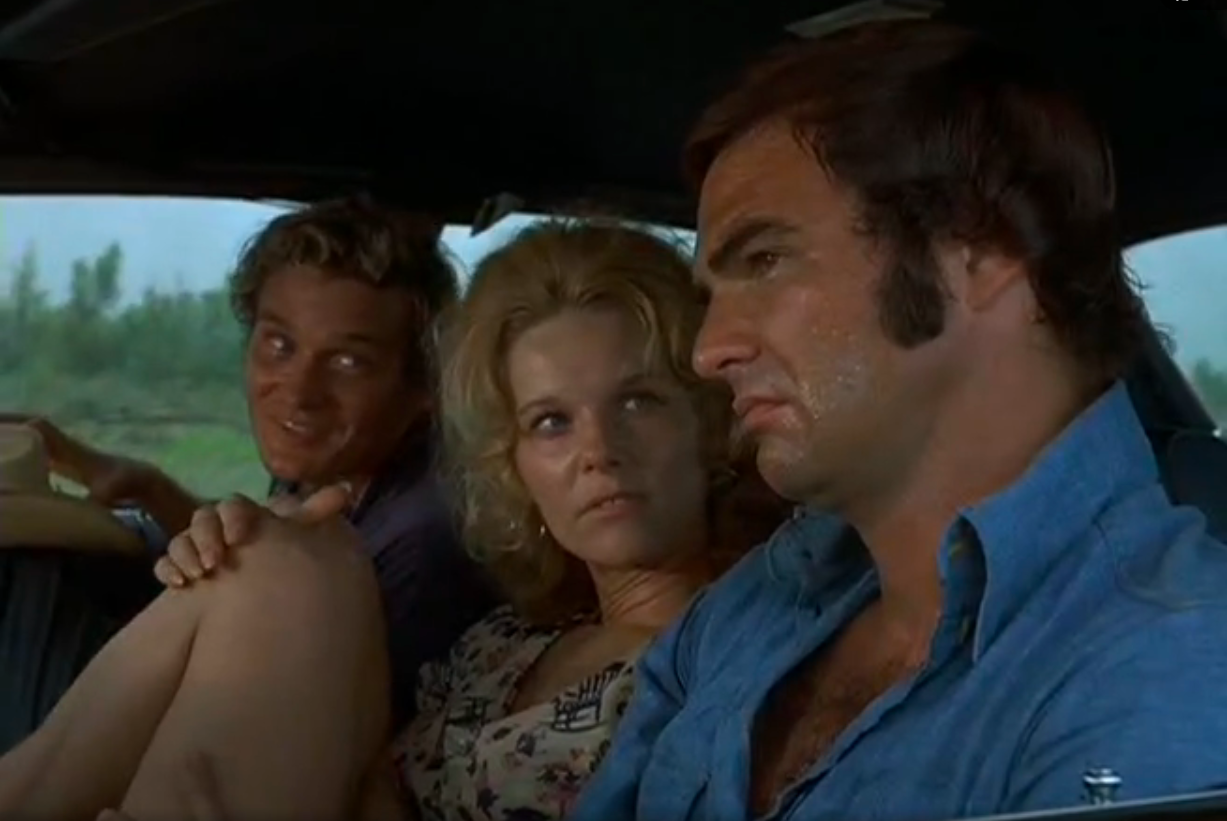
For a real taste of the south, you need look no further than Burt Reynolds and many of his films in the Seventies. The supporting cast here also does much to add to the southern flavour. Bo Hopkins is one of the greatest “good ol’ boy” actors there ever was and Jennifer Billingsley plays her role as the hussy country girl to perfection. And props to normally benign Ned Beatty who nails the part of the corrupt southern sheriff. Not just unscrupulous but rotten. R.G. Armstrong is vicious and looks to have been pulled right from this musky swamp country while Diane Ladd (billed here as “Lad”) makes an early appearance and playing her daughter is real-life child, Laura Dern in her debut. These players take you on a tour through settings that provide a no-frills holiday in the deep south.
This film has also received the Tarantino Stamp. QT selected White Lightning for viewing at his very first film festival in Austin in 1996 and Tarantino is also a fan of the music of the film. Pieces of Charles Bernstein’s score featured in Quentin’s films Kill Bill, Vol. 1 and Inglorious Basterds.
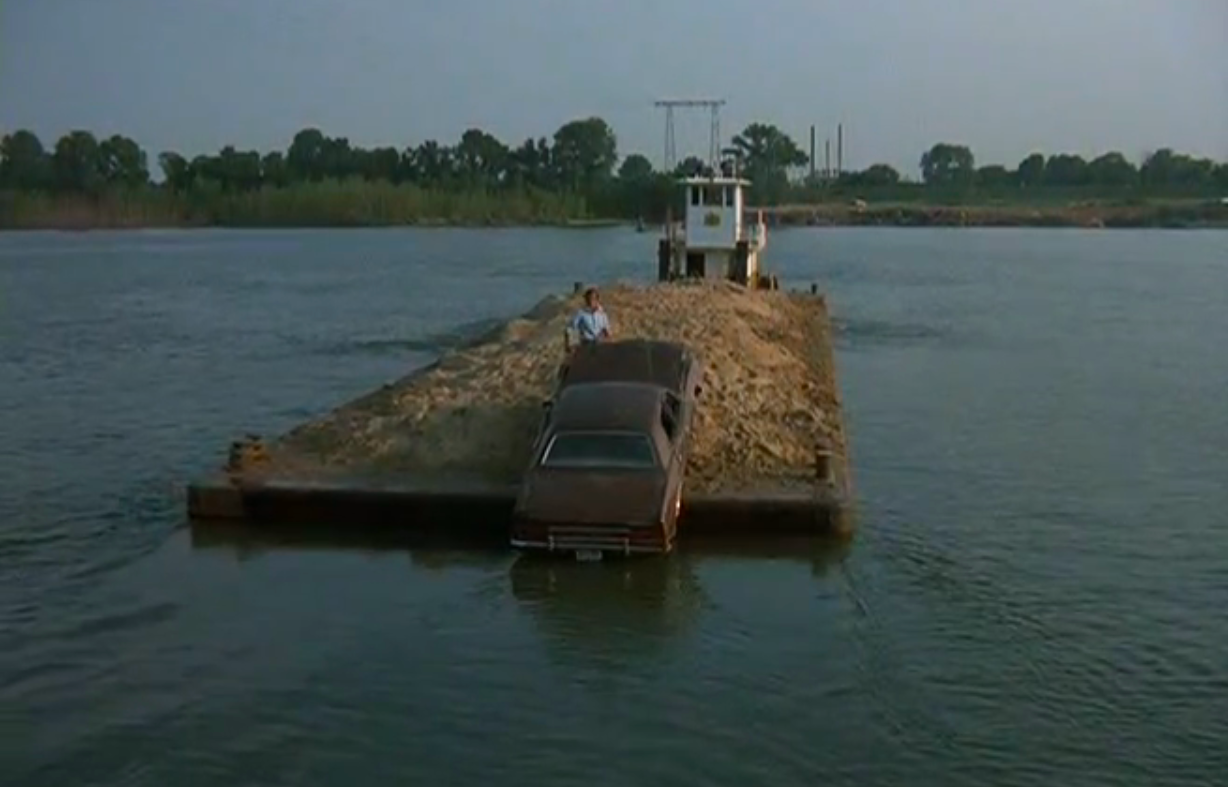
When leaving the drive-in after watching White Lightning, you’ll be excused – though not by Smokey – if you peel out and bomb down the highway at a good clip. The driving in this movie is the source of the excitement. Burt’s buddy, Hal Needham, is responsible for much of the driving and here he serves as stunt co-ordinator and second unit director working with another legendary stunt performer, Buddy Joe Hooker. In this film known for its driving sequences, one of the stars of the show is surely the 1971 Ford LTD Galaxy 500 with the 429cc engine and 4-speed transmission. Needham landing this beast on the barge was almost a stunt gone very wrong and while the ultimate fate of Sheriff Connors and his car is underwhelming, this film will not disappoint in the thrills department.
Gator (1976)
Starring Burt Reynolds, Jerry Reed, Lauren Hutton and Jack Weston

Gator McKlusky is trying to walk the straight and narrow. He has paid his debt to society and now lives simply in the Okeefenokee Swamp straddling the Georgia-Florida state line. New York-based federal agent Irving Greenfield (Weston) shows up with a plan. He wants to rid nearby Dunston County of crime lord Bama McCall (Reed) and intends to use Bama’s old buddy, Gator, to do it. Greenfield wants Gator to ingratiate himself anew with his old running mate and gather intel that will put McCall in the slammer. Gator is uninterested and so Greenfield plays hardball. He looks around at the squalor in which Gator’s daughter is living and threatens to put the child in foster care if McKlusky doesn’t help. Gator, reluctantly, is in.
Gator and Greenfield arrive in Dunston County and Gator reunites with Bama who immediately puts Gator to work as a collector. McCall also offers McKlusky a taste of what working for Bama McCall entails – including access to Bama’s harem of under-age girls. Gator is disgusted and wants out. McCall obliges him by spiking his drink and putting him in his car outside the town line. McKlusky wakes up ticked and determined to get his old buddy. He heads back into town where he learns that Greenfield has been hospitalized by Bama’s goons. While visiting Irving, Gator meets news lady Aggie Maybank (Hutton) who has also been sniffing around for dirt on Bama McCall. Gator and Aggie team up with Irving and the three run into Emmeline (Alice Ghostley) who was fired from the Dunston County courthouse after 22 years for a discovery she made. This disparate group joins forces and does battle against redneck evil.
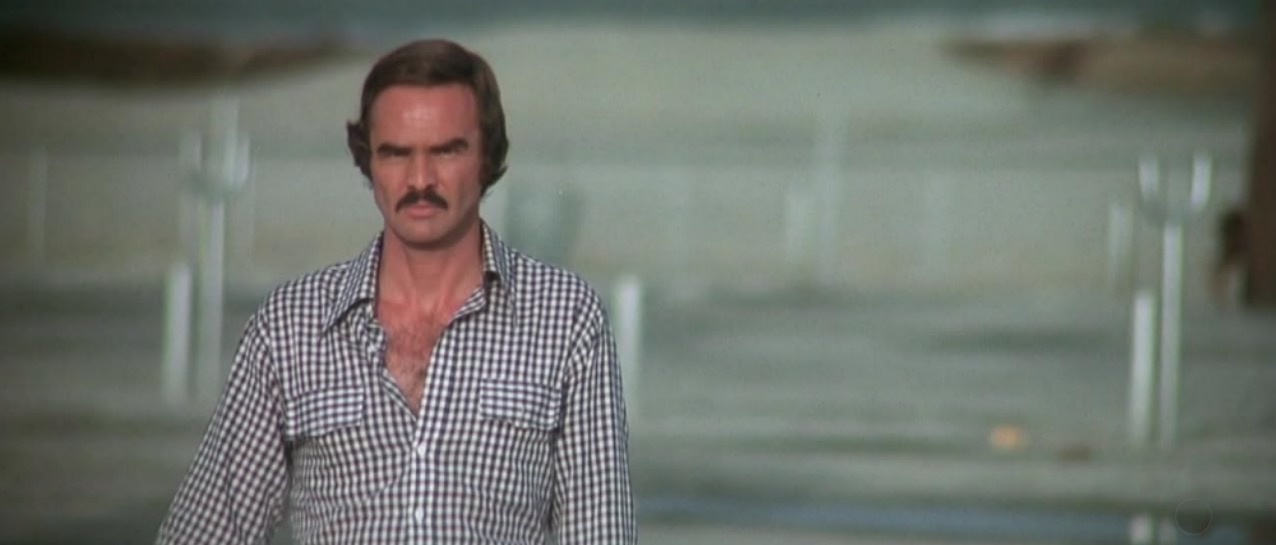
When Burt Reynolds first read the script for this sequel to White Lightning, he was uninterested, saying “it’s a terrible script”; when he was given the opportunity to make it his directorial debut, he said “it’s a wonderful script”. The cast, frankly, is bang average; though Jack Weston will always be Max Kellerman to me. But here’s the thing – Jerry Reed as Bama McCall puts in one of my favourite performances in all of 70s film. I once made the claim that there is not much difference between Reed, the actor and Cary Grant or John Wayne. Those two Hollywood stalwarts thrilled millions for years by simply being themselves. Well, no one’s “self” is more appealing than Atlanta’s Jerry Reed Hubbard. Along with Brian Setzer, he is my all-time favourite musical artist and as an actor his simple, good-ol’-boy charm always lights up the screen. Burt tapped Reed to play the heavy in Gator after having worked with him in the previous year’s W.W. and the Dixie Dancekings – before that, Reed’s only “acting” had come when he leant his voice to an episode of The New Scooby-Doo Movies.
First off – is “Bama McCall” not maybe the coolest character name this side of – “Gator McKlusky”? Burt let the actors choose their character names and Jerry went with the name of a real-life bully he knew in high school. That is apropos as Reed plays Bama as thoroughly rotten. To the core. Ruthless. It is a fantastic performance and Reed’s wardrobe is outta sight. If that wasn’t enough, Jerry also provides the film’s theme song, the stellar swamp rocker “Gator” with some of the greatest lyrics ever written; “Gator McKlusky, sittin’ on a stump, hammer pulled back on a 12-gauge pump…everything’s okey dokey in the Okeefenokee”. What this adds up to is Jerry Reed being the highlight of this film. The rest of the soundtrack – featuring more music from Charles Bernstein and the Bobby Goldsboro song “For a Little While” – is also quite good.
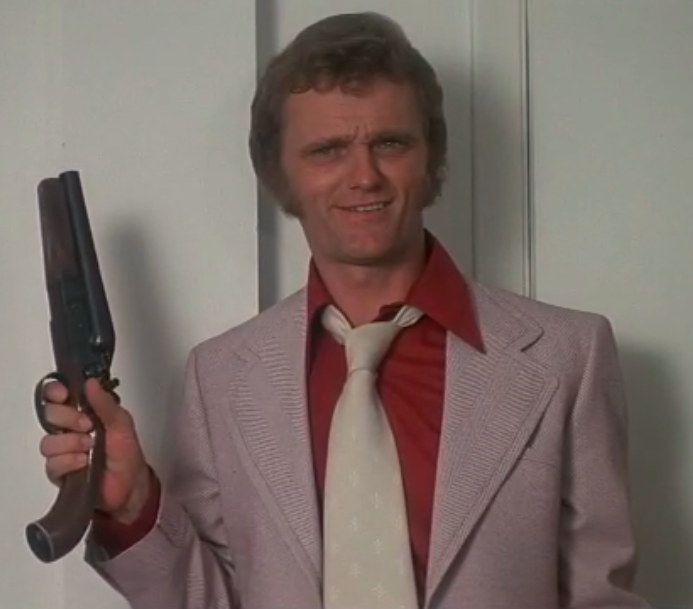
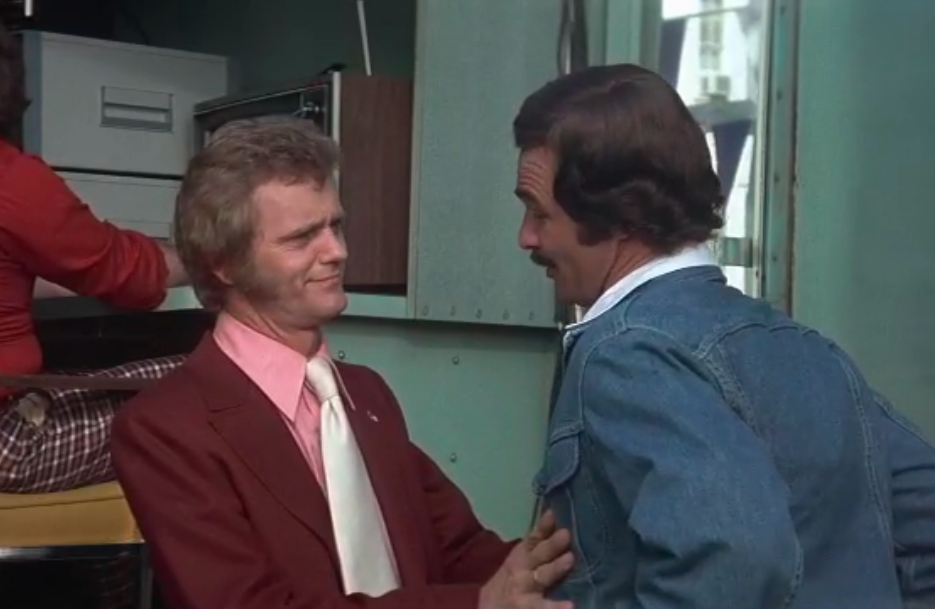
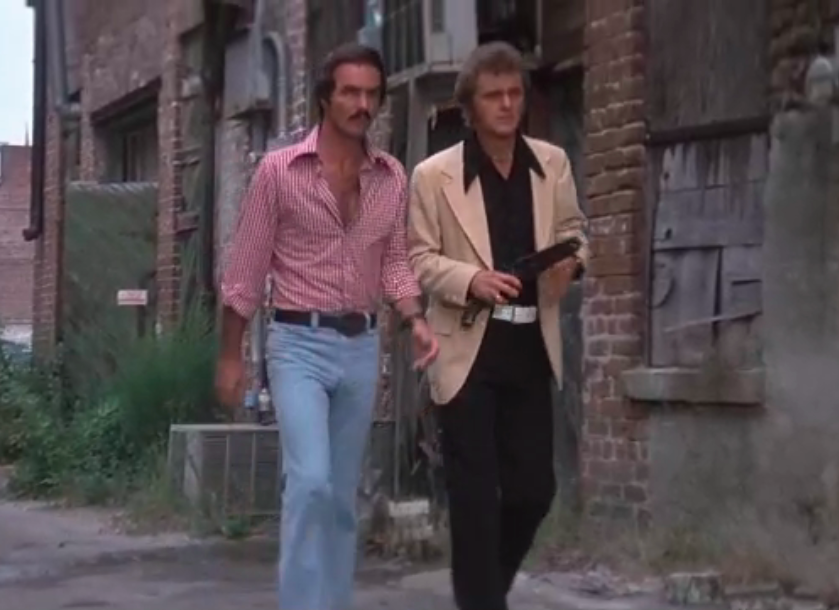
Burt Reynolds is excellent, as usual in this type of role, but he is also to blame for what makes this movie inferior to White Lightning. The first film on this double feature is pretty serious. Watch Burt when he ponders the fact that his brother is dead; heady stuff and good acting. Gator has touches of this substance as well. There are a few violent deaths and – again Jerry – Bama is a pretty depraved character. But Burt can’t help being Burt. Reynolds will tell you himself in his second memoir that he often took the easy road; he never stretched and he stuck to playing the “character” he played with Carson on The Tonight Show. Comedy may have its place but Gator descends into goofiness when Alice Ghostley and her cats almost completely sink the film. This movie could have had an edge – after all, once again Jerry as Bama is a villain who once was Gator’s friend. Now he’s a real rat. He threatens death and commits murder – Gator should really fix his wagon. And he does but this could have been darker. But then of course it wouldn’t have been Prime 70s Burt Reynolds.

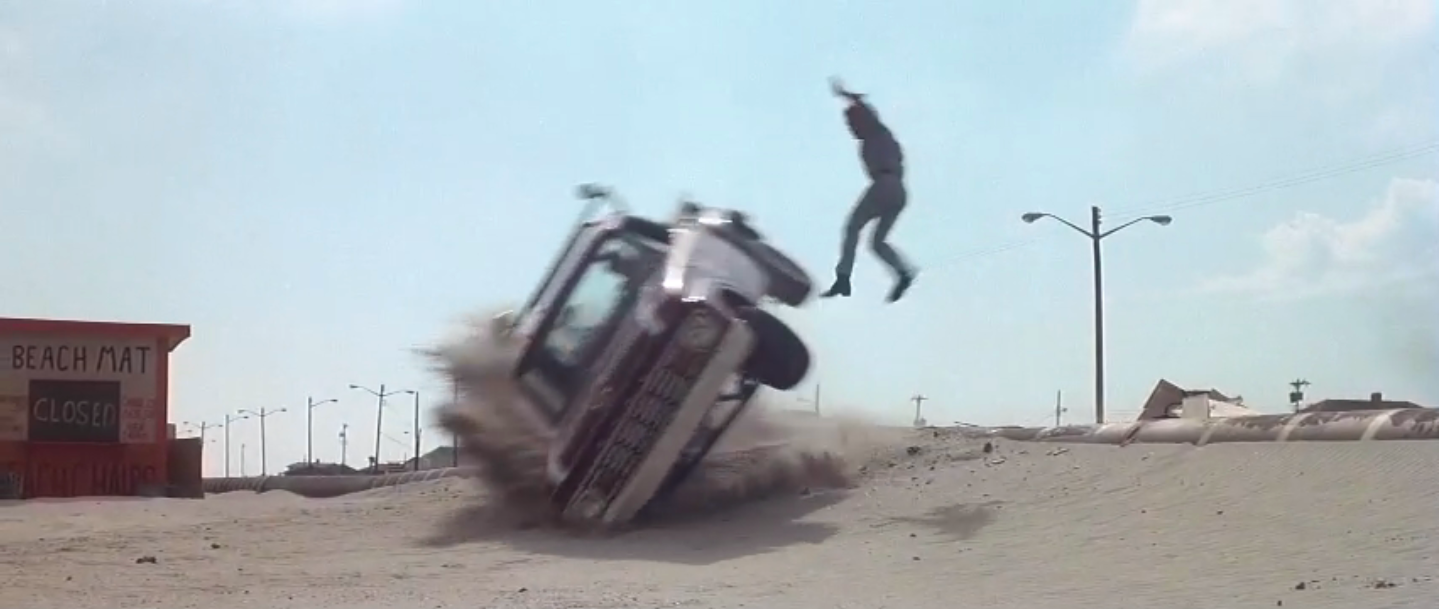
Like White Lightning, Gator features energetic driving and stunt work courtesy of the legendary Hal Needham. This time, added to fast cars, the early going features an exciting boat chase. And once again, Needham almost killed himself on this film. It’s an incredible stunt featuring a pick-up truck making a jump and Hal leaping off the side of it. It didn’t go off exactly as planned and Needham was hurt. Apparently, afterwards Hal just laid there until Burt cut the scene. When the concerned crew ran up to Hal, his only concern was how the stunt looked.
Burt Reynolds would love to have directed more films than the five he did and he wanted to direct a movie he was not in. The irony of the success of Gator was that afterwards Reynolds was offered better scripts and better properties to act in and his ascent as a movie star kept him in front of as opposed to behind the camera. But after Smokey and the Bandit, Gator and its predecessor, White Lightning, offer the best of Burt Reynolds in the Seventies.

 SoulRide
Excellent review as usual. I love the attitude that you can make all your money back in Memphis and anything from the north is gravy 🙂