“He landed and was away in a blur of motion. Now nobody could catch him. Nobody could hurt him. This was his way in the world. These dark streets were his place. An exultation of power fed his body to the pit of his stomach. He missed that. He ran, flew. They would find the alley, the doorway, the hidden place in the moment that they needed it. They might be cornered in the rooms of Harlem, but not in the streets. This was really home. His three minutes were up.”
Shaft
by Ernest Tidyman (1970)
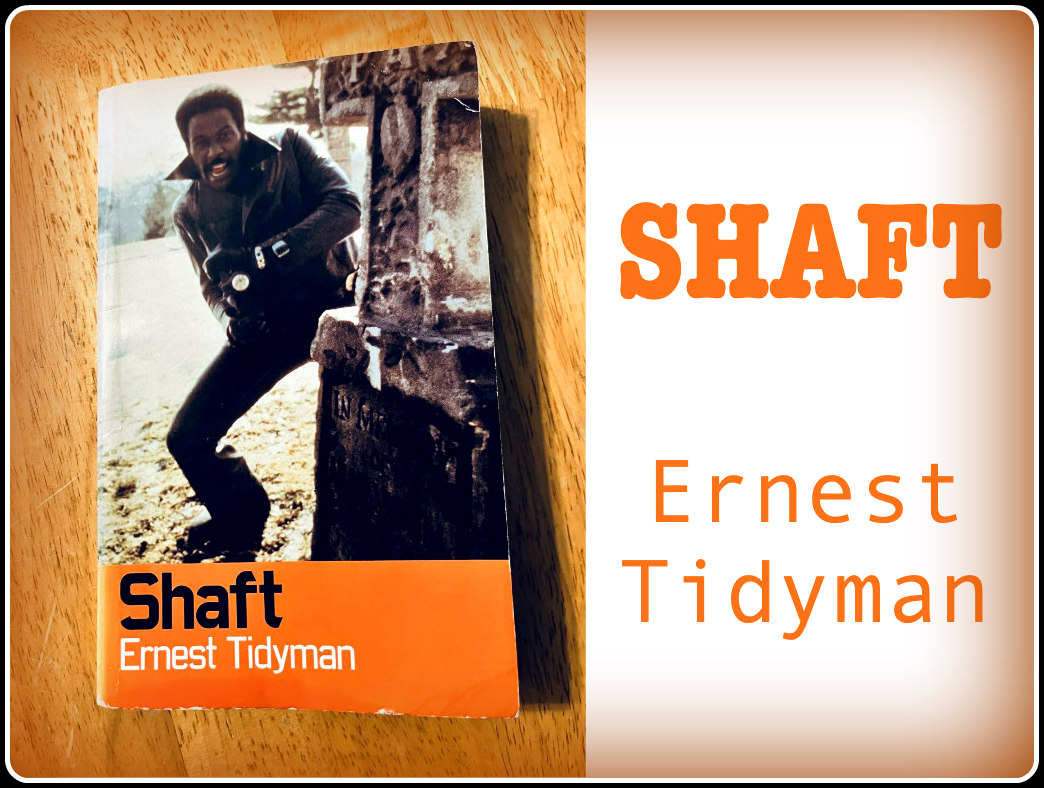
Someone is looking for private investigator John Shaft. He walks the streets of New York City looking for clues as to who it might be. He hits all his usual haunts and talks to all his usual contacts; and they are legion. His black brothers who work the newspaper stands and the shine parlours all hold Shaft in high regard. He is the man who made it. Crawled up out of nothing to stand tall in the world and they all want to help. He gathers intel as he walks.
He runs into a nemesis of sorts; Lt. Anderozzi also wants to know who is looking for Shaft. Anderozzi and the police department don’t want any trouble and Shaft is Anderozzi’s pipeline into the black community. While Shaft is not too eager to help the cops, he admits he doesn’t know who wants him and knows of no trouble brewing, if any. Eventually, Shaft pinpoints the amateurs sent to roust him; only he does the rousting. Turns out Harlem gang lord Knocks Persons is looking for Shaft. The Italian mob has kidnapped Persons’ daughter in an attempt to take over the rackets and the vice of Harlem. Persons knows that Shaft is tight with black militant leader Ben Buford. Knocks hopes that Shaft will broker a deal with Buford and his army to help fight the mob. When the Italians lay a brutal beating on Shaft, he is all in and plots to burn down Thompson Street – with the mob in it.
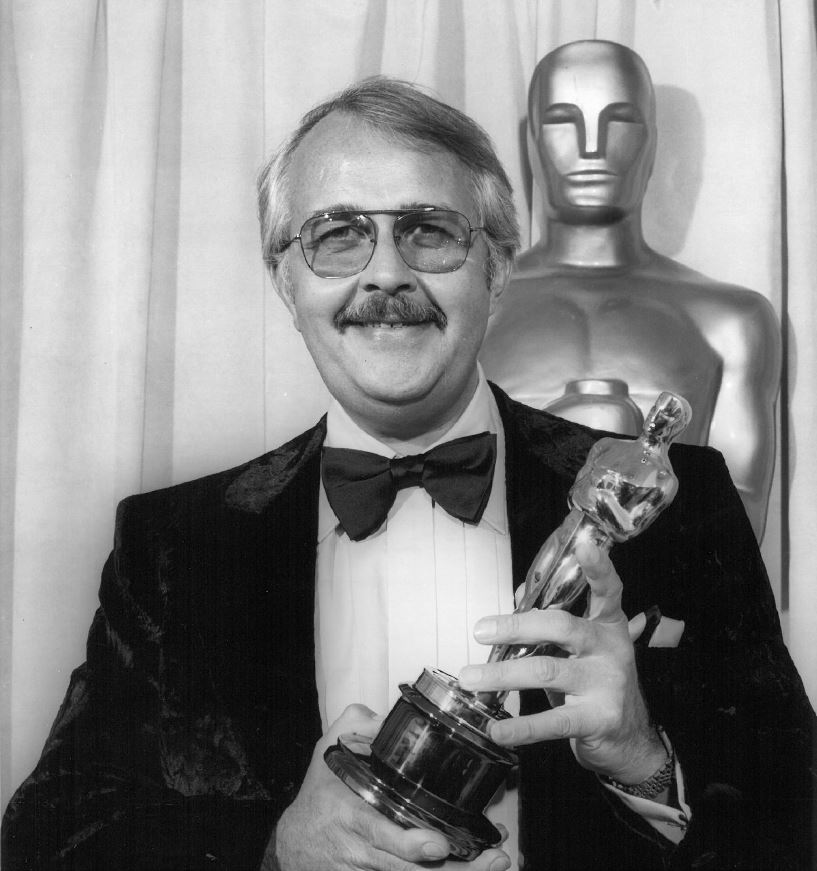
Cleveland’s Ernest Tidyman was a copyboy before enlisting in the Army and working in public relations there. In 1969, one of the few black literary agents at the time suggested Tidyman – a white man – take on the job of writing about a black private detective in NYC. Tidyman has said that the blacks he knew were smart and sophisticated and he conceived of writing about a hero who uses his “black rage” as one of his resources. The novel Shaft was published in 1970 to much acclaim and Tidyman followed it with six sequels issued between ‘72 and ‘75. On the strength of this novel, Tidyman was commissioned to write the screenplay for The French Connection (1971) for which he won the Oscar. He then scripted High Plains Drifter (1973) and a few other films including the Chuck Norris movie A Force of One (1979) and the award-winning TV mini series Guyana Tragedy: The Story of Jim Jones (1980) starring Powers Boothe and directed by William A. Graham. For writing the Shaft books, Ernest Tidyman became – and remains – one of the few white men to win an Image Award from the NAACP. The author was married five times, once to Motown soul singer Chris Clark and he died – in appropriate writer fashion – from complications due to alcoholism in 1984. He was 56.
The novel Shaft is good and if you’re like me and are a fan of the film you’ll be pleased to see that much of the movie’s attitude found its inspiration in the novel. Me, personally, I had to get over the fact that the novel takes place during the beauty of spring whereas I connect with this story in the winter. This of course is down to the opening scenes of the film being shot on location in New York in early 1971. But from the book’s opening passages we see the essence of the whole novel; that John Shaft is in control. That he stalks these streets as a master and as a man who has made his own way, one who has conquered the system and cut out his own place in the world. He has a spring in his step and he is winning. And as for the streets themselves, Tidyman lists them all and the neighbourhoods of Midtown Manhattan, Times Square, Greenwich Village and environs become a character unto themselves. Here in the book you will find all the grit, all the action and all the cool of the movie. Tidyman would go on to issue six sequels to the novel, all published in a few short years.
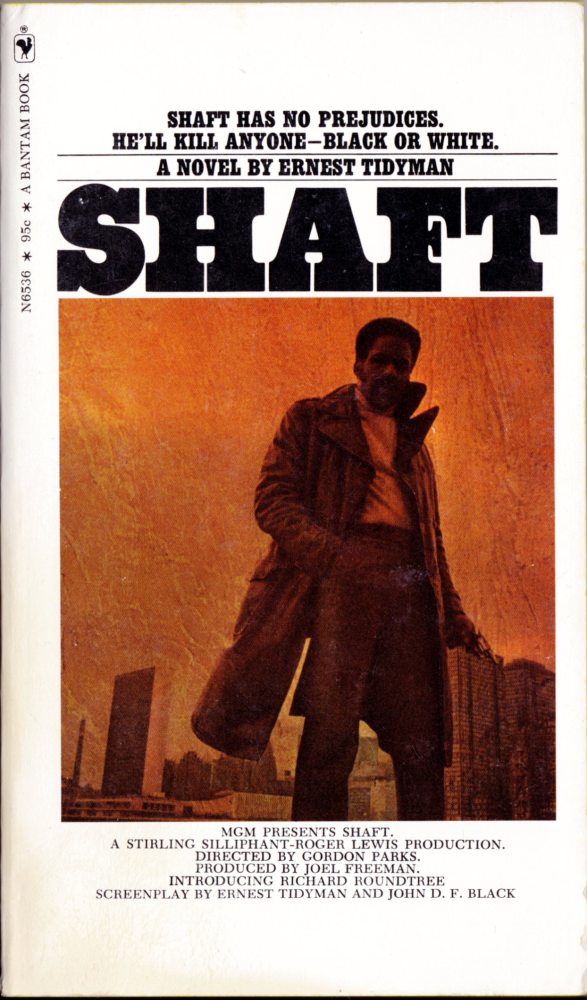
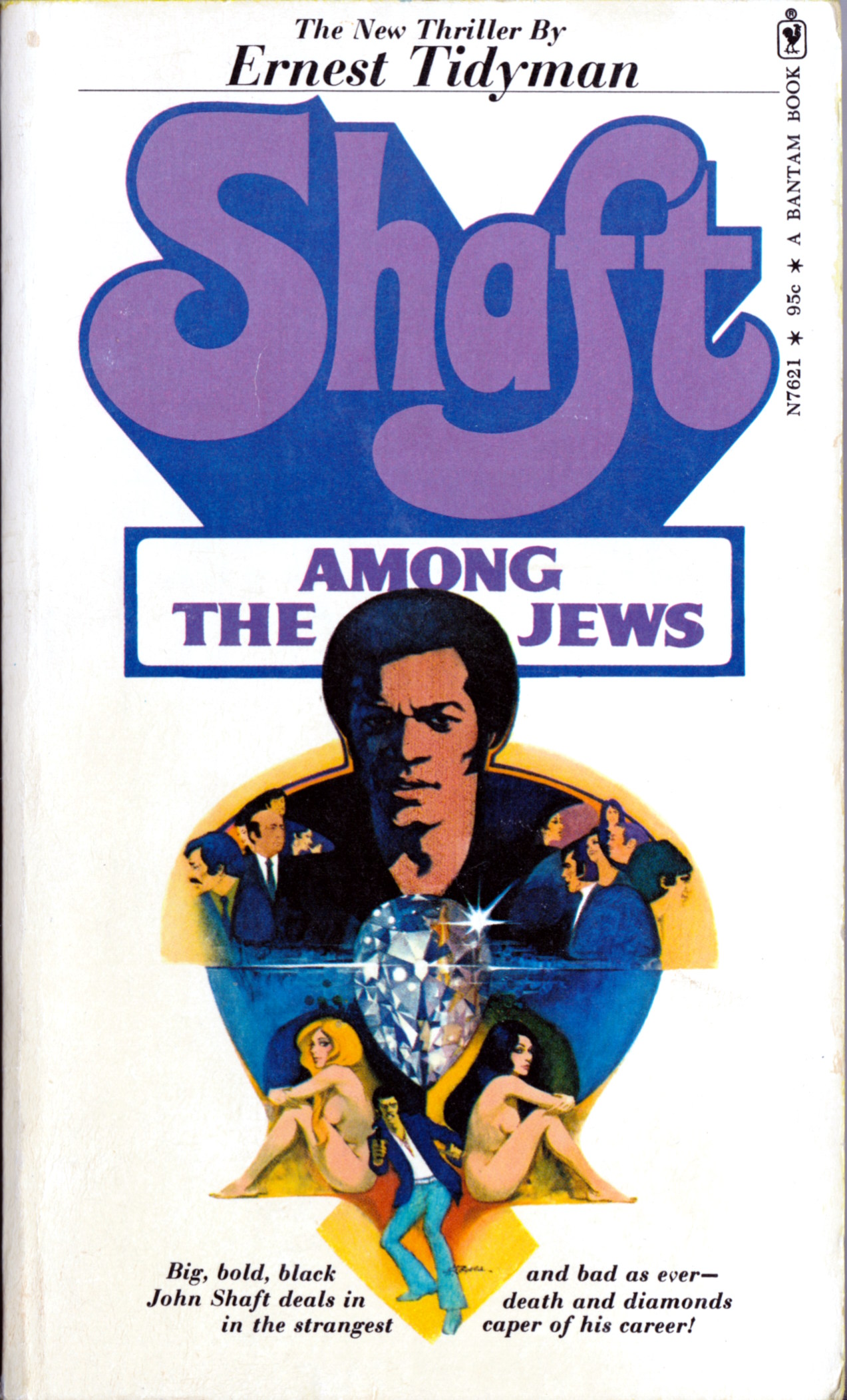
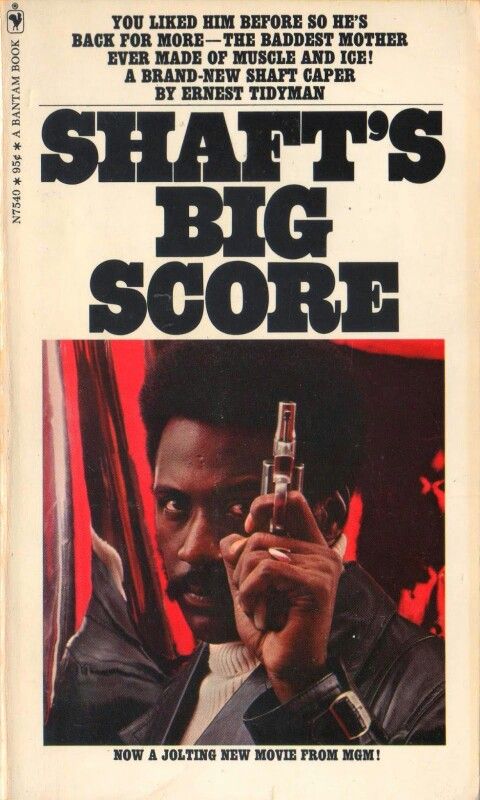
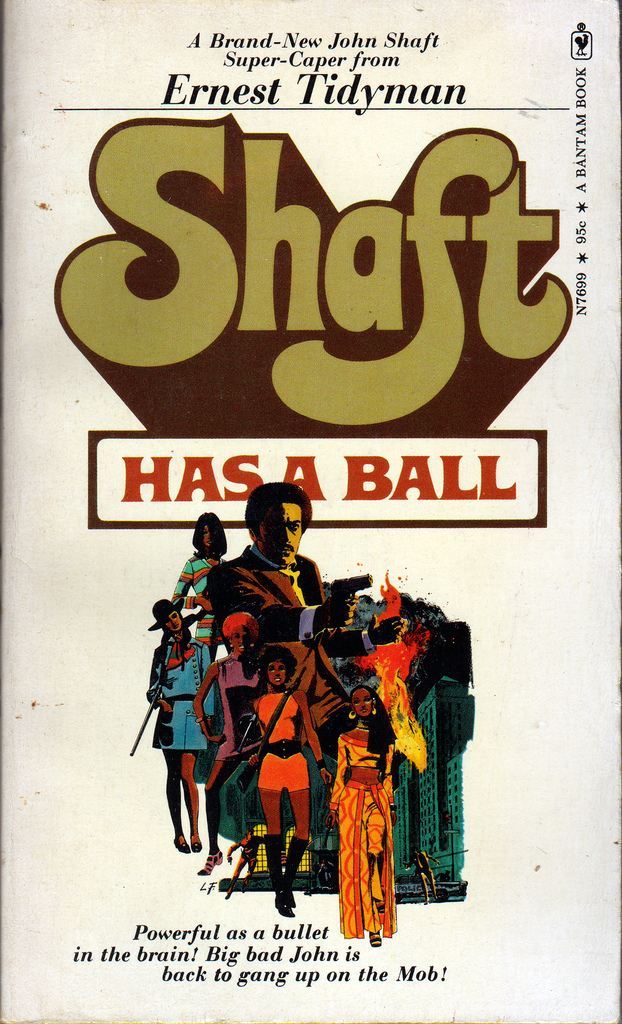
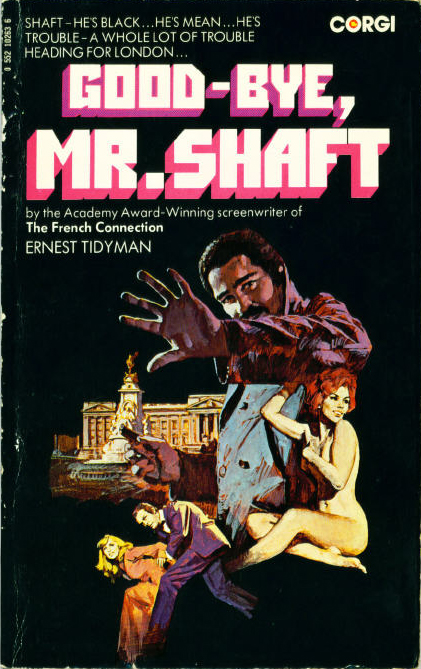
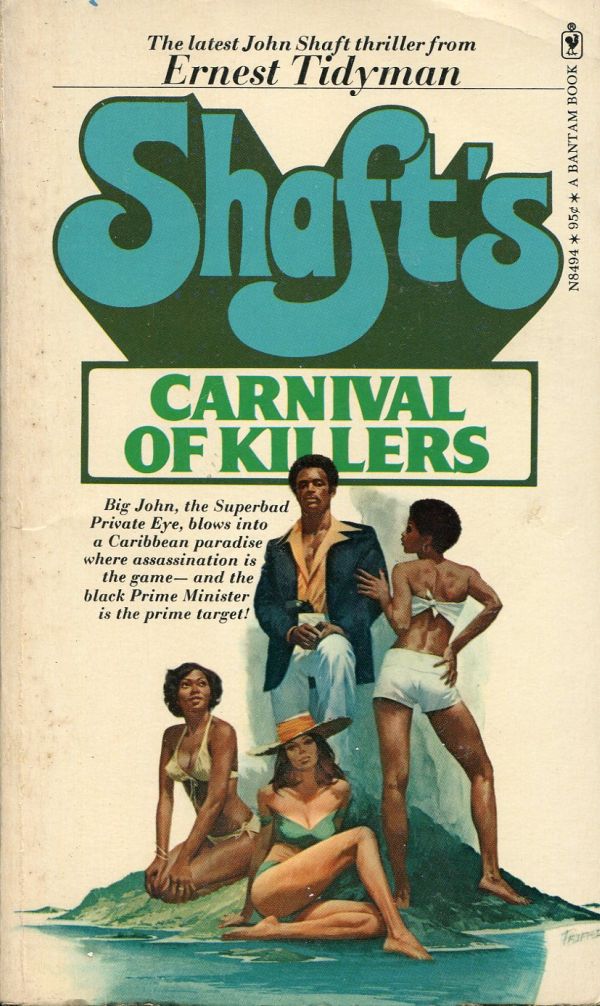
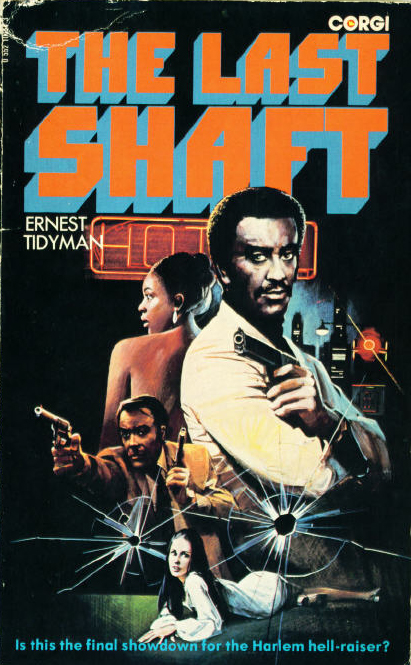
There is an incredibly thorough website dedicated to The World of Shaft. Writer Steve Aldous has done an exemplary job cataloging the many adventures of John Shaft and offers insights on Ernest Tidyman, Shaft onscreen and Shaft in print. The images in this article are courtesy Mr. Aldous and I strongly suggest you head to stevealdous.co.uk for all the skinny on this bad mother.
Speaking of which, Shaft was commissioned for a film adaptation before it was even published. There had been talk of casting a white man – which seems odd – until unknown model Richard Roundtree was chosen. The film was a major hit and has become a cultural touchstone giving birth to the genre of blaxploitation – a discussion of which you can find here. The film also featured an iconic score from my man Isaac Hayes, work for which Ike became only the third African American to garner an Oscar. “The Theme from Shaft” is today perhaps better known than the film and certainly the novels. Shaft’s Big Score – also a novel and screenplay from Tidyman – followed and then came the excellent Shaft in Africa in 1973, a movie that successfully placed John Shaft in James Bond territory.
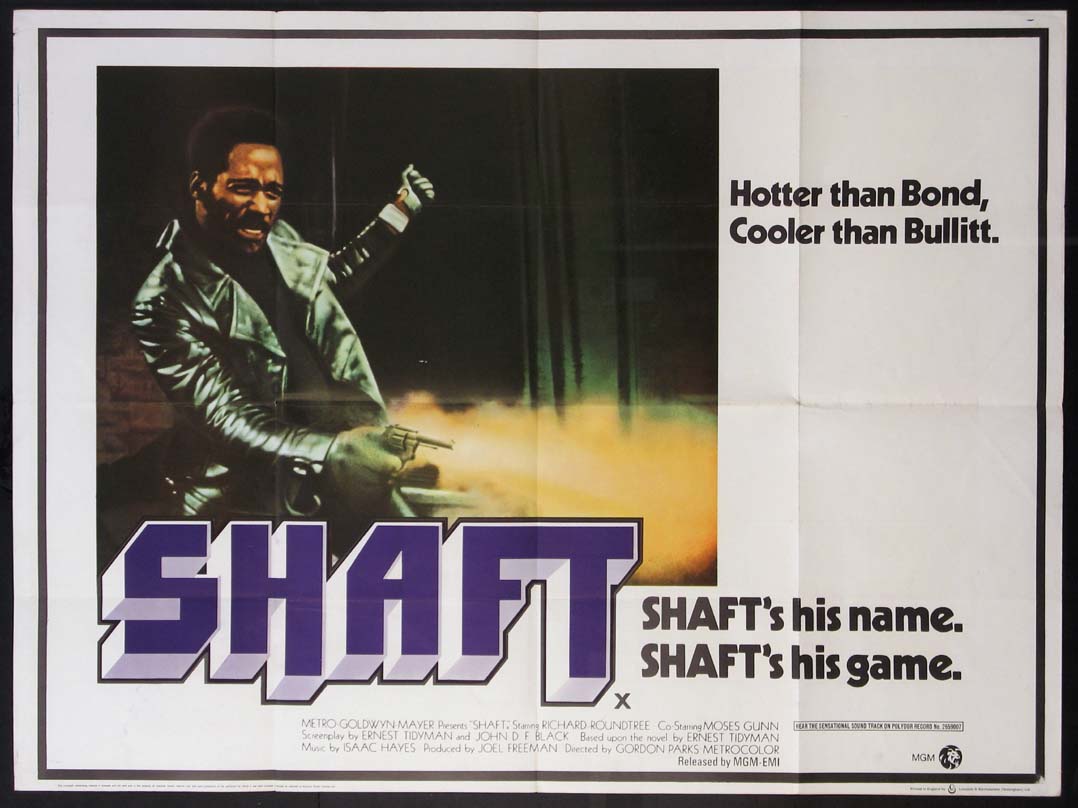
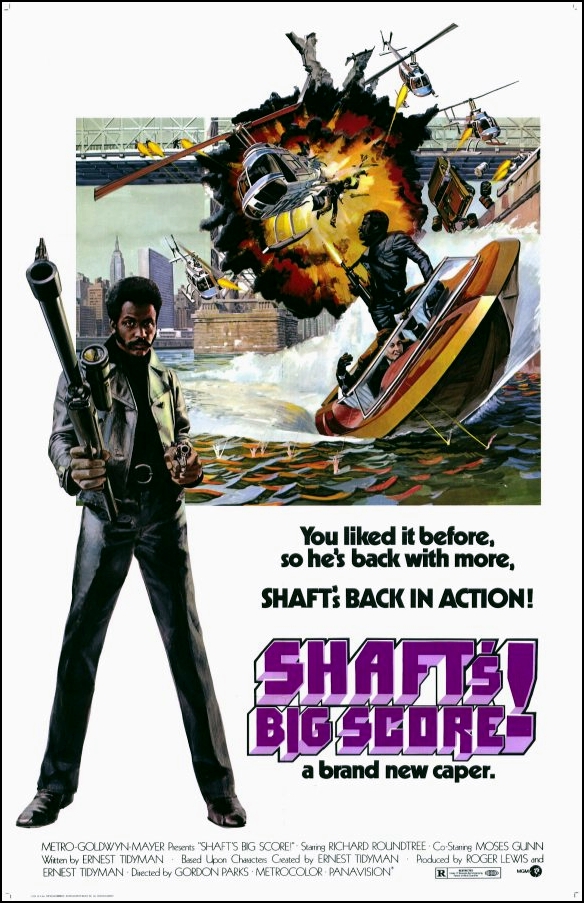
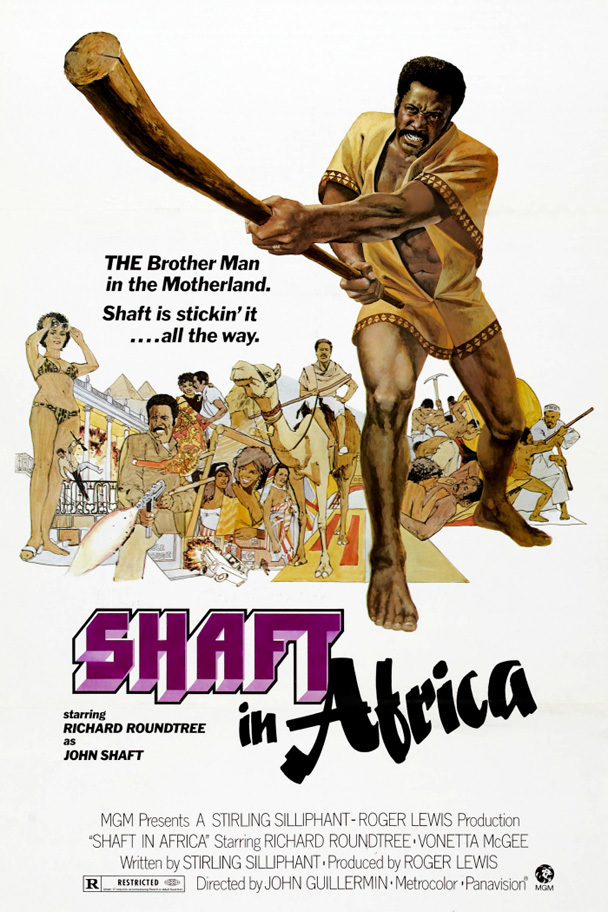
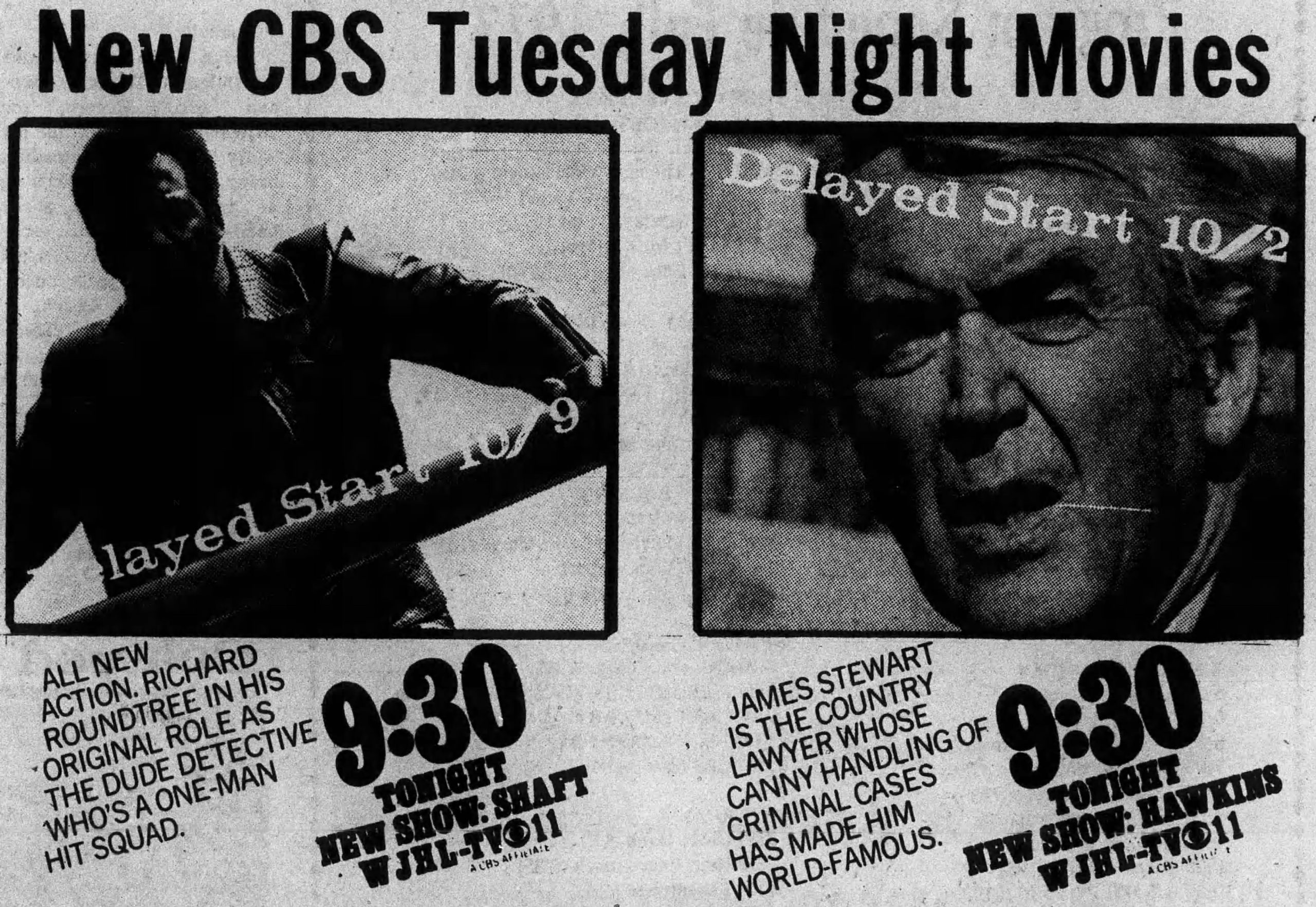
Next up was the Shaft TV series and here is a tale of the oddity of Seventies television programming. Shaft on the small screen took the form of telefilms that were broadcast on alternating Tuesdays opposite another series starring James Stewart called Hawkins. First off, CBS toned down the grit of the films for television and secondly Hawkins drew an entirely different set of viewers than did Shaft which only served to alienate and confuse audiences. After seven TV films during the 1973-74 season, the plug was pulled – much to the delight of frustrated star Richard Roundtree.
The year 2000 saw John Singleton bring Shaft back to the big screen starring Samuel L. Jackson in the title role. It is a contemporary sequel in which Jackson plays the nephew of Uncle John Shaft played by Roundtree reprising his iconic role. Finally – to this point – in 2019 there was another film released, this one simply titled Shaft and it served as both a remake and a sequel to the 2000 film. Sam Jackson is back and we are introduced to a third generation of Shaft men. Roundtree is of the party again this time sporting a classy white beard. Sadly, Richard Roundtree – who had survived breast cancer with a double mastectomy in 1993 – died of pancreatic cancer in October of 2023.
But this whole world sprang originally from Ernest Tidyman and his excellent original novel. Here is a case of a white man providing the black community with a strong, heroic and honourable character. Get your copy of the OG at AbeBooks.
 SoulRide
Classic Character. I also watched the movie in 2019 and it literally cracked me to see that his son and grandfathers name is also John Shaft.