Let’s return to those thrilling – and chilling – days of yesteryear! Back to the time when two bits would get you an afternoon of horror at the local theatre. Here’s a look at two pioneering films from Universal, movies that present two of the most indelible characters in film history. Make your way down the aisle of the darkened theatre, find your seat and get ready for a spooky good time!!
Dracula (1931)
Starring Béla Lugosi, Dwight Frye, Edward Van Sloan and David Manners
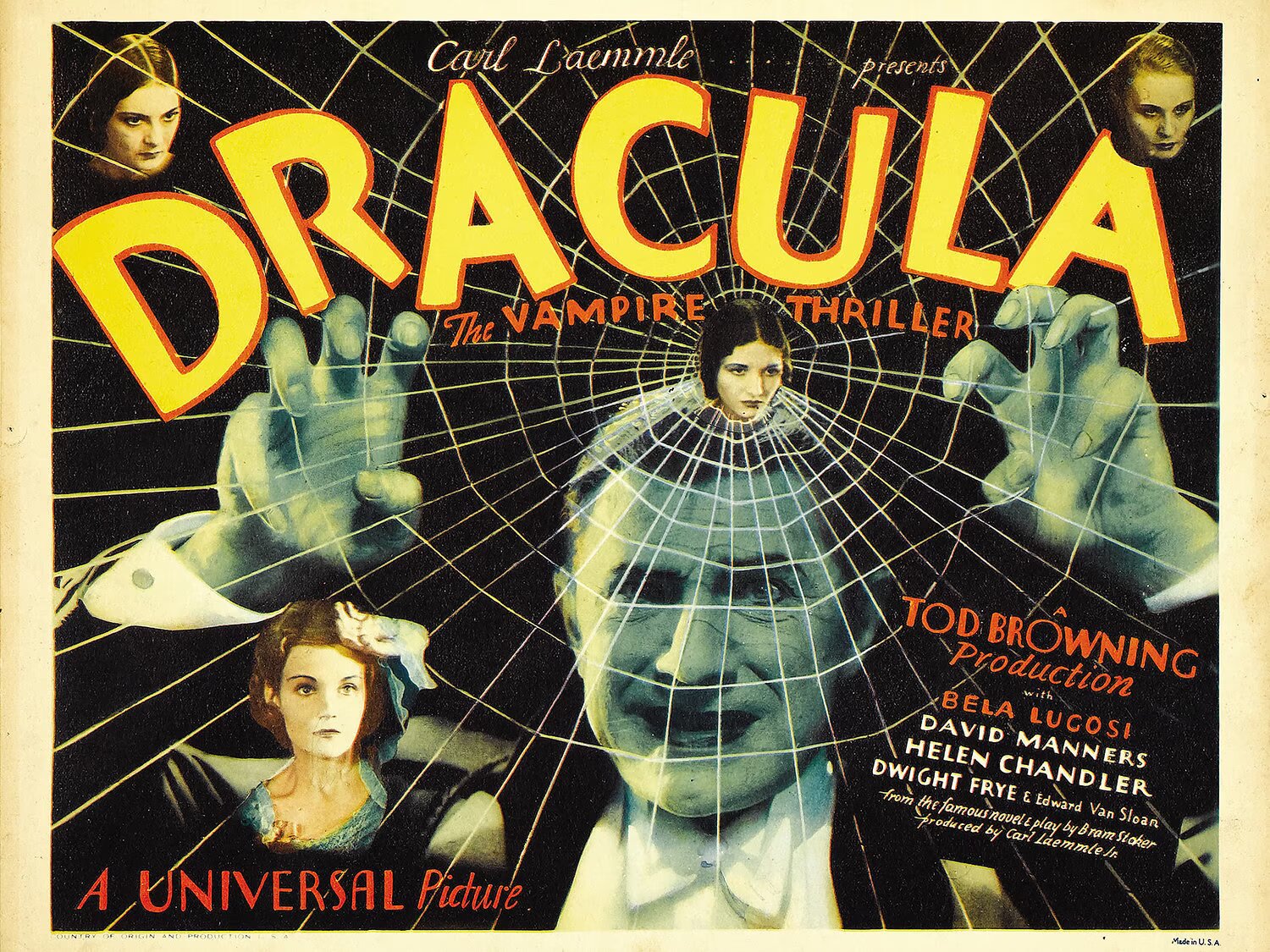
Unsuspecting solicitor R.M. Renfield (Frye) is en route to Transylvania to close a deal with eccentric client Count Dracula (Lugosi). Despite vehement warnings from the local townspeople, Renfield carries on to the Borgo Pass where he is met by a mysterious carriage. Somehow, Renfield remains unsuspecting even when he meets the Count and is ushered in to the dilapidated, cavernous castle he calls home. Sure enough, Renfield is soon set upon by Dracula’s three wives until finally the Count himself appears to initiate him into the dark nether world the Count inhabits. Count Dracula, you see, is a vampire.
Dracula travels to London with Renfield, now his raving servant who is obsessed with devouring bugs and small rodents. Hobnobbing amongst society, Dracula meets Dr. Seward (Herbert Bunston), notable director of the local sanitarium, at the theatre. With Dr. Seward are young Jonathan Harker (Canadian Manners), his fiancé and Seward’s daughter, Mina and family friend Lucy Weston. Late that night, Dracula pays a visit to Lucy’s room and drinks her blood. Next day, doctors are stumped at her condition and she undergoes multiple blood transfusions. Then, the big guns are called in.
Professor Abraham Van Helsing (Van Sloan) is a renowned polymath doctor who arrives on the scene and quickly ascertains the problem and the Count’s dark secret. And the serious Van Helsing does not shy away from the challenge of vanquishing the vampire and undoing the harm he has brought on this group. Dracula knows a worthy adversary when he sees one and even commends Van Helsing on his mental strength. Van Helsing knows the path he must take to achieve his ends and soon puts a plan in motion to rid the world of Count Dracula.
See!! A trailer to make your blood curl!!! Rotten Tomatoes Classic Trailers
Now we’re talkin’ some horror. The story of Count Dracula – the character, the novel, the plethora of films – is the very definition of “horror”. A supernatural being who lives in the shadows longing to relegate human beings to the same plane and to suffer the tortures of the damned – that is some horror. And this film version from Tod Browning is the place to start though it does not mark the beginning. That would be the novel Dracula published in 1897 by Dublin’s Bram Stoker; a book that remains one of the most thrilling I have ever read. The first filmed version of the Dracula story was Murnau’s immortal Nosferatu (1922) and that film is certainly unsettling but the start of the cinematic life of the Count is this depiction by Hungarian Béla Lugosi.
Much like the image of a pirate being set by Robert Newton in Treasure Island (1950), what most people think of when they think of a vampire can be seen in Lugosi’s depiction of the Count in 1931’s Dracula. Lugosi had played Dracula in the stage version on which Universal based its film but Béla was not the studio’s first choice to play the role. Our even their fifth choice. It’s actually a sad part of the tale that Lugosi must have sensed that the character was his and that it would be his only chance, his one ticket to immortality. He may have even sensed that his opportunities would be limited but that the Count would be his legacy. Subsequently he lobbied way too hard for the role and finally won it – at a real steal for the studio. Lugosi made $3,500 though he did indeed claim a piece of film history.
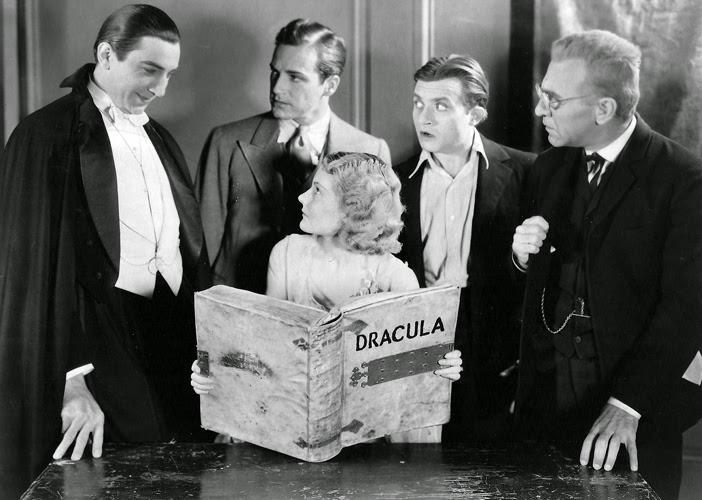
Others in the film, though, also leave impressions. Perhaps most notably is one of the most underrated performances in horror film history, that of Dwight Frye as Renfield. While not necessarily a “great” actor, Frye does really well as clean and collected Renfield in the early scenes before exhibiting much agitation when he meets the Count. But it is later on that he really shines as lunatic Renfield and it is a performance for the ages. Shame that Frye – who also appeared (all in the same year of 1931) in another seminal horror film, Frankenstein as well as being the first to play the gunsel, Wilmer Cook, in the premiere version of Hammett’s The Maltese Falcon – was not able to forge a successful career in Hollywood. Sad to learn that after adding The Invisible Man and Bride of Frankenstein and many other Universal horror films to his CV, he remained “uncredited” to the end of his life. Added to this is the fact that he died of a heart attack at 44 while riding in a bus in Hollywood with his son. Later in the Seventies, Alice Cooper paid tribute to Dwight Frye.
A real hero who maybe needs more love (though he did get his own film in 2004) is Dr. Van Helsing. I love the way Edward Van Sloan plays him; cool, classy and in control. He perceives the enemy at once and calmly implements plans to save the victims and conquer the foe. His brief battle of the minds when he meets Dracula is well acted. Another of Universal’s horror stock company, Van Sloan was a prolific actor on stage and screen, married a Canadian and made it to 81, dying in 1964.
A classic showdown Movieclips
This prototype story of the immortal vampire is loaded with atmosphere and there are few superfluous scenes in the film, every one of its 75 minutes is watchable even all these years later. Conspicuously lacking in music, the movie is the epitome of eerie, the black and white photography adding to the doom. It boasts stunning set design and three great performances spearheaded by Béla Lugosi in the very definition of the “signature role”.
The Wolf Man (1941)
Starring Lon Chaney, Jr., Claude Rains, Warren William, Béla Lugosi and Evelyn Ankers

After 18 years, Larry Talbot (Chaney, Jr.) returns to his ancestral home in Wales and is greeted warmly by his father (Rains). He spies a local lass name of Gwen (Ankers) and he escorts her and her friend, Jenny (Fay Helm) to the gypsy camp where Jenny has her fortune told by Bela (Lugosi). Bela reacts in horror when he sees a pentagram in Jenny’s palm – tortured Bela is a werewolf and those thus afflicted will see the five-pointed star in the palm of their next victim. Sure enough, Jenny is attacked and killed despite Larry leaping into the fray and being bitten by Bela in wolf form. This, of course means that Larry is next in line to suffer the tortures of the damned.
Larry is still intent on being with Gwen, although, as he learns more about lycanthropy (“werewolfism”) from Bela’s mother, Maleva (Maria Ouspenskaya), his concerns mount that he is indeed now a killer who becomes murderous when he shape-shifts into a wolf. After a grave digger is killed, Larry’s fears grow and it doesn’t help that police captain Montford (Ralph Bellamy) is giving him the side eye. Larry finally expresses his fears to his father and talks with Dr. Lloyd (William) and decides to leave town. Before he can get away though he sees a pentagram in Gwen’s hand which pushes him over the edge and he seeks his father’s counsel. His dad ties him to a chair to prevent him from running loose, proving he is not a werewolf. But of course Larry breaks free and runs amok.
Prowling! Killing!! Terrifying!!! See this horrifying trailer!!!! If you dare!!!!!
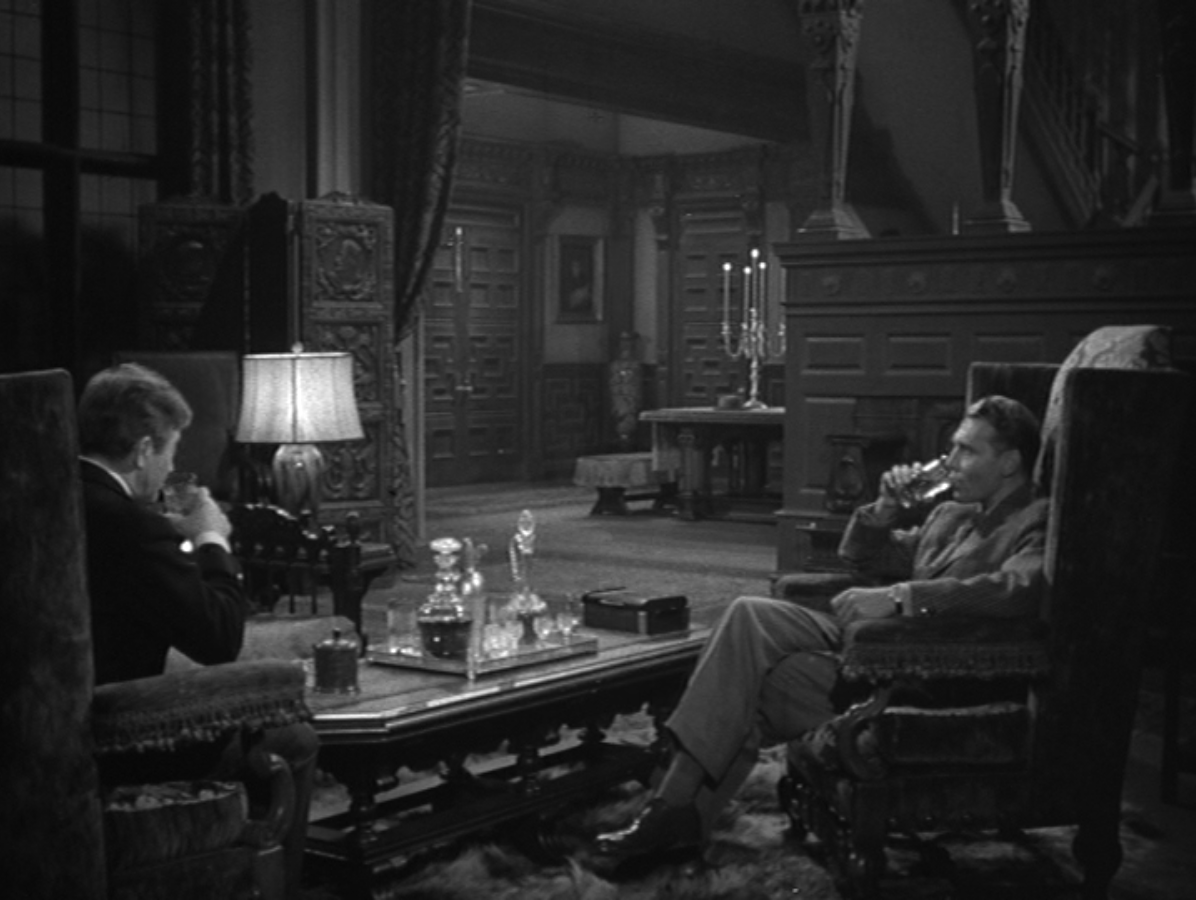
With many of these classic horror films, their appeal often comes down to one thing – atmosphere. The Wolf Man has this in spades. Similarly to Universal’s The Invisible Man (1931), this film features substantial interiors including richly appointed rooms with heavy wooden furniture and deep rugs, high ceilings and tall windows. The men wear thick tweeds, canes and fedoras and smoke pipes and all this contributes to the atmosphere. The exteriors are equally impressive and shrouded in mist and all this adds up to a cool viewing experience.
You’ve got to hand it to Lon Chaney, Jr. but let’s talk some straight talk; the guy – maybe Lenny in Of Mice and Men aside – was not a great actor but he portrays Larry Talbot well. It is a rare example of a sympathetic monster; through no fault of his own and much against his will, Talbot becomes a murderous werewolf. He hasn’t dabbled in science irresponsibly (like Dr. Henry Jekyll or Dr. Jack Griffin) or tried to play God (like Dr. Victor Frankenstein) and actually he was coming to someone’s rescue when he was cursed to this life. Chaney displays Talbot’s tortured soul valiantly for an actor otherwise ill-equipped. And he did so in multiple films. Chaney as Talbot morphed into a wolf in four sequels; “The Wolf Man is the only Universal monster to be played by the same actor in all his 1940s film appearances” So, Chaney inarguably can lay claim to the depiction of one of the single most notable monsters in classic film history. Additionally, though, Chaney also spent hours in the make-up chair becoming Dracula (Son of Dracula), Frankenstein’s monster (The Ghost of Frankenstein) and the Mummy in three pictures – he is the only man to portray all of Universal’s major horror characters. A sickly Chaney stumbled through his final film roles sporting enormous bags under his eyes and suffering from a plethora of illnesses including cataracts, beriberi, liver problems, gout, cardiac issues and heart disease. He died in ’73 at 67.
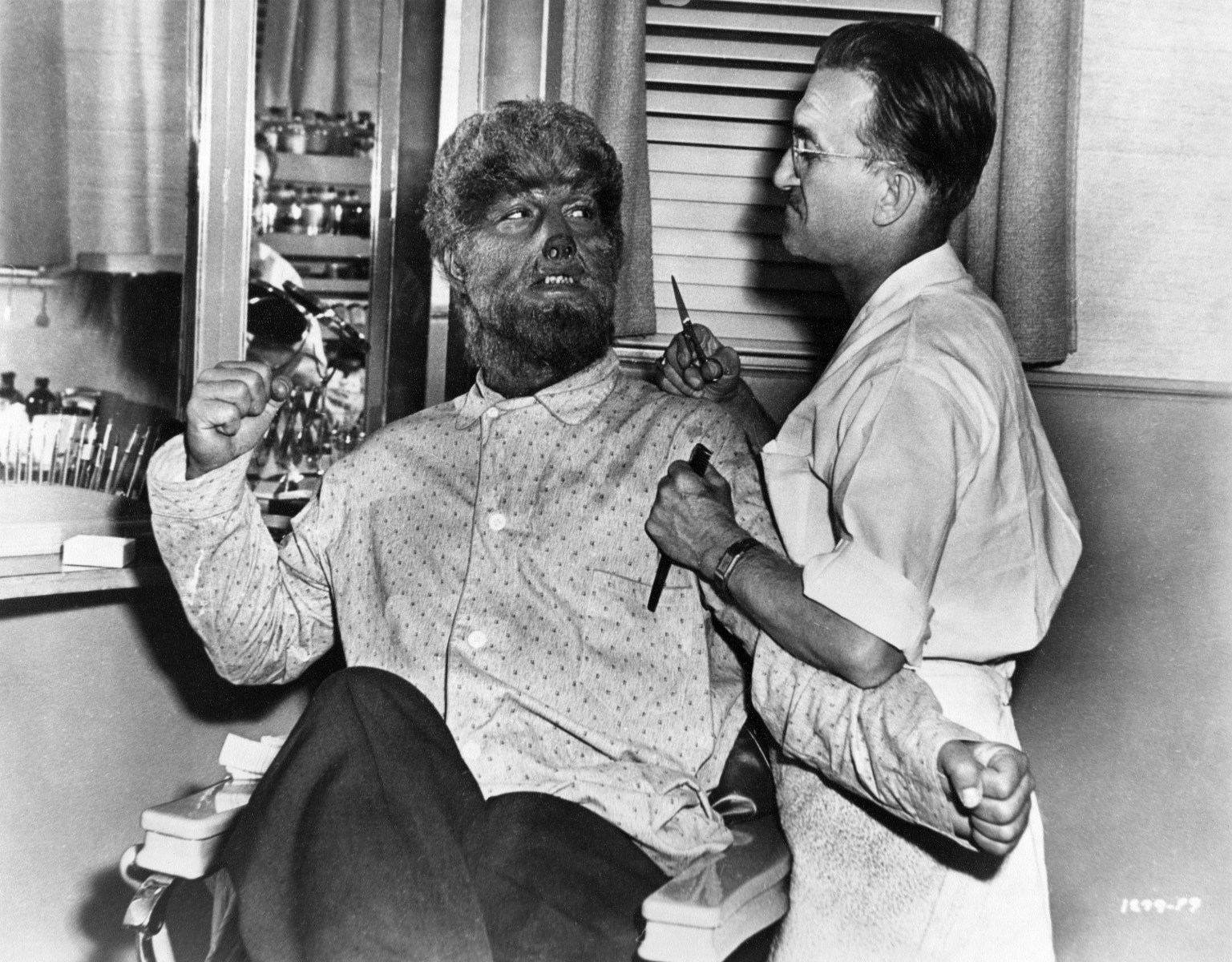
One of the things that makes The Wolf Man so watchable is the long list of notables in the cast. Claude Rains is his erudite self as the elder Talbot and my man Warren William appears as the sympathetic doctor. Warren was a major star in the Thirties and was later called “The King of Pre-Code”. He was a prolific leading man, making it interesting to see him in a supporting role here. Ralph Bellamy is always nice to see and while Patric Knowles has a recognizable mug his character here is an insufferable bore; a “milquetoast” or, as my friends and I would say back in the day, a “squeef”. Also fascinating is the casting of Béla Lugosi in the smaller but pivotal role of the appropriately named gypsy, Bela. Ten years gone from playing the indelible Count and poor Béla is down the cast list. You could only have placed Maria Ouspenskaya and no one else in the role of Maleva and Evelyn Ankers? She’s the female lead here but not at all engaging.

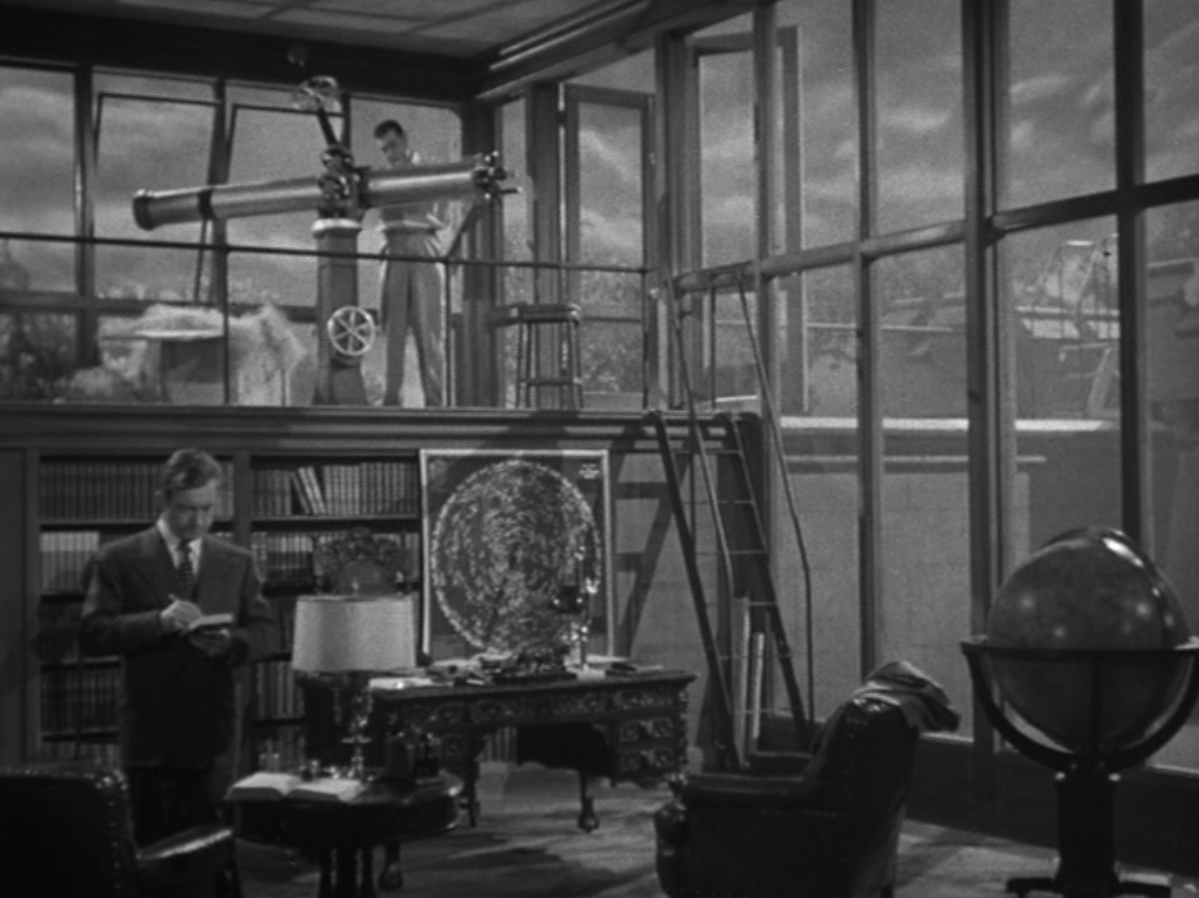
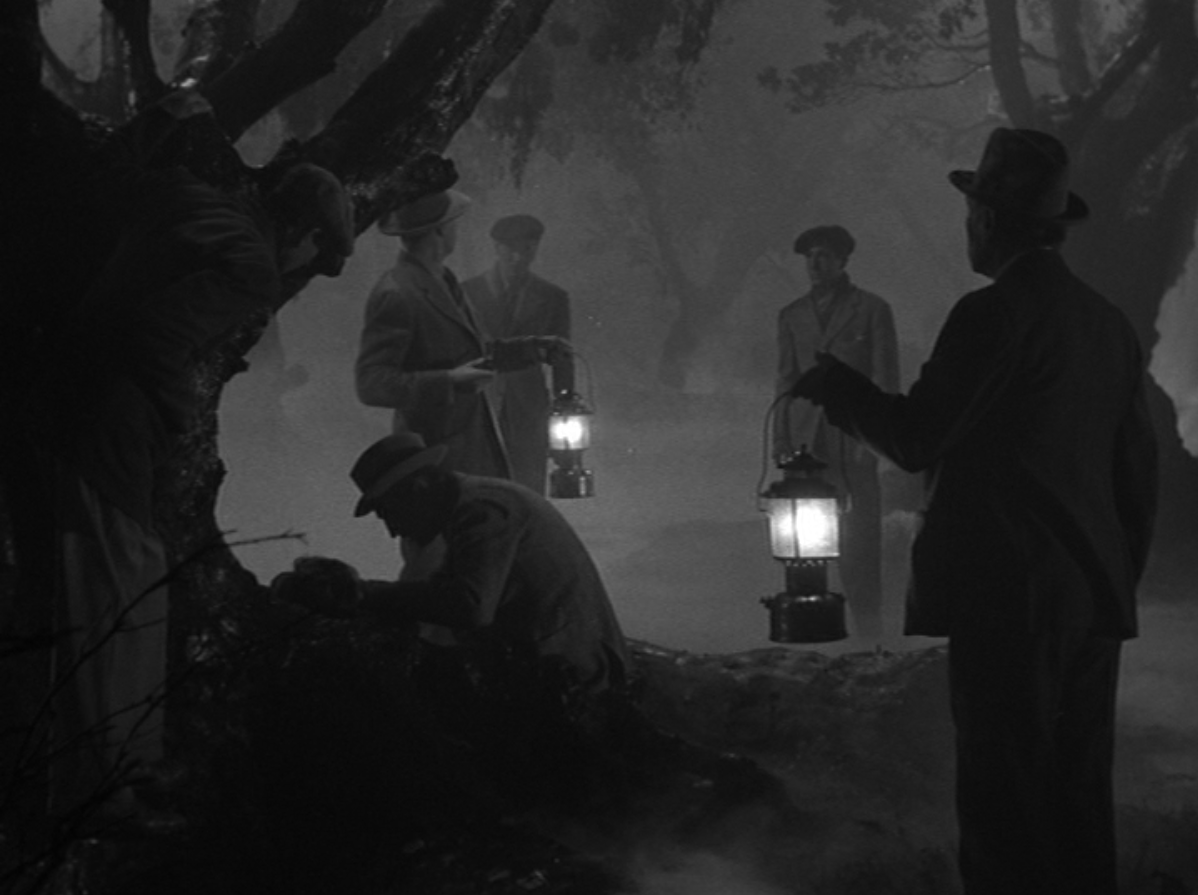
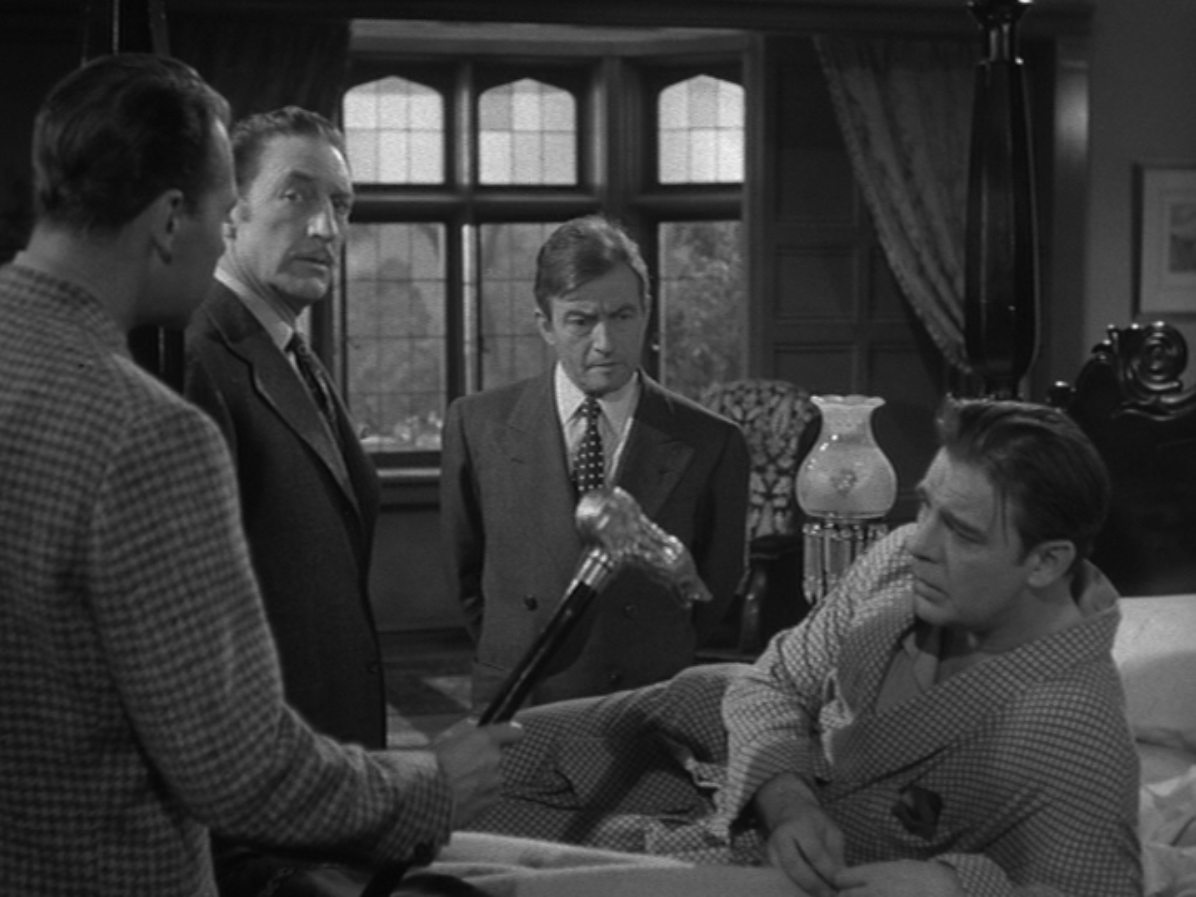
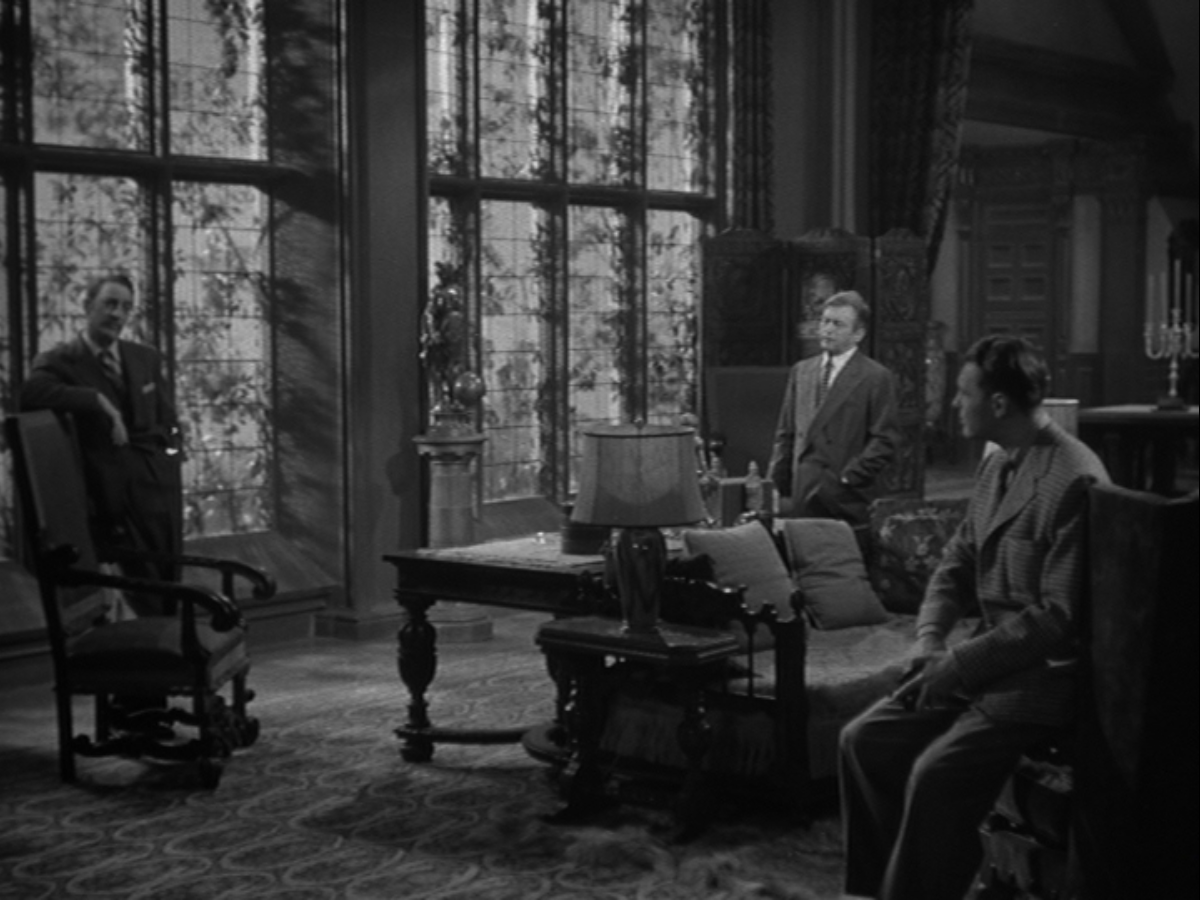
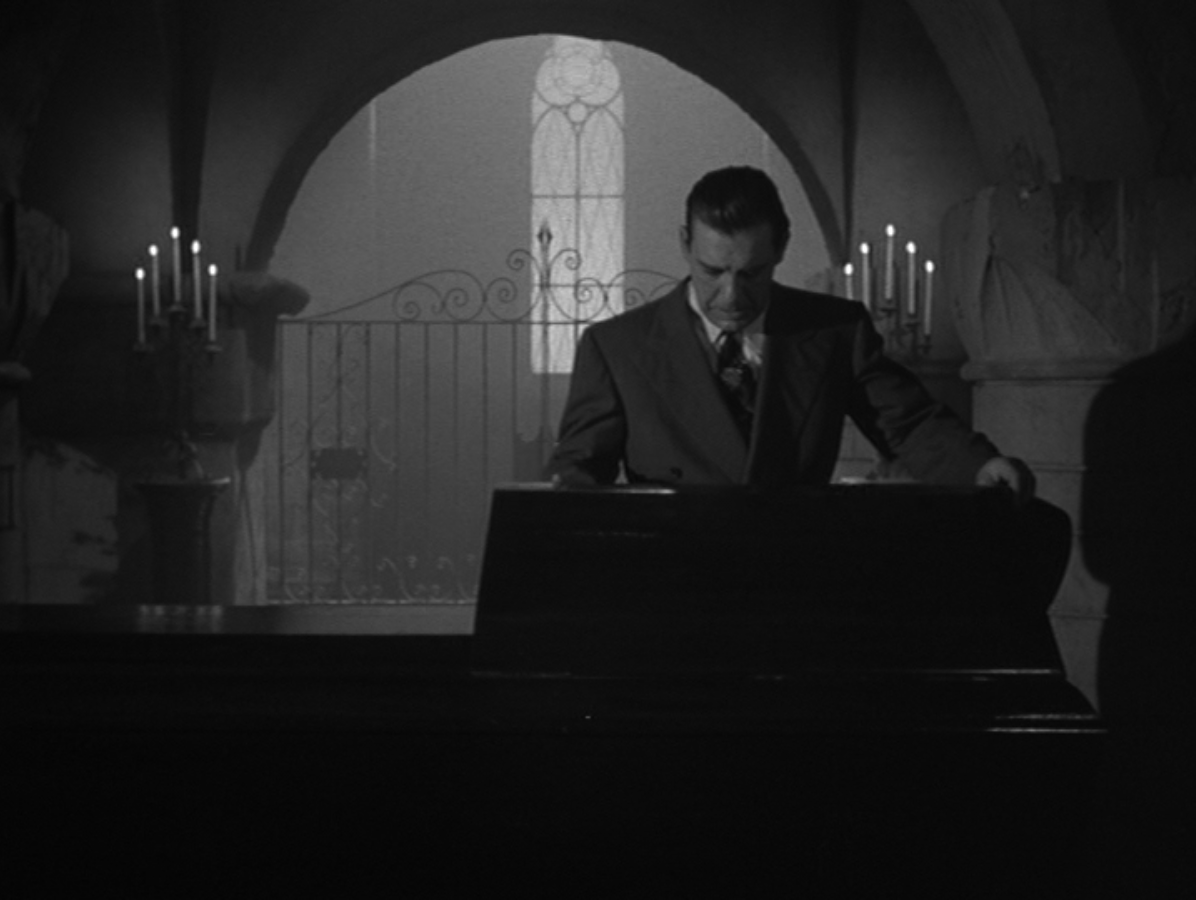
The Wolf Man – in much the same way the story of Dr. Jekyll and Mr. Hyde has – has been much analyzed over the years. Scholars have somewhat grandly pronounced the presence of various story elements; “The Wolf Man expresses and exorcises the Id-force of uncontrolled aggression in its own system (the werewolf), in Larry Talbot (his werewolf phases), and in the community (the destabilizing forces of rape, murder, gypsy liminality, and aristocratic privilege—Talbot often behaves as if he had droit du seigneur when courting the engaged Gwen).” OK, then. It has also been conjectured that the film is an allegory for puberty, and that it reflected the anxieties of American audiences during World War II, that it was a parable about the war effort. But for this commentator it is much more about the aura of the movie and one wonders if the screenwriter intended this tale to be so grand and to contain such far-reaching commentary. Curt Siodmak (of Dresden, Germany; 1902-2000) was a prolific novelist and screenwriter and actually he looms large in classic film legend. His wolf man character joins Dracula and the Frankenstein monster as the most significant monsters in film history and Curt created his out of whole cloth while the others have literary sources. Siodmak invented basically all of the werewolf lore that is presented in The Wolf Man and also in its sequels and remakes. There are no ancient texts with passages pertaining to the pentagram, the silver bullet or the poem about “a man who is pure in heart”; that’s all Curt Siodmak; so, points for him. He didn’t stop there though and added scripts for other minor classics like several Invisible Man, Wolf Man and Dracula sequels and other drive-in, late show horror flicks like Creature with the Atom Brain and Love Slaves of the Amazons, a film he also produced and directed. Quick side note: speaking of remakes, the 2010 version of this film starring Benicio Del Toro and Anthony Hopkins is excellent and I can highly recommend it.
I have a friend who once told me he didn’t consider these classic Universal monster films “horror movies” because they were no longer considered scary. But in fact these movies are, as I’ve said, the very definition of horror films. Dracula and The Wolf Man both are about inhuman supernatural monsters who have an immense power that approaches immortality and they descend to levels of depravity and bloodlust that makes them unstoppable forces. That, my faithful readers, is “horror”. And more than that they contain that atmosphere I spoke of, that gothic ambience with its roots in previous centuries. But they also contain the excellent set and production design of the classic Hollywood era that resulted in ostentatious, misty and shadowy settings that fill the viewer with dread. That wonderful sort of terror we all love to sometimes revel in.
 SoulRide
Enjoyed this interesting blog. I completely agree these are true horror films – certainly the kind I was introduced to as a child. The slasher flicks of the 1980s and beyond – just a whole different thing.
oh, and thank you for introducing me to the term droit du seigneur – definitely a sophisticated name for a pretty creepy concept. 🤔😂
The things you get from my site! That’s a 50 Cent Term that you can have for free!
Merci!