
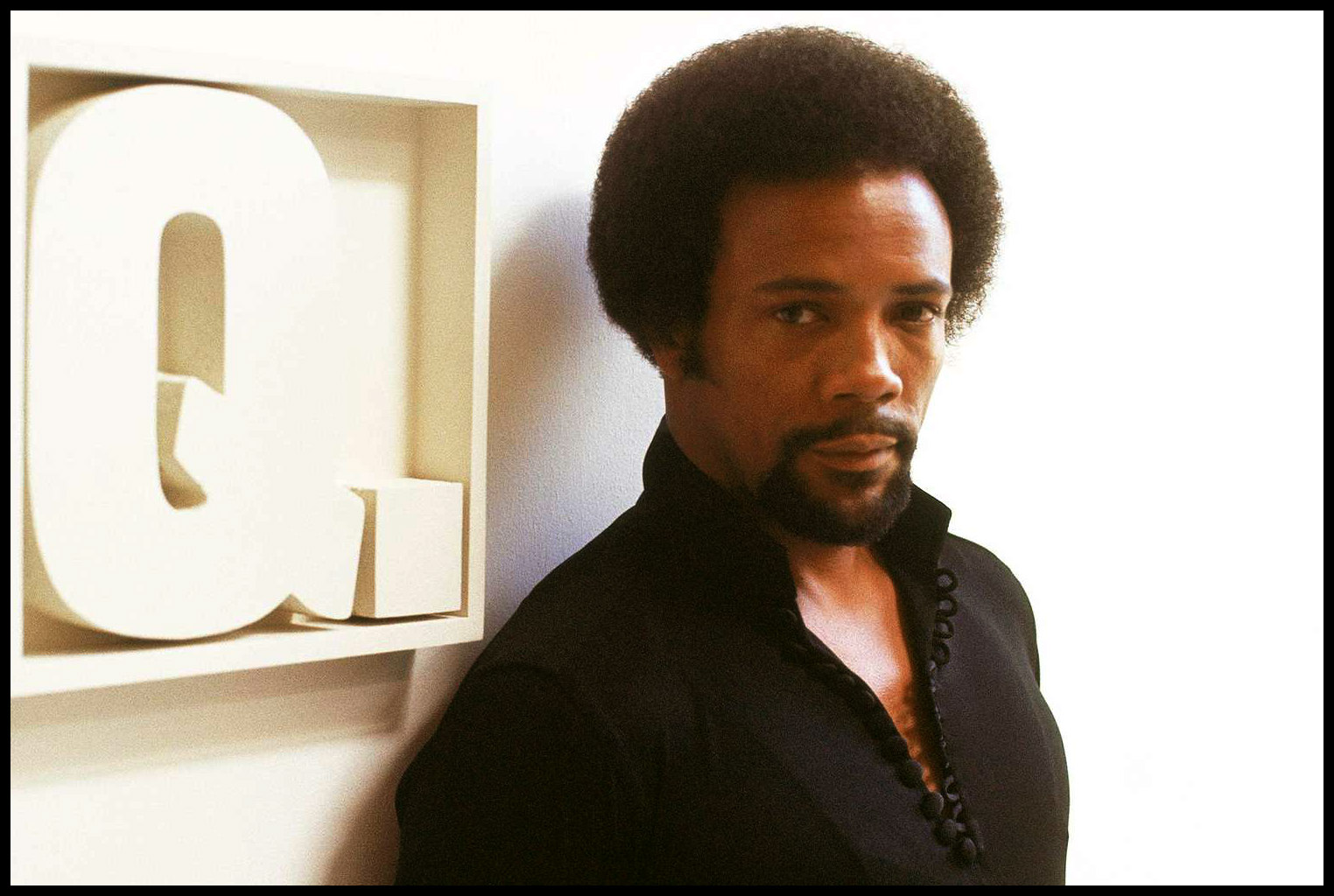
Pick an era, he was there. Pick an artist, he was there. Pick any box – Quincy Jones checks it.
While many artists make their mark in a very short period of time, others cut a swath through their industry and forge careers that span years and include work with a plethora of artists across different mediums, styles and genres. While there are a handful you can name who have been prolific through the decades, I have to wonder if there are any as inherently cool as Quincy Jones.
Several years ago I conceived of an article on Jones but got no further than the title. Then came the news that Q had died on my birthday in 2024. While I have in the past made an effort to honour various personalities before they leave this plane, in Quincy’s case I’m left to present his highlights after he has shuffled off this mortal coil. Certainly his storied career deserves illumination.
I started off by challenging you to pick any coolness box and Quincy would check it. This truth extends to his debut on earth. Box One on his Coolness Checklist is his name – Quincy Delight Jones, Jr. – how cool is that? – was born in Ol’ Chi in 1933. So, his father contributed to the Quincy Coolness by passing on the wonderful name “Delight” but Q’s mama helped out, too. I like to think that I am somehow related to Quincy Jones as his mother’s maiden name was Wells, if you can believe it. Quincy Jones, then has just been born and already coolness abounds.
Nice to learn that Q’s father was a loving man who’s work ethic young Quincy, Jr. adopted. Another influence was Ray Charles. Jones noted how Charles overcame his blindness to forge a career and a 14-year-old Quincy made a point of meeting Ray when the 16-year-old pianist was playing in a local club. Quincy Jones got early work in the industry writing arrangements for Charles.
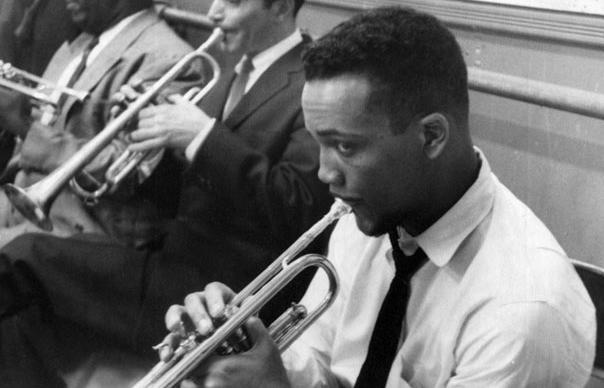
Then Quincy made a stop in Elvis World. Jones, by this point an accomplished musician, scored a temporary gig as second trumpet on the CBS television program Stage Show starring the battling Dorsey Brothers. Many will know that it was on this show produced by Jackie Gleason that Elvis Presley made his first national television appearances. As if Quincy Jones on trumpet backed Presley – played with him! – for the rising king’s six appearances on Stage Show. Quincy turned 23 during EP’s performances on the Dorsey show and this means that, for those scoring at home, by his 23rd birthday, Q had worked with Ray Charles and Elvis Presley, two artists who would go on to become two of the most influential figures in 20th century music. But Jones was just getting started.
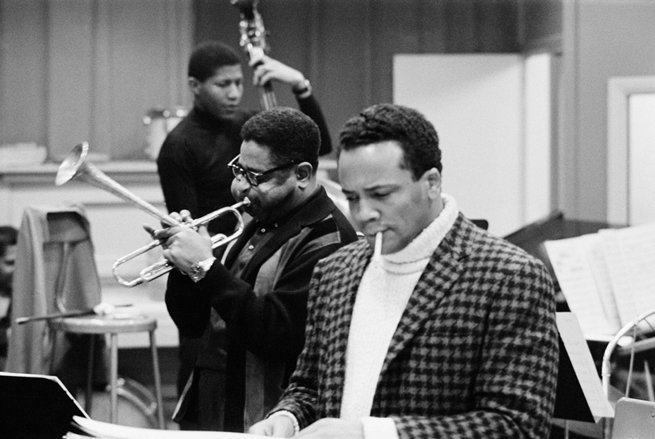
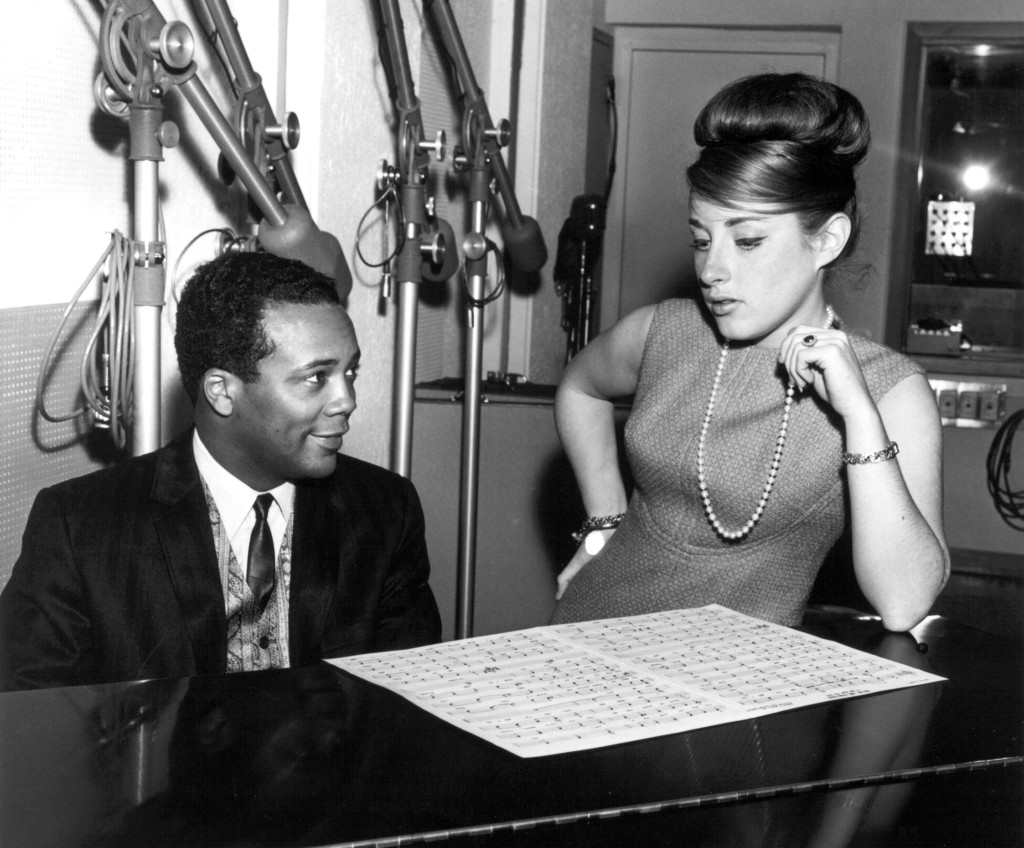
After working with Dizzy Gillespie, Quincy made a monumental move. Jones himself said later that “I discovered that there was music and there was the music business“, a savvy observation that lead Jones into the production end of the game and in 1961 to a position at Mercury Records as vice-president, the first African American to hold the position. From there, Q scored success in the pop world when he teamed up with a little lady name of Lesley Gore. In my piece on Ms. Gore, I detailed how Jones and German Claus Ogerman constructed pure pop hits for the teen from Tenafly. This perhaps disparate group scored four million-selling singles, a Number One song in “It’s My Party” and other Top 40 hits.
I wrote about Quincy again when he worked with Andy Williams. Andy’s last album for Cadence Records was Under Paris Skies, a “stylish and erudite record” that Williams made in Paris with Q. Before Andy went to Columbia and his albums began to all sound similar, he made this, one of his finest LPs, with Jones. Worth noting that this one time when Andy took over control of the recording of one of his albums the man he called to conduct and arrange was Quincy Jones.
Again Jones featured in an article of mine when I reported some years ago on the 1969 film John and Mary, for which he provided the score. Quincy had entered the world of film scoring with his work for 1961’s The Pawnbroker and I noted with some wonder just how prolific the maestro was in this arena. I was amazed to learn that “from 1970 through ’72, Q scored a total of 10 films! 16 film scores in four years”. That’s a lot of music. He would eventually write the music for upwards of 40 major motion pictures, earning Oscar noms along the way. Another part of the business conquered by Q. And that’s not to mention the small screen. Jones composed the themes to many TV shows with two standouts including his theme for the Raymond Burr show Ironside, a theme that has become iconic and one that received the Tarantino Stamp with its canny use in Kill Bill: Volume 1. His second notable theme is no less than my third-favourite song of all-time. “The Streetbeater” served as the opening and closing music of the hilarious Redd Foxx show Sanford and Son. And here I’ve written about Quincy Jones again; you can read my thoughts on this tune here.
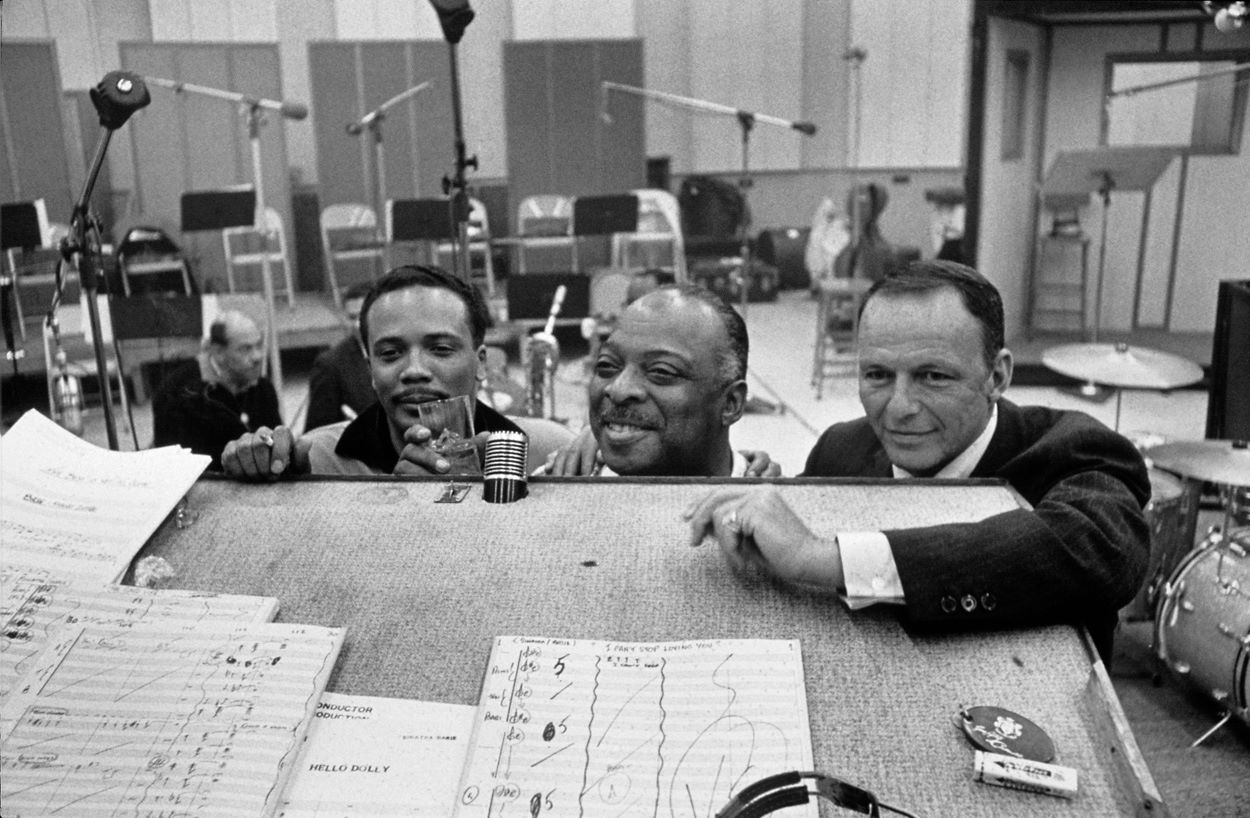
By 1964, Quincy – already with a string of successes behind him – began doing arrangements for the swingin’ records Count Basie was releasing at the time. He then entered truly rarified air with a relationship that would burnish Q’s image for all of time. And it was Frank Sinatra who made the first move. Frank knew many things and all the people in the business. Years before, he had requested Q to run the band for a 1958 gala for Princess Grace and remembered the bandleader when it came time to cut another record with Count Basie. After meeting in Hawaii under a Jack Daniel’s flag, Q joined FS in Hollywood to begin work on arrangements while Frank finished work on None But the Brave; Q stayed next to Frank in Dean Martin’s dressing room. Jones says he worked endlessly on the charts for the record and early one morning was awakened by Frank in military costume for his film asking how Quincy liked his eggs.
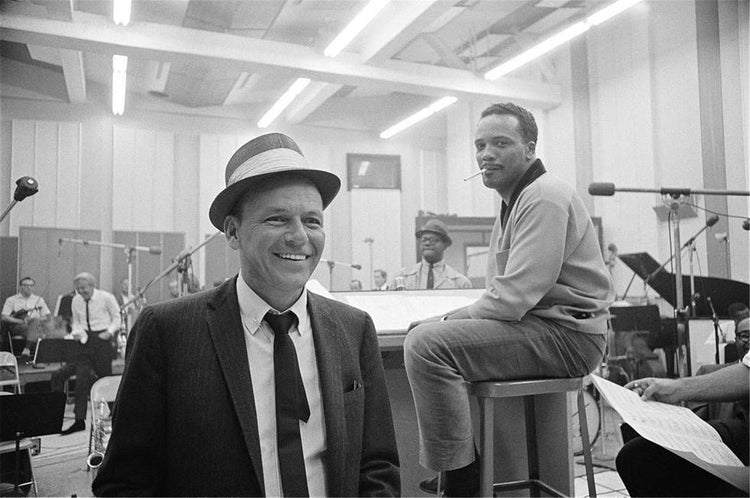
Those in attendance at the recording of what would become It Might as Well Be Swing attest that when Frank first entered the studio he did not take over the proceedings but instead deferred to what Quincy had prepared for the recordings. It is generally accepted that the resulting album is a bona fide classic, ranking among the best Sinatra LPs which is saying something. It contains timeless recordings immediately identified with Sinatra like “Fly Me to the Moon” and “The Best is Yet to Come”. Two years later, the majestic conglomerate of Sinatra, the Basie band and Quincy, came together again for a month-long stand at the Sands Hotel in Las Vegas. During the last week of the engagement, Reprise recorded the proceedings and released Frank’s first live album, the swingin’ Sinatra at the Sands.
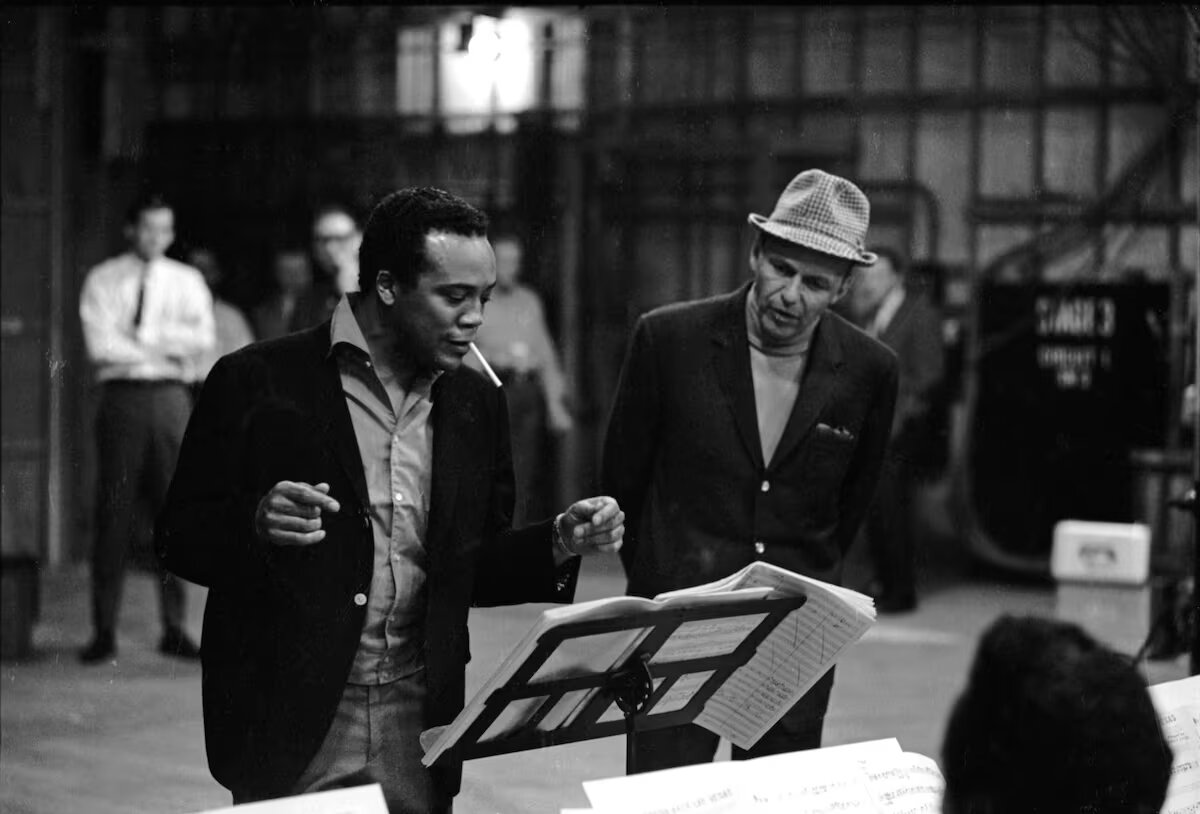
These two titans teamed again years later after Q had conquered the pop world. L.A. is My Lady materialized through the brand new title track, one that was to do for Los Angeles what “New York, New York” did for the Big Apple and the rest of the set would be filled with older standards Frank had yet to cut. The record has the slick sound of Quincy Jones, the Producer King of Pop circa 1984 and this is particularly heard on the title track and when it’s leftover disco sound failed to make a dent on the charts, the record took on the sheen of a failure. But the album has much to offer including excellent individual tracks (“After You’ve Gone” is my fave), a stellar band featuring Lionel Hampton, the Brecker brothers and George Benson and the last new recording of Sinatra’s to be proliferated during his final days. The version of “Mack the Knife” crafted by Q and FS has a vibrancy that translated well to the concert stage during Sinatra’s last years as a performer and became “the final Sinatra performance to be widely released commercially”. So, in terms of their professional relationship, Quincy Jones did much to add lustre to an already incandescent career and with L.A. is My Lady Jones lays claim to being the man to construct Frank Sinatra’s final proper album release.
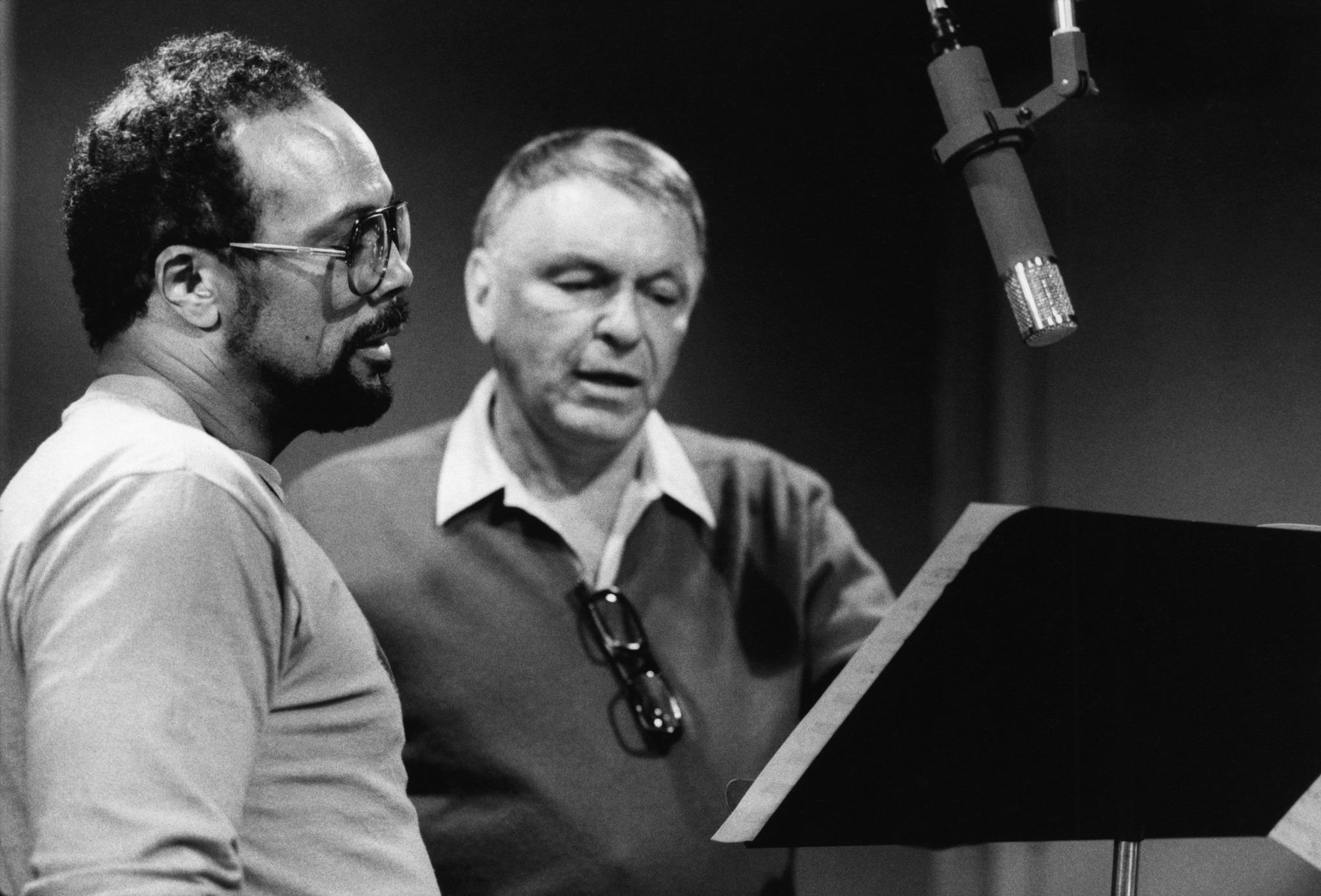
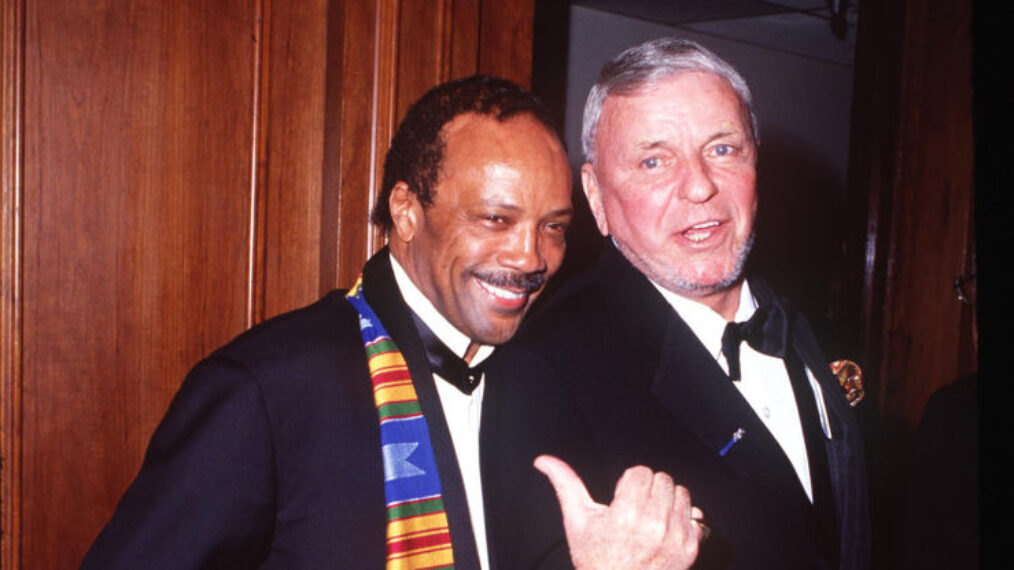
Maybe more than these collaborations was the unique friendship between the two men. It is much the same in Elvis World; often times it is said that FS was “friends” with someone but the way Frank – and King – consumed life left little room for fraternal connections. But Sinatra biographer James Kaplan is at least one source of the assertion that Frank really liked Quincy due in part to the bandleader’s ability to be agreeable without being a yes man. Sinatra forged a relationship with Quincy Jones that was unlike the ones he had with any other of the arranger-conductors that Frank worked with. And then there is the ring. The story you may have heard is true that, upon his passing, Sinatra actually bequeathed to Quincy a ring Frank wore for 40 years, one that bore the Sinatra family crest. After Frank died, Jones wore the ring every single day saying it was one of his prized possessions “because it has and will continue to represent our everlasting friendship”.
Q became a mogul with his Quincy Jones Productions but he continued to release his own records. And who did this mogul record for? Herb Alpert, of course, the mogul’s mogul. Herb might be the only guy who rivals Q for showing up in people’s stories. Here the two joined forces when Quincy began releasing yearly albums on Herb and Jerry’s A&M Records. Jones began the most substantial part of his career as a recording artist with 1969’s Walking in Space, a record that introduced Quincy’s particular brand of jazz music laced with lounge and featuring guest vocalists. Gula Matari followed the next year and featured the likes of Freddie Hubbard, Herbie Hancock, Grady Tate, Ray Brown and Milt Jackson. Smackwater Jack has the cool album cover, Q’s version of Carole King‘s title track and Jones’ full version of the Ironside theme. 1973’s funkier You’ve Got It Bad Girl I’m proud to own on vinyl and it has many notable tracks. It opens with “Summer in the City” followed by “Love Theme from The Getaway” (film score by Quincy Jones), Stevie’s “Superstition” and the previously mentioned favourite of mine, Q’s theme from Sanford and Son. Actually, with these last two songs, this album contains two of my three favourite songs. And it’s Quincy’s second consecutive album to contain a song co-written by Bill Cosby. Body Heat was a little lighter as evidenced by the presence of smoothies Dave Grusin and Bob James and the record topped both the Jazz and R&B charts. Mellow Madness helped introduce the Brothers Johnson and Sounds…and Stuff Like That!! from ’78 ventured into disco and featured covers of Stevie Wonder, Herbie Hancock and the Doobie Brothers.
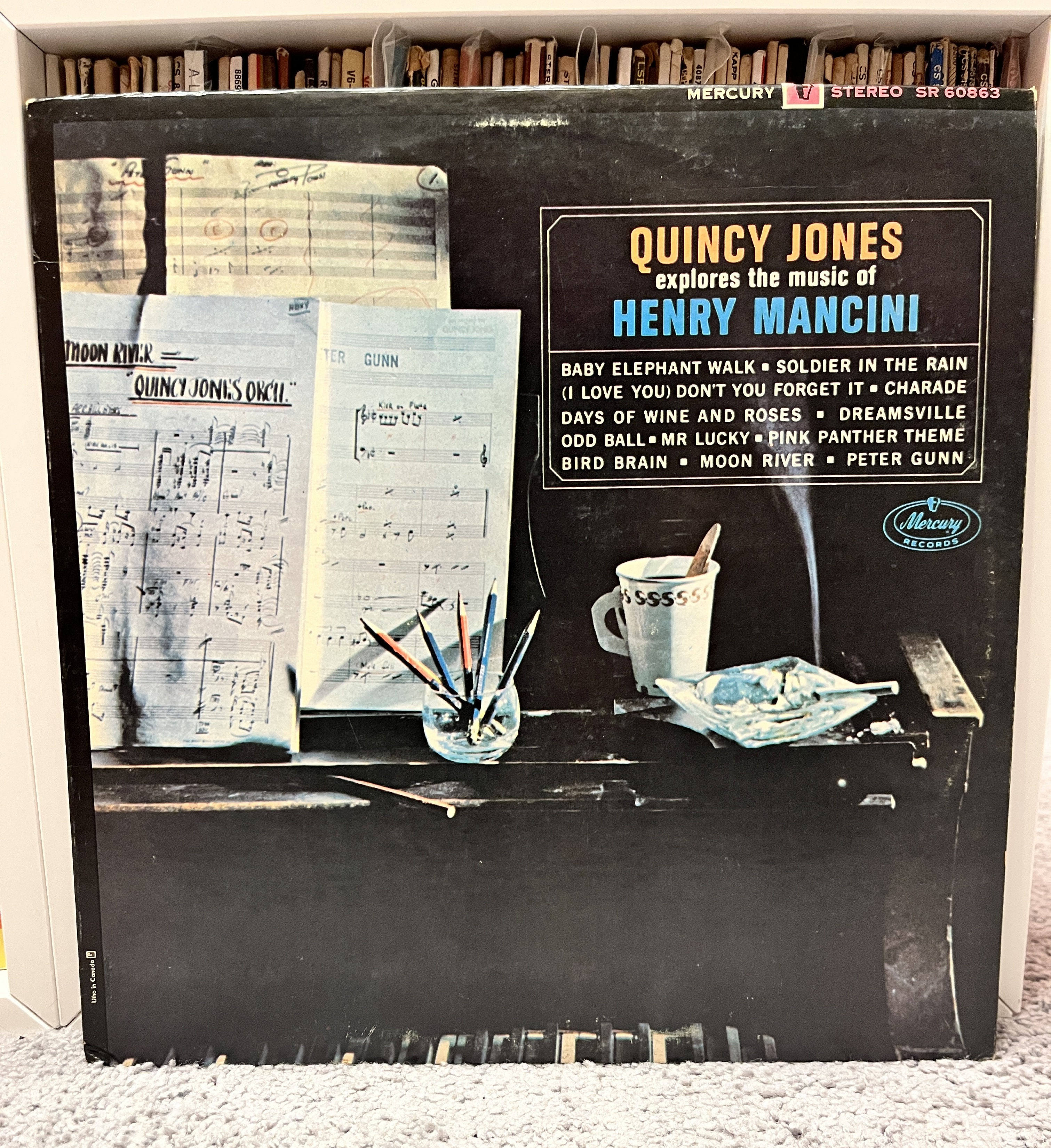

Then came The Dude, a 1981 album that was Quincy’s last for A&M and his last album as a solo artist for some time. Here again Jones – much like Sérgio Mendes did for his album releases – recruited many guest vocalists and musicians. Singing on the album are quiet storm stalwarts Patti Austin and James Ingram and the musicians used comprise many premiere session players. The album was very successful, reaching #9 on the Pop albums chart and topping both the Jazz and R&B listings. It spawned 3 Top 40 singles including “Just Once” and “One Hundred Ways”, both with Ingram at the mic. The album – another I own on vinyl – has a great smooth vibe and was nominated for 12 Grammy Awards – including Album of the Year, losing to Double Fantasy – winning three. Some songwriting for the record was done by Englishman Rod Temperton, a guy I once thought of profiling here. At the time of The Dude, Quincy called Rod “truly the songwriter of the 80s” and Q and Rod would work together again with Temperton writing hits for Michael Jackson. And then Rod just…went away. After writing some massive hits in the disco, R&B, quiet storm and yacht rock idioms, the well must’ve went dry.
“More powerful than even a mogul, Jones is a multimedia baron whose controlling interests extend to film and television projects as well as music.”
– Will Friedwald in Sinatra! The Song is You: A Singer’s Art
You see, individual articles could be written on Quincy Jones, a series. One on him and Frank, maybe, one on his film scoring and one certainly could be written about his work with Michael Jackson. In 1978, MJ asked Q who should produce his next album and Jones gave him some names but also offered to do the work himself. Jones was given the reins and Off the Wall began the most successful three-album run in music history. Off the Wall sold “only” 20 million copies – a colossal number making it one of the biggest-selling records of all-time though it was dwarfed by their next collaboration. Everybody understands Thriller‘s place in music history and popular culture. It is a touchstone in so many ways. Quincy Jones again crafted the sound of this album that is the biggest-selling of all-time, shipping 65 million at last count. This power duo’s third and final album together was 1987’s Bad, another gigantic success and a third Michael Jackson album to sit among the most-sold records ever, selling in excess of 35 million units. For those scoring at home, this trilogy of albums has sold 120 million copies. Understand that these three mammoth albums are the crowning achievements in Michael Jackson’s career, a career with almost no parallel. It is hard to overstate their importance in the story of popular music – and they were produced by Quincy Jones. This alone places Q in a unique place among music’s titans.
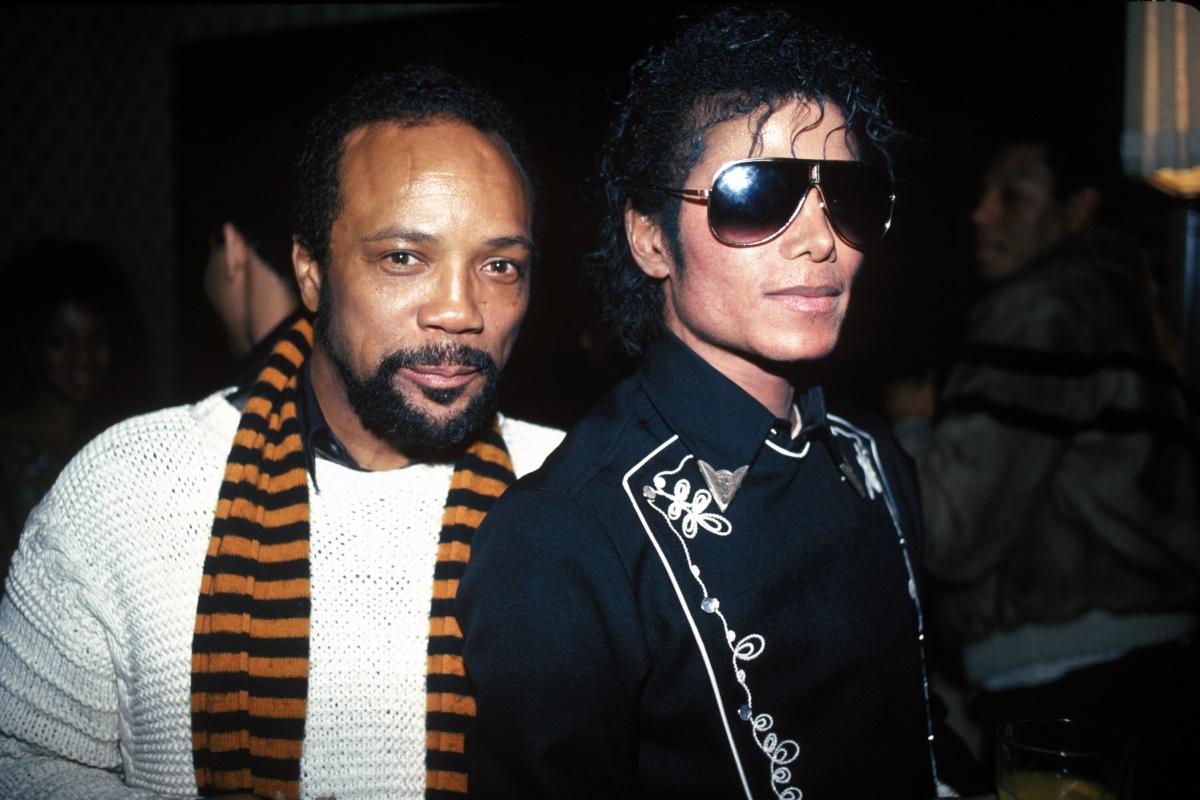
But he was not done. Later in the 80s Quincy went into film production. It took him awhile to get on his feet as a movie producer. His first film, Steven Spielberg’s The Color Purple, was only nominated for 11 Academy Awards. Q also scored the film, marking the first feature film directed by Spielberg to not feature music by John Williams. At about this same time, Jones was called to help guide the recording of the humanitarian anthem “We Are the World” recorded by the most accomplished “one-hit wonder” in history, USA for Africa. Most know the story of this single conceived by Harry Belafonte as a way to raise awareness and funds to help sufferers of famine in Ethiopia and there is a Netflix documentary devoted to its creation. It was Jones who brought Michael Jackson to the project and Jackson co-wrote the song with Lionel Richie and here again Jones had a hand in an historic recording, one that became the fastest-selling single in US history. This Quincy Jones production went to Number One in over 20 different countries, won four Grammys, became the first single to go multi-platinum and sold 20 million physical copies, placing it in the Top Ten of highest-selling singles. Another major feather in Q’s cap.
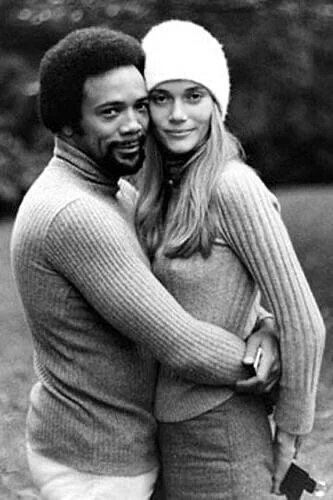
From the 1990s on, Quincy Jones enjoyed a rare position in the pantheon. He moved effortlessly through television production (The Fresh Prince of Bel-Air introduced the world to Will Smith), more recordings with scores of collaborators including the up and coming R&B generation, he continued in his role as mogul shepherding young careers and published his memoirs. Notes from his personal life include three marriages and seven children from five different women – Q was always prolific. His second marriage to Swedish actress Ulla Andersson produced Quincy III who followed his dad’s footsteps into the business. Jones was notably married to actress Peggy Lipton. The two were wed the day after Quincy’s divorce from Andersson and they had two daughters – both became actresses – and were married for 16 years until 1990. Then Q lived with German actress Nastassja Kinski and their daughter, Kenya, became a fashion model. All this left Q with at least one detractor in the young black community. Tupac Shakur beefed that Jones had too many relationships with white women – leading one of Jones’ daughters to rebuke the rapper in an open letter while another daughter actually dated Shakur and they were in fact engaged when Tupac was sent to meet Houdini.
Jones may have been a rarity in that his life lacked debauchery. His only serious drug use came when he was all of 15 years old and Ray Charles introduced him to heroin – much to discuss there. Q though used for only five months before kicking. He did not, though, avoid health issues. In 1974, Quincy developed a life-threatening brain aneurysm and the prognosis was so dire that a memorial service was held which Jones himself attended. He had two brain surgeries and a clip was inserted (!). He was told never to blow the trumpet again or the clip would come free and he would die. Jazzbo to the bone, Jones did pick up the horn again. One night after playing, he experienced pain in his head. Sure enough the clip had come loose (!) and Jones never did play again after that.
Jones did not waste his final years. He was actively involved in scores of charitable causes and in promoting the study and the proliferation of music appreciation from street level and into the highest levels of government. He also was devoted to activism and spent his life lending his formidable presence to causes he believed in. This activity spanned supporting MLK in the Sixties to working closely with Bono on many philanthropic causes. Quincy was as prolific in this area as he had been in music. Cool, indeed.
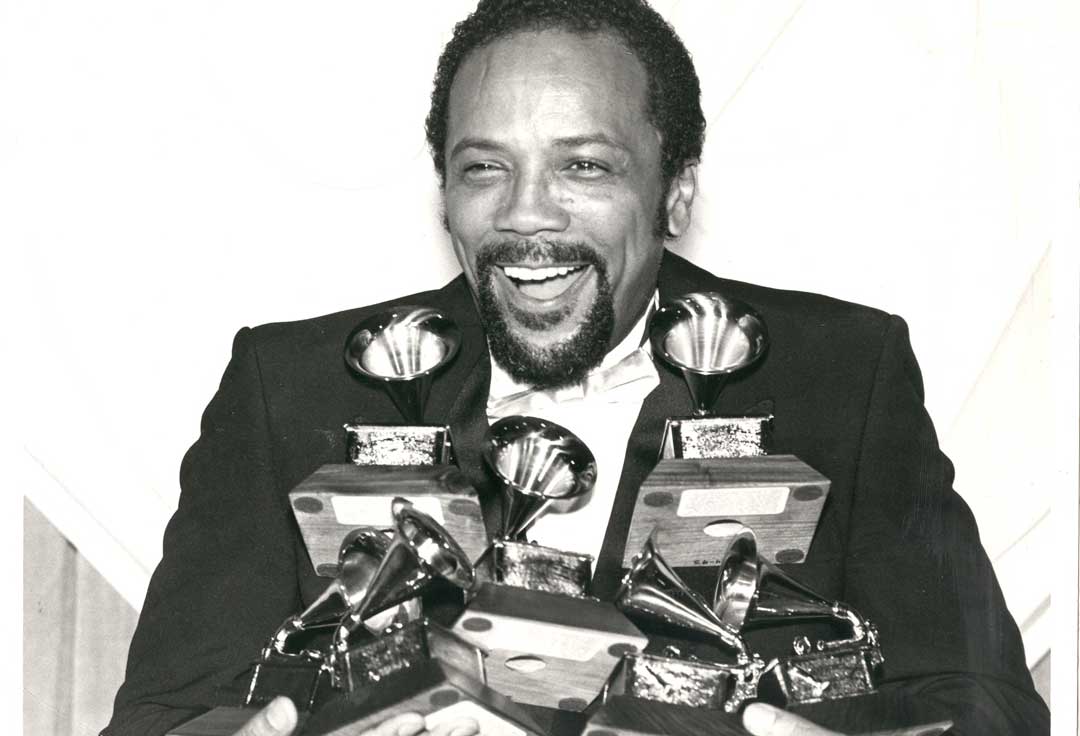
Yet another post could be devoted to his many awards and honours. No one has received more Grammy nominations than Quincy Jones who was nominated 79 times, winning 28; only Beyoncé and Sir Georg Solti have won more Grammys. In 1991, after some 35 years in the business, Jones won 6 Grammys including Album of the Year for Back on the Block. As a testament to his longevity, influence and relevance, the record spans the decades featuring the last recordings of Ella Fitzgerald and Sarah Vaughan alongside contributions from Ice-T and Big Daddy Kane. He has won Tonys and Emmys, was inducted into the Rock & Roll Hall of Fame and received over a dozen honorary degrees. He was “the first African American to be the musical director and conductor of the Academy Awards in 1971. He was the first African American to receive the academy’s Jean Hersholt Humanitarian Award in 1995. He tied with sound designer Willie D. Burton as the second most Oscar-nominated African American, with seven nominations each”. Dang, Q. Go get ’em.
Quincy Jones was coolness defined. Blessed at the outset with a cool name, Jones worked his way into the halls of greatness running with Brother Ray, playing in the pit for the king and crafting pure pop for little Lesley. Living the expat life in Paris, he was called on to make a smooth record with Andy before returning home to make robust albums with Bill Basie which lead to a working relationship and friendship with Sinatra. A plethora of film scores and his own boss records through the Seventies. Herb’s A&M Records and the colossal successes with “We Are the World” and Michael Jackson. And Peggy Lipton. So many boxes checked. But maybe more than all this, it seems Q was a solid dude, humble and giving, sharing his resources and himself with the music and movie industries and with those hurting throughout the world. And he had the temerity and the determination – the class – to live to 91, gifting us with so many years. Thank you, Q. You were the epitome of cool.
Sources
- Sinatra! The Song is You: A Singer’s Art – Will Friedwald
- Frank: The Voice – James Kaplan
- Official Facebook Page – Quincy Jones
- The Dude – liner notes

