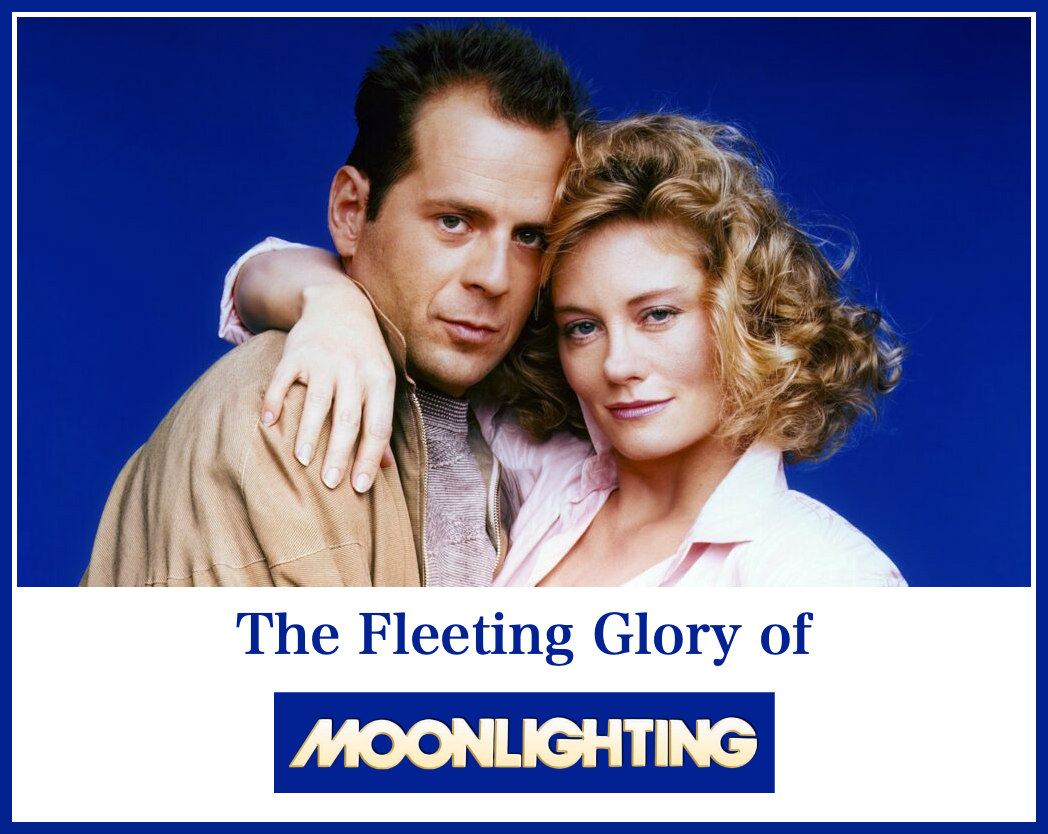
I wish I could remember how it started for me. I was still only 14 years old on February 3, 1987 – a date we’ll talk about later – and at that age and in the pre-internet 1980s I cannot imagine how I would have first came to know about the television show Moonlighting. But I did come to know about it and, more than that, it would deeply affect me and shape my early character, filling my imagination, giving me a hero to emulate and forming my romantic ideals.
For me personally, it served as the origin of my lifelong love of Bruce Willis, who was plucked out of obscurity to portray wise-cracking, smirking David Addison. He became one of the first actors I wanted to be, if you know what I mean. I had no previous knowledge of vivacious Cybill Shepherd but part of the appeal of the show, for me and the audience in general, was pairing this veteran actress with a nobody.
My origins with the show may be cloudy but the creation of the show itself is well documented. Glenn Gordon Caron (b. NYC, 1954) was a producer on Remington Steele before starting his own company, Picturemaker Productions. Caron created Moonlighting and later he made four feature films, the final one being a remake of the classic tale Love Affair (1994) that starred Warren Beatty, Annette Bening, Pierce Brosnan (speaking of Remington Steele) and Kate Hepburn in her final film performance.
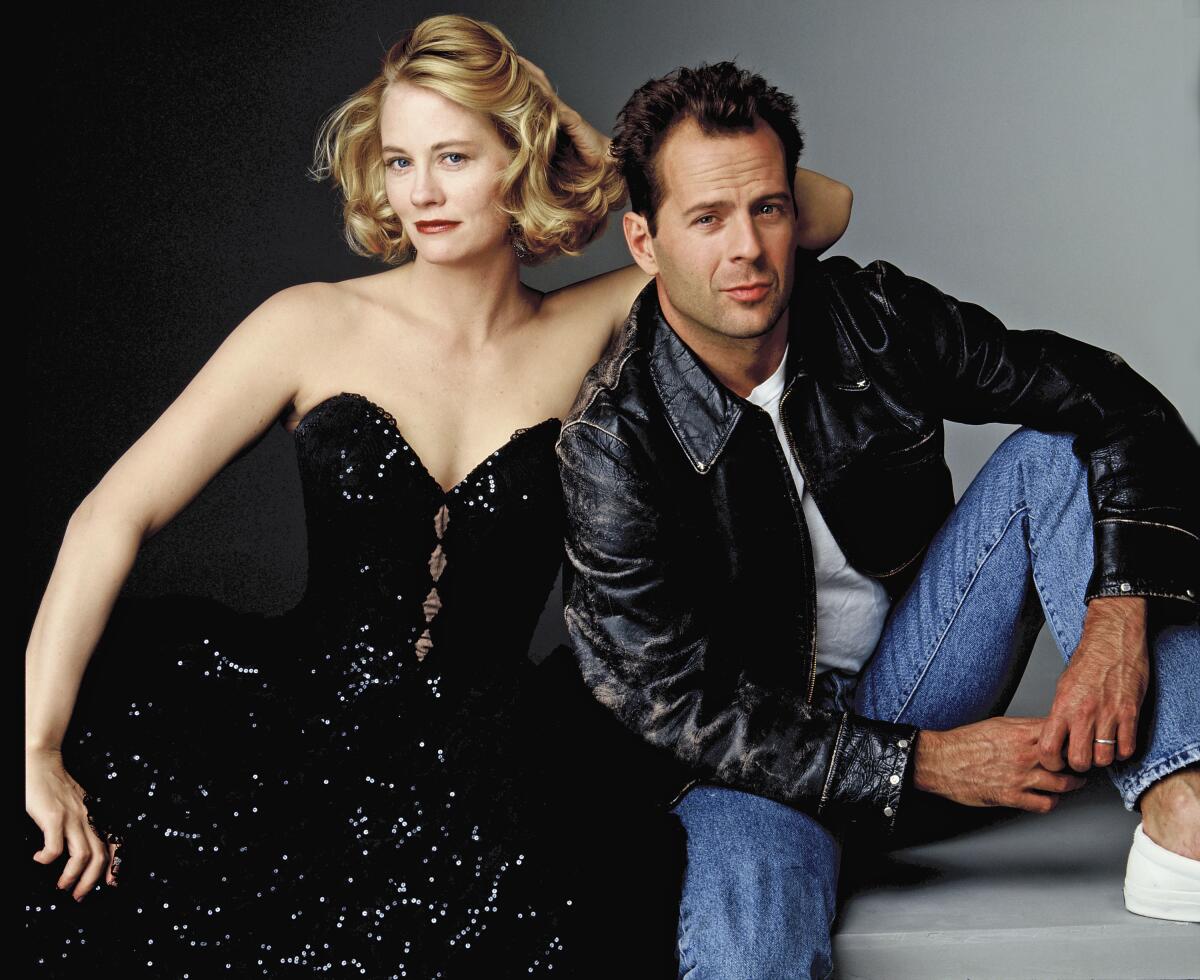
It is important to note that Moonlighting was never an ordinary show. Not ever. Without acknowledging this, one has no hope of understanding neither the trajectory nor the appeal of the show. And looking back from here, it is plain to see that it was never, ever – not ever – going to last. When he was writing the pilot, it occurred to Caron that he was writing the main character of Maddie Hayes for Cybill Shepherd. When she read the first script, she told Glenn it reminded her of the comedies of Howard Hawks. Neither Glenn nor anyone on his team knew who she was talking about; shocking, really. Cybill had Glenn, his producers and Bruce Willis screen Bringing Up Baby, Twentieth Century and His Girl Friday and these films – along with Nick and Nora Charles – established the templates for the relationship between Cybill’s Maddie and Bruce’s David.
The scripts were twice as long as those for “normal” shows and this was often down to the extensive and over-lapping dialogue and, because Caron wouldn’t cheat when it came to storytelling and cinematography, each episode entailed long hours and a lot of heavy lifting. The show was the first successful “dramedy” and its combination of drama, comedy, romance and intrigue proved a prototype for TV shows that followed in its wake. In fact, Moonlighting would become the first TV show to be nominated by the Directors Guild of America for Best Comedy and Best Drama in the same year.
The premise of the show was also unique. Cybill plays Madelyn Hayes, a former model and the face of Blue Moon Shampoo. In the pilot, she finds she has been swindled by her accountant and she begins to liquidate all her holdings, one of which is the City of Angels Detective Agency which has been run for years as a tax write-off by the freewheeling David Addison. When David learns that Maddie is shutting the place down, he convinces her to join him and run it in partnership with him; she has the name and face to draw clientele and he can handle the detective work. They agree, rename the place the Blue Moon Detective Agency and we’re off. Working the phones is quirky Agnes DiPesto who is played by Allyce Beasley and one of the employees is dishevelled Herbert Viola, played by Curtis Armstrong.
Perhaps the main thing that really set the show apart is that it constantly acknowledged to itself and the audience that it was a television show. This was achieved by the cast regularly breaking the fourth wall which is always a fun wink and a nod but with Moonlighting it was taken to an extreme. It was assumed to be common knowledge that David and Maddie were characters who would visit with viewers weekly. The audience was in on their adventures and the progression of their relationship. It was understood; these fictional characters actually lived “real” lives as “real” people – only they were bound by the confines of your television set and the dictates of screenwriters.
There are many other things that set the show apart. Caron and his team may have missed Howard Hawks but not The Big Chill. One thing the producers did understand was Motown and the pop, soul and R&B of the Sixties. And they found an ally and an outlet in Willis who is a fan of these sounds – a stone cold soul brother – as evidenced by his two outstanding albums released on the Motown label (learn about them here). The episodes were loaded with classic pop and Willis himself would often bust out with a few choruses while in character. Perhaps Miami Vice had already set the standard practice of loading episodes with music and Moonlighting followed suit. I distinctly recall being moved by the use of one of my all-time faves, the Isley Brothers’ “This Old Heart of Mine (is Weak for You)” in an episode featuring Dana Delaney. They had the Temptations on the show one night for one of Moonlighting‘s trademark cold openings and the fellas in sparkling jackets introduced me to the stellar “Psychedelic Shack”. One episode finds David Addison in jail. He sings to himself the wonderful “What’s Your Name” by Don & Juan, later joined by a con in the adjoining cell. When I later first heard the actual song on oldies radio I recognized it right off as the one David sang in his cell. Then there’s the poignant use of “Since I Fell for You”. Smooth jazzbos Bob James and David Sanborn recorded this cover in 1986 with Al Jarreau on lead vocals. This version was used to devastating effect in an episode we will talk about later. Both this tune and “This Old Heart of Mine” are on my Top 100 list of favourite songs and I heard them first as a youth on Moonlighting.
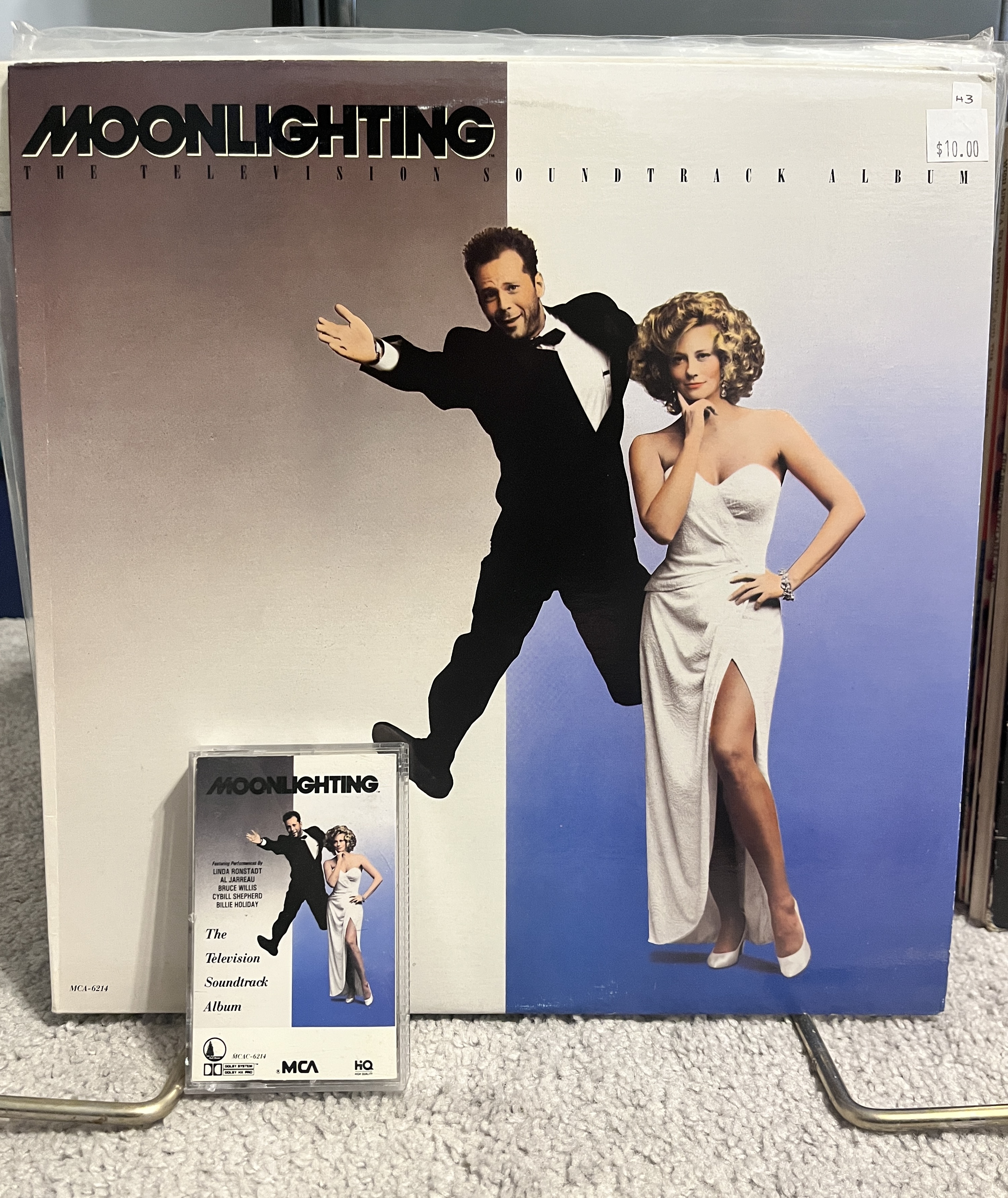
Speaking of Al Jarreau, the late vocalist sang and wrote the lyrics to the show’s theme song, one that reached the Pop Top 40 and hit Number One on the Adult Contemporary chart. The soundtrack album I have owned on cassette for years and more recently acquired on vinyl. It features recordings used on the episodes like “Limbo Rock” by Chubby Checker and Billie Holiday’s version of “Stormy Weather” but it also features two selections rendered by Cybill Shepherd. In “The Dream Sequence Always Rings Twice”, a Season Two fantasy episode, Shepherd plays a night club singer and the two tunes she sang in that episode are included. Shepherd has actually released 10 albums in her lifetime starting in 1974. Sinatra heard one of her records and was apparently unimpressed, famously saying of her producers “what some guys will do for a broad”. In the episode “Atomic Shakespeare”, Willis had cut loose with a run-down of the Rascals’ timeless “Good Lovin'” and that is also present on the soundtrack album.
And the show was forever having fun and thinking outside the box. “The Dream Sequence Always Rings Twice” was a remarkable episode that was a tribute to film noir and featured Shepherd as a singer married to a bandleader and Willis as a roguish trumpeter. The episode was shot in black and white and was introduced in an opening sequence by Orson Welles. It was his last performance and the episode aired just six days after the great man’s death. “Big Man on Mulberry Street” may have been the most ambitious television episode of the time. My man Billy Joel was a huge Moonlighting fan and actually approached the producers and offered his song, “Big Man on Mulberry Street” from his 1986 album The Bridge, for use in the show. Don’t know if even the Piano Man could have guessed what Caron & Co. would do with it. What they did was hire legend Stanley Donen to choreograph a dialogue-free dance number performed by Cybill and Bruce and taking up the bulk of the episode. Later, Pat Boone shows up as a future potential version of David in an episode that also features David and Maddie recreating a steamy scene from Body Heat. These are just a few examples of the many fantasy sequences and musical numbers that regularly occurred on the show. TV audiences must’ve regularly been shaking their heads and talking about the show around the water cooler Wednesday mornings particularly in the winter of ’86-’87.
Then came “The Straight Poop”, a clip show like no other in history. Moonlighting was always extremely difficult to stage week to week, for reasons we’ll get into later. As a result, there was often no new episode to air on a Tuesday night at 9 Eastern, 8 Central which made a cobbled together “greatest hits” episode inevitable. But this one had Rona Barrett arriving at Blue Moon Detective Agency to get to the heart of why there was no new episode and why David and Maddie couldn’t get along. Here again, the characters are treated as actual people who’s job it is to provide entertainment to the viewing audience. When that wasn’t happening, real life Rona showed up to find out why. More than that though were other mash-ups of real people and fictional character appearances. Rona interviews first Maddie, asking how she and David met which sets up an obvious revisiting of scenes from that first meeting in the pilot. Other clips substantiate Maddie’s version of why there is so much friction at Blue Moon. Outside opinions are also cleverly brought in. Pierce Brosnan shows up, ostensively as Remington Steele, and sings Maddie’s praises mentioning that the two almost worked together. Peter Bogdanovich is interviewed. This is particularly clever as the noted film director and Cybill Shepherd dated in the 70s when Peter used Shepherd in his films. Bogdanovich says that he and Maddie used to go out but it was a bad time as he was also dating a model from Memphis who he used in a couple pictures – an obvious reference to Shepherd. The episode ends with a funny blooper reel and “The Straight Poop” serves – and no doubt served at the time – as a great way to get the gist of the show and how the characters got to where they were at that point.
Up until the middle of the third season, the show was all about sexual tension. Moonlighting may not have invented this story element but the show became a touchstone and a prototype when it came to the idea of two principal characters courting and sparking and always stopping short of breaking boundaries and crossing lines. Heat just beneath the surface. It was one of the early shows that depicted this dance and this is part of what kept audiences coming back – to see if David and Maddie would ever get together.
Three weeks after “The Straight Poop” began the first significant story arc of my young TV-watching life. In fact, I have only ever been so captivated by an arc once afterwards later on when Brenda Walsh went to Paris in the summer of 1992 on Beverly Hills, 90210. But starting on February 3, 1987, I embarked on an emotional journey that had a great impact on me and indeed influenced and shaped my young ideas of romance, passion and the release and consummation of the barely submerged feelings so many of us have experienced for members of the opposite sex. It set a template of sorts for me and formed my perceptions of amorous excitement both in fantasy and fiction and as a possible pursuit in reality. It presented me with images and feelings I have never forgotten, running the gamut between exuberance, decision, heartbreak, frustration, the exultation of achievement and the disillusionment that can come afterwards. This was a romantic story that just happened to catch me at a formative time and my character was such that it just seeped down into me, forever to stay.
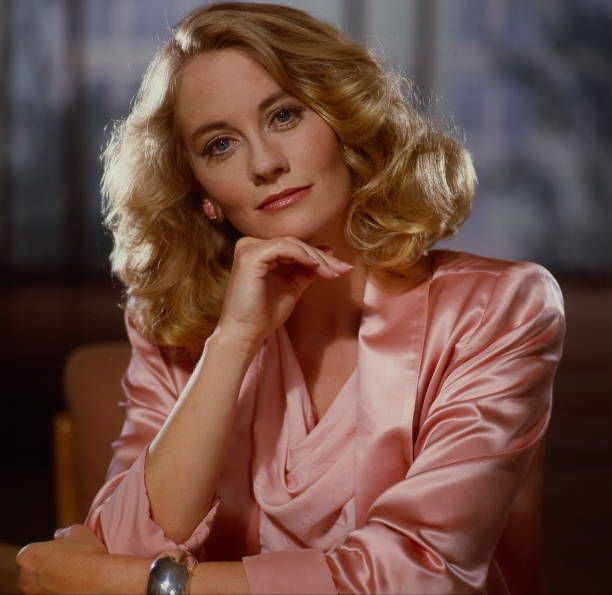
In yet another pop culture nod, the episode was called “Blonde on Blonde”, Episode 3.11, the 36th of the series. Maddie comes into work feeling restless, ill at ease with her life. David detects something and tries to draw her into one of their trademark arguments. When she won’t bite, David – referencing twice the fact that they are on a TV show and audiences expect them to fight – is miffed by her indifference. She insists multiple times that David does not want to hear what is bothering her but he is equally insistent that he does, stating they they are friends, a team, “Ham & Legs” and that he wants to help. She explains that her chastity belt is pinching. She is tired of playing it safe and chaste. She feels like breaking free and finding a man, just any man and “being bad”. Bruce’s face is perfect as he forcibly stops her saying she was right, he doesn’t want to hear this. Not from her. She’s better than that. Plus no doubt David is thinking that if it should be anyone she would be reckless with it should be him. She bolts and David follows her at a distance.
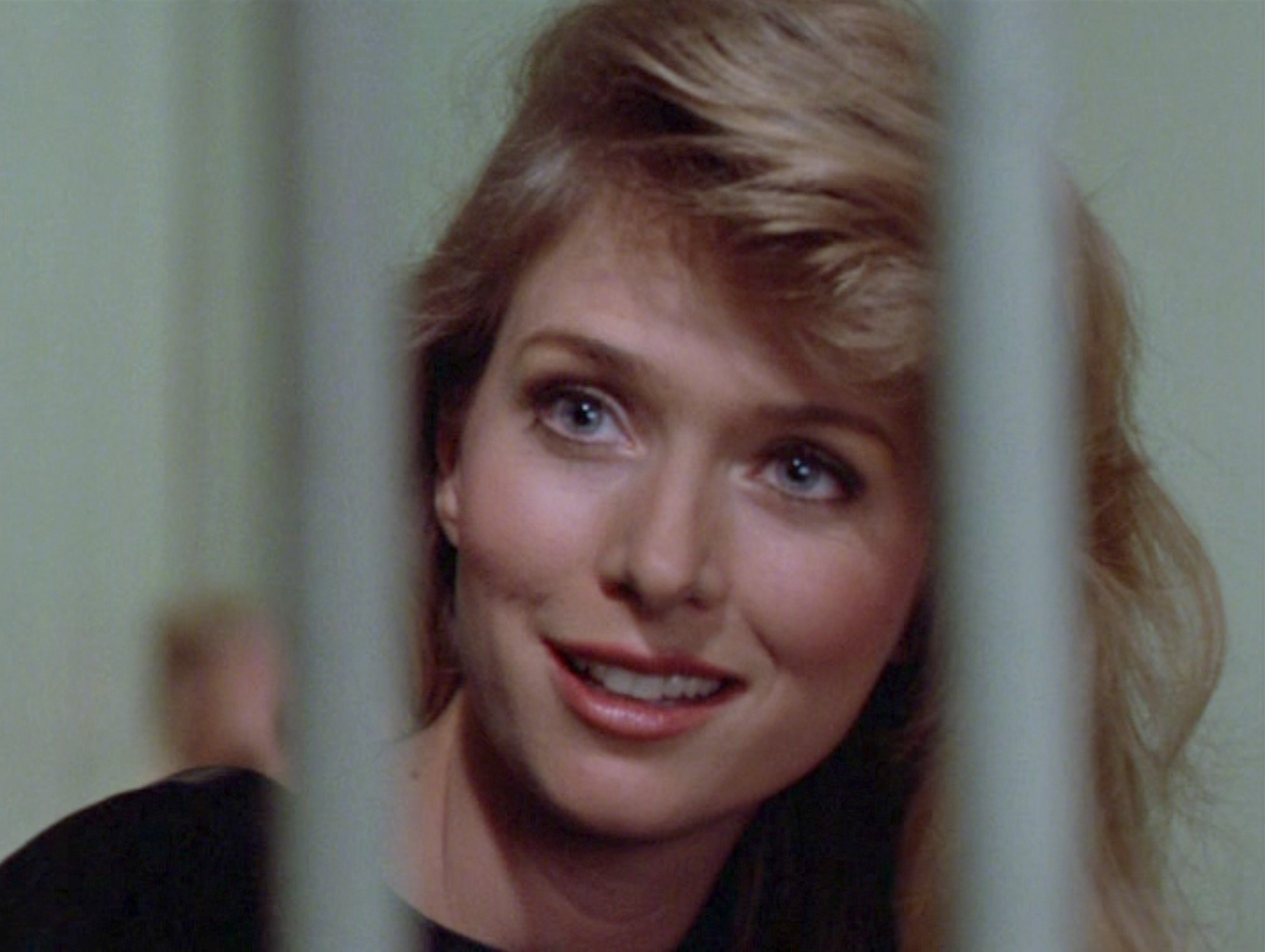
Ridiculously gorgeous Donna Dixon – Mrs. Dan Ackroyd for 40-some years – plays a woman who is also being followed. David mistakenly starts following her and gets caught up in a murder and thrown in jail with Donna in the adjoining cell. He confides in her about Maddie and Donna poignantly asks “does she know how much you love her?”. When David insists he does not, he only cares about her – “I’m in care with her” – she ain’t having it. She encourages him to tell her and, when he’s let out of his cell, he makes a significant speech that sums everything up to this point. It’s been two years, he says, of back and forth, of “is you is or is you ain’t” but tonight…tonight the itch gets scratched.
Its the middle of the night and pouring rain. David pounds on Maddie’s door yelling that he has something to tell her. But it is not Maddie who answers the door but a man, a man who is buttoning his shirt and telling David that Maddie is asleep. Stunned, David turns and walks away to the sounds of Al Jarreau singing about misery and pain. The final shot is a close-up of David’s rain soaked face. He turns and looks at the camera. David Addison and Moonlighting have “looked at the camera” often in the past and always for a laugh and with a wink and a smile we have been brought into the fun. This time though it is shattering. This time when he does it, David shares with the audience his utter heartbreak. Can you believe this? he asks us. This time it is a shared devastation.
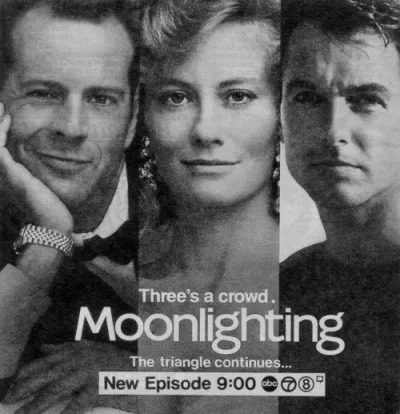
The next day is depicted in “Sam & Dave”, Episode 3.12. The man who answered the door turns out to be an old friend of Maddie’s named Sam Crawford who, in a brilliant piece of casting, is portrayed by handsome Mark Harmon. Maddie arrives at the office two hours late and David is dying to know the score. He gently chastises Maddie for being late and probes for answers. Eventually, Maddie says that she met an old friend and they stayed up a little late; Maddie doesn’t know, of course, that David met Sam while pounding on the door at 4 in the morning. After being in the office only minutes, Maddie takes a long lunch and comes back with a new dress and hairdo and is talking about her dinner date with Sam. David counters with the stakeout that is required for their current case but Maddie begs off. This really ticks David and he goes off on her saying she is being irresponsible – foolish coming from someone who has made that an art. Perhaps Maddie suspects something underneath all this and asks David what is really wrong but he won’t tell her how he feels.
“Stick with the slap and tickle. It may not be deep but it’s better than inviting somebody to play stickball with your insides.”
-the wisdom of David Addison
That night, David finds out where Maddie and Sam are having dinner and he crashes. Sam gives them a minute to talk “business” and David almost shares his feelings with Maddie but Sam arrives back at the table. It is uncomfortable to watch Dave get loaded and make a fool of himself. Maddie even seems to sympathize with how bad David comes off especially when compared to Sam; a Yale man, an inventor and an astronaut. There is so much that is unspoken in this episode, more so than David not having the courage to be honest with Maddie. Consider that Sam knows that David must feel something for Maddie because Sam knows that David showed up at Maddie’s house in the middle of the night in the pouring rain saying he had something to tell her. Consider also the timing. David was finally going to tell Maddie but that was the very night Sam came back into her life. Good guy Sam though doesn’t let on. Also unspoken is Sam’s acknowledgment that he has competition here, Maddie’s sense that David has feelings for her and her embarrassment at the fool David makes of himself. Sinatra’s Oscar-winner “All the Way” is used in this episode that sets up this triangle that is apparent to all though it is unarticulated.
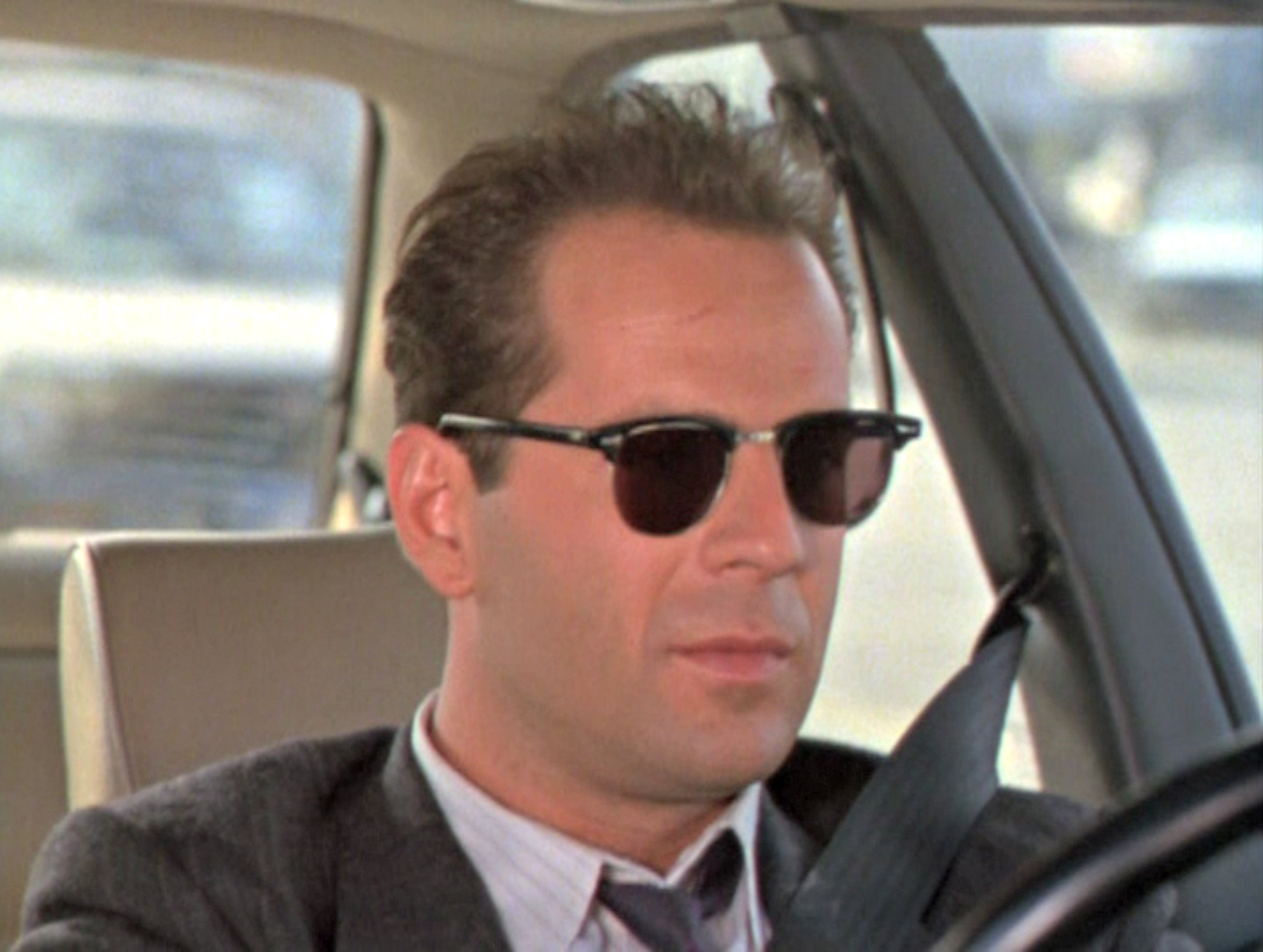
The action continued but not until three weeks later. “Maddie’s Turn to Cry” (Ep. 3.13) actually begins with a recap, letting the viewers know where we are in the story. This is accomplished cleverly as the episode starts with interviews with random people on the street catching up other viewers. Maddie then starts the work day lost in thought, pondering the situation she finds herself in knowing full well she is potentially headed for bliss with Sam while also wanting David to express himself to her. In a quick meeting in David’s office, Maddie seems eager to have David say what he was going to say last night at the restaurant. I like that she is eager. She seems hopeful that David will be brave and mature enough to tell her how he feels, to throw his hat in the ring so that she will have all the data she needs to decide who she wants to be with. This indicates that David is “worthy” of Maddie’s consideration. She cares enough for him that she wants him to come forth. David, though, stubbornly says that all he wanted to say was that Herbert should get a promotion. He must know Maddie doesn’t believe him. But if he won’t man up… In a brief talk with Agnes, she reveals that Mr. Addison is putting on a great show for Maddie, throwing his hat in the ring in his own way. Maddie allows that both Sam and Dave are “both really terrific”.
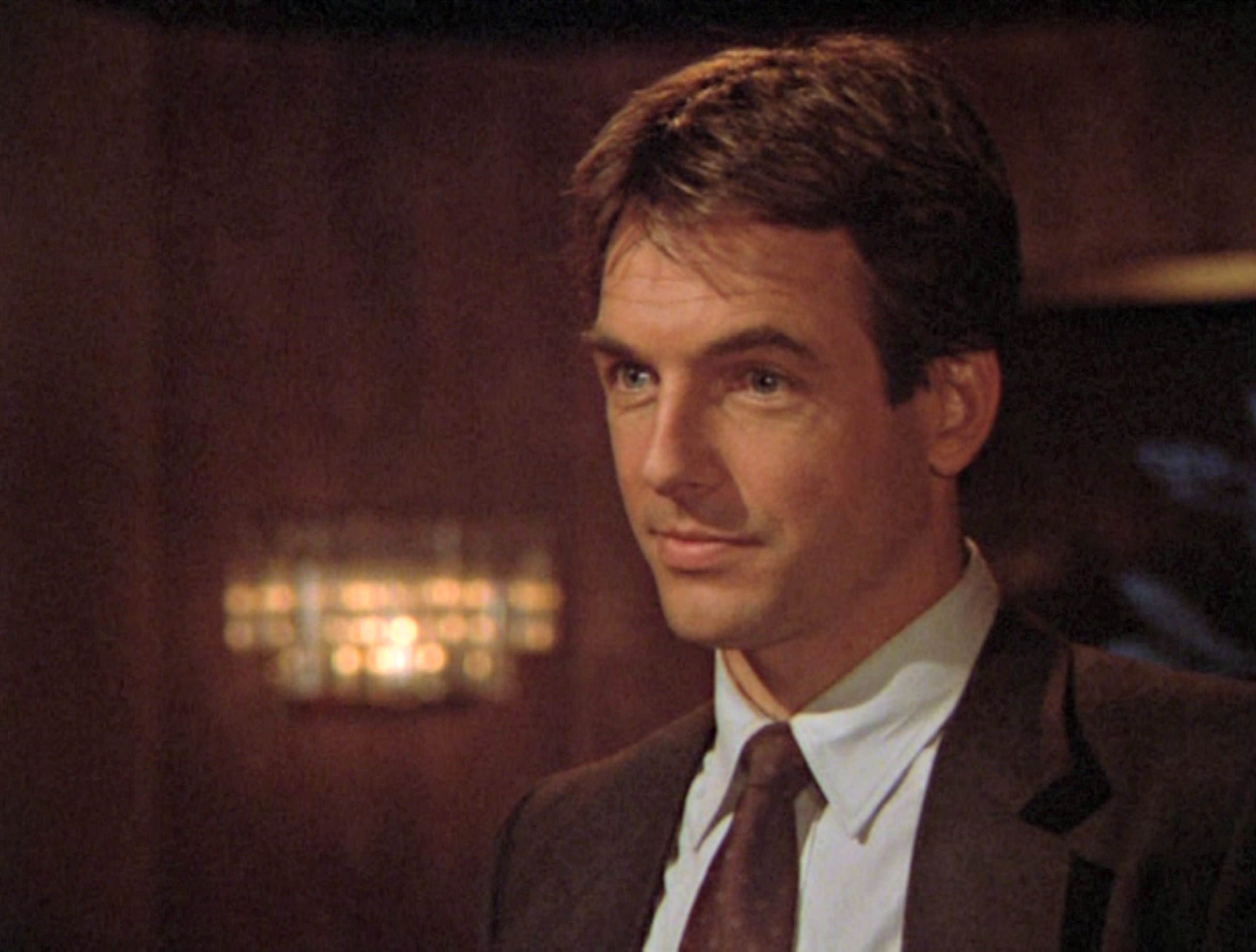
This third episode in the Magic Arc serves to show Maddie conflicted between the two guys and David unable and/or unwilling to tell Maddie how he feels. It also depicts how perfect Sam is but also how much fun Maddie has with David. They’re both a pretty good match for Maddie but in vastly different ways. To the sounds of Linda Ronstadt singing “Someone to Watch Over Me” with Nelson Riddle, Sam proposes to Maddie. This throws her and she says she is confused. So much so that, late that night, she leaves Sam in bed and goes to David’s apartment to flat out ask him what it was he came to the restaurant to tell her. If Sam is opening up one avenue to her, she must know if there is another path, a path that can only open if David tells her how he feels about her. “He’s perfect for me, you know? But you and me…”, Maddie says to David and they share a gentle kiss. David and Maddie are out until late on a case – featuring Gary Cole and a bowling alley that is off-the-chain busy at 4:30 in the morning! – and Maddie is exhilarated. Her work is a thrilling part of her life and David is a big part of this. They mesh. Maddie suddenly remembers – she seems to have forgotten – Sam. The episode ends with Sam waking alone in bed and calling out and a title card declaring the “Big Finale” will be up next; so the producers obviously knew that this arc was huge in the trajectory of the show.
Next came one of the most significant television episodes of my life, of the era and of all of TV history. “I Am Curious…Maddie” (3.14) was another three weeks in coming, airing March 31st, 1987. Again it started with a recap, this one in the form of an old Movietone newsreel and this time stretching back to the beginning of this arc. Sam is still waiting for Maddie’s decision on his proposal. He takes it upon himself to talk to David and Sam lays it down plain. Sam tells David he proposed to Maddie and says Maddie is confused though she shouldn’t be; it’s obvious who and what is best for Maddie. Look at you, Sam says, look at the way you live. Maddie deserves better. Next day, David is irked that Maddie did not tell him about the proposal but Maddie counters by wondering aloud why she would feel obligated to tell David – after all, he has never made his feelings clear to her and as far as she knows he feels nothing so why should she tell him? Again though she presses David to tell her how he feels and, frustratingly, David says nothing.
Later, Agnes and Burt encourage David to finally come clean with Maddie and he runs to find her. He stops her and Sam in her car heading for dinner. Maddie refuses to listen to David and he and Sam fight with Sam coming out on top. Driving home, Maddie and Sam have words and Maddie finally says she needs some time alone to figure things out. She allows Sam to make use of her home and she heads to the office where she decides that the only thing she is sure of is that she is NOT ready for marriage and she heads home to tell Sam. She finds Sam in bed and tells him not to move or speak. She says that she loves Sam – but she loves David, too and that is not good enough for Sam. She declines his proposal but gets in bed wanting one final goodbye. Sam stirs but it is not Sam – it is David.
David says he showed up to apologize to one and all and when he did Sam’s bags were packed and he was heading out of Maddie’s life. David’s on painkillers from the beating Sam gave him and he passed out on Maddie’s bed. The two have one of their knock-down drag-outs. See, David thinks now that Sam is gone its game on with him and Maddie, which is not fair to Maddie. She again chastises David for never having said anything about how he feels and he has the audacity to say that he doesn’t have to say anything. “You feel it and I feel it”, he says. As they fight, finally they do express their feelings for each other but each just points out the character flaws of the other. Finally, Maddie strikes David twice. Attempting a third, David grabs her wrist and, to the classic strains of Brian Wilson’s favourite song, the Ronettes’ “Be My Baby”, they finally act on two years of bottled up desire.

What came afterwards was a freight train of sorts. A messy, ragged run of hilarious and irresistible tales with twists and turns that tried to pick up the pieces once the glorious bomb of David and Maddie’s consummation had been detonated. Like Oppenheimer’s A bomb; much work and passion was put into creating something that could end up being magnificent or devastating. After it blew up, the effects were assessed and found to be rife with complications and eventually there was destruction.
Finally scratching the itch has brought about differing results in the two principles. Maddie is thrown for a loop and she wants David and her to simply file the incident away and go back to the way they were. David is over the blue moon and wants to leave some personal things in Maddie’s bathroom. Of course, they clash over this. Gradually, they continue sleeping together until Maddie finally has to ask herself where this is all heading and much analysis of the relationship takes place – with Maddie receiving advice from Dr. Joyce Brothers and, more his speed, David gets counsel from Brother Ray Charles and both Maddie and David see themselves in a twisted version of The Honeymooners.
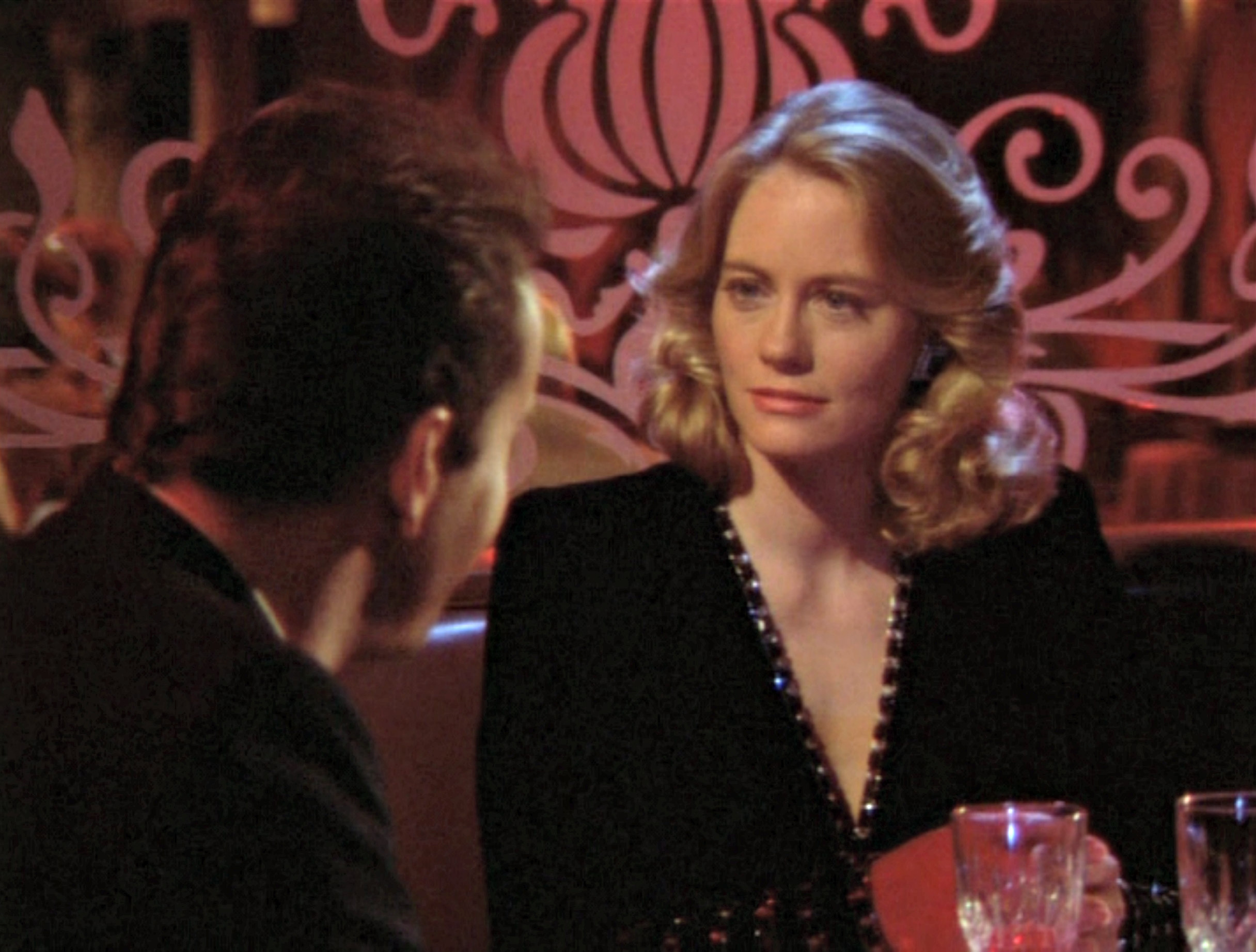
Maddie bolts to Chicago to stay with her parents, played by screen veterans Robert Webber and Eva Marie Saint, and while she lays around trying to figure things out David does the same and he begins to realize he may really be in love. Maddie continues to stew and David broods until Maddie realizes she is pregnant. David finds out and runs for the airport. Then things really go off the boil.
At the airport, David is mistaken for Mad Dog Hundley (played by Tony Bill, two movies with Frank), a killer being transported to prison. In a two-part episode called “Cool Hand Dave”, Addison winds up in jail, performs a musical number with the other chain gangers, I get a line I still use today (“…line him up with the hood ornament…”) and Bruce sings “What’s Your Name”. While David is trapped in prison for two episodes, the agency is left in the hands of Agnes DiPesto and Herbert Viola as Maddie is still in Ol’ Chi and no one knows where David is. Not even network executives – who begin to audition replacements that we get to watch as Moonlighting continues to move fluidly between fantasy and reality.
David returns to find mutiny at the agency and the furniture being repossessed. Maddie’s father has taken matters into his own hands and shows up at Blue Moon to face-off with David but when David suggests that the baby might not even be his Mr. Hayes is enraged; “I wouldn’t have you for a son-in-law if…it’s bad enough you’re the father of my grandchild. If I was twenty years younger I’d knock you on your ass!”. David, though, explains the intensity of his feelings for Maddie and his intention to be whatever Maddie needs be it husband or father or both and Mr. Hayes softens, loaning David the money get Blue Moon back up and running.
David’s intentions include going so far as to sign up for Lamaze class – without a partner. He is given one, Terry, played by Brooke Adams, and the two begin to bond. Maddie is touched when she finds out what David has been up to and she prepares to return to Los Angeles by train where she meets bookish Walter Bishop (actor/director Dennis Dugan; he will eventually direct Moonlighting‘s final episode). Upon her return to the office, David is thrilled and ready to team up with Maddie in any way as they await the arrival of the baby but he – and no doubt the audience – is staggered when she delivers a vicious one-two punch. On a whim, she and Walter have married and – an even deeper cut – the baby is not David’s.
Stop and think here. David Addison is a frat boy. He begins a little growing up when he encounters the accomplished, successful, beautiful Madelyn Hayes. Amazingly, they forge a bond and become intimate. David could be seen as having won the lottery; a guy as irresponsible as he has been has no right having it this good. And then? Is the baby his? Nope. Will he and Maddie marry? Don’t think so – she has married some shlub! Devastating. Just like the A bomb.
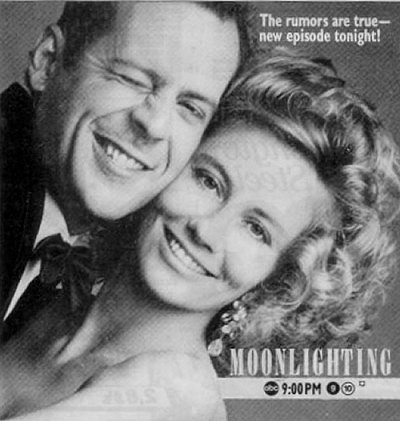
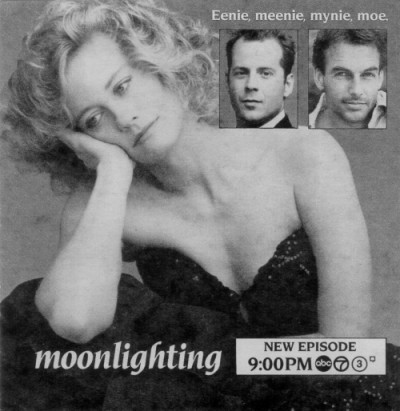
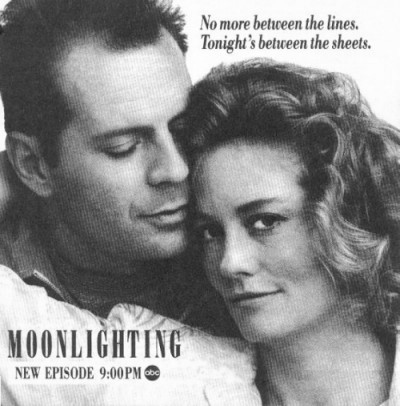
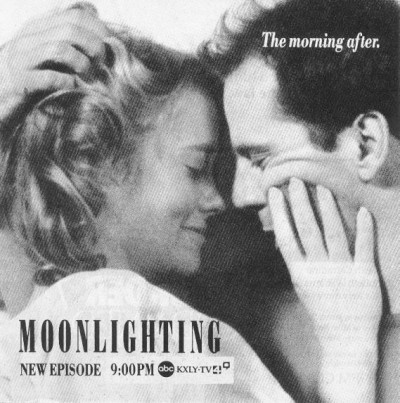
When David meets nebbish Walter Bishop, he thinks he’s got it figured out; no way Maddie loves this guy. She just married him because she’s scared of a relationship with David. He’s right, of course, and Maddie gets her marriage annulled. After Walter says goodbye to Maddie, he looks at the camera and says “there – are you happy now?”. But audiences weren’t really because this did not hurl David and Maddie into each other’s arms. Instead, they agree to go to Lamaze class together and meet for a chat once a week, say, every Tuesday at 9. Sadly, Maddie miscarries but even this is played for laughs. The baby is told he’ll be born into another family maybe on Growing Pains or The Cosby Show.
So…they never get together. Which is stupid, really. In episodes during the lacklustre fifth season, the two discuss their relationship but it is clearly a postmortem and audiences are stuck with a show that has become…well, redundant.
There was one more notable episode, though. “Lunar Eclipse” was Episode 5.13, the 67th and final episode of Moonlighting. After Agnes and Herbert’s wedding, David and Maddie return to Blue Moon to find their set being dismantled by various grips, gaffers and best boys. They are informed that their show has been cancelled. In a panic, they race through soundstages and across the lot looking for their producer in the hope of reversing the situation. It is sadly poignant to hear the producer – played by Dennis Dugan – explain to the two of them that people fell in love with them falling in love – but you can’t fall forever. Sooner or later, you have to land. In a joke that is somehow cruel to the audience, they say they will now get married if they can have their show back. But it is too late. They run into a priest but even he won’t perform the ceremony. It’s over.
Interesting doc that looks at the third season – and also reunites Bruce and Cybill – lovely to see them at the end
The show simply fell apart. Cybill Shepherd soon realized the workload a show of this type came with. There were pages and pages of dialogue and shooting days ran into 12 hours and more. The reaching the show did for a certain style and quality entailed a lot of hard work for all involved. Then Cybill became pregnant with twins. Of course this physical condition made her unavailable for filming and becoming a mother again perhaps lead to a change in perspective. Additionally, I have to accept that Bruce Willis – always one of my favourites – was not always a swell guy. Particularly after Die Hard made him a star. After that film was released, he had little desire to continue on the small screen and he became increasingly combative and difficult. The show became famous for not airing a new episode, for padding episodes with varied zaniness, for seasons not starting until long after September was over and for a relatively low number of episodes. You could argue that all this came to pass simply because Moonlighting was too good to sustain itself. It was way too good to last.
It was a flash of light. It was Christmas. It was Gidget. It was not designed to last. It was a coalescing of divine elements that fit well together but there is no way it could have lasted and it is almost exempt from criticism because of how very good it was at its absolute best. At it’s very core the show and its most charming elements were appealing because of their transient nature. “Oh, they wrecked it when they got together”. Maybe but that’s too easy. And anyways when they did get together that was wonderful, that was a joy to watch and it was a lovely pay-off. And how long could that tension have possibly lasted, anyway? This might have been better as a mini-series, actually with less expectations as a sustaining weekly program. The novelty of David’s madness, breaking the fourth wall – that stuff can’t last. That stuff is funny and unique but soon wears thin. Not because its no longer funny but because we’ve seen that; I know he looks at the camera and mentions the writers. Its funny but I’ve seen it; it can’t help but lose its freshness – but that doesn’t reduce its glory or its impact. If it had stopped earlier perhaps it would have been perfect, like James Dean. Instead it went on and tarnished its once shining image, like Brando. Gidget by definition is a cute teenage girl. When she’s a wife and mother something is lost. That is something else altogether. Moonlighting is like Baby and Johnny in Dirty Dancing; wonderful how they got together and great that they were together but there’s no way they stay together. STAYING together is NOT part of their appeal, GETTING together is. Ward and June Cleaver you want forever, you expect forever. Not so with David and Maddie.
One wonders if Glenn Gordon Caron knew from the beginning that it wouldn’t – couldn’t – last. Some thirty years later, the “limited series” would come into vogue and this would’ve suited a show like Moonlighting but the program was definitely of its time and very “Eighties”. The television industry of the day created expectations that were never going to be met by a shooting star like the Ballad of David and Maddie. But all these years later many of us can still revel in the fleeting glory of Moonlighting and the undying charm of the Magic Arc.
Further Studies
- oOMoonlightingOo – this YouTube channel features tons of clips from all five seasons
- DavidandMaddie.com – I scored some good images here
- MoonlightingStrangers.com – ditto; there’s a boatload of images here
- Smirking Through Hollywood and Bruce Willis & Bruno – check these two SoulRide articles
Please help us maintain our page quality by reporting any dead links
 SoulRide
Moonlighting had its moment. Great TV show! Wonderful write-up.
Thank you. I really enjoyed this. “Moonlighting” was one of my favorite TV shows. “Moonlighting” and “Dallas” were the only shows we just could not miss. So, the rare occasions when we had to, we fired up the VCR to record them. In those days before streaming, if you missed an episode of a TV show, well, you just missed it – period – unless it showed up in the summer re-runs. So, the safest way to ensure catching every episode, you had to invest in an (initially) relatively expensive VCR.
And you are so right. “Moonlighting” is where we first met the oh-so-charming, glib, spontaneous, versatile Bruce Willis. What a delightful discovery! I loved how he would frequently just burst i to song – like the time he began singing Archie Bell & the Drells’ “Tighten Up.” He was spot-on.
For years, I was using the term, “Baby, that’s back atcha!” and attributing it to Bruce Willis. I only recently (in this century) learned (when listening to Smokey’s Soul Town channel on SiriusXM), that phrase is actually from a Smokey Robinson song. Bruce sure knows his Motown.
One of my favorite scenes(among so many) was in the episode “Every Daughter’s Father is a Virgin.” Maddie, suspecting her father is having an affair, gets David to tail him. So, in his car, David sho es in a cassette of The Temptations’ “Papa Was a Rolling Stone,” while Maddie”s dad (Robert Webber) is listening to an instrumental version of “Love Is a Many Splendored Thing.” Not only is this a perfect juxtaposition, it is great fun watching David grooving to his music – likely also enjoying the experience.
As you mentioned, the scene where David showed up at Maddie’s at 4:00 in the morning, only to be greeted by the handsome Sam Crawford (Mark Harmon) was heartbreaking. The usually cocky, confident David walking away in the rain, with tears – oh my…
So, thank you for reminding me of all the greatness that was “Moonlighting” – fabulous theme song, too – the wonderful Al Jarreau.
https://youtu.be/iOnmkdNCTqQ?si=_vOEMl7gVTqgljpo
Always so nice when I hear that others have similar fond memories of a TV show or film, etc. These things can really get under our skin and have lingering effects on us. There can only be a handful of other instances where the actor and the character were such perfect fits as Bruce was with David. Quite a show, it was!
Thanks for reading and for sharing your thoughts. It is much appreciated.