Change of Habit (1969)
Elvis Presley, Mary Tyler Moore, Barbara McNair, Jane Elliot, Robert Emhardt, Regis Toomey, Richard Carlson, Edward Asner, Timothy Carey, Darlene Love and A Martinez
Director William A. Graham
Universal Pictures (93 mins)
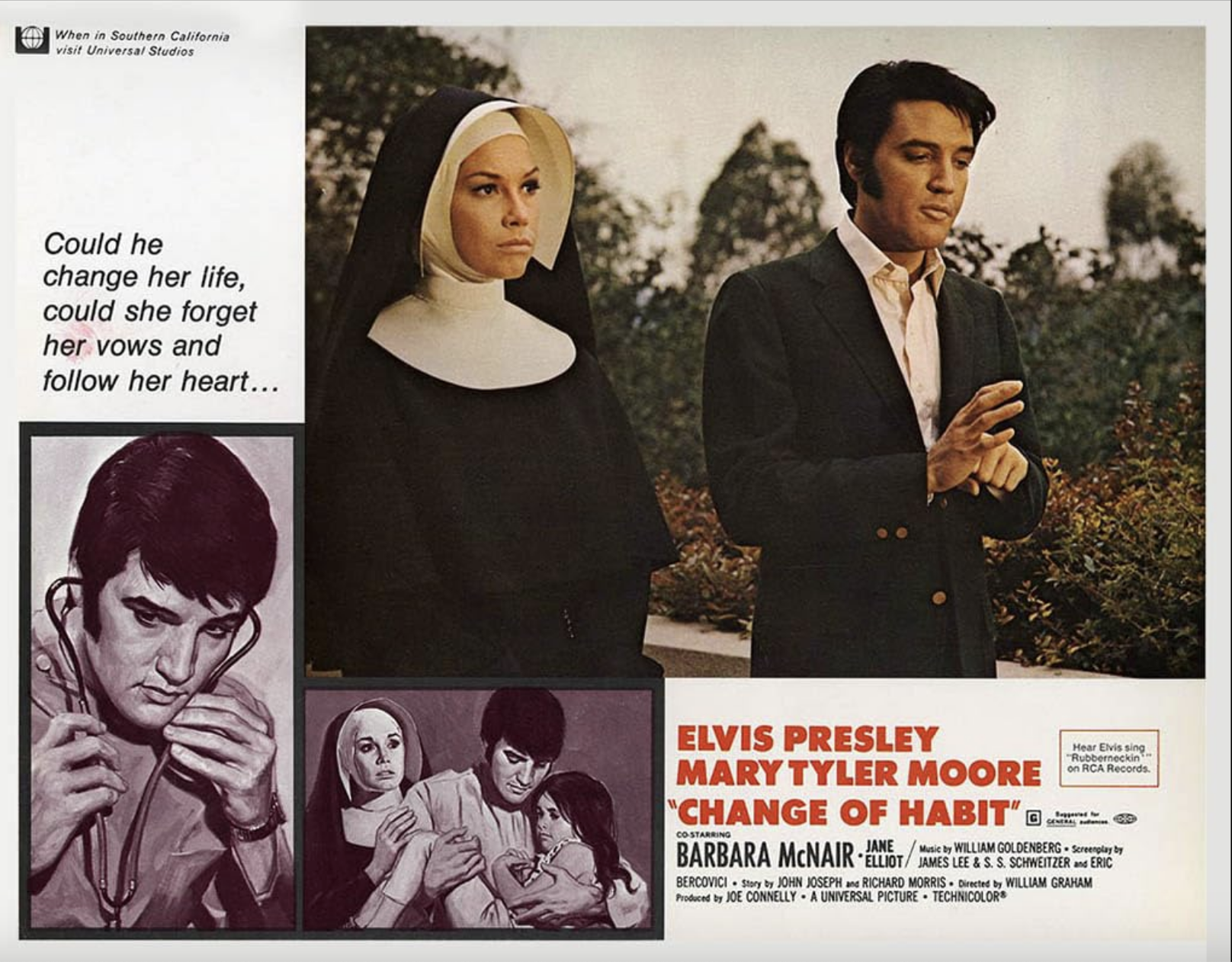
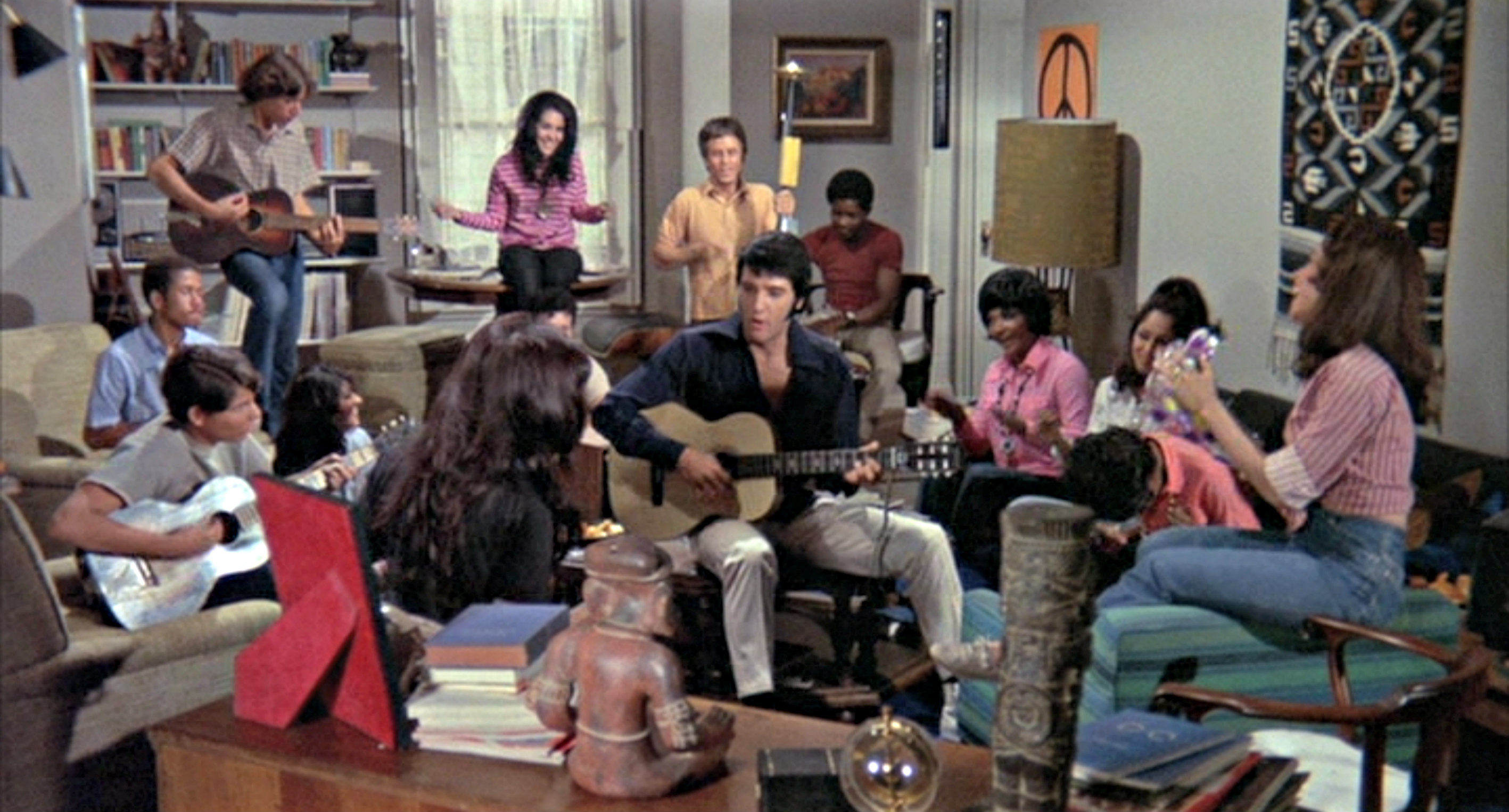
Three Catholic nuns of the Little Sisters of Mary are given permission to leave the convent and go out into the world to aid ghetto doctor John Carpenter (Presley). The unique nature of the commission is that the nuns will no longer wear their habits but dress as ordinary women. Each of the nuns, Michelle (Moore), Irene (Hawkins) and Barbara (Elliot), has specialized abilities in health care and they present themselves to Dr. Carpenter who is in the middle of a jam session with a multiracial group of friends and he seems to be a regular fella with a casual manner. Unaware of their religious vocations, he at first is skeptical that these clean and neat women can handle what they will encounter in the ghetto – though Irene, who is Black, assures the doc that she comes from streets like these. Dr. Carpenter’s sometimes flippant and flirtatious remarks are handled clumsily by the sheltered nuns.
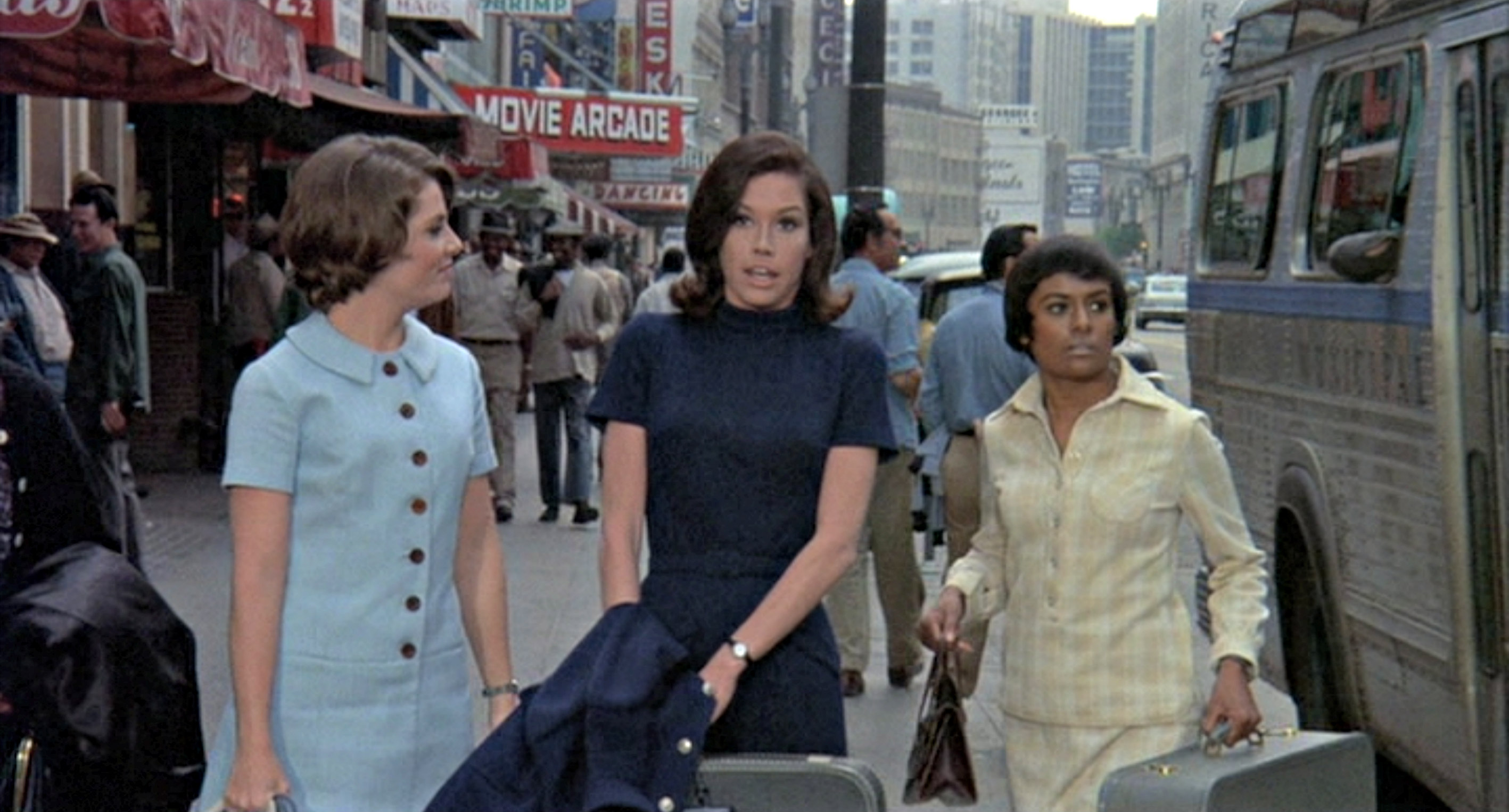
The girls have been set up with digs in the parish but are met with disdain by the local busybodies while the men in the area take notice and give the girls some tense moments. When Carpenter and his buds come over to help the girls clean up and paint the apartment they’ve been given, the doc and Michelle seem to hit it off but he notes her detached manner when he gets her in a clinch.
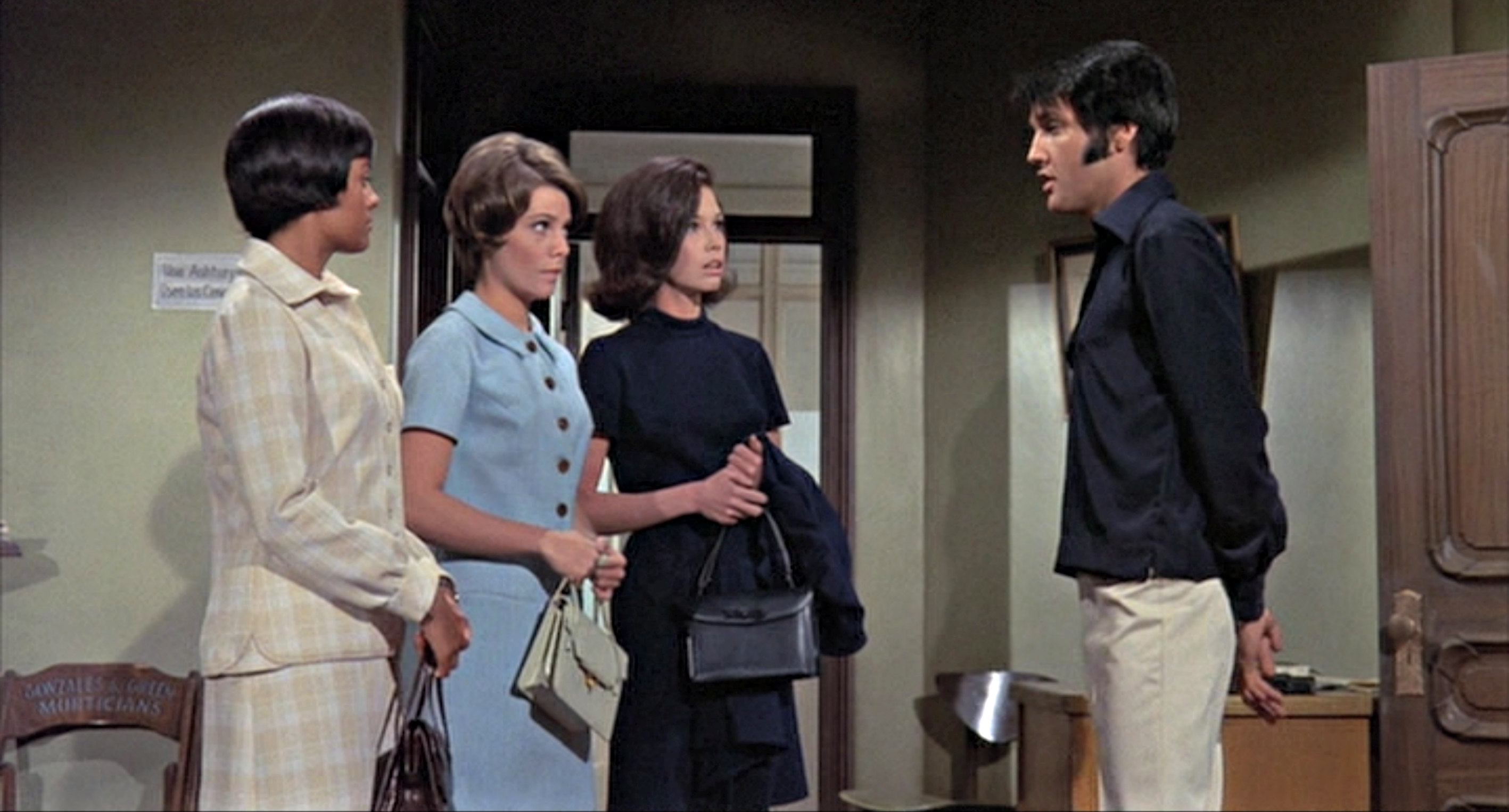
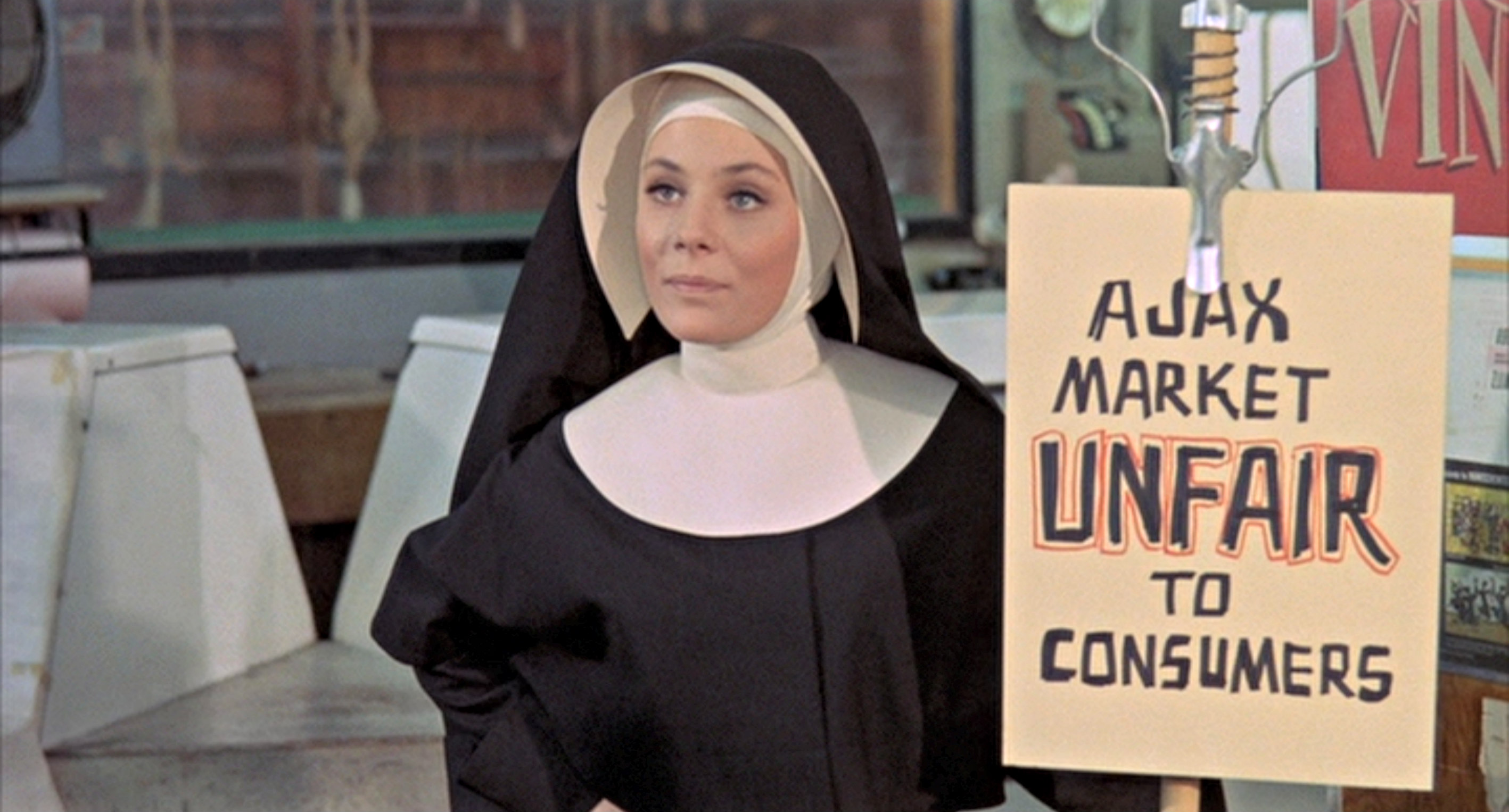
At work, Dr. Carpenter shows his charming bedside manner, his dedication and his special way with the locals. Michelle, a speech therapist, is charged with helping stuttering Julio (Nefti Millet) and autistic Amanda (Lorena Kirk). Irene makes some house calls and is harassed by the local Black Panthers who accuse her of cutting out on her own. Barbara runs into corruption and price gouging at the local market. The Banker (Emhardt) shows up, a local loan shark who is ruthless and who provides the clinic with many of its patients.
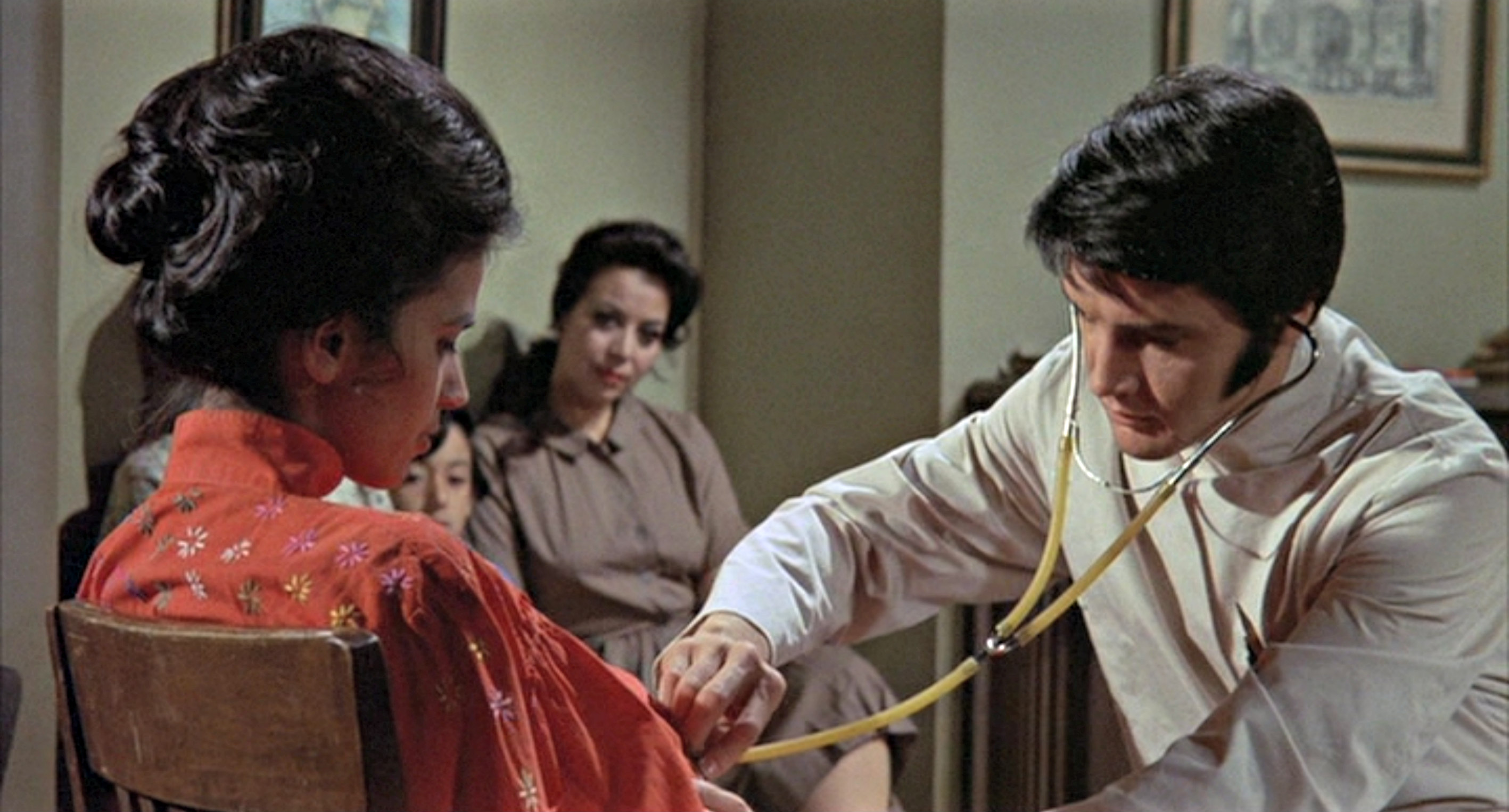
The Bishop Finley (Carlson) is having second thoughts about the safety of the habit-less nuns but the girls are determined to finish their work. Eventually though each of the three fall into danger and each is forced to reassess their roles in fixing society’s ills.
Change of Habit is a notable King Movie and for more reasons than the obvious. This is Elvis Presley’s last narrative film, marking the final time he would play a character in a dramatic movie. This is the way we have to phrase it as he made two later films but they were concert documentaries. By the time this was released on November 10, 1969, the king had already done much to reclaim his throne and he now cut a vastly updated and contemporary figure to the public. He had transformed himself – which makes it actually a bit odd to see him in yet another movie. But these things are not all that make this film unique in Presley’s filmography. While the results were decidedly inconsequential, there was still an attempt here to make a gritty, street-level film that addressed current issues and didn’t shrink from placing Elvis in circumstances in which audiences had never before seen him. In many ways, the film failed and continues to fail. But in an equal number of ways Change of Habit retains its notability and is still worth watching and talking about. Regardless of the results, it scores points for ambition and its attempts at realism.
Our story was written by two men with very little else on their resumé – typical for King Movies. One was a low level TV writer and the other was a librettist who wrote 66 episodes of The Loretta Young Show; neither worked on a feature film again. Believe it or not it took these two men to come up with the story and three more to write it – five writers to craft this classic! James Lee wrote the play and then the screenplay for Career, the film version starring Dino with Elvis Women Joan Blackman, Carolyn Jones and Donna Douglas also featuring in the film and he later scripted four other movies including ours and most of the episodes of the mini series Roots. The second writer is the dubiously named S.S. Schweitzer who actually started his screenwriting career with Change of Habit and also wrote the cool Rock Hudson war film Hornets’ Nest. The third screenwriter gives me something to talk about.
Eric Bercovici (1933-2014) I have talked about before. He wrote the screenplays for two excellent blaxploitation movies, Three the Hard Way in 1974 and Take a Hard Ride the following year. I have seen his name pop up often on Hawaii Five-O and he won a Prime Time Emmy for his work on 1980’s Shogun. Eric’s father, Leonardo, wrote The Bishop’s Wife (1947). Again, it’s typical in the world of King Movies that these five are all TV writers who contributed to very few feature films, none of them really notable.
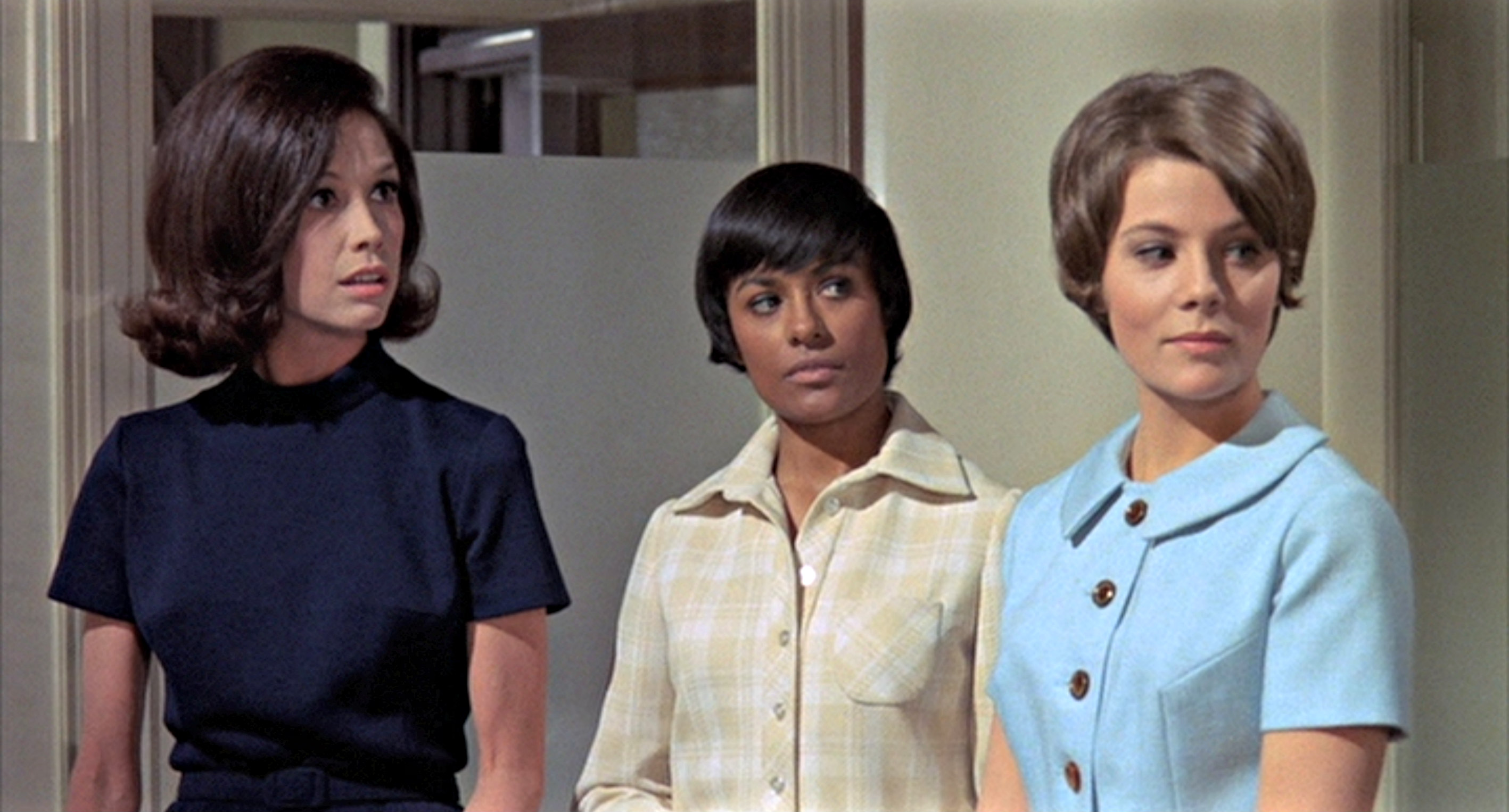
Our director has featured here at Vintage Leisure scoring his own article. William A. Graham was a prolific TV director who also helmed 11 feature films and gifted me with Then Came Bronson. For more info, check out my article on him here. The pleasant musical score is provided by William “Billy” Goldenberg who was much in demand at the time. He had worked on “The ’68 Comeback Special” and this same year he scored one of my new favourite films, Silent Night, Lonely Night. Less than a year after Change of Habit premiered, Mary Tyler Moore would change the television landscape with her seminal The Mary Tyler Moore Show and of course before our film she had made her name playing Laura Petrie on The Dick Van Dyke Show. She was not a film actress and after this she would not make another feature until the award-winning Ordinary People in 1980. Barbara McNair is interesting casting. She was a singer turned actor like Elvis and she released almost as many albums – two on Motown – as films she made. She played Virgil Tibbs’ wife in both They Call Me Mr. Tibbs! and its sequel The Organization, rolled with James Darren in the eccentric Venus in Furs and was married five times. Jane Elliot is a fresh-faced dish, still with us as of this writing. She would go on to make only three more films – the last two somehow coming much later in 1987 – and became an Emmy-award winning actress on various soaps. Big Robert Emhardt plays the slimy Banker; he appeared with King many years previous as a much less sinister cook in Kid Galahad.
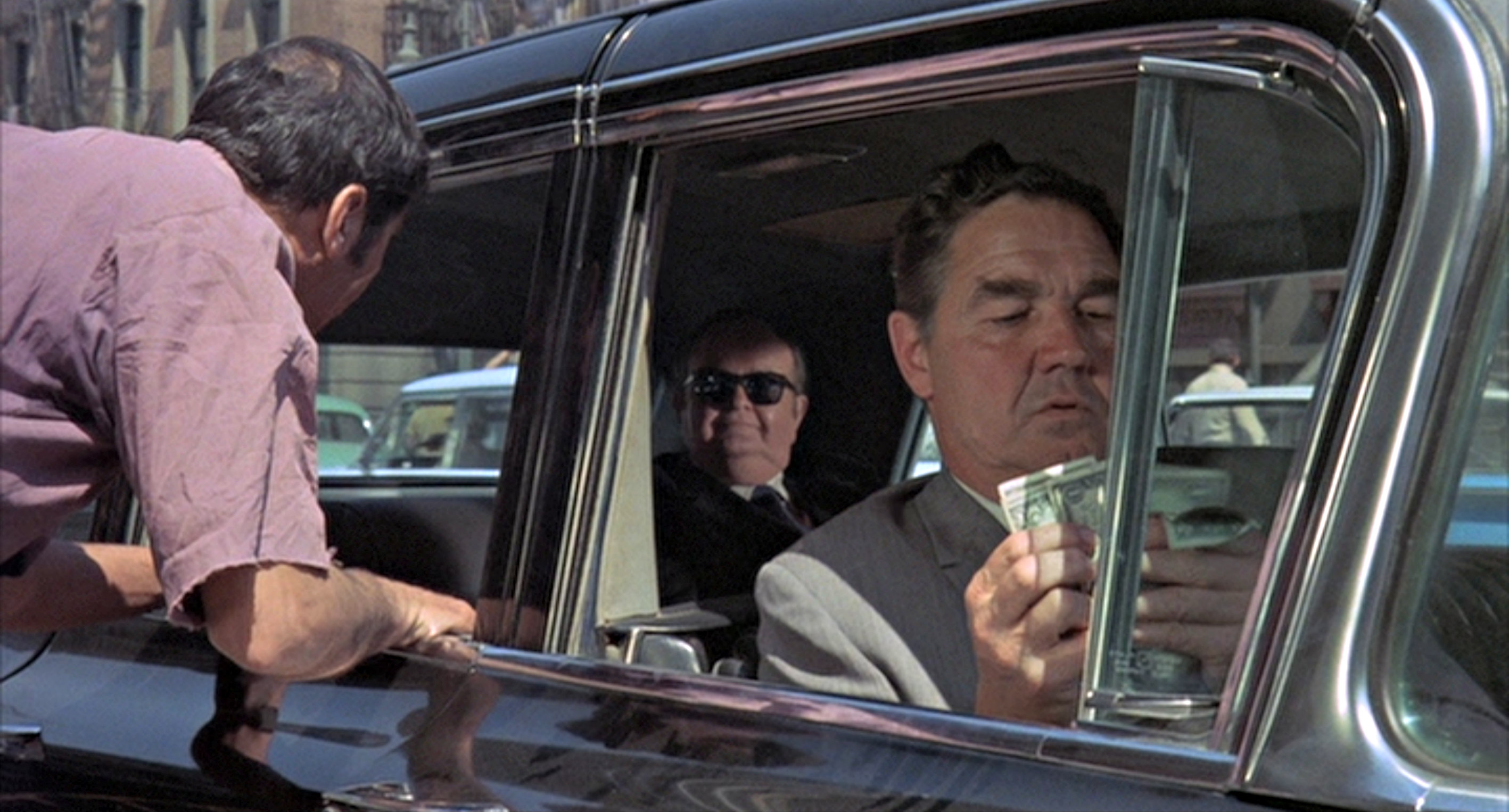
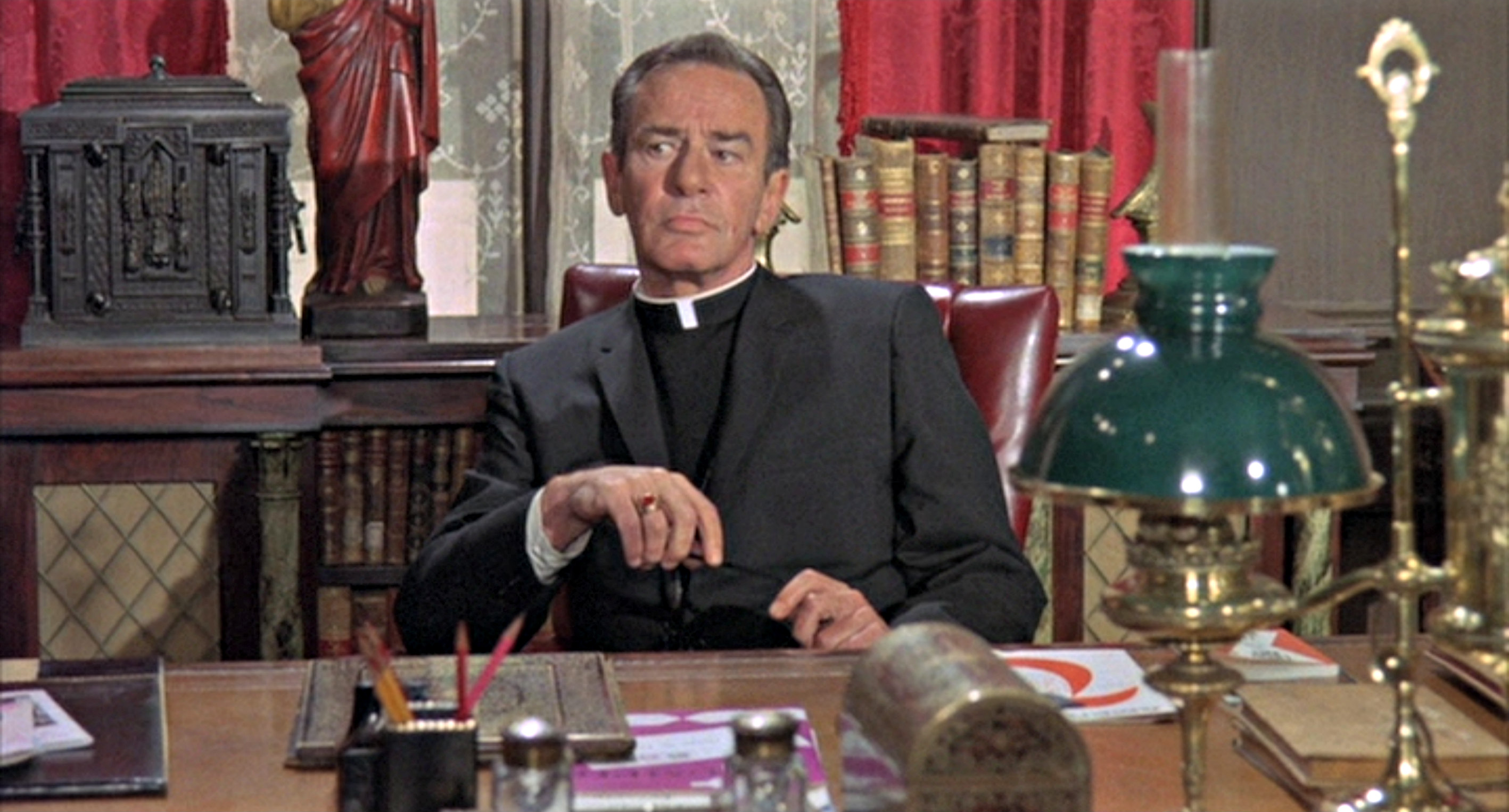
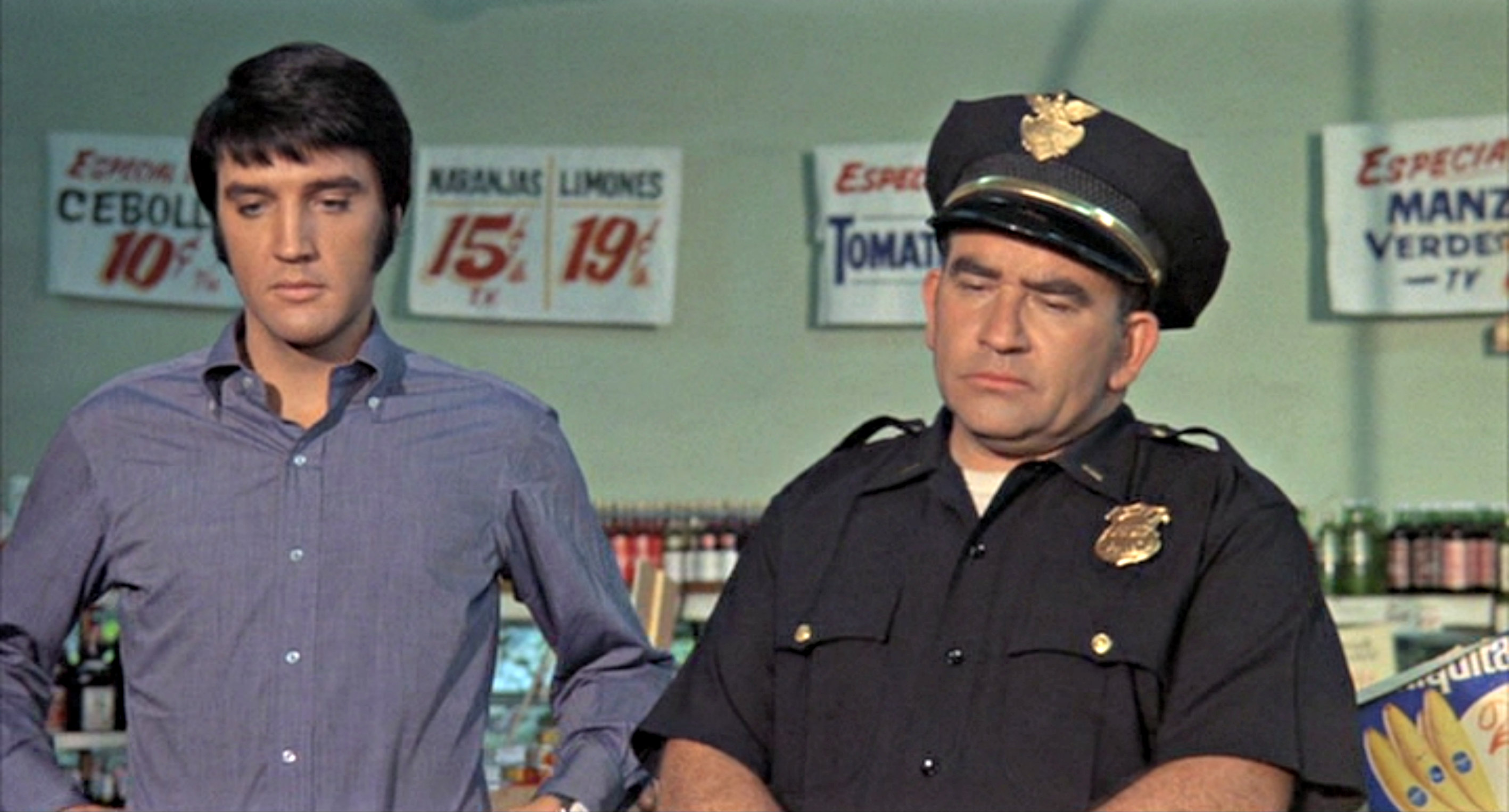
Regis Toomey was born in Pittsburgh in the 1800s. He began his career acting alongside the likes of Kay Francis and William Powell and wrapped his career soon after this film having appeared in over 180 movies. I dig Richard Carlson and have talked about him here; Change of Habit was his last film. As if Edward Asner is in this. Speaking of Kid Galahad, Asner made his film debut in that gem and, of course, he would join Moore in making TV history playing Lou Grant. Timothy Carey looks much different here than he did when he cracked me up in Beach Blanket Bingo, legendary back-up singer Darlene Love – who supported King on the ’68 TV special – adds realism by playing a back-up singer and another soap opera stalwart, A Martinez, appears here in his second film playing “2nd Young Man”.
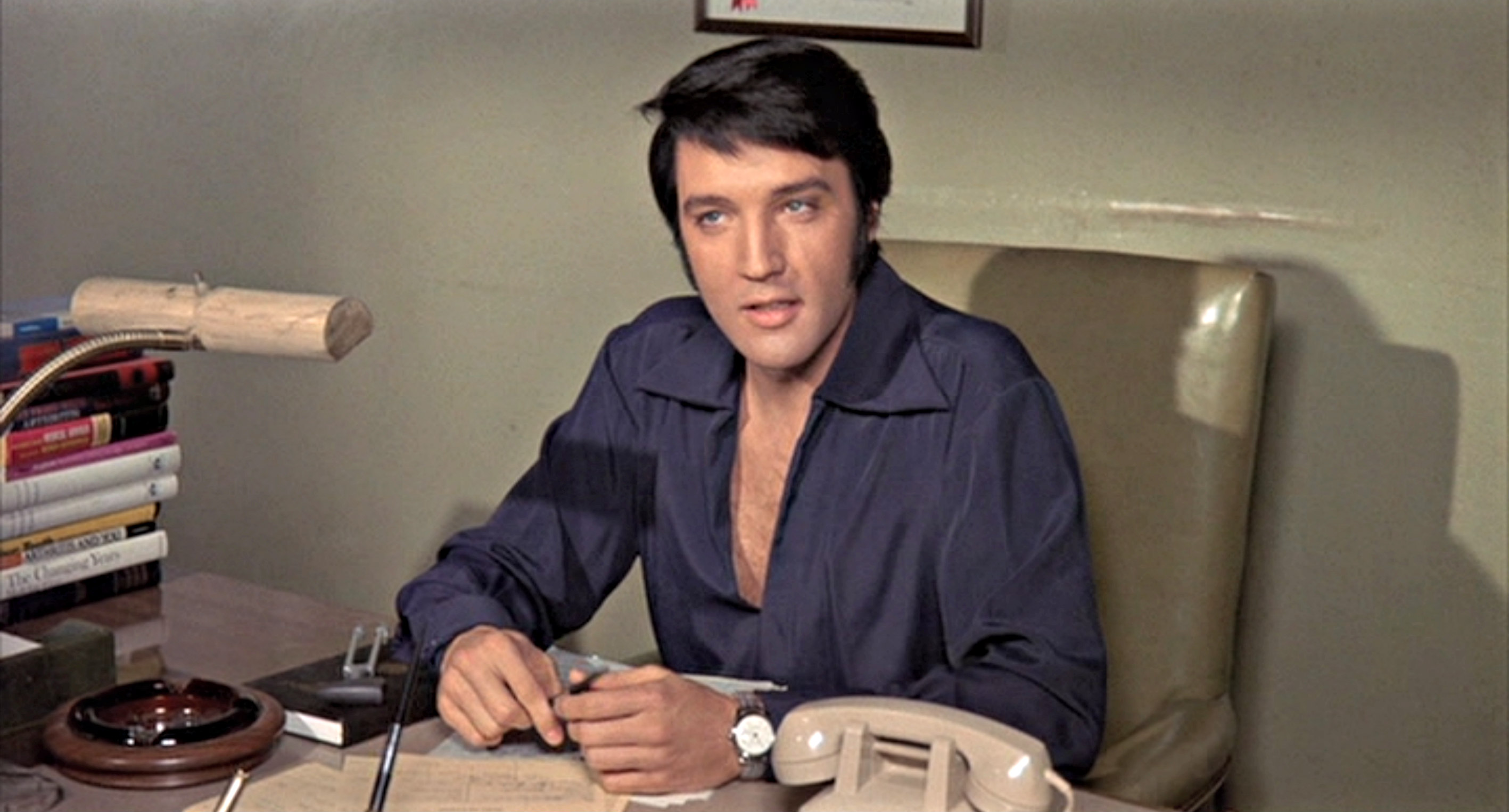
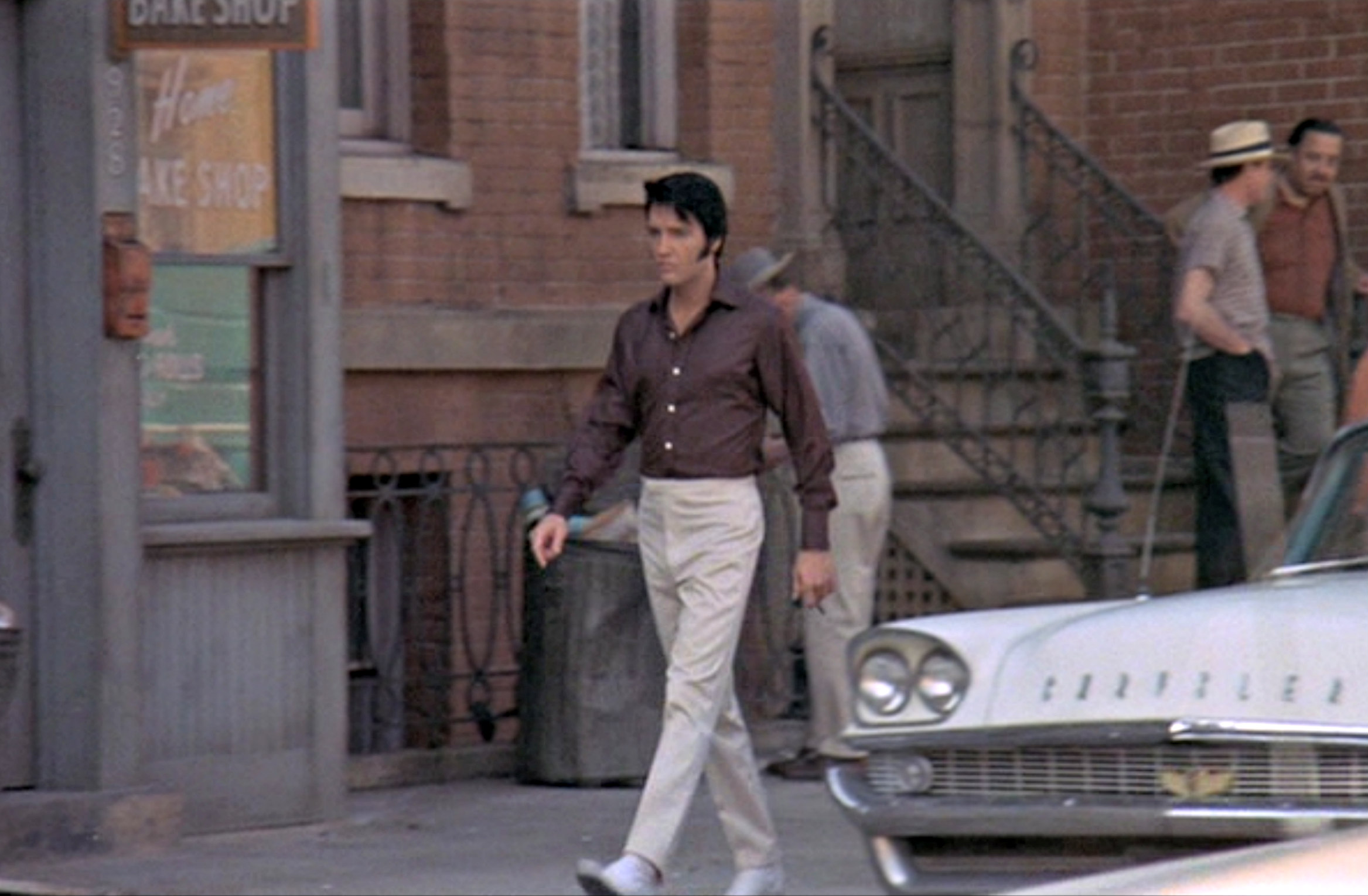
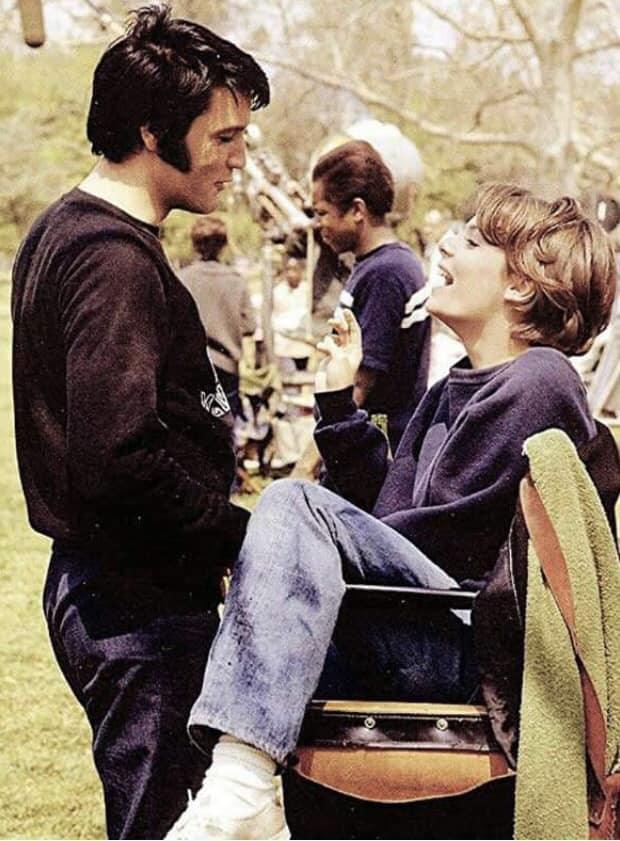
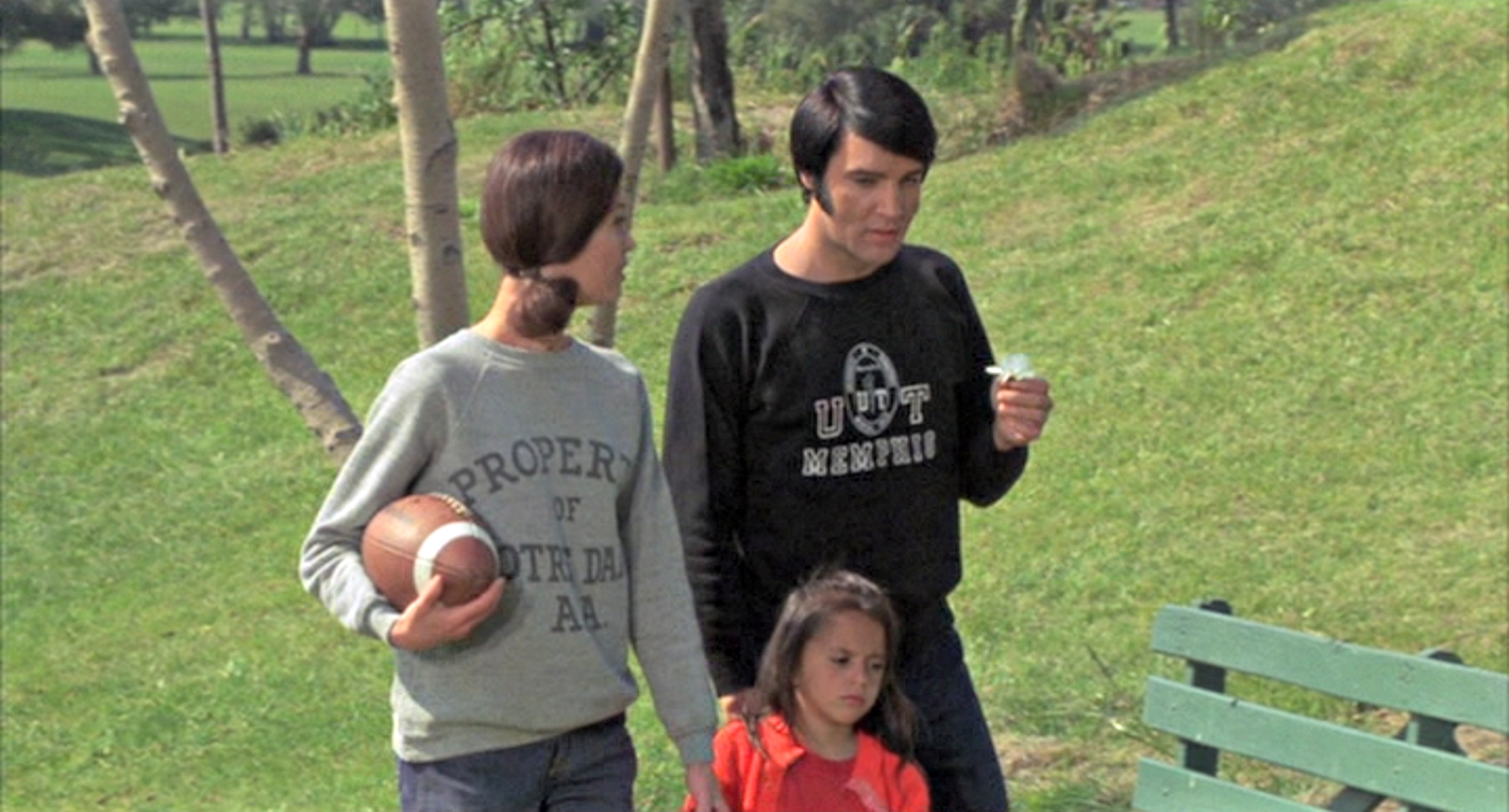
The Look: Elvis Presley never looked better than he did in 1969 and he was no doubt in the best shape of his life. When trying to explain to the world just how magnificent the man looked, one will share a handful of images from 1956, some from Aloha from Hawaii and undoubtedly some shots from 1969. This particular role as a ghetto doctor does not allow for Elvis to sport many good looks though the film tries to make it clear that Dr. Carpenter is a stylish cat. His pant-shirt-boots combos look good on him as does the Matt Helm look he adopts for the street festival. And dig the hi-cut Converse and University of Tennessee sweater he wears to play football in the park. I guess the biggest story regarding how Elvis looks here is his hair. I noted in my piece on director Graham that he encouraged Elvis to wear his hair more naturally and without the use of product – which he does here to unsatisfactory results. At some points, his bangs are just sitting there in a straight line. Not good but maybe fitting for the character. His hair hasn’t looked this bad since, maybe, Viva Las Vegas.
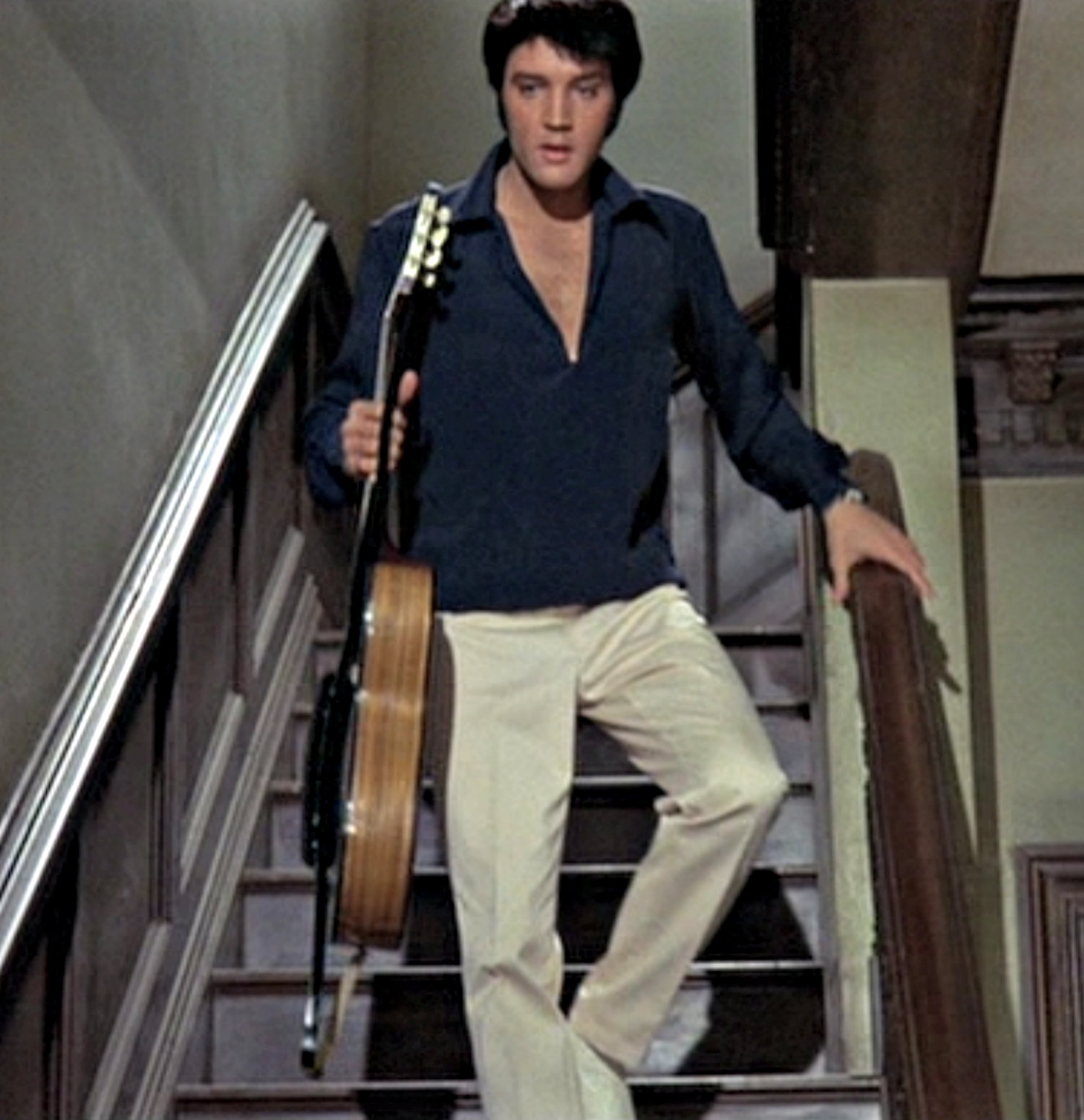
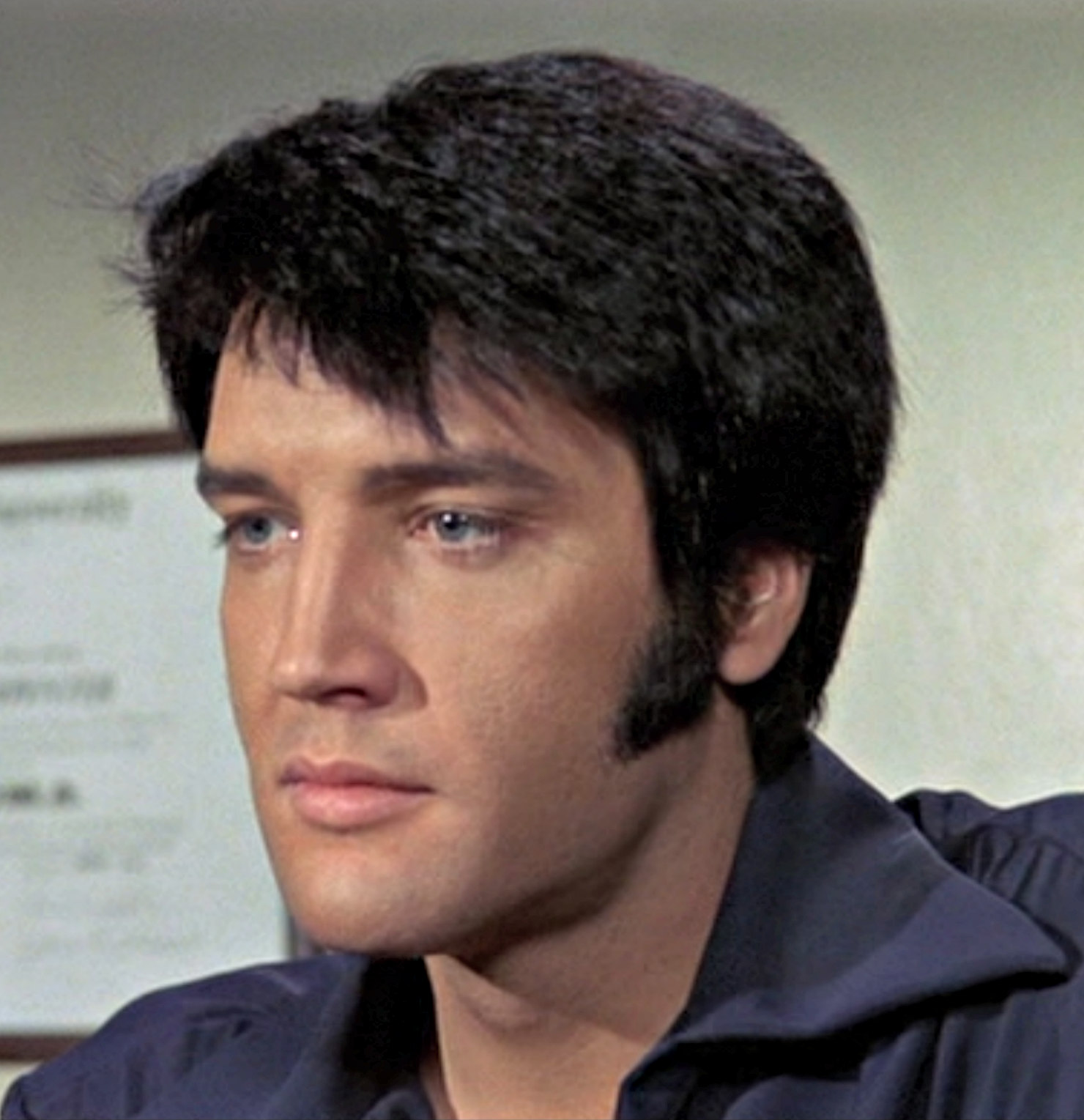
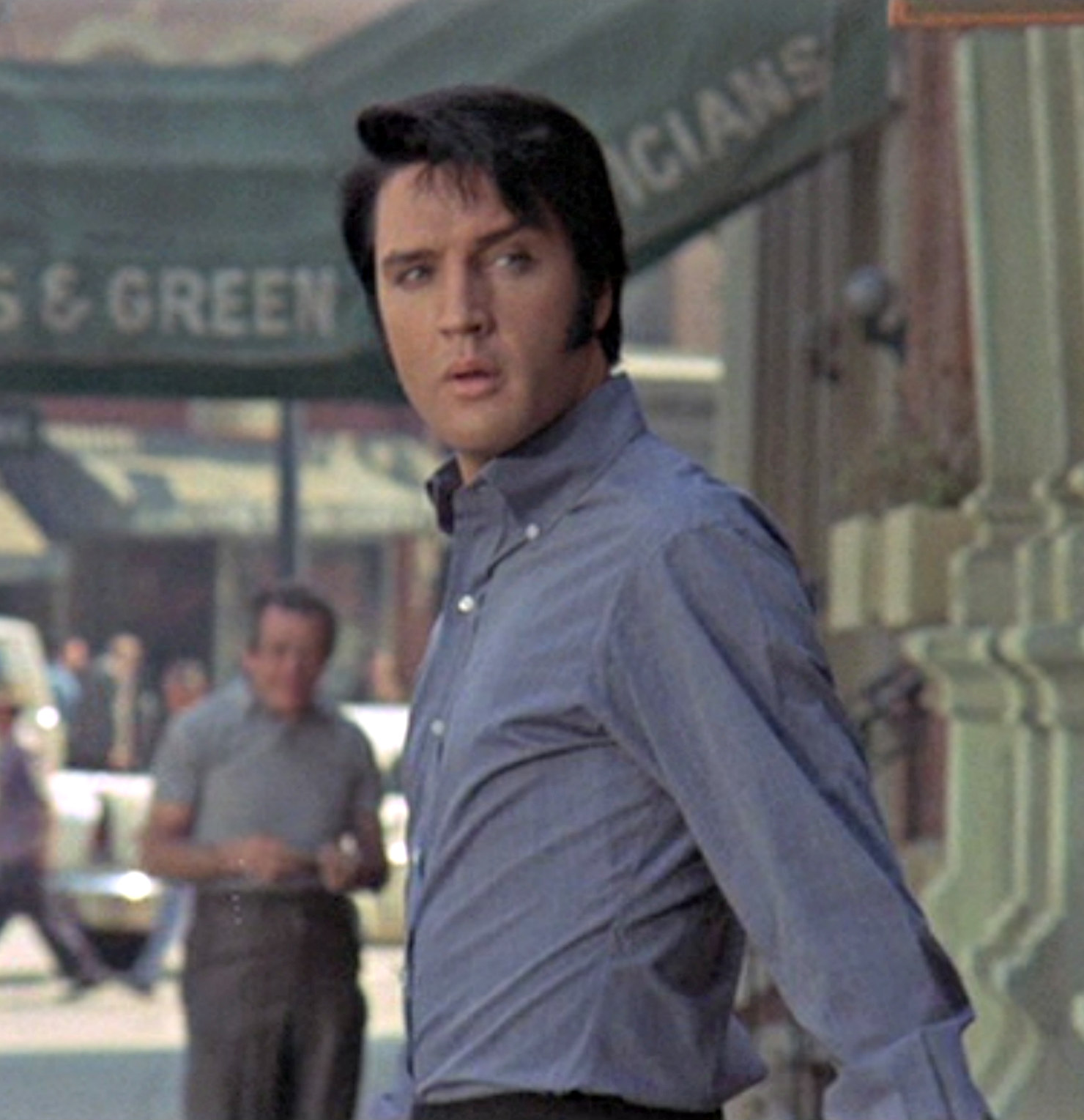
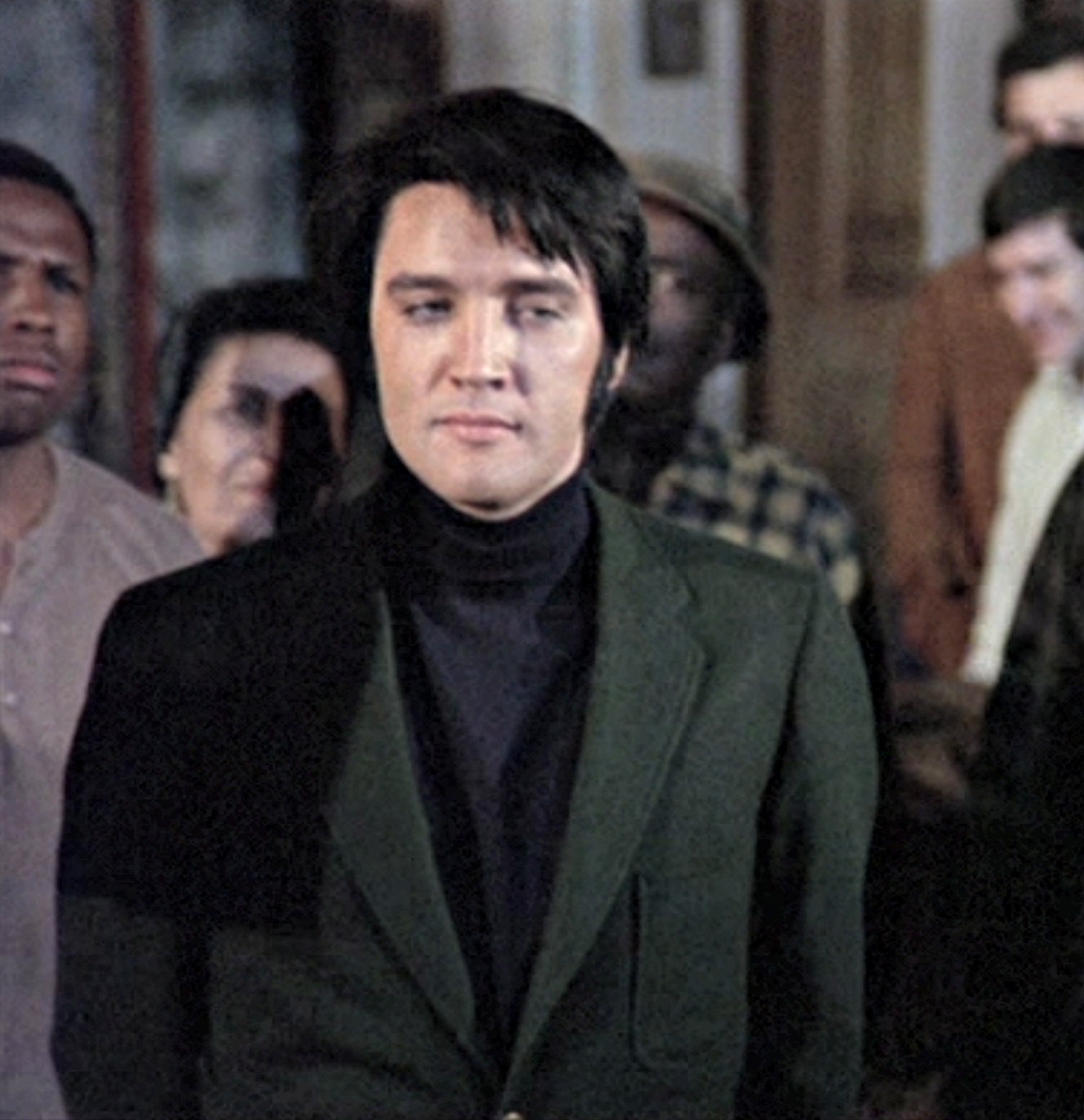
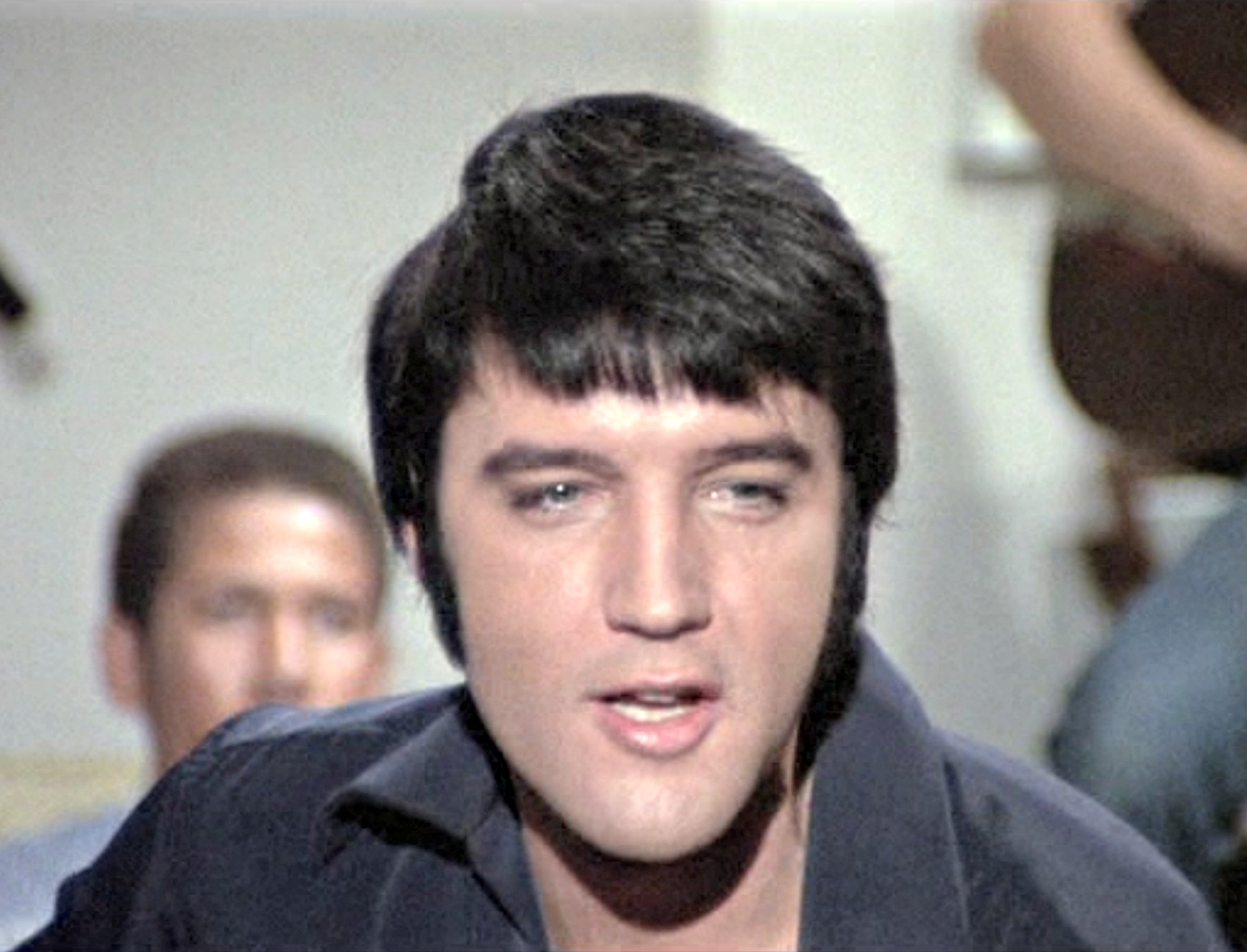
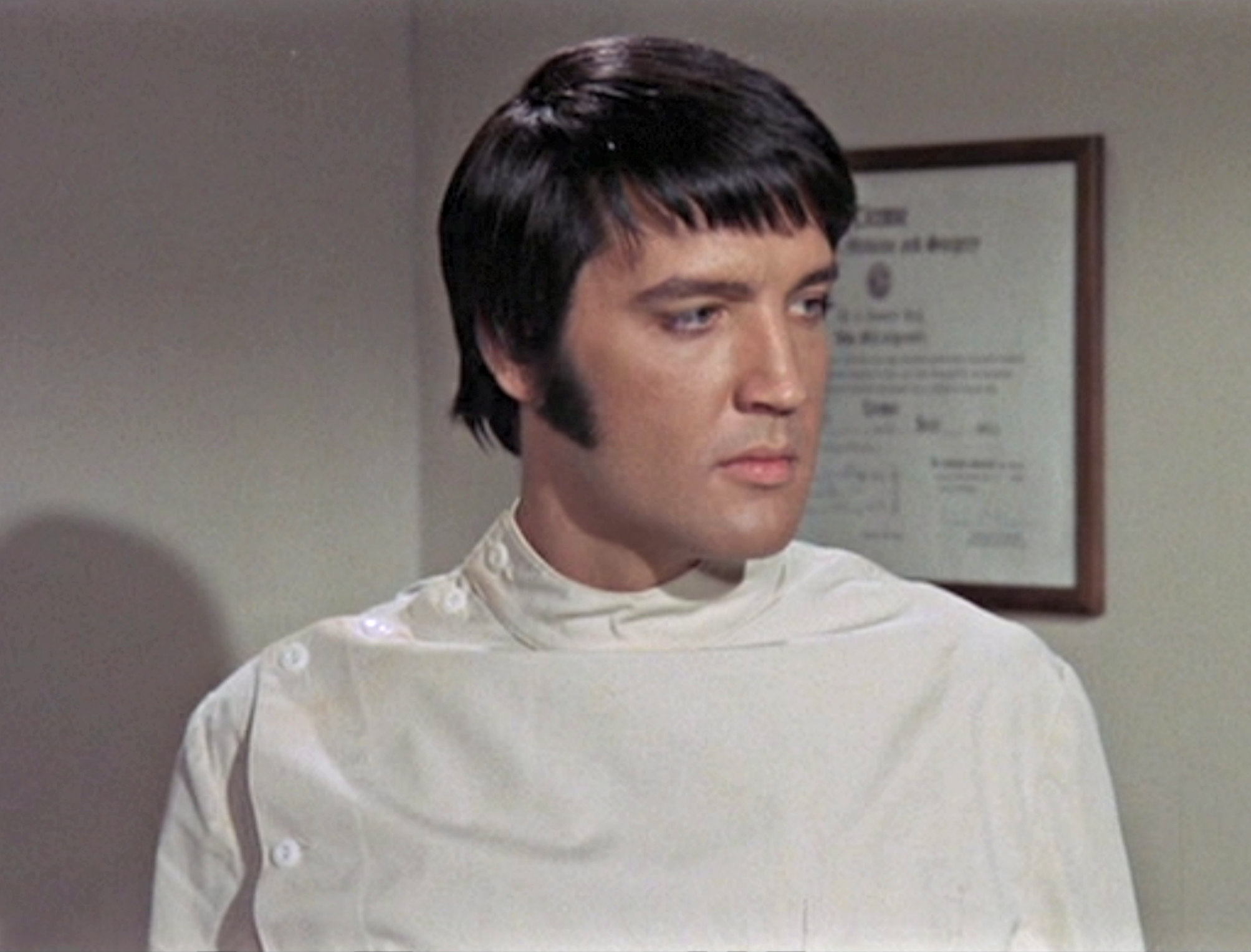
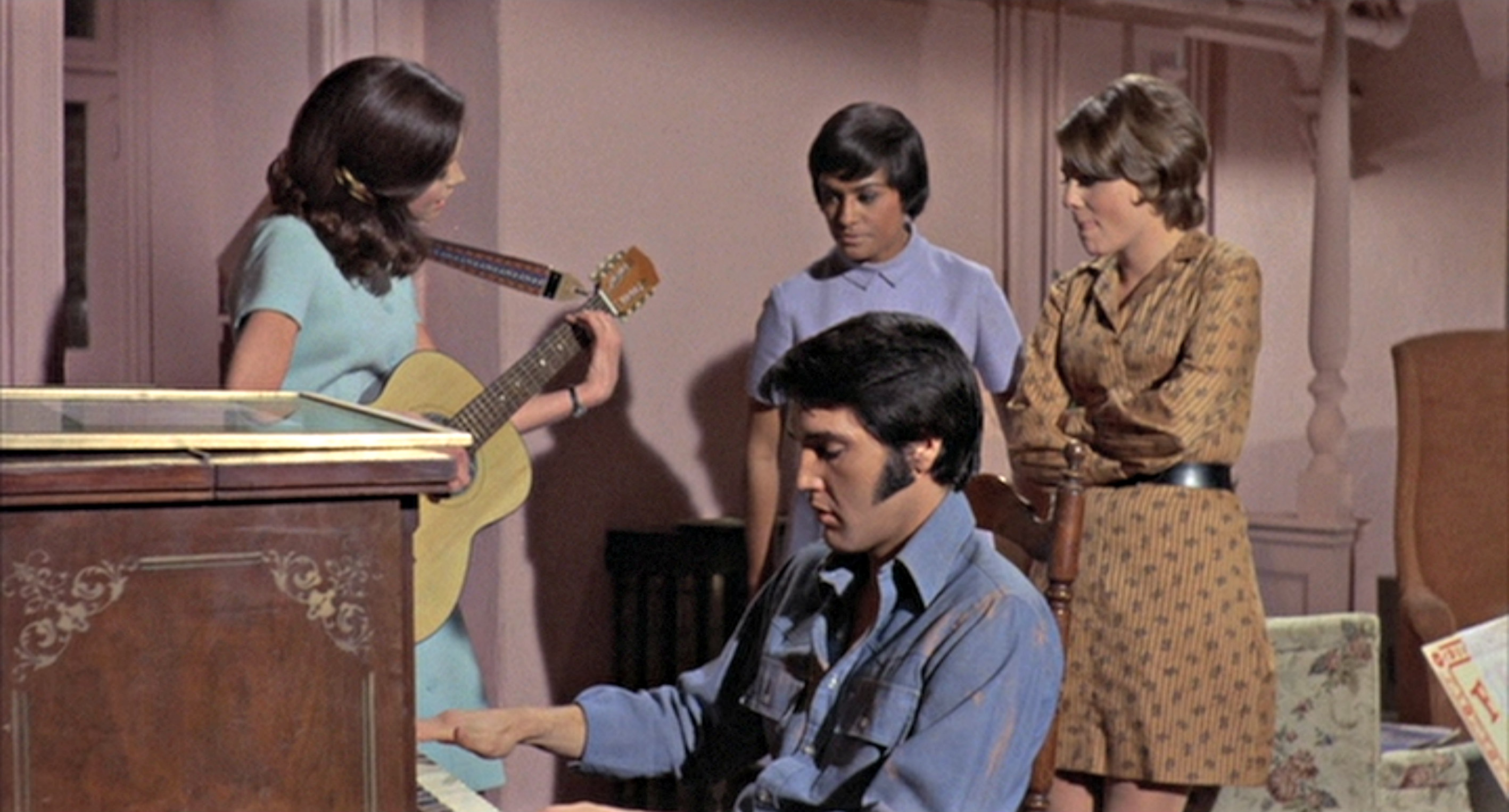
King Moment: Again, because an overworked ghetto doctor doesn’t have much chance to get into any fights or other shenanigans – and credit the film for not straying into comedy – there is a lack of those indelible King Moments in this his final film. He does deliver a couple of lines to his patients with typical Presley aplomb but I will award the King Moment here to the scene depicting Dr. Carpenter joining the women in their apartment for noodle ring. Presley sits at a real life piano and actually plays it, fooling with a casual tune that sounds a lot like “Lawdy Miss Clawdy”. It’s a great moment that shows Elvis being Elvis and without the music being overdubbed.
The Music: “Change of Habit”, “Rubberneckin'”, “Have a Happy”, “Let Us Pray”
I mentioned when talking about 1968’s Stay Away, Joe that, at this point, songs in King Movies were certainly less of a thing. His final movies cannot really be called “musicals” and songs were added only as tokens and because Elvis Presley was starring. Even the Colonel did not insist on jamming in more tunes; even the wily Snowman must’ve known that the jig was up. And, yet…Elvis. Even here in this gritty, urban, non-musical film, he gifts us with one last little gem in the form of the title track. In my article ranking the King Movie title tracks, I declared “Change of Habit” #7, putting it among “the pinnacle of Presley’s title tracks and movie music”. It is excellent. Not sure I would consider “Rubberneckin'” a “movie song” as it was an actual song first before being tapped to be used in the film. But what I will say is that this song’s inclusion does much to elevate the film as I would – and have in another article – consider it among my favourite and the very best songs by Elvis Presley. Graham would not have made a good director of music video, methinks, as this segment is handled sloppily, perhaps more so by the editor. This is the scene though that was once featured in an absolutely hilarious episode of Miami Vice.
I hesitate to even talk about the last two songs. “Have a Happy” is like one last kick to the nutsack for us Elvis People. Even in this dramatic movie, we are forced to endure Elvis singing to a child once again, a practice that marred many a King Movie stretching back to G.I. Blues and It Happened at the World’s Fair. There is something though that I really like about this silly little ditty, I have to admit. Don’t ask me what it is. “Let Us Pray” works in the context of the film but it is basically bollocks.
Meanwhile in Elvis World: 1969 was certainly a seminal year for American society in general and entertainment in particular. In Elvis World the year began with King back home in Memphis to cut some sides. This understatement does not begin though to describe the enormity of what went down in January and February at 827 Thomas Street in North Memphis. Elvis started off sheepish and with a cold when he entered American Sound Studios to work for the first time with producer Chips Moman and his crack house band was not overly impressed with Elvis and his sycophants. “I mean, we were thrilled about Elvis”, said trumpet player Wayne Jackson, “but it wasn’t like doing Neil Diamond” but Presley soon won the boys over with the intensity of his commitment and the abundance of soul in his voice. The American Sound recordings rank with the Sun sides as the pinnacle of Presley’s career and some of the finest moments of rock vocalizing and blue-eyed soul stylings. But – typical in Elvis World – the experience was tainted by conflict of the business kind. Chips had felt stung over the way he had left Stax years earlier and swore he would forever after be master of his domain. Then he came up against the Colonel and the Presley Bean Counters in the form of song publishers who demanded Moman give up some of his rights to the songs he was working on with Elvis. “Suspicious Minds” is the most substantial example of a song that was almost never released over rights squabbles. Elvis and Priscilla were off on a holiday in Aspen when all this went down but the smoke cleared enough that King returned to Chips’ House later to cut more legendary recordings. It was down from this high that King descended on Universal Studios to the lowly land of a TV movie-level production to work on a project that must’ve felt like an unwanted detour. After the success of his 1968 TV special and the exhilarating potential of the American Sound recordings, it must have been particularly frustrating. But it no doubt added impetus to Elvis Presley’s desire to escape Hollywood and get back to doing what he did best.
You see, its a funny thing about Change of Habit; its good. Well, its not good. But its good. Maybe the execution is not as sharp as it could be. The narrative is not as compelling nor the presentation quite as crisp as other major studio films of the time. But it is quite fascinating especially – but not solely – when taken in the context of the other 30 King Movies that had preceded it. The movie actually provides us with many talking points so let’s roll them out.

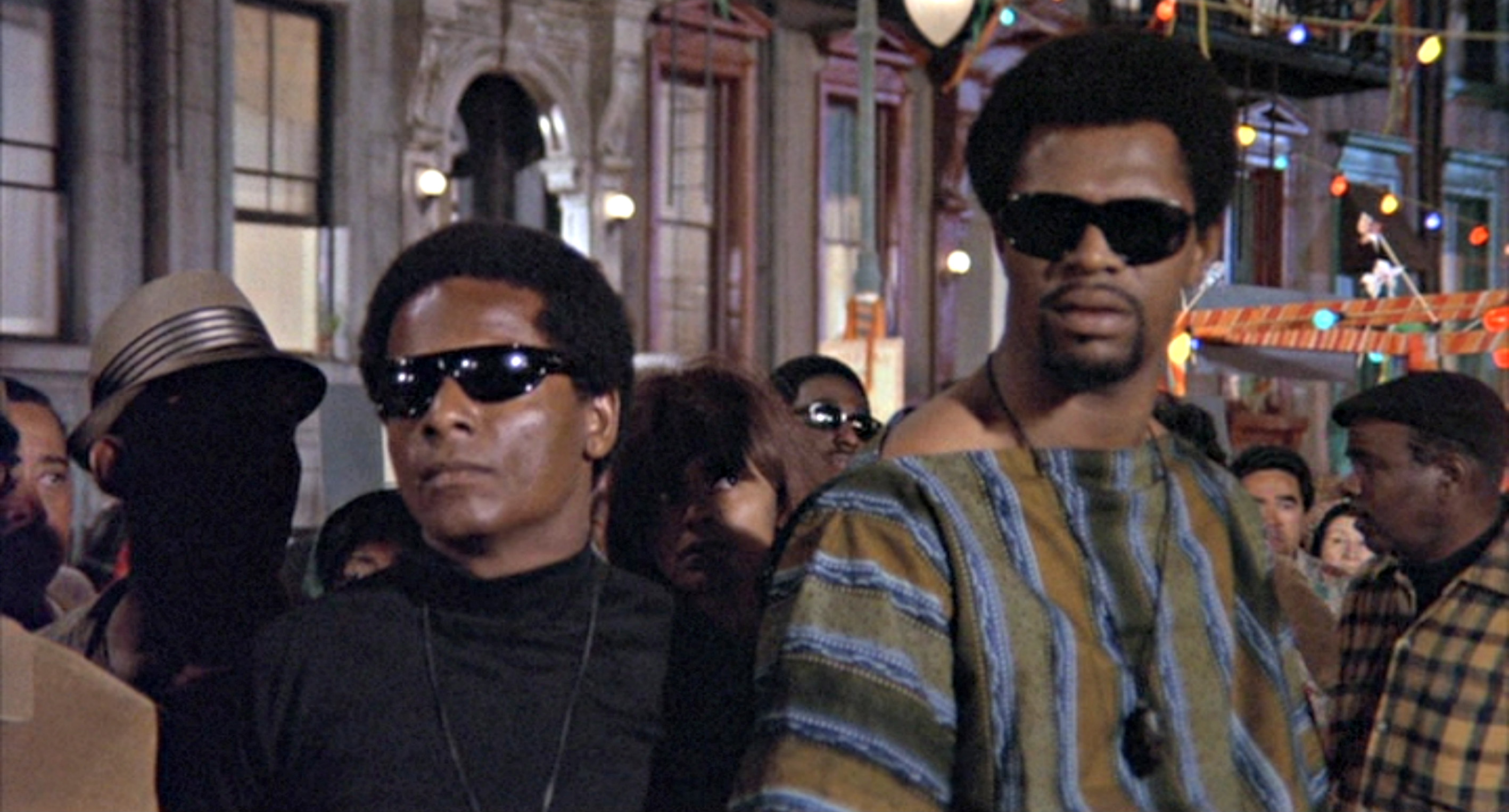
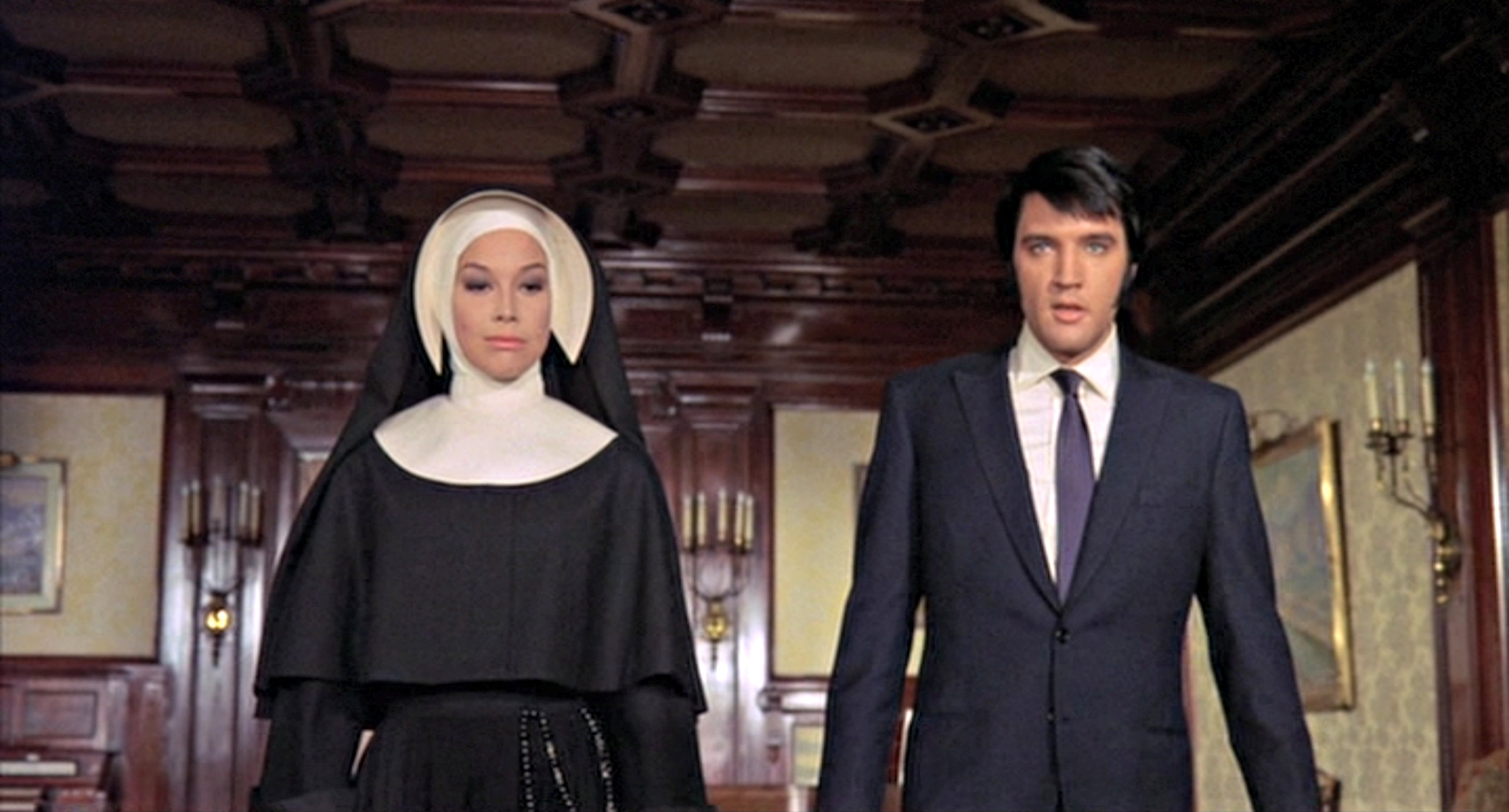
There is a pre-credit sequence, rare for a Presley film, doubly in that it does not feature Presley. The property started as a vehicle for Mary Tyler Moore and her name – along with King’s – appears before the title. The three nuns shed their habits in a sequence that could be inappropriate if it is viewed as brides of Christ performing a striptease. Few opportunities to add grit to the tale go begging. Michelle says the girls must no longer hide behind the protection of their nun attire and “be accepted as women” just as guys on the street – A Martinez among them – gently accost them, prompting Irene to cleverly quip that they are about to be accepted as women, indeed. Dr. Carpenter thinks at least one of the girls is pregnant, something they can’t even fathom, and tells them to go back to Park Avenue. Irene again pipes up asking what end of that fancy address does the doc thinks she is from and later, she uses the “n word” which makes Dr. John uncomfortable. Carpenter talks bluntly to the women not knowing how foreign that is to them and one patient is feeling no pain, Dr. Carpenter explains, because he is “on the stuff…H” and points out the needle marks in his arm.
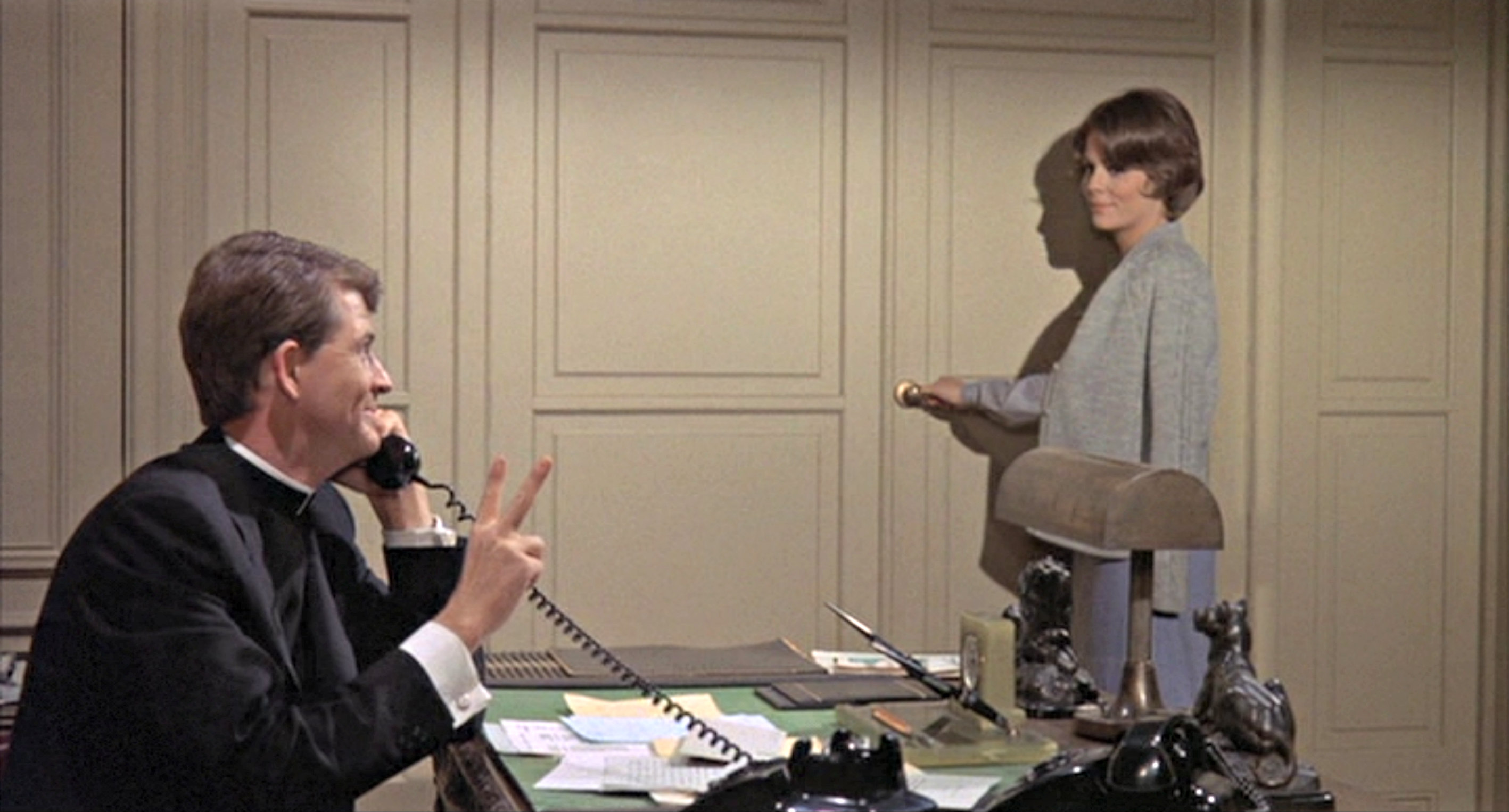
I must make a note about the depiction of “religion” in the film or “the church” and my comments do not necessarily pertain to Catholicism itself. Take the busybody ladies who “welcome” the undercover nuns to the parish. They are seemingly in tight with Father Gibbons and so we can perhaps assume they are regular church-goers. But they are – quite broadly and stereotypically – depicted as miserable, judgmental people, who assume the three nuns are prostitutes, one loudly mentioning that Irene is “Black as the ace of spades”. Father Gibbons is worse. Here is a Catholic priest and he is never without a scowl on his face. He is rude to the nuns when they show up to pray and doesn’t hold back when describing how he feels about them and their mission. He runs down a litany of why he cannot get behind them – and the whole list comprises unimportant things like their clothing and how they wear their hair.
These depictions in film always infuriate me and for two reasons; first is they bring home the reminder that the pious are often close-minded, dogmatic and judgmental. Secondly, it frustrates me that these depictions colour all people of faith as being like that. These depictions can help to “confirm” for people that the “religious” are not only as bad as everyone else but they are worse because they claim to be better than those who don’t live like them. While what we see in Change of Habit might be overly simplified, it is still worth noting that people are on to something when they say that they don’t have a problem with Christianity; its Christians they don’t like. Michelle is given a good line when the girls comment on the busybodies. One says they are evidently Catholic and Michelle says “its too bad they’re not Christian”. She’s hit on something pertinent but it could go a step further. Christianity, sadly, is loaded with humans and humans are extremely flawed. People will look at someone like Father Gibbons or Jimmy Swaggart or anybody and claim they are the reason they don’t truck with God. But one could do worse than to focus more on Christ and less on broken humanity. Is Father Gibbons acting like Jesus? Decidedly not but that’s on Father Gibbons. Not Jesus. Don’t let an idiot like Father Gibbons colour your perception of Christ. Anyways…
Then there is little Amanda. Michelle says she thinks she is autistic and her aunt – played by Virginia Vincent who also played Sally Bullock in my fave Tony Rome – says “artistic? Nah, she don’t even pick up a crayon” and she can’t be blamed as likely many in the audiences of the day didn’t know what autism was either. Change of Habit is considered the first film to portray autism by that name. It is said that it “accurately portrays” the misdiagnosis and lack of understanding of the condition and features a scene of Rage Reduction therapy.
I have read that this film’s depiction of autism is “offensive” and I couldn’t disagree more and my aversion to the statement doesn’t really come from what you actually see in the movie. As depicted here, the understanding of autism is archaic but at the time, doctors and scientists were feeling their way, trying to help those afflicted with something their knowledge had not yet fully grasped. To say this was offensive is unfair; efforts were being made to ease suffering and certainly not all of them were successful.
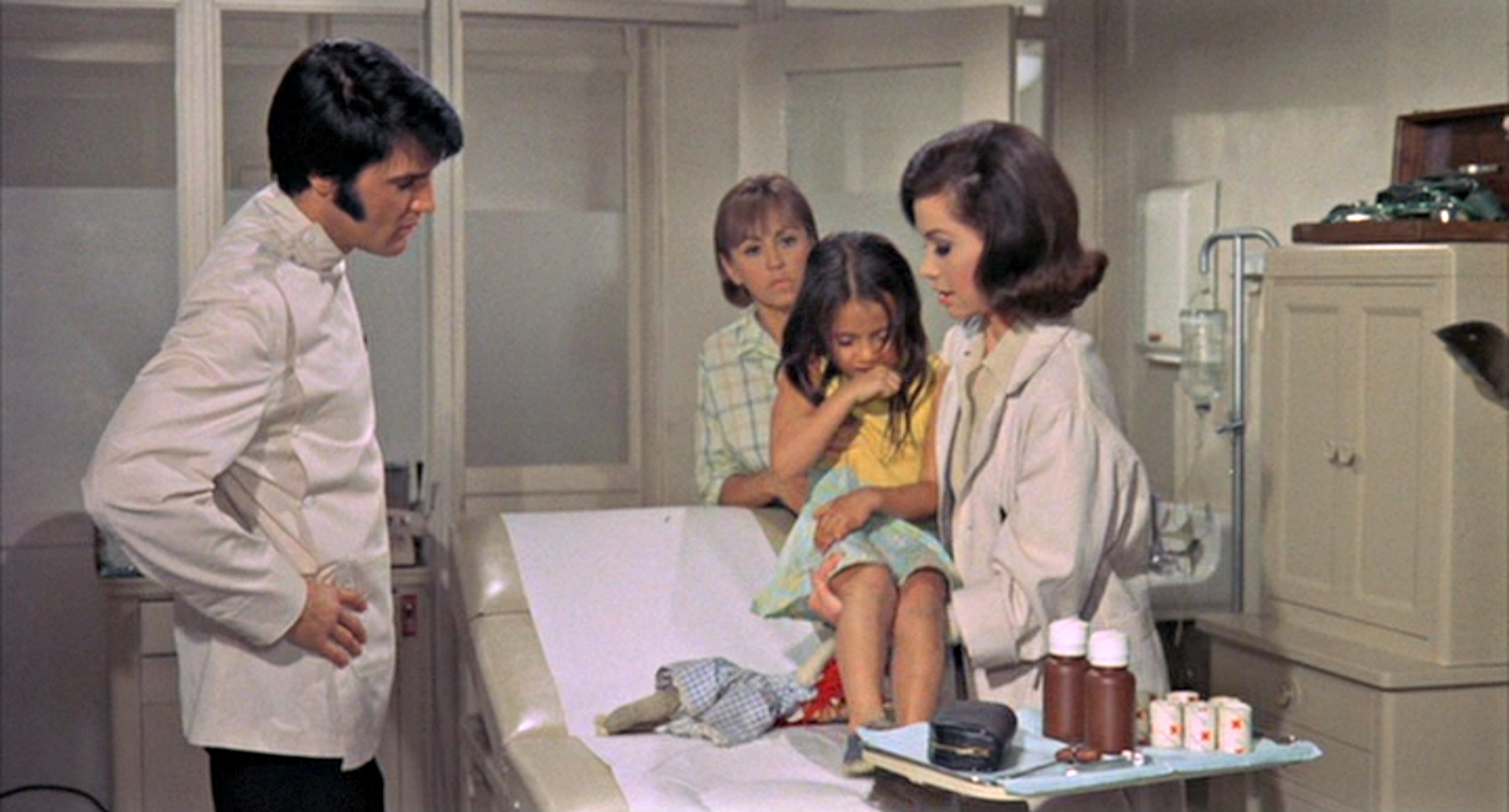
The article I refer to had the gall to say “by today’s standards the description of autism is nonsense”. A LOT of things from fifty years ago are nonsense “by today’s standards”. “By today’s standards”; the vey statement suggests we are comparing apples to oranges. “Wow, lookit how that country doctor in the western gives the patient brandy and tells him to bite on a stick as he digs that bullet out. How stupid is that?!”. Stupid? How can the doctor provide for the patient medicines that hadn’t been invented yet or weren’t at his disposal out on the prairie? Far from stupid, those doctors were pretty smart, says I. I have read that it is “inexcusable” for the film to depict something that was “the belief during that time period”. To me, that thinking is so broken because if it is what was believed at the time, then it WAS valid to depict it. There was no other thinking to depict! Consider also the author of this article denigrating the film in part because of its depiction of race saying that the term “dipped in maple syrup” is used but he has foolishly misrepresented the entire context of that statement; it is used by a Black character to berate another Black character who is judged to be not “Black enough”.
The use in the film of Rage Reduction is another matter and perhaps cannot be similarly defended. This method of treating autism has been disproven as a pseudoscience and its deployment has in many cases been so badly perverted that it has resulted in the horrible deaths of many children, particularly those who have been adopted.
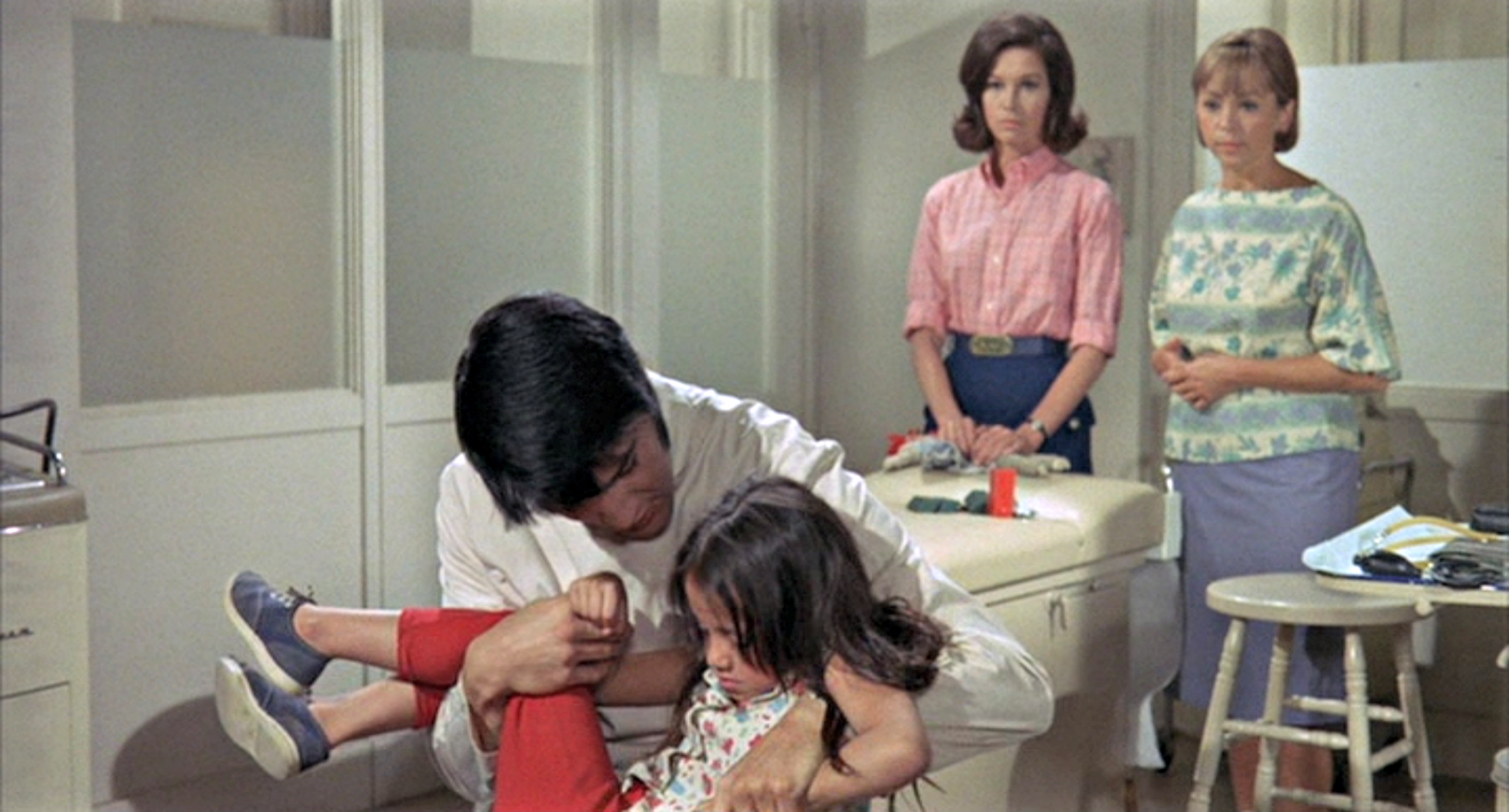
For the record, Rage Reduction or Attachment therapy is described thusly; “Through this process of restraint and confrontation, therapists seek to produce in the child a range of responses such as rage and despair with the goal of achieving catharsis. In theory, when the child’s resistance is overcome and the rage is released, the child is reduced to an infantile state in which he or she can be “re-parented” by methods such as cradling, rocking, bottle feeding and enforced eye contact”. How about us? Learning about such things from a King Movie!
Something else the film lightly brushes is the folk mass, that is employing contemporary music stylings in a church service. I’ve ran into this while researching the origins of Contemporary Christian Music and running across the band Mind Garage. In this very same year of 1969, these guys from West Virginia were encouraged by an Episcopalian minister to create The Electric Liturgy, which became the pioneering use of rock music in a church service. So, here’s another instance of goofy Change of Habit commenting on actual things that were going on at the time.
I feel like I want to credit the three nuns in this film for wanting to reach people and for bristling at what they considered the restrictions of their status as nuns and the restrictions of their work in the church. They wanted to be out on the street – evangelizing, yes, but also serving the public right where they live. They wanted to step out from inside the walls of the church to understand what is really going on out there and to help their fellow men and women.
This is a clumsy film – for example, I feel like all the dialogue has been dubbed – but I still feel like I want to defend it though it is not easy to do so. If for no other reason, it is worth watching for its unique standing as Elvis’ last movie. And, again, not only for that unique standing but also because it really does have something to offer the viewer.
Sources
- The First Autistic Character: Change of Habit (1969) Review – James Ward-Sinclair (2018) Autistic & Unapologetic
- A Young Jane Elliot Connected With Elvis in Change of Habit – Elvis History Blog (2016)
- Careless Love: The Unmaking of Elvis Presley – Peter Guralnick (1998)
 SoulRide