Roustabout (1964)
Elvis Presley, Barbara Stanwyck, Joan Freeman, Leif Erickson, Sue Ann Langdon, Pat Buttram, Joan Staley, Steve Brodie, Norman Grabowski, Lynn Borden, Beverly Adams, Teri Garr, Billy Barty, Richard Kiel, Raquel Welch, Kent McCord, Red West, Joy Harmon and Kenneth Becker
Director John Rich
Paramount Pictures (101 mins)
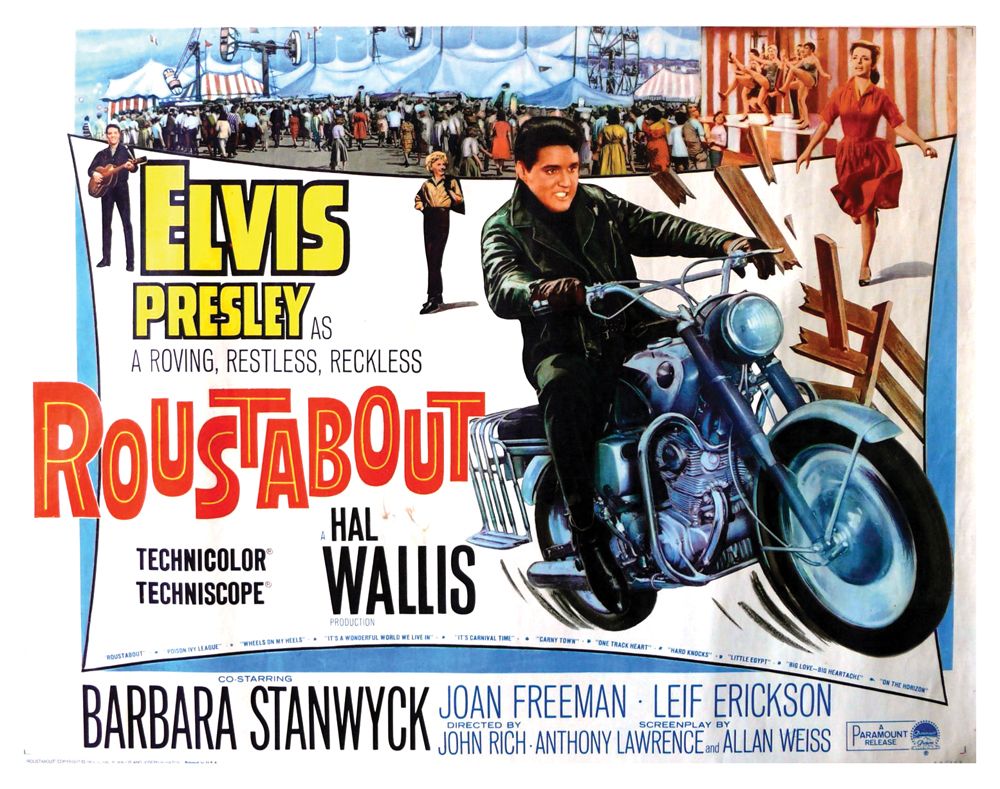
Charlie Rogers (Presley) is singing at Mother’s Tea House when a couple of college boys give him a hard time. Naturally, Charlie has to beat them up and he gets thrown in the slammer. Marge (Staley), waitress at the Tea House, bails him out and wants to hit the road with him but he ain’t having it and he takes off alone.
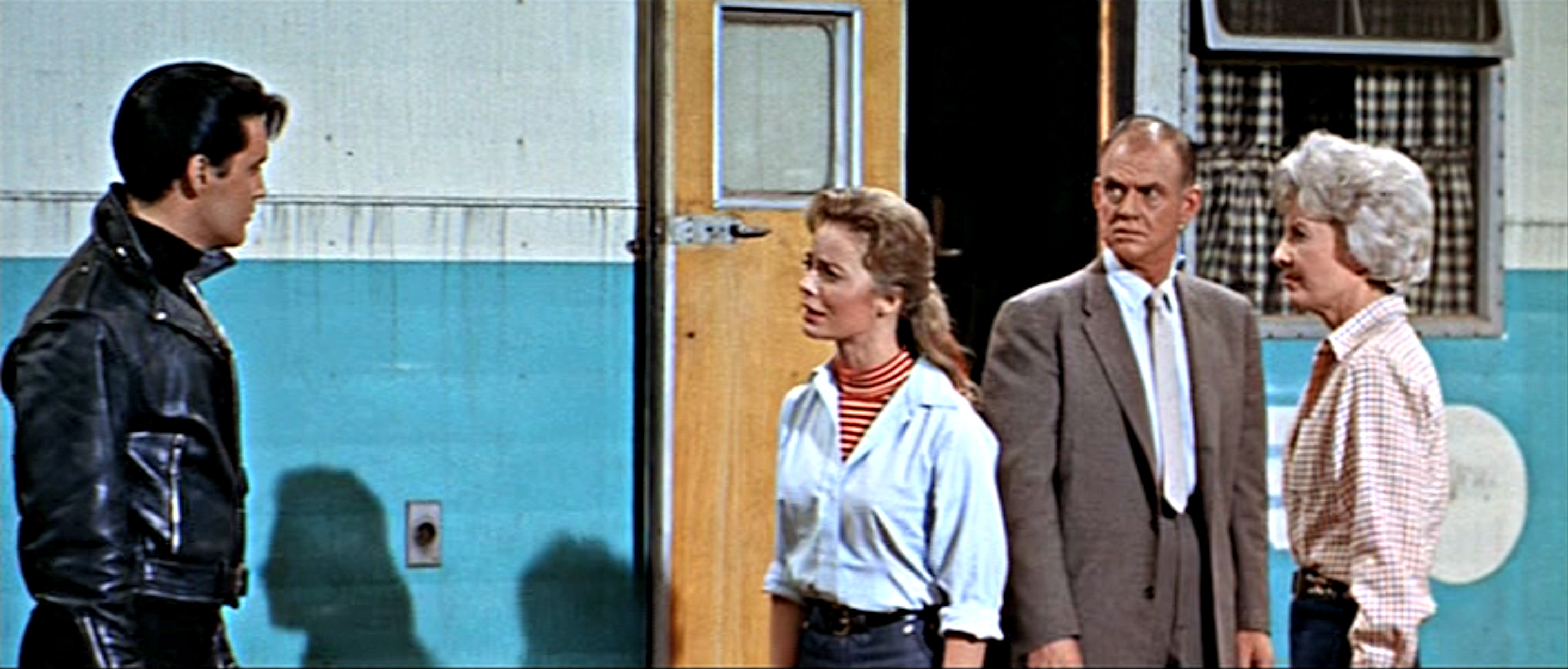
Bombing down the highway on his motorcycle, Charlie comes across a jeep and in the backseat is a pretty little miss named Cathy (Freeman). Charlie invites her to come for a ride but her father, Joe (Erickson), who’s driving, gets surly and runs Charlie off the road. His bike is damaged and Maggie (Stanwyck) offers to pay for the damage. The three give Charlie a lift to their nearby carnival. There, Charlie fully reveals his surly nature and his disdain for carny life. He becomes more attracted to Cathy and also to the combative nature developing between him and Joe. Against his better judgement, he decides to stay on and become a roustabout; not only to pursue Cathy but to spite Joe.
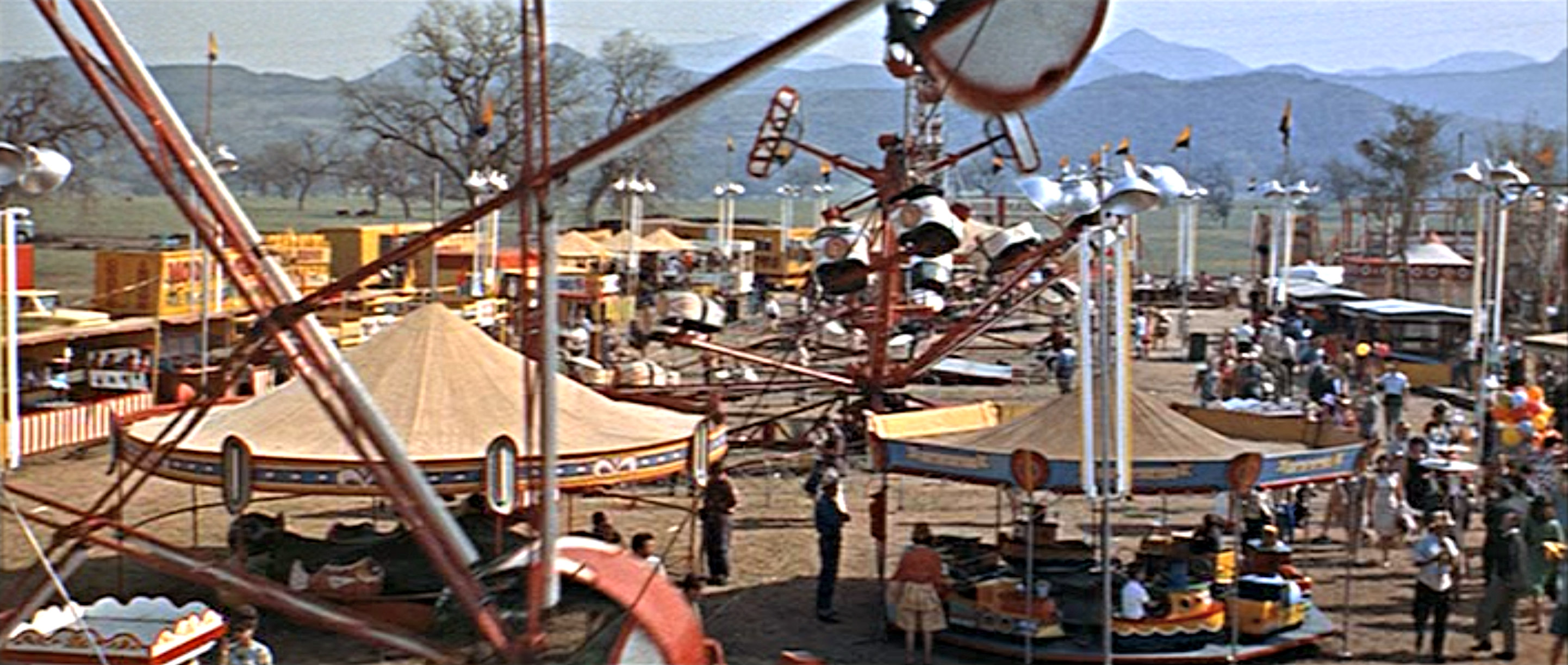
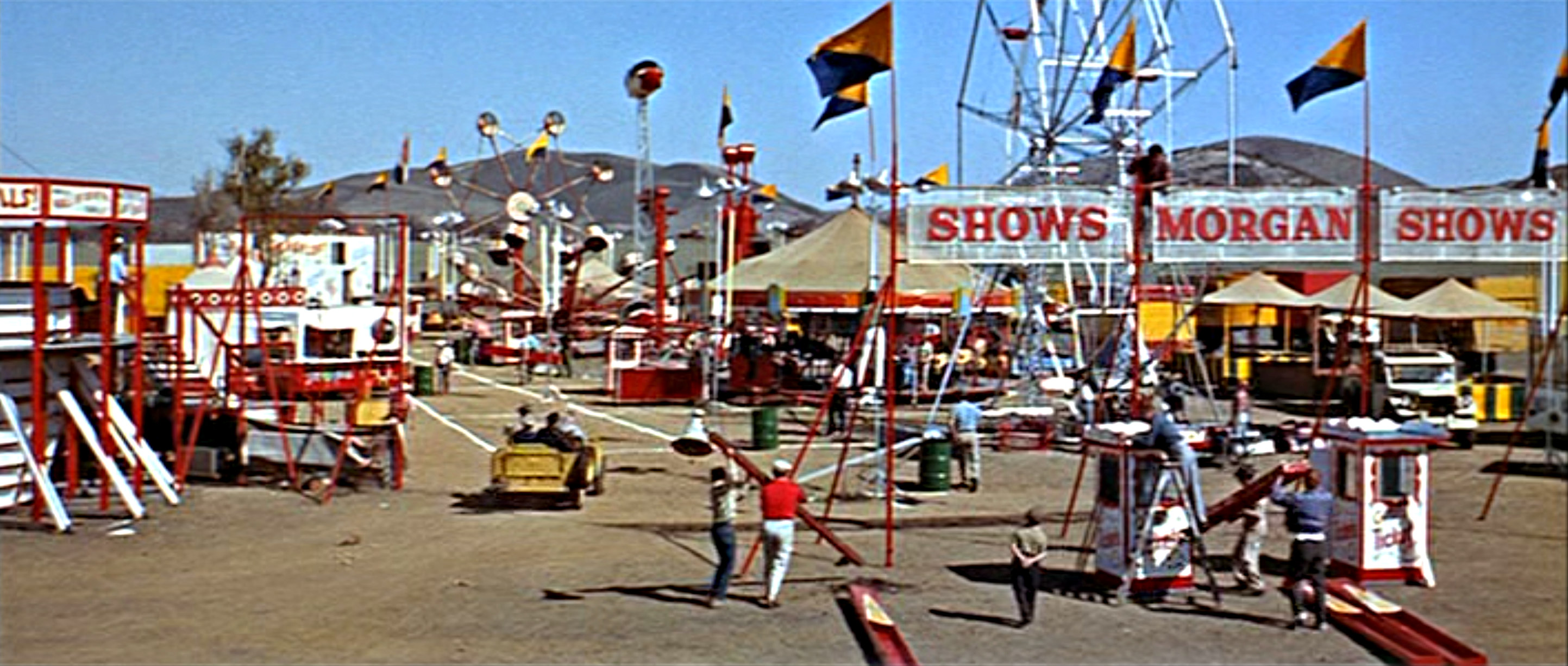
Charlie is a hit singing on the midway and this is helping Maggie get the operation out of the red. But the ambition and avarice in Charlie rears its head. When Harry Carver (Buttram) offers Charlie a contract to join the much larger Carver’s Combined Shows, Charlie takes it. But when Maggie finally hits the skids and Cathy reaches out for help, Charlie Rogers redeems himself.
Truth be told, Roustabout may be the most significant film Elvis Presley ever made. While it is not the best, it could be considered the movie of his that you would watch first in order to understand the type of film he made and more consequentially the type of character he portrayed on film. More on this later. Roustabout was Presley’s 15th film, released on November 10, 1964. No doubt the most notable thing about this film to the casual classic movie fan is the fact that Barbara Stanwyck appears with Elvis. In a way, you could say that Roustabout signalled the final King Movie that bore any semblance of quality. It was the last of three Presley movies released in 1964, the first of 6 consecutive years that would see three Elvis flicks hit the theatre in a calendar year. After Roustabout would come a spate of movies that did much to sink Presley’s credibility as a serious player in the industry. As Charlie Rogers, he was already looking the way he would throughout the 60s up until roughly Clambake, sporting a look that was not only tame but lacking in any of the character that would mark King when he was looking his best. But before he entered his celluloid valley, he gave us the film we’re looking at today, one that has lots to recommend it.
Once again we see a King Movie written by someone who had done little before and would do little afterward. Co-writing our screenplay was Anthony Lawrence who added scripts to various TV shows throughout a career that somehow stretched into the 1980s and featured 9 episodes of Hawaii Five-O and The Sixth Sense. No, not that one. This was a TV series that Tony created that dealt with the paranormal and starred Gary Collins and ran for 8 minutes (25 episodes) in 1972. Lawrence claims that when he got the job to write Roustabout – he says it was a re-write of a script they already had – he had never heard of Elvis Presley. I don’t believe him. He would contribute two other scripts for King Movies, for Paradise Hawaiian, Style and Easy Come, Easy Go. Lawrence made it to 95 and died in 2024.
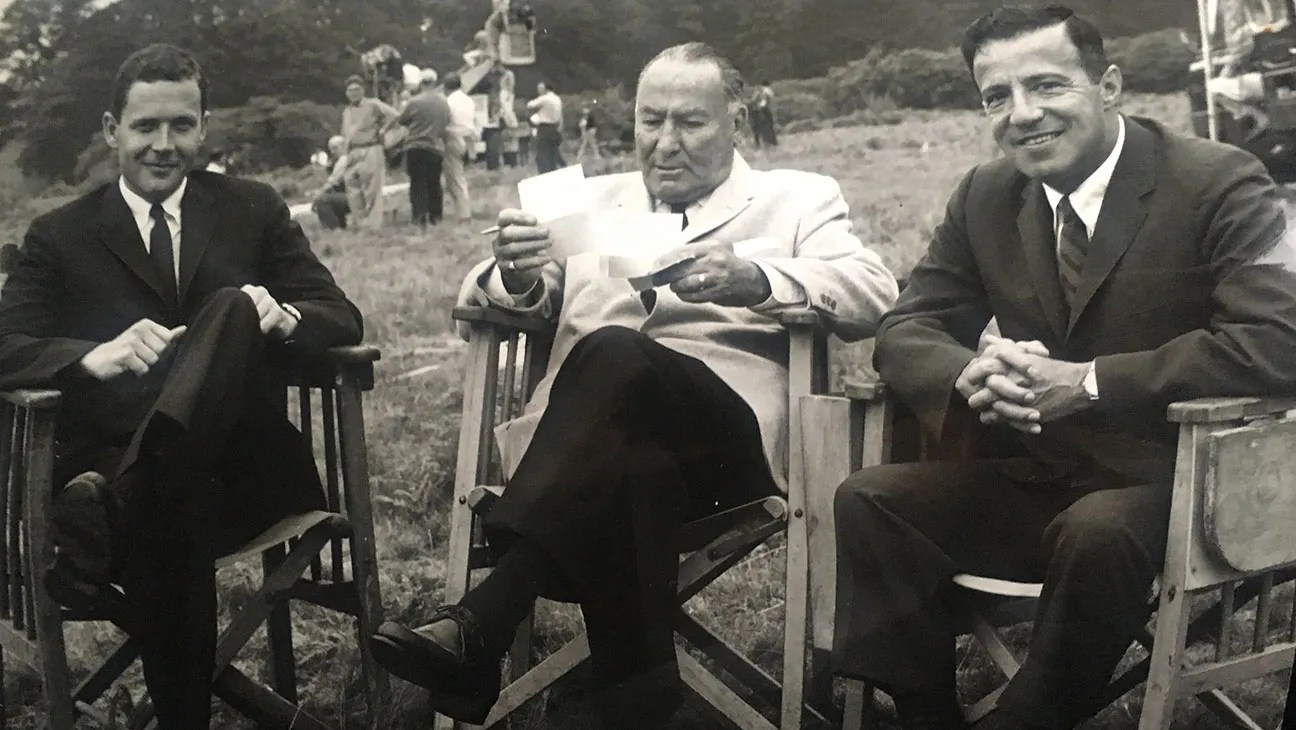
Allan Weiss is the greatest screenwriter who ever lived. Not really but… Weiss from Pennsylvania was the life partner of Paul Nathan, the producing partner of Hal Wallis. Weiss didn’t mess around with inconsequential films no one would watch. He wrote only 7 scripts but all notable and with more than a little charm; Blue Hawaii, Girls! Girls! Girls!, Fun in Acapulco, Roustabout, Paradise, Hawaiian Style, Easy Come, Easy Go and, oh, yeah, throw in Duke’s The Sons of Katie Elder. All made money, all fan favourites that many of us have watched multiple times. Weiss worked with Wallis and Nathan and was on hand for Presley’s original screen test. Weiss recalled that Presley “was such a strange, quiet fellow — so completely foreign” but that the screen test “was phenomenal. It was an amazing experience to be there, one of those life-changing experiences”. Weiss’ nephew, Ken Maas, told the Hollywood Reporter that his uncle died at 90 in a nursing home in Mission Viejo, California, and provided the trade paper with the unique photo below. And that, dear reader, is another instance of what we provide here at Vintage Leisure; absolutely all the information extant about Allan Weiss is right here in this article. Internet searches are more concerned with a Canadian author of the same name. You’re welcome.
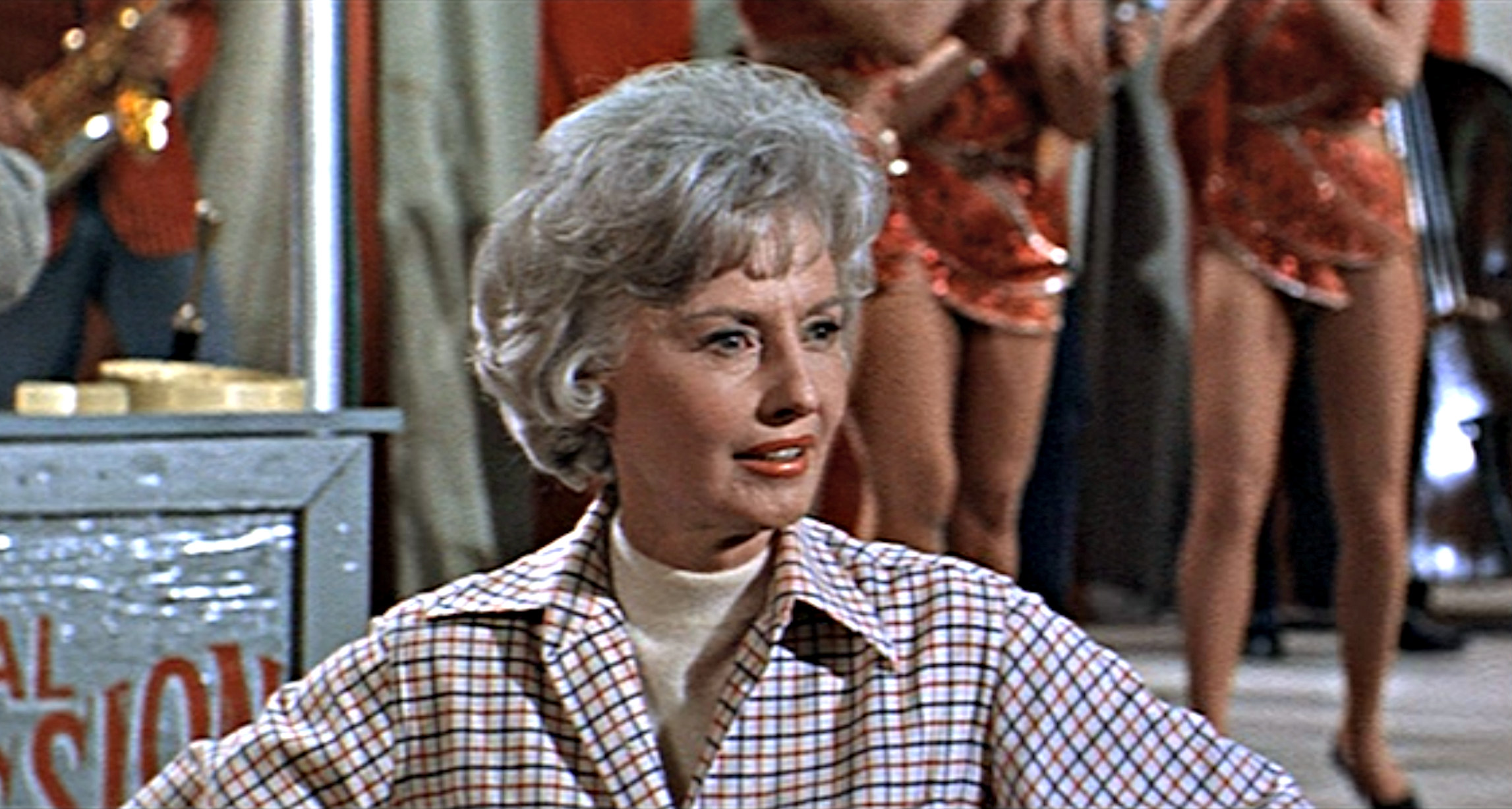
You don’t need me to tell you about Barbara Stanwyck. At least you shouldn’t. She is undoubtedly one of the very biggest stars in Hollywood history and continues today to be revered like few other actresses are by fans of classic film. Stanwyck along with Bette Davis, Joan Crawford and Katharine Hepburn ruled Hollywood through the 30s and 40s and, inevitably, Stany’s stardom and her work slowed through the 50s. In 1957, she was still making quality films like Crime of Passion but her big screen race was run. Interesting, then, that she returned to film first in ’62 for the serious Walk on the Wild Side and then made our film two years later. She would make only one more movie also released in ’64, the psychological horror film The Night Walker, made by William Castle and co-starring Stanwyck’s former husband, Robert Taylor.
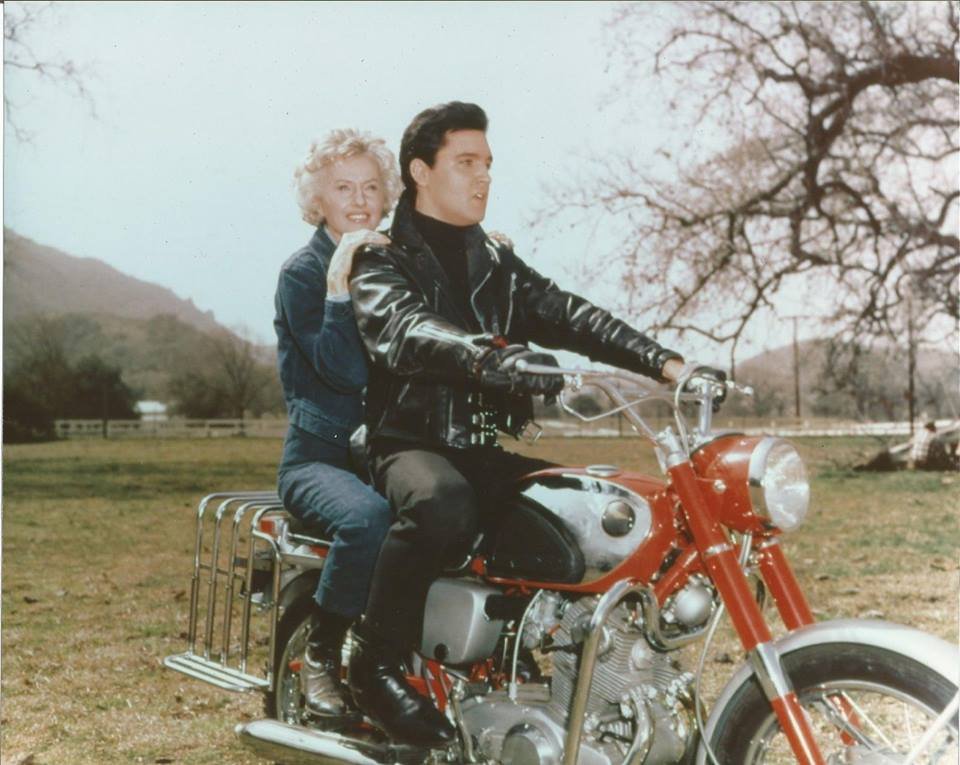
Speaking of Taylor, when Stany and King met on set, she was initially cool to him which made matters worse for the already-intimidated Elvis. Later, Stanwyck took EP aside to explain; Presley, the legendary actress said, reminded her far too much of her ex, Taylor.
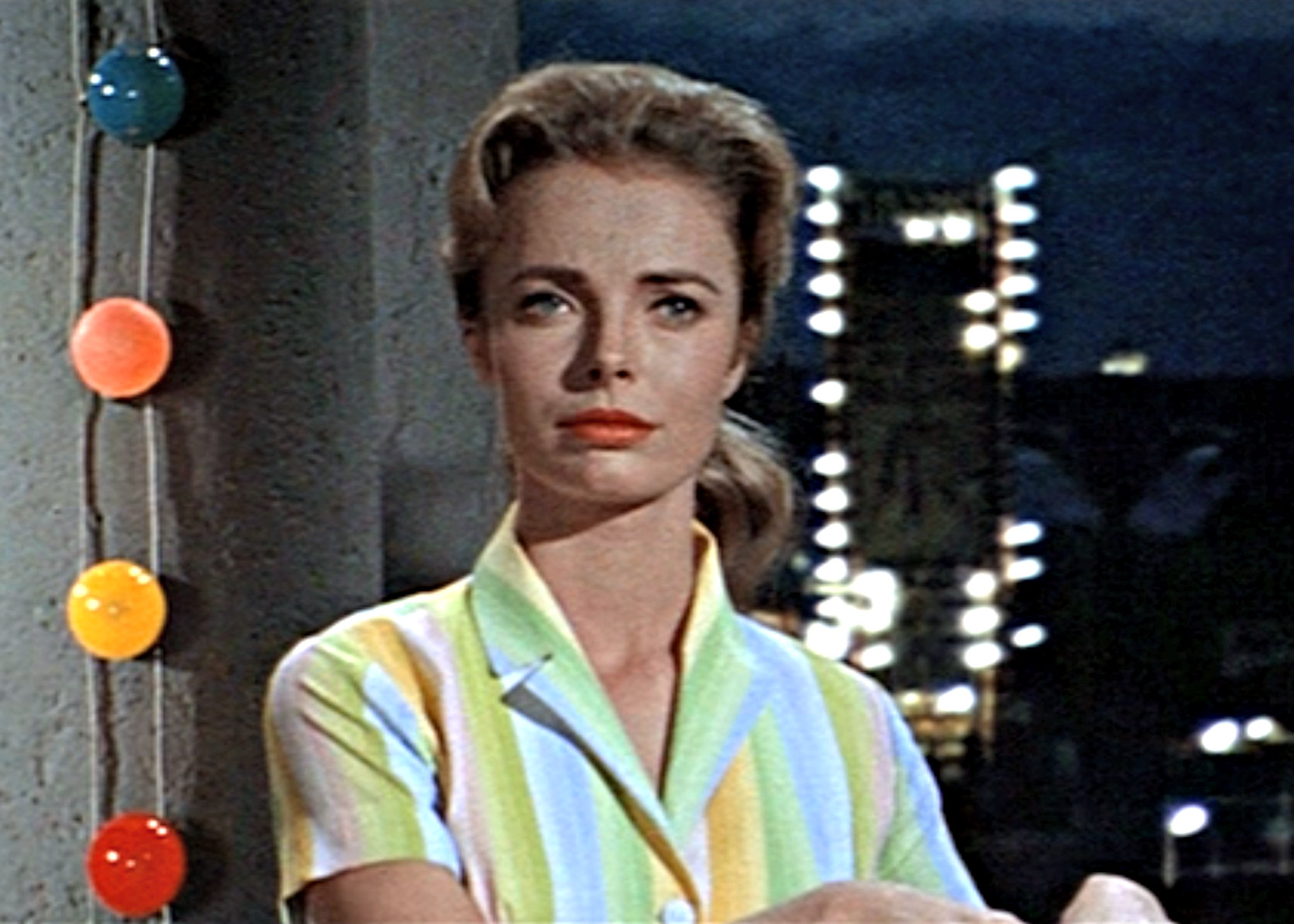
Little Joan Freeman (b. 1942) graduated from John Burroughs High School in Burbank; other notable alum include Dan Haggerty, Ron and Clint Howard, Tim Matheson and Debbie Reynolds. John Burroughs was an American naturalist – but Jon Burroughs was also an alias Presley used when he traveled. Joanie is a typical co-star in King Movies; a charming but lightweight actress who did little of consequence before or after her appearance with King. She did, however, make movies with John Wayne, Rock Hudson and Bobby Darin, starred with Roy Orbison in his only film and – most notably for me – was in the interesting Panic in Year Zero! She made only a dozen or so movies and one of them was The Three Stooges Go Around the World in a Daze – so, there you go. Let it be said that Joan does really well as Cathy. I like her.
Big, strapping Leif Erickson (born William Wycliffe Anderson) served in the Navy as a photographer and was shot down twice earning two Purple Hearts. He showed up in Sorry, Wrong Number (with Stanwyck), The Snake Pit and Fourteen Hours, was in Trouble Along the Way with Duke and Joan Freeman and played another cold-hearted brute in Tea and Sympathy. He does well in Roustabout agitating Presley’s Charlie Rogers. Jack Albertson was one of only 24 actors to have won a Tony, an Oscar (The Subject Was Roses, 1968 with Martin Sheen) and an Emmy. Jack had also appeared earlier in 1964 in Kissin’ Cousins. Sue Ann Langdon lives on as of this writing, aged 90, and appeared with King in Frankie and Johnny and also in the excellent Strangers When We Meet that I have reported on here. Pat Buttram was an old cowboy actor who also appeared with Elvis in Wild in the Country and in The Sweet Ride, one of my summertime faves.
Joan Staley plays Marge, waitress at the Tea House. Joan’s father was an Army chaplain and her parents were missionaries and little Joanie played the violin as a child before going in to modelling and acting. She joins Sue Ann Langdon as two in our cast who posed for Playboy; Hef chose Joan to be Miss November, 1958. Staley played a child violinist in Bing Crosby’s The Emperor Waltz but got her adult career going when she was seen in the shower during the opening credits of Bells Are Ringing with Dino. Before heading for television, Joan appeared decoratively in notable films; Ocean’s 11, Midnight Lace, Breakfast at Tiffany’s, Cape Fear, Johnny Cool and Kissin’ Cousins. In the late 50s, Joan had worked singing back-up on sessions at Sun Records in Memphis. In the end, Joan Staley racked up seven children, 10 grandchildren and 20 great-grandchildren. She remained active in her church, in prison ministry and died at 79 in 2019. And in an identical scenario seen in Blue Hawaii, Steve Brodie appears as a boor with a loudmouthed wife who gets in a fight with Elvis.
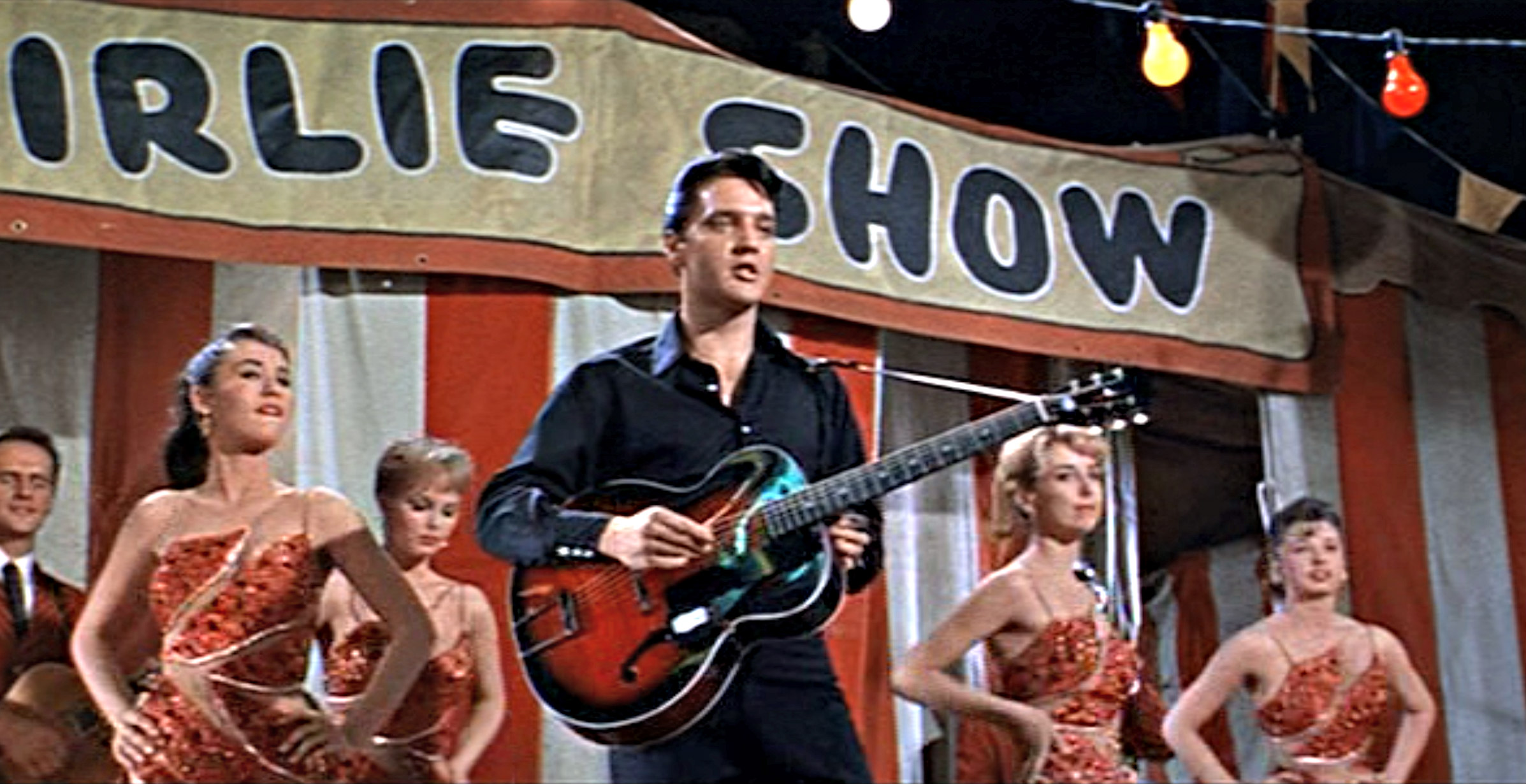
Took me years but I spotted Kenneth Becker as the guy who returns Charlie’s bike to him with the funny line “it was just out of gas”. Becker is the redneck Deke Rivers beats on in Loving You (Presley’s first on-screen fight), held the wager money in G.I. Blues, played the blind drunk Ross Carpenter had ejected in Girls! Girls! Girls! and then chilled for a few years after making our movie, appeared in True Grit and then shut it down. Ken was married to Patti Kane who was in Gidget and the two had Tony Becker, an actor who was in the TV series Tour of Duty. Keep your eyes peeled for Norman Grabowski (Girl Happy), Lynn Borden (Breezy), Canadian Beverly Adams, Billy Barty, Teri Garr, Joy Harmon, Kent McCord, Raquel Welch, Lance Legault, Sonny West, Joe Esposito and Red West.
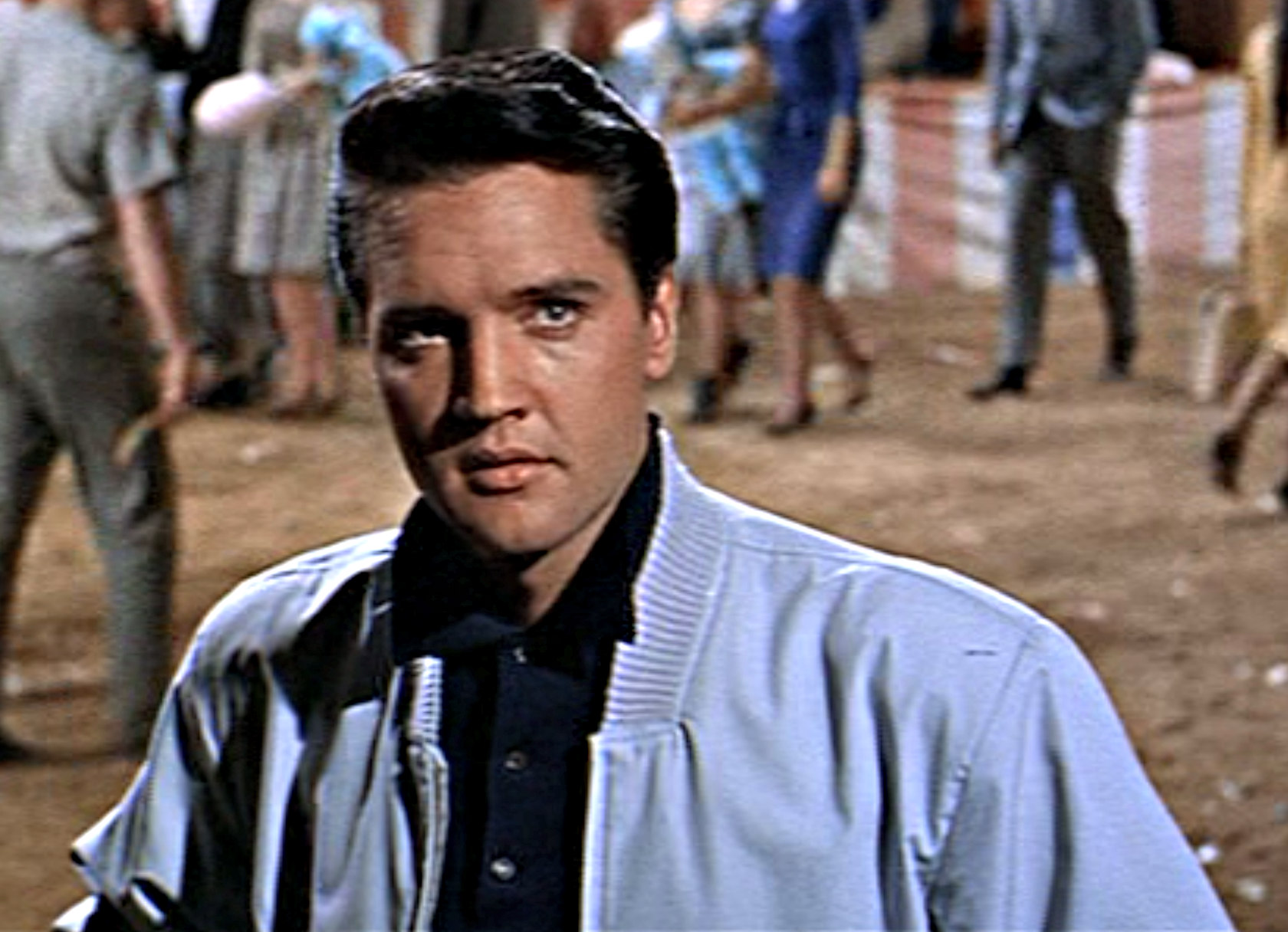
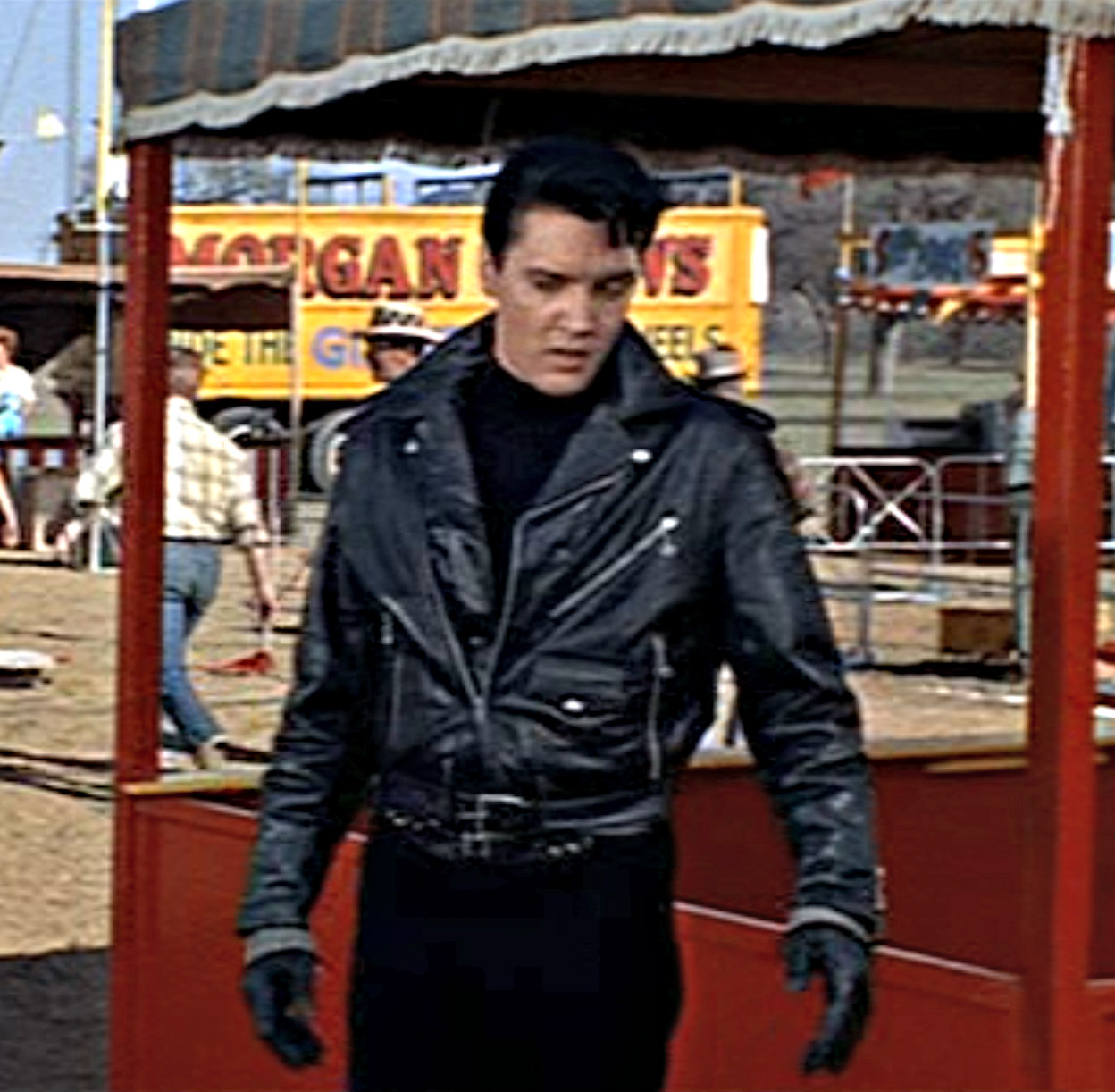
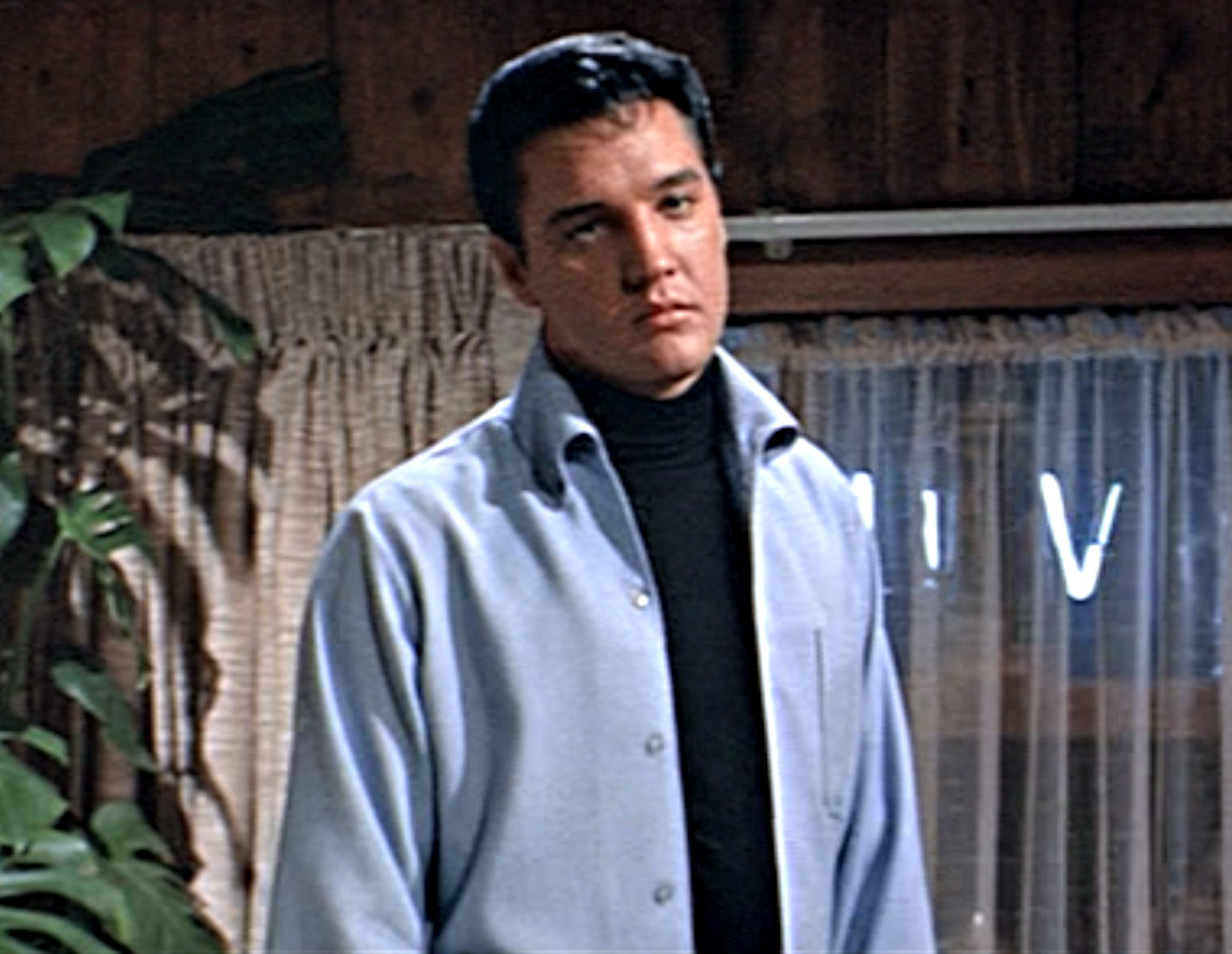
The Look: I mentioned in my previous King Movie review for Blue Hawaii that Elvis Presley’s physical appearance could be separated into five segments or eras. Roustabout falls early in Segment 3, Hollywood Elvis, and this Elvis comes with disappointing hair; it’s his bangs, mostly as that area of his hair seems too trim, too tame, too “small”. Otherwise, our boy looks pretty good and Edith Head has him outfitted in duds that befit a drifter and a carnival worker. At the outset, Elvis looks good in a light blue jacket over a black shirt but the most notable outfit must surely be the leather motorcycle jacket accessorized by black leather gloves. The jacket looks great on King and makes sense as motorcycle wear (“dress for the slide, not the ride”). Google the jacket and you’ll see that replicas are for sale all over the place. Notice the belt he wears as well; not functional for keeping his pants up but flashy, a precursor of the belts he would wear with his jumpsuits. The rest of the way, Elvis is seen in denim, something he eschewed in his private life as it reminded him too much of the poverty of his childhood. Incidentally, Edith has Barbara Stanwyck looking good in denim, as well, and one can imagine the fun the two women had during the fittings, what with their history together, Edith having adorned Stany in the past in all manner of gowns and fancy clothes. And watch for a nice, bright dress Joan Freeman wears when she goes to visit Charlie after he has left.
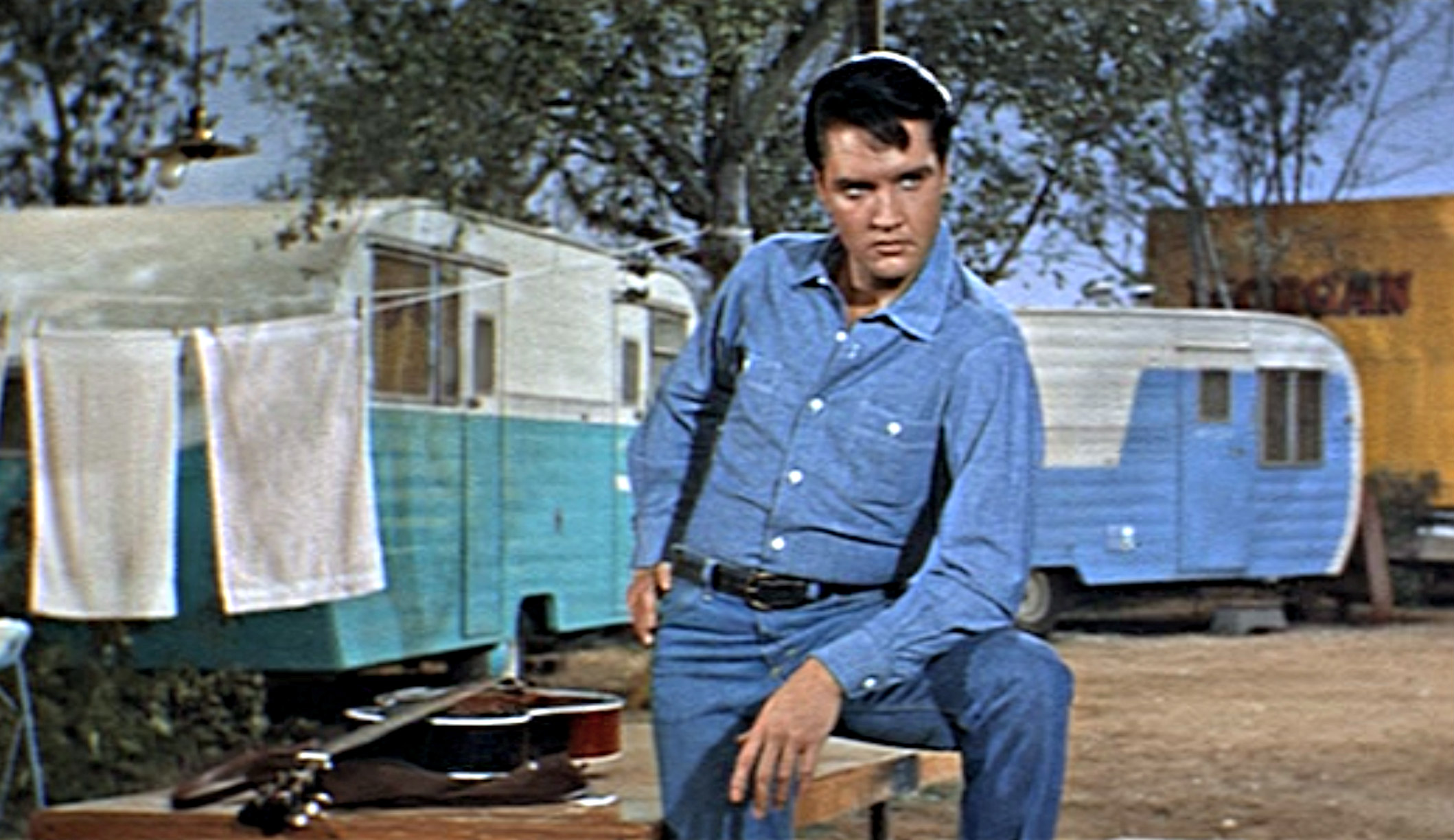
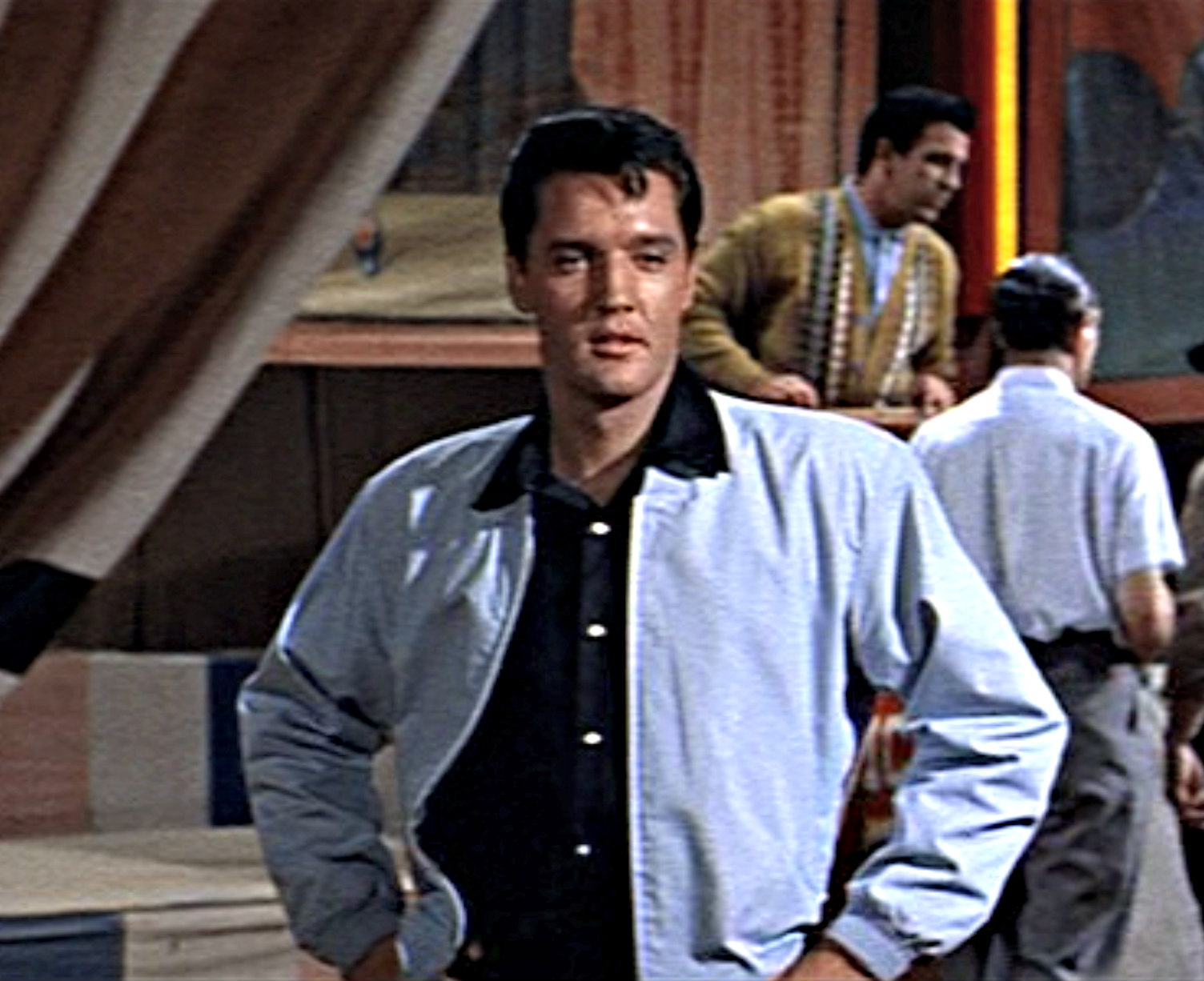
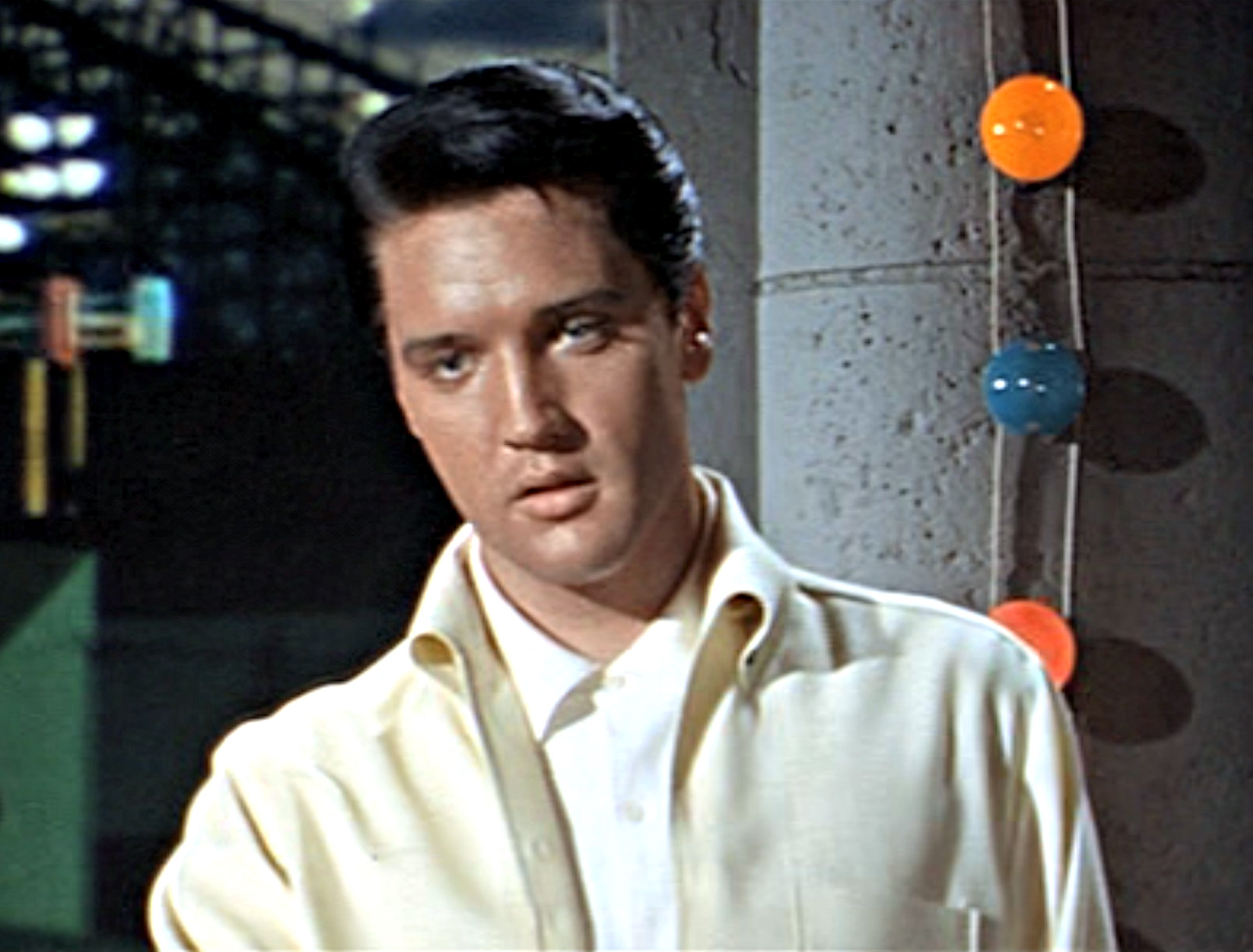
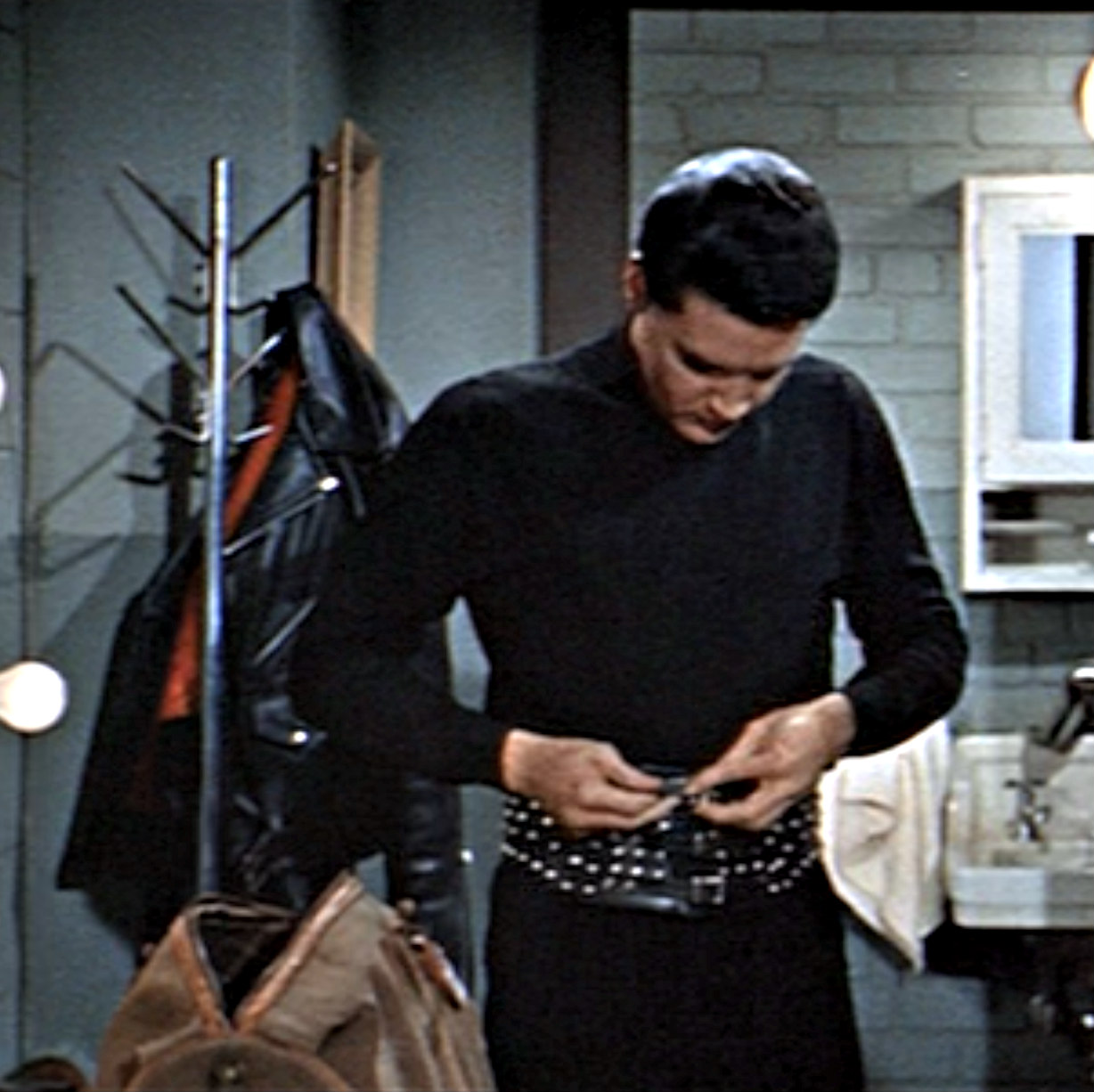
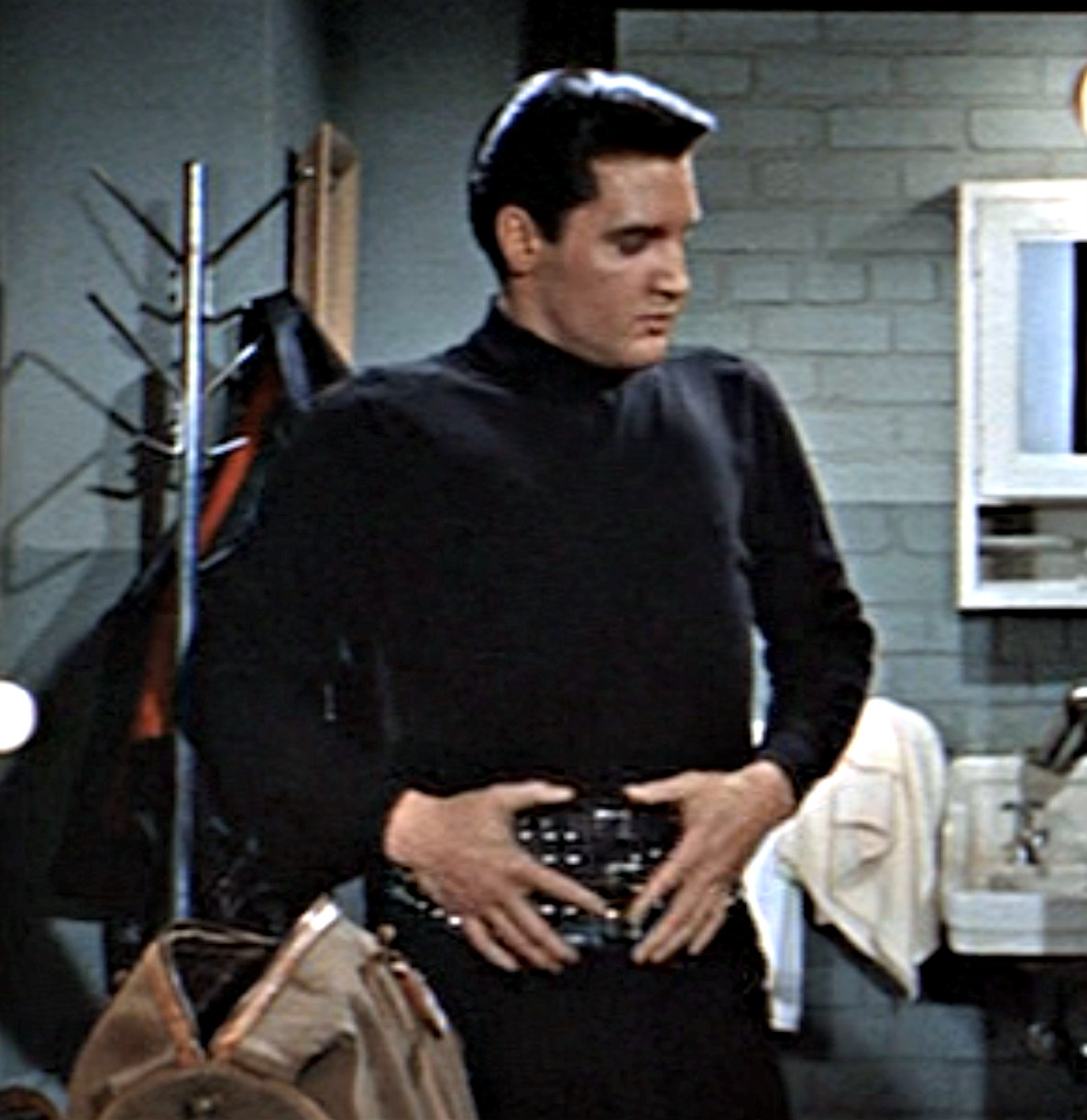
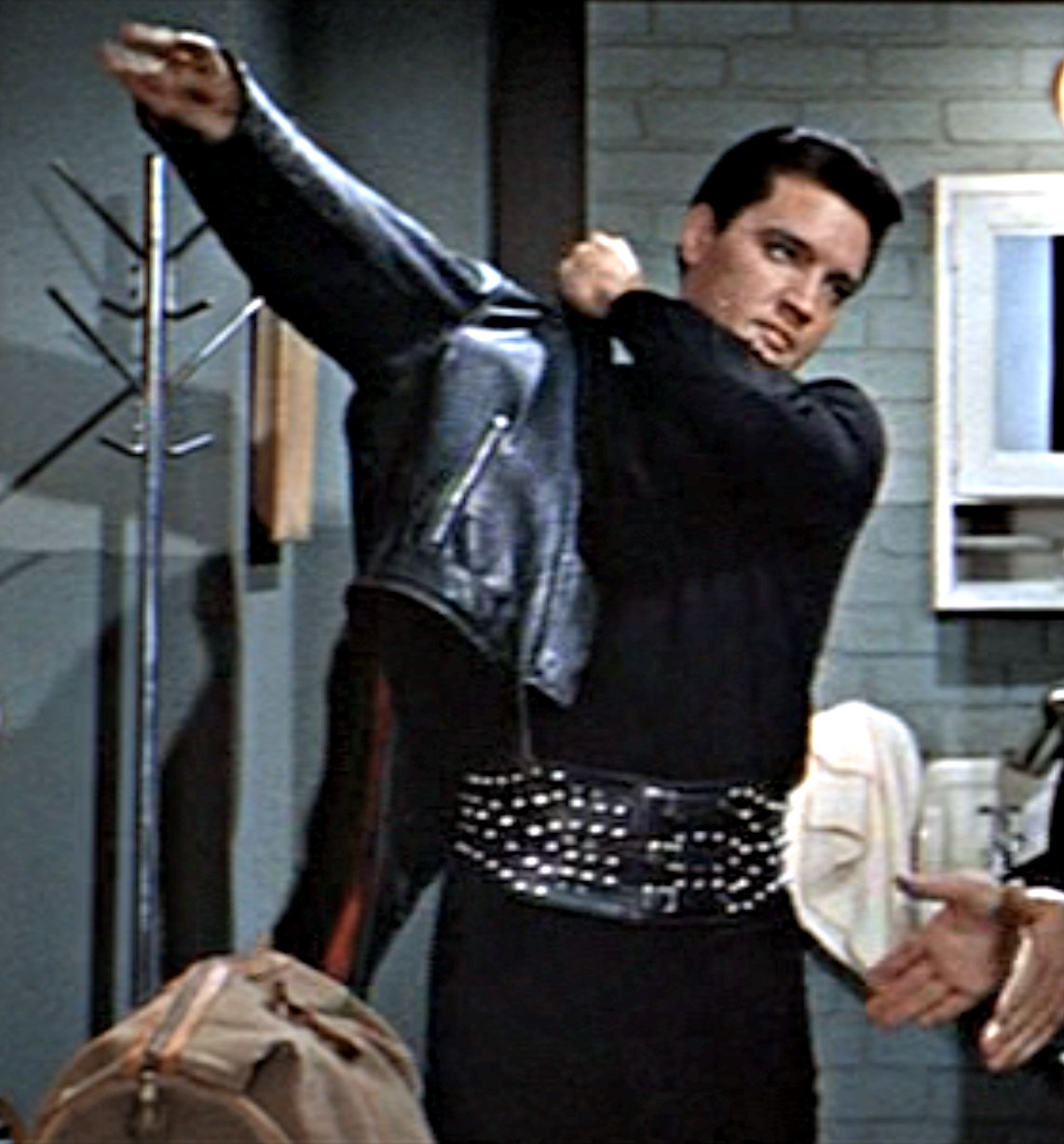
King Moment: Charlie Rogers is savage. He cares nothing for nobody. From the beginning, he just cannot see the appeal and he is disdainful of the carnival and carny life and he denigrates it sarcastically every chance he gets. Things have come to a head after Joe gets thrown in the clink. Charlie has been tempted by Harry Carver, he has scorned Estelle’s (Langdon) advances and he is heckled and coerced into the Wall of Death. He wipes out and drops the missing wallet. Vindictive Estelle rats him out and Cathy is angry he let Joe sit in prison all night and the Wall of Death guys berate Charlie for his treatment of another carny – after they’ve pressured him into the motorcycle stunt that almost kills him! I guess by this point Charlie has had it and, in a heated exchange with Maggie, unleashes a torrent of fury against the carny life and Maggie’s situation specifically.
The Music: “Roustabout”, “Poison Ivy League”, “Wheels on My Heels”, “It’s a Wonderful World”, “It’s Carnival Time”, “Carny Town”, “One Track Heart”, “Hard Knocks”, “Little Egypt”, “Big Love, Big Heartache”, “There’s a Brand New Day on the Horizon”
Quentin Tarantino has said that Roustabout contains the best soundtrack of all of Presley’s colour films and I’m inclined to agree with the proviso that Spinout‘s soundtrack is just as good or better. Considering the carnival setting, the soundtrack is not as bogged down as it could be by plot-device songs; only the obvious “It’s Carnival Time” and “Carny Town” have trouble living outside the film. In my article ranking the title tracks from King Movies, “Roustabout” came in at Number 15 and I noted that the lyrics sum up King Movies as a whole; “’til I find my place there’s no doubt I’ll be a roving roustabout”. It’s a great song and was the second choice for the title track. “I’m a Roustabout” was also recorded but not used and it was released to the public years later. “Poison Ivy League” has some clever lyrics that Charlie Rogers uses to prod the college boys sitting down front at the Tea Room and highlights “One Track Heart”, “Wheels on My Heels” and “Big Love, Big Heartache” are fine songs if slight that Presley delivers well. “It’s a Wonderful World” is a delight taken at a mid-tempo shuffle and it is not to be confused with other movie songs “What a Wonderful Life” or “Wonderful World”.
“Hard Knocks” is a robust rocker and “There’s a Brand New Day on the Horizon” is one of the better closing numbers from Elvis’ movies. “Little Egypt” makes sense and works well as a song that Charlie would sing during his show. It was written by Jerry Leiber and Mike Stoller, two men who had already written many songs that Presley recorded. It had been released by the Coasters, an act for which Leiber and Stoller provided a string of hits, in 1961. In the film, little Wilda Taylor dances as Little Egypt and can also be seen dancing in Frankie and Johnny and Harum Scarum.
Still amazes me that the soundtrack album for Roustabout went to Number One in 1964, the Year of the Beatles. The album is only 20 minutes long and features two tracks that come in at less than 80 seconds. The record seems more like a program or a souvenir that you would take home from the theatre and much less a rock album – how then to explain the fact that it topped the charts? Two reasons, I guess; Elvis and Presley. Roustabout was King’s last Number One album until Aloha from Hawaii in ’73. Screenwriter Allan Weiss once noted that to write a screenplay for an Elvis movie, “You had to make room for 12 songs, and they had to be integrated”. This film presents a good example of that integration working, allowing the songs to function well outside of the film – no mean feat.
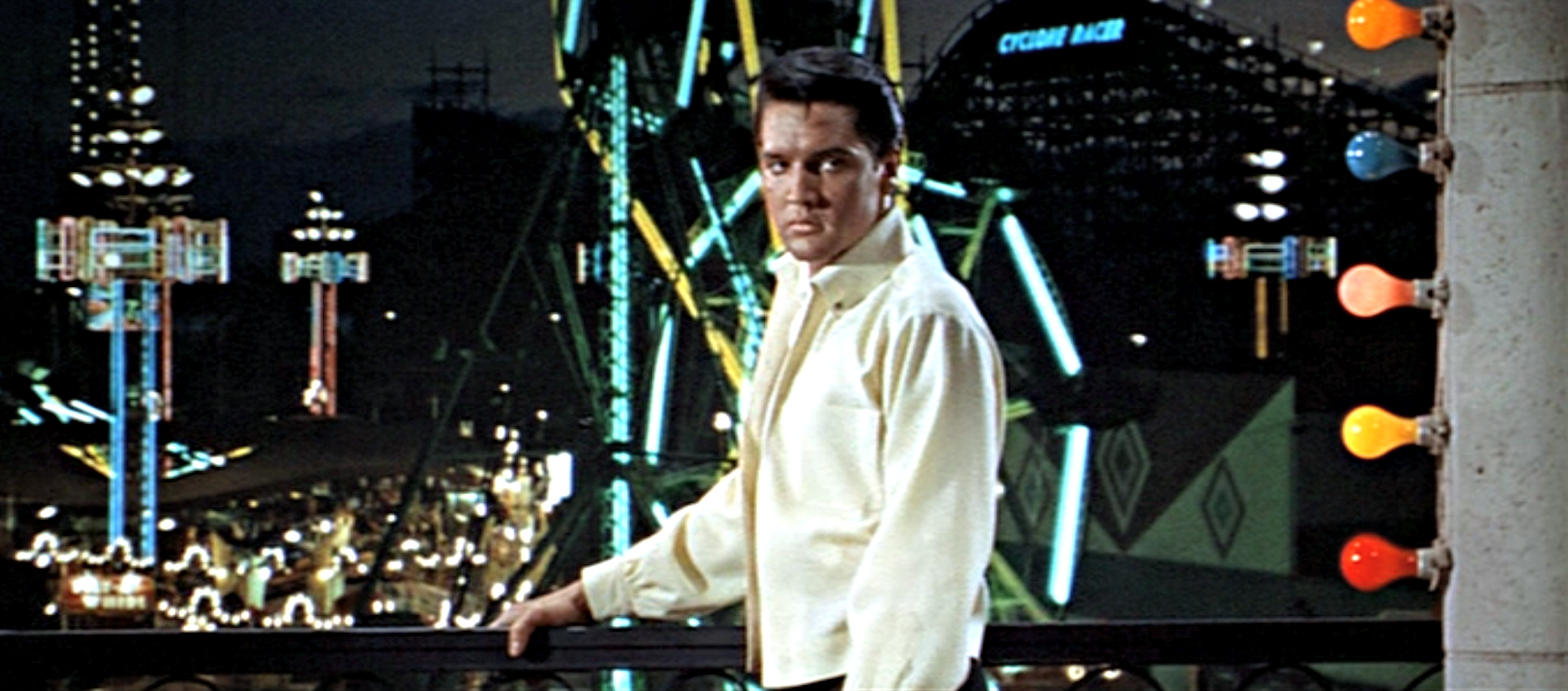
Meanwhile in Elvis World: In the fall of 1963, Elvis was winding down his relationship with Ann-Margret. He and Priscilla had a big blow out about the Swedish redhead and Elvis said he was done seeing Annie but also that he and Cilla needed to spend some time apart. As Cilla walked out, though, Rusty walked in. The assassination of John F. Kennedy looms large in American history and everyone alive at the time remembers where they were when that tragedy unfolded. Elvis and Ann-Margret spent that time together at Elvis’ house in Los Angeles. The relationship was, indeed, over though as Annie knew that to pursue her career she needed to break away from Presley and she did. Early in 1964, Elvis went into the studio and for the first time in awhile it was not to cut movie tunes but to pursue some tracks he believed in. Sadly, the previous session was supposed to yield an album and single but maddeningly for us today Colonel’s plan to focus on movie music won (or lost) the day and that album was shelved, released by FTD in 2018 as Elvis Sings Memphis, Tennessee.
But Elvis was determined to work through two great songs, “Ask Me” and “Memphis Tennessee”, the Chuck Berry cover he set much store by. The ever present cloud though hung over the recording sessions in the form of the publishing companies and the sub-par songs they were offering to Elvis. And then came the lesser material for Roustabout. This sad casting of the die where recordings were concerned spilled over into Presley’s physical appearance. Hal Wallis had written to Col. Parker about his concerns with Elvis looking “fat” and “jowly”. But sadly Elvis was only beginning the nadir of his film career though Roustabout is a fine film and one that was close to Tom Parker’s heart. First off, Parker was able to secure $45,000 in bonus payments in advance of filming – “to be split equally between Elvis and himself, with an additional $25,000 going to him as Technical Adviser”. One wonders who was paid more for making Roustabout, the king or the colonel. Anyways, the colonel – an old carny himself – was determined to make a picture that depicted the carnival milieu in the best possible light, accenting the honest and hard-working nature of the life.
Elvis Presley’s worst fears about his movie career were confirmed on the last day of shooting this film. The Las Vegas Desert News published a story citing Presley’s “help” in the success of the hi-toned Wallis production of Becket starring Peter O’Toole and Richard Burton. Screenwriter Allan Weiss had said that Wallis wanted to keep the Presley screenplays “shallow”, emphasizing lots of songs and girls for maximum receipts at the box office. Because Hal Wallis and Paramount kept Presley imprisoned in shallow films that made so much money, the producer could afford to make a prestige film like Becket. No doubt, then, that it was a demoralized Elvis Presley that entered a career valley in the spring of 1964.
The best thing about Roustabout is Presley’s performance. You may think that’s a no-brainer as the best thing about all King Movies is King. But in this particular case Elvis does what he does so well; he plays it surly. Look at maybe the best acting he ever did, as Vince Everett in Jailhouse Rock. Vince was a miserable rat and Elvis pulled that off extremely well. Charlie is much the same though perhaps the script has him trying too hard to be difficult. Even from the get go, in an exchange with Marge at the Tea House. With very little preamble, Charlie says to Marge “if you’re not tough in this world you get squashed, honey” with a shrug. Marge notes that she didn’t have any parents either and this is the script’s clumsy though expeditious way to explain who Charlie is. It’s a little over done but the fact remains; Charlie has a chip on his shoulder and King plays that well. The opening at the Tea House is actually the worst part of the film. The college boys, the references to Charlie’s motorcycle – or “sickle” – and to karate are lame and Marge causes undo trouble by calling the cops before anything has even happened, landing Charlie in jail. No matter; Joanie is gone for good 12 minutes in.
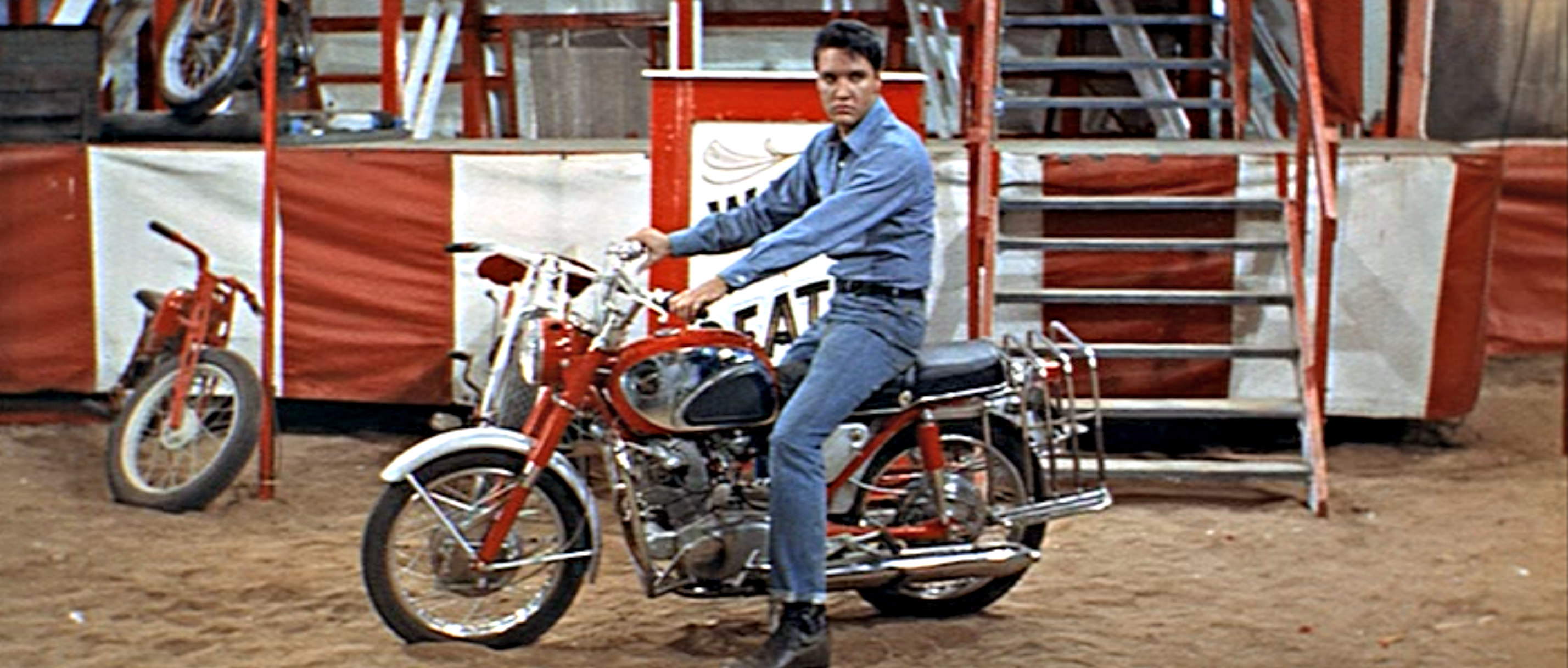
Elvis and the boys did not get along with director John Rich like they had with Norman Taurog. But Rich acquiesced when Elvis insisted on doing a fight scene himself without a stunt double. Rich feared for his professional life when Elvis was cut near the eye requiring stitches. The bandage Elvis wears from early on ostensibly from his motorcycle crash is the result of that cut. Presley did a lot of his own motorcycle riding, too as any self-respecting Elvis Person knows that King was an avid rider. And lest we forget the thing we mentioned that makes this film stand out in Presley’s oeuvre – that being Barbara Stanwyck. She really is great. She looks spectacular at 57 and her craft is still intact and this is seen not only in her interactions with the force that is Presley but also with the veterans Erickson, Buttram and Dabbs Greer.
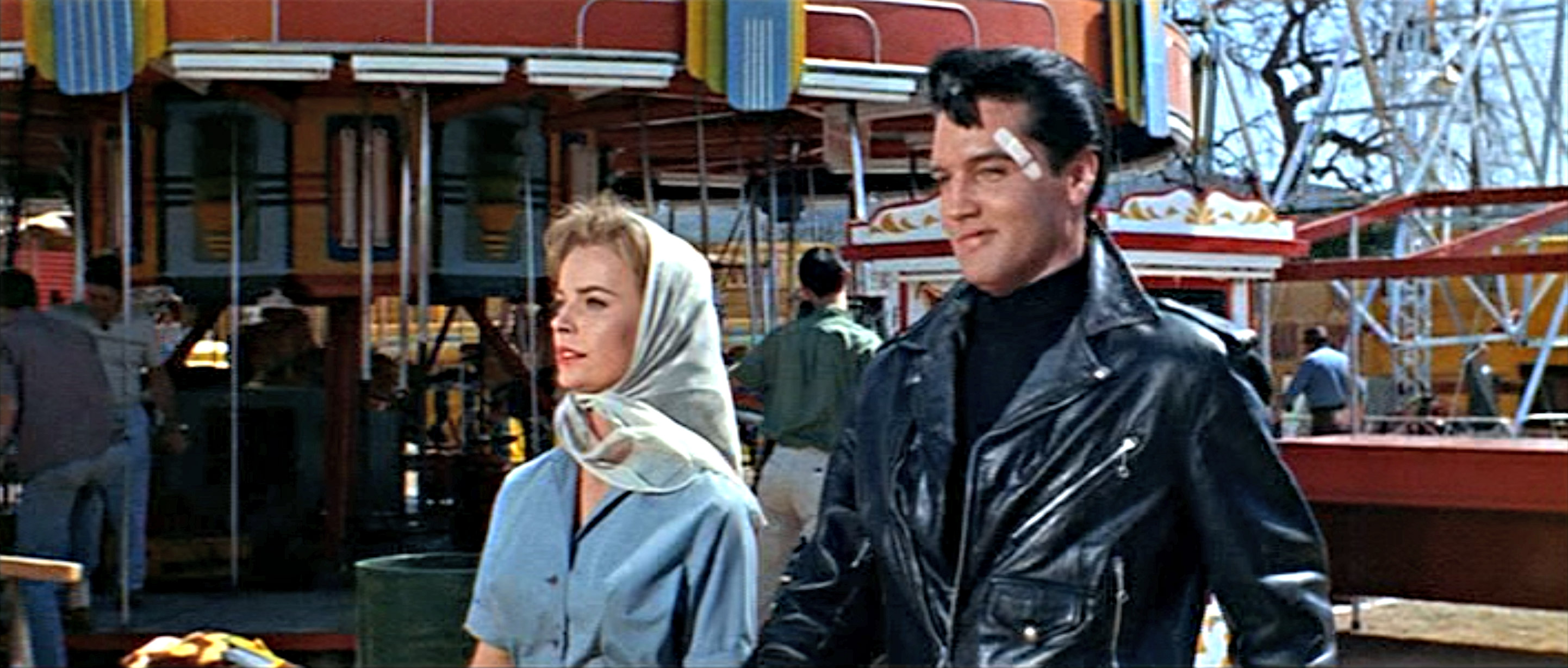
Simply put, Roustabout is the paradigm when it comes to King Movies and the character of Charlie Rogers is in a nutshell the persona he would adopt in almost all of his films. Charlie has no parents – this is a key element in all of Presley’s characters. The lack of parents indicates a dearth of authority figures that will influence his actions. With few exceptions, he is not beholden to anyone in his films, almost never married and usually without kinfolks; either it is expressly stated that they are deceased or they are simply never mentioned and never part of the screen story. We learn lots from a brief exchange between Charlie and Maggie early on. She asks him where he is from and he replies “a little swamp outside Shreveport” and when asked if he as any relatives he replies “not that I can remember”. Charlie Rogers is free and travels the countryside on his Honda 305 Superhawk with only a diaphanous destination in mind.
Charlie wants to better himself and go from wandering without possessions to bright lights and clean sheets. He is rough and tumble, ready to fight and not afraid of danger. He moves fast and loose with the women, taking his pleasure where he may. At the beginning of the film he is directionless, traveling. He leaves a pretty girl pining behind him and makes a move on the next one he sees. He has a way with a song and could easily forge a career as an entertainer. All these things make Roustabout the quintessential “Elvis movie”. Even down to the fact that it is very good in parts, bang average at times, with really good songs and forgettable songs.
It’s a fun film, though, and I put it in the second tier of King Movies; maybe not among the very best but certainly better than most. I do love the carnival theme, as well. It is a fascinating setting for a film – I remember distinctly being excited to watch the movie Carny and being so disappointed afterwards that I immediately put Roustabout on right after to give myself a proper movie about carnival life. Where I live, we have the Potato Festival every August and during this weekend the midway sets up at the baseball park. I love to walk around and watch the carnival workers and to steal glances at their living quarters. I usually have the Roustabout soundtrack in my ears as I walk – “Roustabouts roustaboutin’, there’s happy shouts, children shoutin'” – and so the movie is particularly dear to me. And when I think of all the Elvis characters I’d like to be, after Chad Gates, I always choose Charlie Rogers, free as a bird on his Honda. I can easily recommend this movie mostly because in these 101 minutes alone you can see what King Movies are all about.
Sources
- Allan Weiss, Writer on 6 Elvis Presley Movies, Dies at 90 – The Hollywood Reporter (2017)
- Careless Love: The Unmaking of Elvis Presley – Peter Guralnick (1998)

