The Colonel and the King: Tom Parker, Elvis Presley and the Partnership That Rocked the World
by Peter Guralnick (2025)
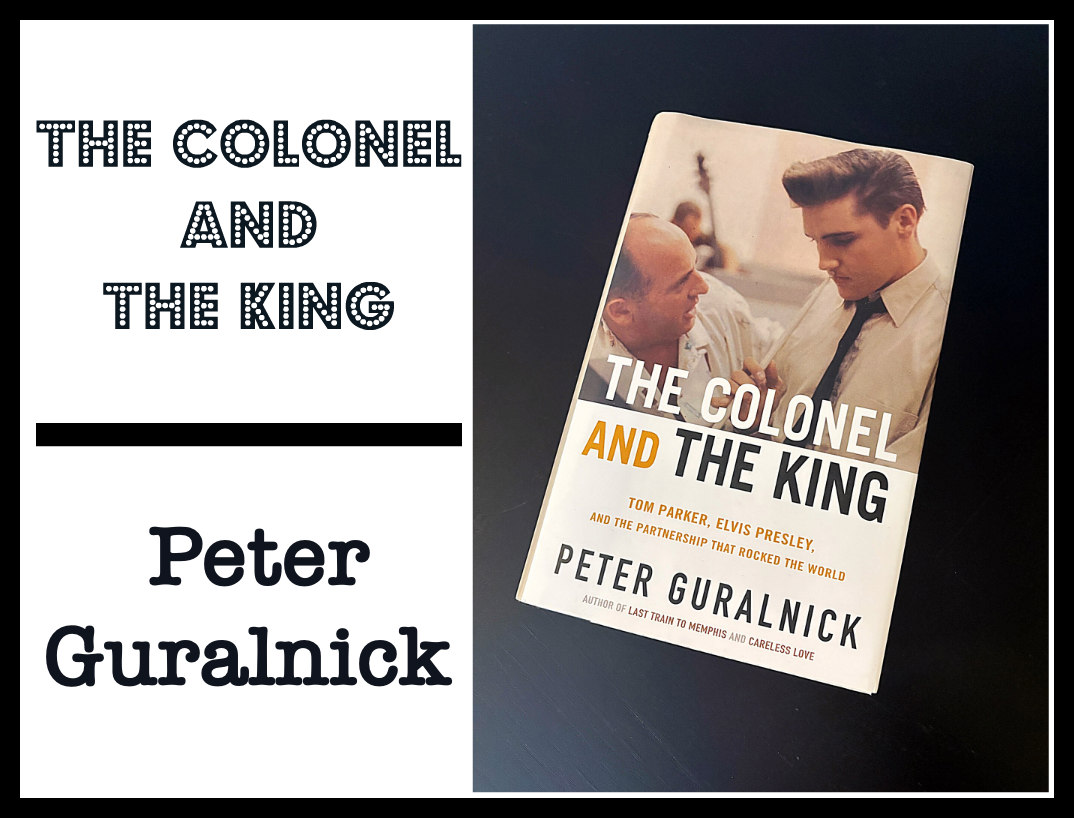
I was intrigued when I heard that Peter Guralnick had written a book on the relationship between Elvis Presley and his manager, Col. Tom Parker. One of the very oldest books in my collection is Dirk Vellenga’s groundbreaking work on Tom Parker and his Dutch origins and much more recently I read Alanna Nash’s eye-opening account on the business behind this fabled partnership. So, what more, I had to ask, could there be to know? What is Guralnick’s angle? Now, a quick note on Peter; I consider him to be Presley’s official biographer and his two-volume life story of King I take to be gospel and I have often flat-out said that if Guralnick says it, then it is so. We will need to keep this in mind as we take the long journey through analysis of this book. And what is Peter Guralnick’s “angle”? Well, he sets forth a notion that is nothing less than mind-boggling and shakes the foundation of everything we have always been told about Parker’s dealings with Presley and his attitude towards the legendary entertainer. Buckle up.
First of all it bears noting that Peter Guralnick “made the list”. The author met and knew Col. Tom Parker and the wily old carny told the writer that he had been given an approval of sorts which afforded Guralnick a certain entrée to Parker, his intimate friends and associates and, most importantly, to the colonel’s widow, Loanne Miller, with whom the author forged a relationship and to whom this book is dedicated.

Equally significant is the revelation that Peter Guralnick was one day ushered in to the sanctum in which were stored boxes and boxes filled with Col. Parker’s correspondence; letters written to Elvis, to Vernon Presley and to every one of the business associates Parker encountered during his many years navigating the record and movie business. And here we find the book’s angle; Guralnick asserts that, through the intimate and private letters that Parker wrote to various people, the reader will get a window into his mindset and his way of doing business. More importantly, what will be revealed are his thoughts and feelings towards Elvis and his career, his advocating for his artist and the myriad motivations for his various business dealings. So, right from the book’s prologue the reader is warned that they must prepare for Guralnick to present a different image of the colonel – and this can only mean that Parker’s reputation as a villain is about to be contested and perhaps even torn down. PG even openly beseeches the reader to keep an open mind saying that his own preconceptions had been challenged.
“It was a bond that would never be broken, even long after it might have been better for them both if one or the other had chosen to break away. It was as if each had come to believe that without the other they would not be complete.”
Speaking of being challenged, from the outset then the reader must brace for Col. Tom Parker to be shown in a sympathetic light, something very few Elvis People would be prepared to accept, I think. And, again, the fact that this is Peter Guralnick basically forces the reader to keep an open mind and be ready to have a plethora of assumptions – theories long thought to be simply understood – decimated.
The Colonel and the King is divided into two halves, the first being a detailed biography of Col. Tom Parker and the second is made up of many of the letters Parker wrote throughout his life and career, each with context and a few notes from Guralnick. Parker’s childhood in Holland is detailed, as is his work for country singer Gene Austin and his time spent as Eddy Arnold’s manager. PG indicates there was no chicanery and no exclusion of business partner, Hank Snow in Parker’s acquisition of the contract to manage Presley, stating that Parker believed in Presley’s talent more than anyone else and was more than willing to charge headlong and lock Elvis down in writing. It’s a long story but Canadian Snow was frozen out at this point but Guralnick seems to excuse it by saying that Col. Parker was not without loyalty but Hank did not have an eye on the future and although “it went against all his instincts” Parker had to walk away from Snow and reap the benefits of Presley’s early concert tours on his own. I wondered if there was a measure of cunning in Colonel selling Presley to RCA for $35,000 but seems not. RCA said $25k was their final offer and Colonel just went radio silent until RCA capitulated. At which point Elvis sends Parker an astounding telegram –
“Words can never tell you how my folks and I appreciate what you did for me. I have always known and now my folks are assured that you are the best and most wonderful person I could ever hope to work with. Believe me when I say I will stick with you thru thick and thin and do everything I can to uphold your faith in me. Again I say thanks and I love you like a father“
Colonel Parker was “adamant in his refusal” to become involved with the music and how Presley made it and I think that would change in the 1970s or in the case of Colonel and the record company “deciding” that what we need now is a Christmas record or a sacred album and 3 singles and so much other “business” talk. Parker may actually score points for not caving to pressure from RCA to saturate the market with Presley recordings and apparently negotiating with Hollywood executives was actually daunting for Colonel. Guralnick also adopts a more personal, “fireside” approach than he used writing his two-volume biography and this can be seen in his admission that he had been wrong about a few things when it came to Parker’s business dealing. Speaking of which, as you will see in the book, there is no question Colonel worked hard and did many deals others had never thought of. It’s just that these deals benefitted himself personally SO MUCH. Today, we all feel the artist should get it all but surely, in Elvis’ case, there would have been much fewer windfalls at all were it not for the colonel. What would Elvis have done on his own? Or with some schmo of a boring and safe manager? It would have been a different story. Just look at the careers of Little Richard or Jerry Lee Lewis. How long were they on top? Who was looking after their interests?
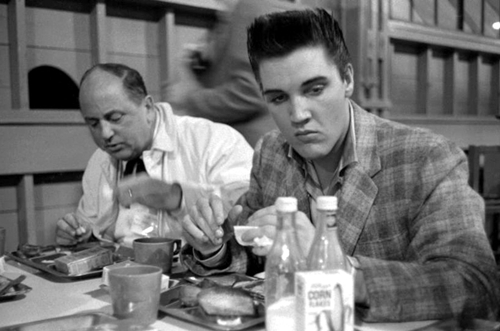
There are many talking points presented in The Colonel and the King. Something quite amazing that the correspondence confirms is that neither King NOR Colonel wanted to keep making the same movie. Colonel even says he can’t imagine a studio wanting the same old thing. So how did it happen that Elvis got trapped in the formula, making the same film over and over? At one point at the dawn of the 1960s, Colonel completed a particularly lucrative deal with the film studios and this assurance of incoming dollars allowed Elvis to “consider his worries over”. No more worries. Because of money. But what about art? Passion? Daring? Elvis exploring his music and film desires? Colonel maybe does mean well when he says that we’re all gonna be set up now, moneywise. But what kind of product are you making to secure that money?
Maddening to hear it confirmed that Colonel thought little of Elvis making quality films. If a producer had come to him asking Elvis to take a pay cut to appear in a role that might actually win him an award – a scenario we have often seen play out in Hollywood history; taking less money to appear in a prestige production – Parker would flippantly demand Presley get his usual salary and if he won an award that fee would be refunded. Very funny. No takers. “Anyway, what’s Elvis need? A couple of songs, a little story and some nice people with him” So, you see? Tom Parker thought they should keep the movies light and so he is complicit as one of the jailers who kept Presley’s film career locked up. But Guralnick in this case just states the facts and may be complicit himself in not calling out the Colonel on this. In one passage, PG seems to absolve the colonel of all blame. The author says Parker was perhaps too comfortable with the success of the movies and he was “unable to come up with” a new direction where the films were concerned and so he – and therefore his artist – took “the path of least resistance” by making more of the same films. Seems to me that Parker could easily have made it known that Elvis was looking for a different script and a different type of movie role. No doubt someone would have had an idea and Presley could have made a quality film. But we all know that if anyone had’ve, Parker never would’ve settled for less money or relinquished top billing and the idea would have died. Why? Because of money. Commerce over art. Don’t tell me Parker didn’t know what to do here – just don’t go for the buck. Simple. But that was never going to happen so, yes – Parker is at least partly to blame.
“In a strange way (Parker) felt like he had found in Elvis a true confidant. It was as if the two of them understood each other perfectly…”
Larry Geller makes an appearance in the book and this brought up some interesting thoughts, maybe not so much on Geller himself but on what his relationship with Elvis meant. Seems everything – or least a lot – changed at 4pm on April 30, 1964 when Elvis met hairdresser and student of the spiritual, Geller. The way it is described is that the colonel considered Larry a threat because his discussions about life and spiritual pursuits kept Elvis from…what? It keeps him from “being Elvis”; recording music and making movies. Larry is perceived as a threat to all of them, Parker, Vernon, the entourage, etc. because if Elvis doesn’t make money, none of them make money and that is understood. It is stated plainly that Larry is considered an “immovable object”; this is a friend of Elvis’s, who is enriching his life and showing him other avenues and opening his mind. That is an obstacle? What about Elvis’ desires and wishes? What about the validity of his pursuits? Elvis started going in a direction contrary to his “contractual obligations” but is that the most important thing in his life? Should Elvis have been left alone to pursue peace and happiness? Maybe it’s not quite that simple but it certainly bears considering, though the idea of Elvis quitting the business in the mid-60s for the sake of his mental health is, I’ll admit, far-fetched.
“For all of his hustle and bustle, for all of his bluster and outsize personality, this windmill of a man had reinvented their world, and in the process created one of his own, in which for the first time he felt truly at ease. There was not a single moment in his well-filled day that he did not enjoy, there was not a challenge he was not eager to meet, and he had an artist of whom he couldn’t be more proud.”
Now for some money talk. It is reported in the book that Col. Parker, in the mid-Sixties, was able to negotiate a new contract with RCA at a time when sales were down and Presley was reluctant to record. This new contract is fascinating. Elvis’ guaranteed income against royalties would go from $300,000 to $200,000 after four years. This is significant because of a clause in the agreement between the colonel and the king that stipulated that any income over and above such guarantees would be split 50-50; so in four years’ time, Colonel would get a raise as Elvis would surely earn more than his guarantees. Elvis was well aware of this arrangement and PG acknowledges that things may never have been the same between them after this. Interesting to note that this new contract came about at a time when Elvis began to record less as he explored the cosmos with Larry resulting in less guaranteed product and therefore less income for Elvis – and the colonel. You could not be blamed for thinking that the colonel suspected there would be less money coming in and I better increase the percentage I get of the money that DOES come in.
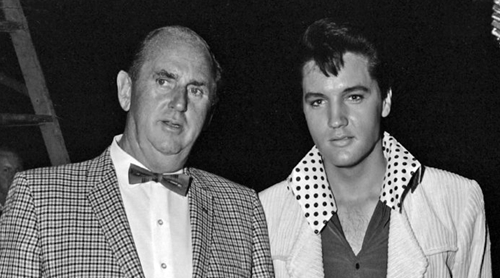
And Guralnick shares some of Colonel’s thinking on the allocation of income. As Parker explained to his wife, Loanne, long after Presley’s death, if Elvis was going to spend more than he was going to make – and if Elvis was going to persist in saying that Parker was tying him to obligations he was no longer interested in fulfilling – then there had to be some changes. As it is related in the book; “the terms of their engagement, and the nature of their business relationship would have to be recognized for what it was: a ‘joint venture’ in which each of them had their separate tasks but to which they both contributed equally. In other words, a true partnership”. Thus, the 50-50 arrangement. Peter says that, in his later conversations with Parker, the old carny felt if not guilty then misunderstood and would get almost defensive about the “misconception” that he took 50% across the board. He asserted that he only took half when it was a “joint venture”. But, shoot, what would you call a “joint venture”? Think of all of Presley’s triumphs. Which one would you say Col. Parker is 50% responsible for and deserves half the proceeds of? “Elvis [always] got his guarantee”, Parker told the author, “he got his expenses – he got his plane paid for, his hotel, his band, and anything we made over that, we split 50-50”. Explaining it like that doesn’t make me buy it. OK, so maybe Parker wasn’t a villain, exactly, but we’d have to say that he was wrong on many counts.
Moving into the Seventies, it is confirmed that Col. Parker became a gambling addict and would regularly lose a fortune at the tables in Las Vegas and it was somewhat surprising but gratifying for me when Guralnick wonders aloud if maybe the contracts made for Presley to play the showrooms in Vegas were not somewhat geared to alleviating Parker’s debts. The colonel evidently thought that selling the back catalogue back to RCA was a bad idea but Elvis and Vernon liked it because it meant money in their pockets – to replace all that Elvis was spending. But dig this; with the buyout in 1973 came a contract extension and with this and the sale of the catalogue, Elvis and the Colonel became 50-50 partners in all of their dealings, not just on “bonus” payments. All things considered, at the end of the seven-year duration of the contract, Col. Tom Parker would make $6 million and Elvis Presley would earn $4.5 million. Now, try to spin that to me or to any other Elvis Person as being OK. Colonel would defend the discrepancy by saying he was having a hard time with his artist and so he required more attention, Elvis had become super-popular and Elvis was his only client. This all warranted making MORE than his artist. In no world could this be considered acceptable.
“Their relationship represented a unique confluence of forces. He was not just a one-artist manager, he was a one-man operation, who, rather than going out and hiring expensive outside firms, provided all services himself. He took care of all publicity, marketing, and record and concert promotion, in exchange for his managerial fee, 50 percent of which…went right back into Elvis’ business. And that may well have been true.”
And now a word about song publishing. Colonel always maintained that publishing was where the money was. If you have an income from songs that live on in one way or another, that is a guarantee for years to come which is sound thinking. Where it gets in the way of art, of course, is to violently insist on getting a piece of the publishing for every single last song Elvis touched, which as we know would have made it impossible for him to have recorded some of his most enduring songs. Look at the movie soundtracks where only the songs they held the publishing on were used. Income is fine but to fight with Jerry Reed or with Chips Moman to gain all the publishing dollars (and thus rob the songwriter himself) or we don’t do this wonderful song, well, that’s where the line is crossed. That is lunacy. So, in the end Elvis maybe didn’t record the best songs from the best sources which is no doubt what he would have wanted. He was stuck with choosing the songs from “our” sources. An example is seen in a letter Parker wrote to Presley in which he describes his way of doing business when handling soundtrack recordings. He says to Elvis that he tells people “Elvis picks his own songs; if he likes them or a certain song than he tells me and I’ll get him the best deal I can with (the publishers)”. Why does it have to be “the best deal”? Why can’t it just be? I really love this song and I want to record it. Period.
Lots more about the movies comes out in Book Two, the letters section. In a letter to the chief of publicity at 20th Century-Fox, Colonel actually says that some movie songs may be pretty and fit the action of the picture “but they do not always make it possible for record releases that will sell”. This is amazing to me. So, Parker actually knew that “Song of the Shrimp” fit the action of Girls! Girls! Girls! but didn’t really suit a “record release”. This is something I’ve been saying for years adding that these “plot device songs” should never have been put on the records! So, why were they?! Guralnick makes another good point that I had never considered. Colonel’s negotiations with the studios getting so much money for Elvis resulted in there being little left over for the production values that went into making a good picture. At one point, Parker tells a movie producer in a letter that he really should take some more time to do a better job. Interesting that he wants the picture to be better even though he doesn’t leave any money for that; it all goes to Elvis. How can they “make a better picture” when 80% of the budget goes to his artist?
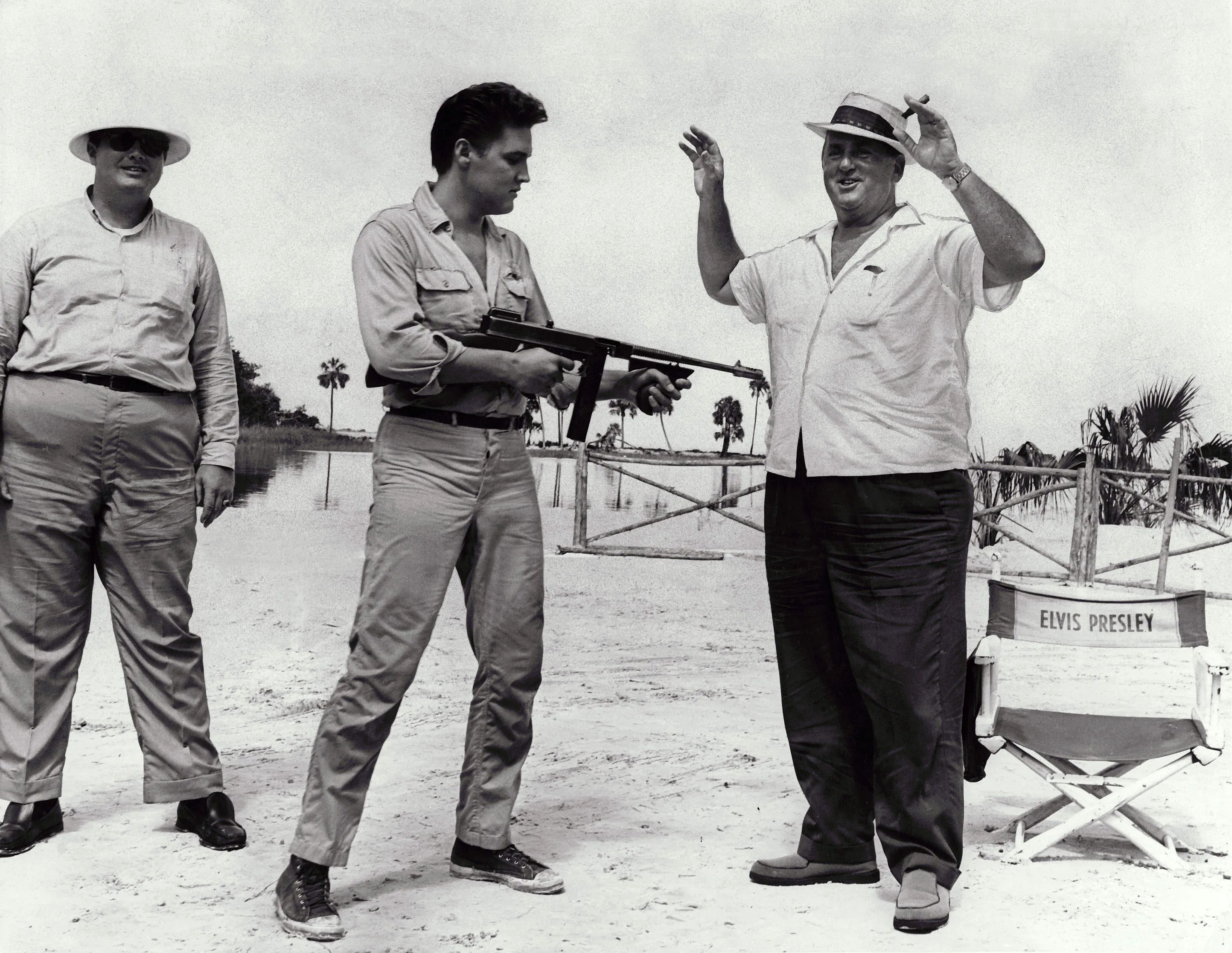
Fascinating to read the letters Tom Parker wrote to Elvis and Vernon in 1973 when artist and manager came to a crossroads and Presley expressed a desire to terminate their relationship. These termination papers really bring something to light; Parker was very thorough explaining all that must be done to sever the relationship and, with all that Colonel was telling Elvis and Vernon to do in relation to signing the papers for the termination, imagine Vernon and Elvis trying to navigate such moves on their own. Think about how every last little minor piece of business since 1955 had been handled by the colonel. And now Elvis and Vernon are being asked to do something without him; they’re being asked to prep for the separation. That alone must’ve been daunting. And the colonel likely would’ve known this and his wording can be seen as almost intimidating.
And for the first time, I really got to thinking about Barbara Streisand approaching Elvis to appear in her remake of A Star is Born and Colonel’s letters shed some light on this and – yet again – there is much to discuss. Whether or not Elvis actually wanted to make the film is another matter. I don’t think any lucid thinking person can really side with the colonel on his sabotaging the deal. His being “furious that Streisand should have approached his artist so casually” is absolutely ridiculous talk. And then he is tone deaf enough to talk about “hold(ing) out for our regular terms as we have in the past”. This is a totally different scenario than “the past” and we can all see clearly today that this is the quintessential comeback situation. Elvis made a certain type of movie for years then he stopped when that had run it’s course. To have come back in a vehicle like this, whether it worked or didn’t, would’ve been a huge story, historically. But Tom Parker apparently couldn’t see that. Instead he talks about Elvis getting “the best deal possible” like it’s all about negotiations and terms? Money again? What about the historical significance of Elvis making this movie? What about “art”? Colonel says Elvis told him “how strongly he feels about doing” the film but he doesn’t want Elvis’ enthusiasm to result in a “cheap deal”. It’s madness! Why is it all about “the deal”? What about the enthusiasm? And look at how long the list of terms is, as shared in the book. Isn’t Streisand doing Presley a favour here? Isn’t she coming up with an inspired bit of casting here? All the ingredients were in place for history to be made. It’s funny, you hear so much in today’s world of guys just accepting scale to appear in a movie because of its appeal, because of the director or because of where they find themselves in their career. Colonel would have no idea what that is all about. Sounds like Elvis was ready and he could easily have said he’d do it for nothing, I’m just so happy to have this chance. I’ll admit it, though – Elvis may not have been able to pull off the role and that would have been devastating. Maybe Colonel knew that.
The correspondence from the last couple years of Presley’s life displays a Col. Tom Parker who clearly sees the end coming and he cannot control, inspire or manage his artist any longer. And so, in the end, I will say that I will cut the colonel some slack to the extent that he was dealing with a person – Elvis Presley in 1976-77 – that you really couldn’t deal with. A man who was at the end of his tether. He was a person the likes of which the world had never known trapped in a business and a personal situation that nobody could’ve foreseen in 1956. We always say Elvis World is unique and that’s mostly because of Elvis and the way he was. What man alive could’ve handled him and negotiated with him and made deals on his behalf when he was like he was at the end?
Consider this; many of us Elvis People are so fond of saying that there was nobody like Elvis and that he is totally unique. Would that not warrant a totally unique managerial relationship?
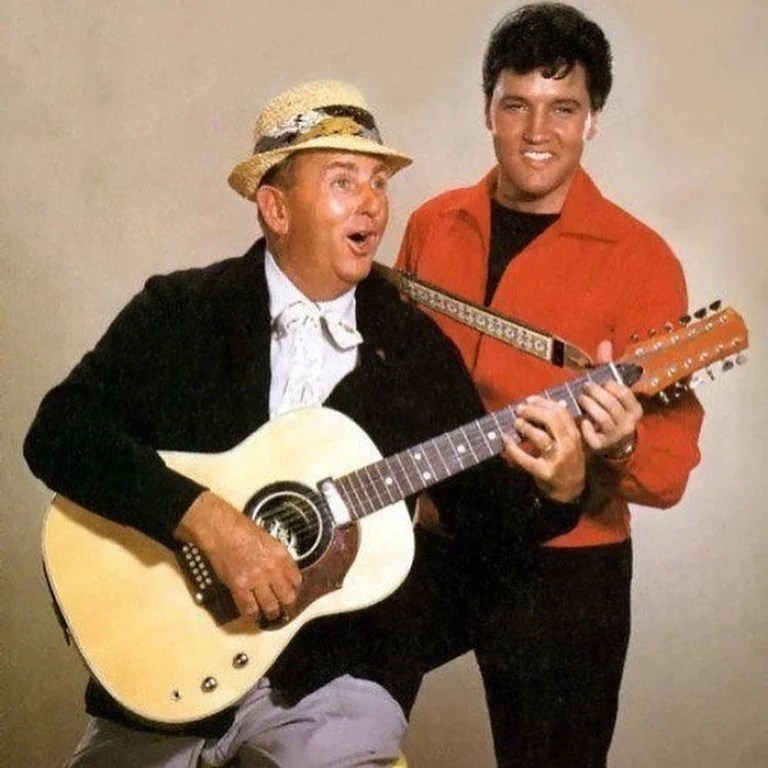
Some little time is spent illuminating the fact that Parker’s Dutch family recognized him in a picture in a magazine and this caused them to re-establish contact with their long-lost brother and uncle. Parker’s brother flew to LA and met with Colonel and Tom took his brother to meet his artist. Guralnick surmises that, though he was famous for never being able to keep a secret, Elvis knew Parker was Dutch and never said a word to anyone. And it seems Parker was not opposed to Elvis touring internationally – until his brother came to visit him and his Dutch origins were revealed. Afterwards, there was never any talk of a world tour. It seems to me that, when he felt he was impervious and no one knew who he was, touring globally was fine. But after his heritage became known, out of perhaps a sense of caution, leaving the country was out. Ponder that one amongst yourselves.
The author also notes more than once that a world tour did not concern the colonel in the early days and he even talked at length with a contact in Australia about taking King Down Under. In the Seventies when the subject came up again, there was some doubt that Elvis really even wanted to tour the world but the clincher might’ve had to do with Elvis’ prescription drug intake. How on earth could Presley or his entourage have travelled overseas and gone through customs carrying the amount of pills Presley would have wanted to have with hm? Again – there is much for the reader to consider here, much that flies in the face of what we have thought of Col. Tom Parker.
“Without a doubt you are by far the greatest artist I have ever known, and can be even greater if you just believe in yourself half as much as I believe in you.”
– Colonel in a letter to Elvis, 1973
It should come as no surprise that there are nuggets galore; to his credit, Guralnick regularly credits the work of Dirk Vellenga and Alanna Nash in the text, many agreements between Colonel/Elvis and RCA were not on paper because of the most-favoured-nation clause, Colonel’s financial advice to Elvis and Vernon often went unheeded, seems Colonel’s first wife, Marie, was not a very nice person and Tom took up with Loanne long before Marie died, Guralnick mentions obliquely the Baz Luhrmann biopic and only in the notes when discussing the “’68 Comeback Special” and the fact that Parker was not as opposed to the format of the show as seen in that film, though he did “demand” that a Christmas song be included not for any artistic reason, of course, but because of the “tremendous amount of promotion” he had done tying the special to the Yuletide season, speaking of the Notes section, this is the first time I’ve seen a book with the notes not in the book but available with a QR code that allows you to read the notes in a browser, Loanne Parker told the author that, at one point after a poor 1976 performance, the colonel was brought to tears and wanted the old Elvis back, Colonel was dressed like a boor at Elvis’ funeral because he thought Elvis wouldn’t want him putting on any airs, after Presley was gone, Colonel “was determined to do everything in his power to protect Vernon and Lisa Marie” (not sure about that), Tom Parker was officially embraced by the estate during Elvis Week in January of 1988 during which he was still arguing with Sam Phillips over the sale of Elvis’ contract, and, finally, in one letter, Colonel is discussing his design of an album cover (like, really? Parker designs the cover?) but – again, instead of art – he uses words like “merchandise”, “sales” and “gimmick”.
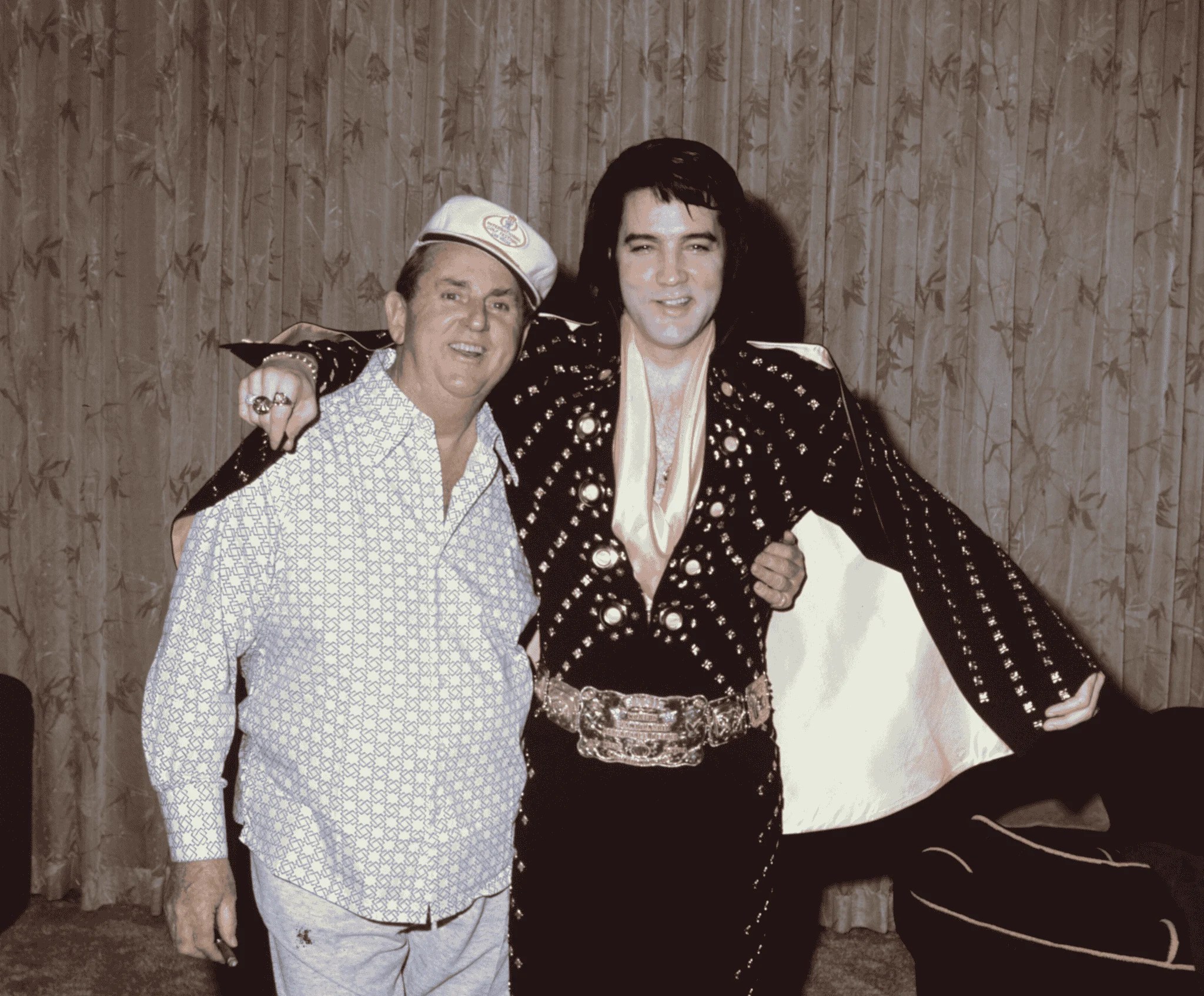
Much of the content of the first half of The Colonel and the King totally contradicts much of the assumptions about Parker and this is hard stuff to comprehend. There are many, many passages, even in the earliest stages of the book, that will cause the reader to wonder if what they have been told for years about the colonel hasn’t been slanted and tainted by some unnamed, unseen forces or for reasons that I wonder if any of us today even understands anymore. This will prove very hard for many readers to contend with, the idea that perhaps Colonel Tom Parker has been misrepresented all these years. That can be seen as shaking the very foundations of your impressions of Elvis World, his career path, RCA’s role, and the colonel’s supposed hampering and cheapening of one of the most majestic careers in entertainment history. This is the main thing you’ll get from this book. The daunting realization “can it be?” And the fact that it is Peter Guralnick – somebody whose word we have taken as gospel for years – adds to this feeling that can only be described as unsettling.
But I have tried here to offer some cross-examinations of Colonel’s machinations particularly where I felt Peter Guralnick could have provided some further insights or discussions or offered rebuttals. I often felt Guralnick had gone too easy on Parker. I hoped to address these missed opportunities with this extensive discussion. A book of this size does present many talking points, each with a lot to unpack. In the end, though, we Elvis People are left with no choice other than to reconsider, baby, all we have been told about Col. Tom Parker.


When Miss Dolly Parton passed last month, I was reminded of her story behind the never-happened Elvis remake of “I Will Always Love You.” Dolly to her benefit, would not share her publishing rights which meant we would never hear Elvis’ version (fine with me; one “I Will Always . . .” is enough for me). But your post leaves me intrigued, not just for what Elvis would have done with this song, but maybe what he could have accomplished without the Colonel riding shotgun? I’d love to hear the imaginary Gregg Allman or Don Henley song written just for Elvis. How about you?
Oh, man, I’m tellinya… It was actually Being Elvis, the book I read earlier this year, that got me thinking about the people that would have jumped at the chance to write for Elvis. Just listen to Bob Dylan speak about how much it meant to him to have Elvis simply cover one of his songs. This surely is one of the larger missed opportunities of Elvis World and we could come up with so many names of people who could’ve written for the king. I think of Jerry Reed. And, yes, the quiet start and big finish of the Dolly song would’ve suited Presley down to the ground. Think about the combine in Nashville loaded with songwriters who churned out excellent songs for all the country stars of the 70s – Elvis could have gotten in on that, too. But, no.
It remains though that Elvis Presley is what he is today and was what he was yesterday – with Parker as his manager. It would certainly have been different but in what ways exactly we’ll never know.
Thanks for reading and your comment!