Dispatches from the Pursuit of This Vintage Life

The CDs I buy at thrift stores or garage sales fall into a couple of different categories. Some I am thrilled to have found and can’t wait to get them home, clean them up and put them on the shelves forever. Others simply interest me because I want to understand an artist or an album, add it to my music vocabulary. There’s also the chance that something I take a flyer on will blow me away.
The case we’re talking about today was even better in the fact that the CD was free! I have talked in these pages of the four boxes of physical media that my cousin gifted me, boxes loaded with mostly John Wayne movies. But there was one whole box of CDs and some intrigued me. Most fell under the heading laid out above; I’m curious and I’d like to listen to this CD. One was a compilation from pianist and vocalist Ronnie Milsap. Funny but I’ve always known of Ronnie Milsap and liked him and his music though I never really explored him. I liked that he did session work for Chips Moman in Memphis and was there to play piano on some Elvis Presley dates in 1969. Additionally, Milsap is part of my Memories of ’83; in later life, I realize that I remember a lot of songs popular in 1983 as this must be the first year I really began to listen to Top 40 radio. Ronnie had a big hit that year that I always remember liking.
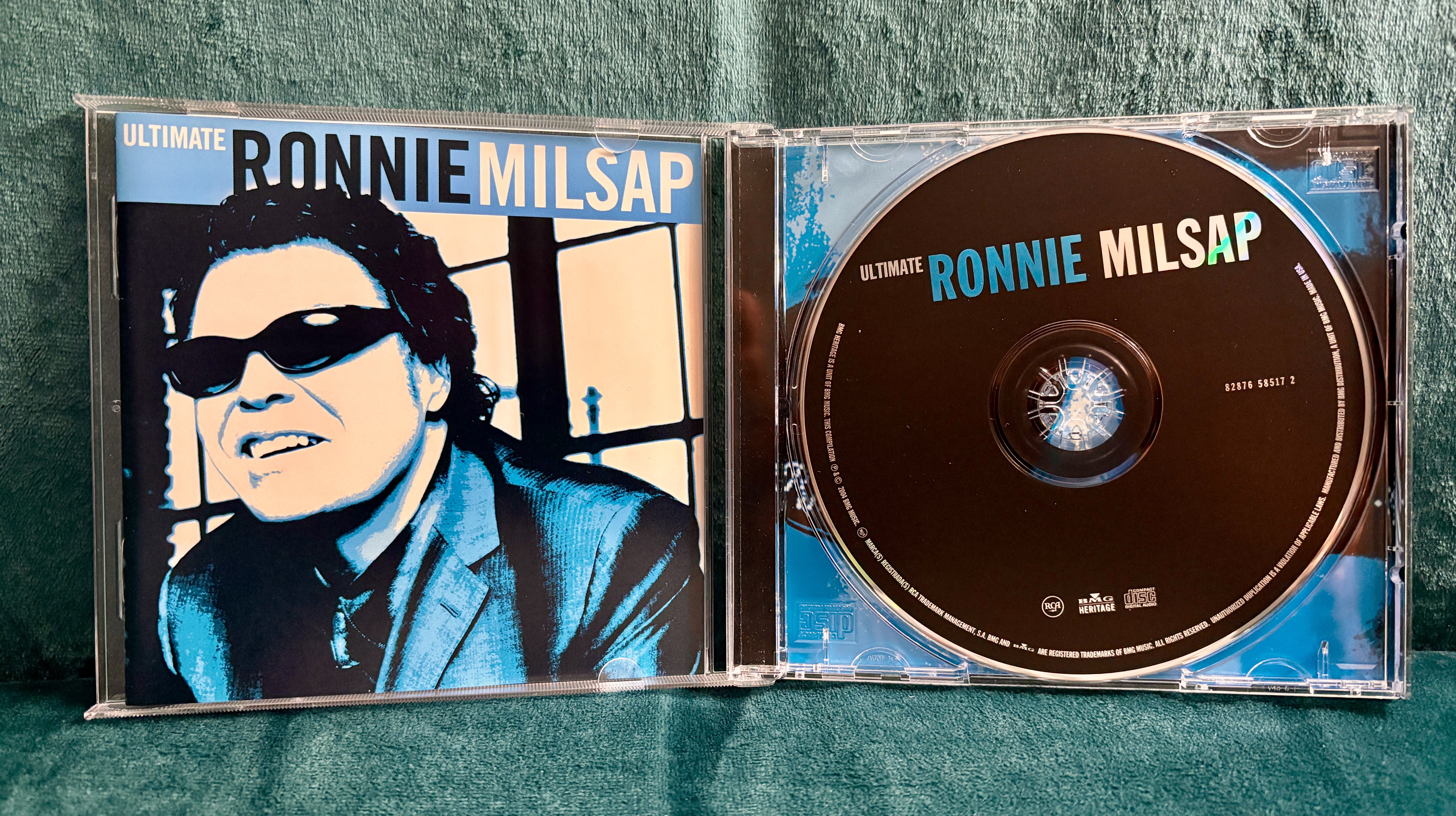
Ronnie was born in North Carolina in 1943 almost completely blind. When he was 14, Ronnie went to study classical music at a school for the blind. The school was dormitory-style and one day a “houseparent” slapped him, causing him to lose what little sight he had in his left eye. Can you believe that? In ’65 when he was 22, Milsap met a young lady named Joyce and they were soon married – and stayed that way for 56 years until Joyce died in 2021. As we mentioned, Ron went to work for Chips at American Sound in Memphis and can be heard on King’s “Don’t Cry Daddy” and “Kentucky Rain”.
Ronnie was singing at the Whiskey on Sunset when who should roll in but Charley Pride who was impressed by Ronnie. Charley told Ron that he should change his sound from rock to country and so Milsap went to see Pride’s manager in Nashville. Interesting to me to think that an artist could decide, for business and career reasons, to change the type of music he plays. But Ronnie went to Nashville and made the change and he began one of the most successful careers in country music history.
In the 12 years between 1973 and 1985, Ronnie released 15 albums. Every one of them reached the Top Ten of the US Country music charts with two of them reaching Number One. And then there’s the singles. Between 1974 and 1991 – 17 years in three different decades that saw tastes change regularly – Milsap issued 48 country singles. 35 of them – thirty-five – went to Number One. 35 Number One singles on the country charts; only George Strait (44), Conway Twitty (36) and Merle Haggard (36) have had more. During those years, he never had a single chart lower than 6. Every single he released for 17 years made it to the Top Ten. A 17-year run spent in the upper echelon of country music.
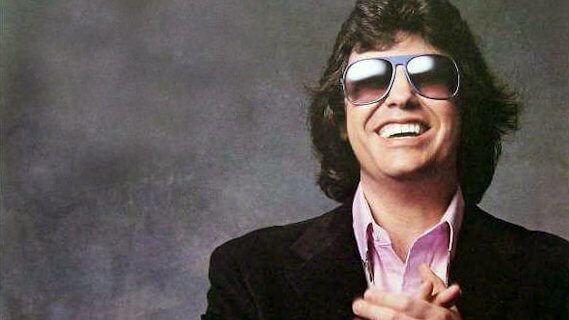
Ronnie Milsap was never really what I would call a sawdust country and western artist. He found his success as a crossover artist, a country music singer who’s songs incorporated elements of pop and rock & roll. He scored six US Top 40 Pop hits including “(There’s) No Gettin’ Over Me” that hit Number 5 in 1981, his highest placing on that chart. He also scored 7 Top Ten hits on the US Adult Contemporary listings, testament to his smooth stylings and his way with country music.
Three songs I wanted to focus on, two that really struck me when listening to this CD and one I grew up with. “Smoky Mountain Rain” was co-written by Rhonda Fleming; no, not that Rhonda Fleming. Rhonda Kye Fleming went by Kye Fleming and is a country music singer and writer from Pensacola who was heavily influenced by Canadian legend Joni Mitchell. In 1974, she was singing at a hotel lounge in Tulsa, the same hotel where Elvis Presley’s band was staying as King was doing a show there. The fellas were impressed with Kye and Jerry Scheff told her to come down to Nashville where he could introduce her to some publishers. She was hired as a staff writer and paired with Dennis Morgan – no, not that Dennis Morgan. The two would meet in an office to write songs. That was their job. This fascinates me. I guess I’ve always thought of songs being written by people inspired to conjure them up in the middle of the night sitting on the edge of their beds with acoustic guitars. But it’s a business, too, and Kye and Dennis would “punch in” and work together creating music.
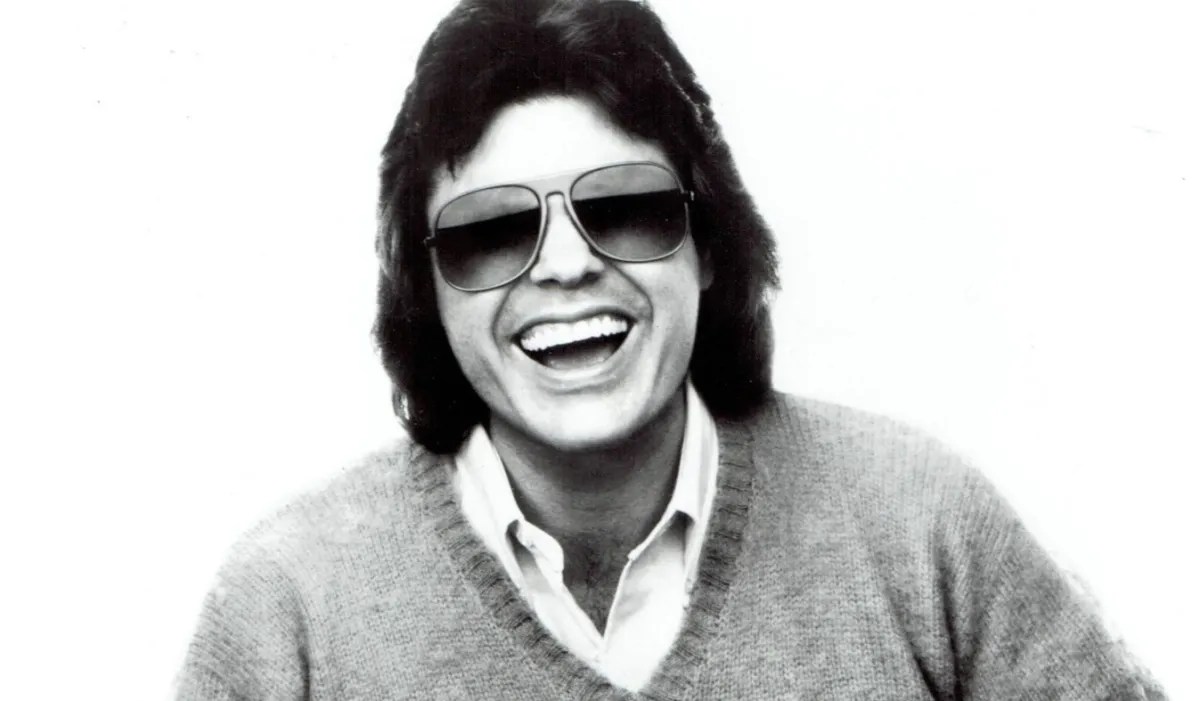
One day, the boss requested a song about the mountains in North Carolina where Ronnie Milsap was born. Fleming and Morgan talked about what it feels like to be in that region and came up with “Smoky Mountain Rain”. The song went to Number One on the US Country and Adult Contemporary charts and later Rolling Stone counted it among the 100 Greatest Country Songs of All Time. The song is a delight and does indeed remind you of every time you have driven through any mountains from Virginia to Tennessee and the Carolinas. The creation of the song really interested me, though and it bears noting that Ronnie Milsap was not a songwriter. This is always risky for an artist as they will have to rely on others to write songs or hope to find appropriate songs to sing. But country music seems different. That genre seems to have a factory system of songwriters who’s sole job it is to provide songs for individual artists. “Smoky” is a case of writing for hire – again, not inspiration striking after a chance encounter with a hobo in an alley or purging the sad memories of your parents’ divorce or stating your take on current issues – this was a made-to-order song and the Music City Apparatus kept Ronnie and others stocked with songs to sing. I was impressed with Kye Fleming and her story and very impressed with “Smoky Mountain Rain”. The singer regrets his choices and is heading back home to claim the girl he loves. But she’s gone. I love to sing along with the chorus; a sprightly chorus considering the sad words. “Smoky mountain rain keeps on fallin’. I keep on callin’ her name…”
From the same songwriting team came “I Wouldn’t Have Missed it for the World”, another Number One Country song and one that hit Number 20 on the Hot 100 chart and 3 Adult Contemporary. This song is all about the sad and wistful story it tells. Stories like this are the reason I love country music – but also why it makes me so blue. It is a song about gratitude despite heartache, about the acknowledgment that something pure and sweet and fine has happened but it has ended. The singer, though, cannot feel devastation because of what was gained through the experience. It’s a tale of time and seasons. Was a time that we were together, that we were in sync, that we meshed so perfectly with each other. The people that we were when we met were simply so right for each other. Perhaps we always knew, though, that it would be fleeting. That it wouldn’t last forever.
"Our paths may never cross again
Maybe my heart will never mend
But I'm glad for all the good times
Cause you've brought me so much sunshine
And love was the best it's ever been"
There is something noble in the singer’s lack of bitterness or self-pity. He recognizes the exalted place he was elevated to by this relationship and cannot lament its denouement. But that doesn’t mean there is not a distinctly bittersweet feeling. The singer’s feeling is such though that he wishes his departed all the best and states that he has no regrets.
"You've got your dreams to follow
But if I had the chance tomorrow
You know I'd do it all again"
It’s a hallmark of the country song to take a simple statement or a common phrase that is timeless and well-used and add a certain significance to it. Here the title is something one might say when they feel only joy and even a good fortune at having made a plan or a trip happen. Here it sounds like a sad sigh, sorrow kept at bay by a resilient gratitude.
"I wouldn't have missed it for the world
Wouldn't have missed loving you, girl
You've made my whole life worthwhile
With your smile
I wouldn't trade one memory
'Cause you mean too much to me
Even though I lost you, girl
I wouldn't have missed it for the world"
“Even though I lost you, girl” That lyric killed me when I first heard it. That is a courageous couplet; this thing is over and that hurts me. I should be wallowing, I should be crushed but I can’t be sad. I’m so glad for what we had and I’ll cherish the memory. And I wouldn’t change a thing. I wouldn’t have missed it for the world. Dang… So fun to sing along to this one – unless you bust out crying.
I should also mention that, in 1981, Fleming and Morgan also provided Barbara Mandrell with the excellent “I Was Country When Country Wasn’t Cool”, a story about “Country music may be hip now because of Urban Cowboy but I’m not a bandwagon jumper. I’ve been here all along. I was country when country wasn’t cool”. It’s a great lyric.
One of the many songs I hold in my memories of childhood is Ronnie’s “Stranger in My House”. Another player from Pennsylvania, Mike Reid spent 5 seasons as a defensive tackle for the Cincinnati Bengals; he was All-Pro in ’72. From there – obviously! – he went into songwriting. Never mind – the guy was also a symphony pianist. In 1980, he moved to Nashville and was mentored by Larry Gatlin and, later, he released three albums of his own, the first spawning a Number One song on the Country charts. Oh, and by the by, Mike Reid, the former All-Pro football player, won the Grammy for Best Country Song for this tune. Quite a guy. Anyways, in 1983, Ronnie Milsap released Mike’s composition “Stranger in My House”, the song of Ronnie’s I distinctly remember hearing on the radio when it was new.
For this dramatic track, Milsap pivots from the piano to one of my favourite sounds, the electric piano or Fender Rhodes and the riff he employs to start the song and plays throughout is very cool. Another great chorus that invites you to sing along. “Stranger in My House” was a rare single of Ronnie’s that did not top the country charts – and it seems it was Jimmy Page’s fault. The song features a vigorous guitar solo by one Bruce Dees, a prolific session man who appeared extensively on country recordings by many and varied artists from the Seventies and into the Nineties. Bruce’s guitar solo was so “searing” that a country station in Denver refused to play the song. Dimwitted personnel at the station thought the solo made the song sound like Led Zeppelin and they wouldn’t spin it! This lack of airplay, they say, likely kept the song from reaching the top spot. If you’re a fan of Zeppelin as I am, you’ll know that Bruce Dees ain’t no Jimmy Page and “Stranger in My House” don’t sound like Zeppelin. The solo does have some meat, though, I guess. And it’s a great song.
Ronnie Milsap has suffered some hardships. As we’ve noted, he lost his wife of 56 years to leukemia in 2021. What’s worse, the couple lost their only child when he died on his houseboat at age 49 in 2019; Ronnie’s grandson found his father’s body. But let’s end on a good note. Ronnie Milsap is a true country music legend and, by all accounts, a fine fella and well liked and that may be most important of all. But let’s salute the incredible career he had – starting with a stop in Elvis World – and his many fine songs. Check him out. Download him or stream him. You won’t buy the CD. Will you?
My work here is done. On to the next town, the next yard sale, the next thrift store. Always searching, the journey will never end. The stories in music’s history aren’t going to find themselves so, it is I who must explore. This is Gary Wells reporting from a lonely street…
 SoulRide
I saw Ronnie Milsap when he opened for Hank Jr. Probably 25 years ago. He was having such a great time, he didn’t want to leave the stage. His handler tried to lead him off the stage and he threw his arm off while he basked in applause then sang another song. Good writeup!
I love when you provide eyewitness accounts! Yeah, I feel like Ronnie is a good guy. Would’ve been a great show, I guess, Ronnie and Hank Jr.
Didn’t know that about Mike Reid. What a fascinating man!
Yeah, he sure is. I feel like the world of country music is filled with interesting songwriter stories like his.