We’ve talked about winter movies and autumn movies here at Your Home for Vintage Leisure and now as the calendar rolls I am put in mind of the many war films I enjoy watching in early November in advance of Remembrance Day and Veteran’s Day.
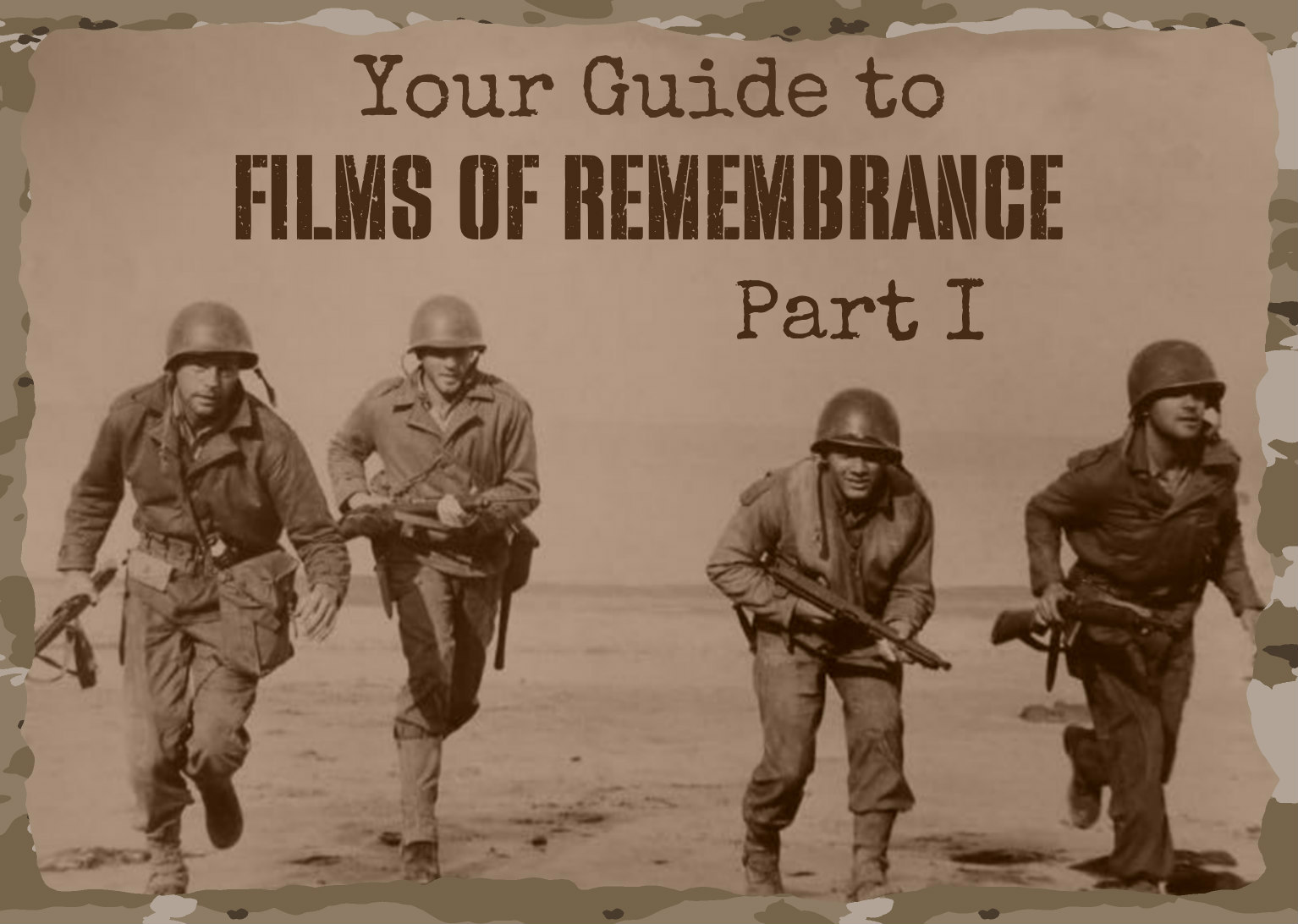
Due to my Seasonal Interest Syndrome, I’ve always had a well-defined schedule for watching certain types of movies at certain times of year. While I don’t necessarily restrict myself to watching summer favourites in July, for example, some films go down better if I watch them when I enjoy watching them. This was a common theme in our house when my two boys were young and they have memories of this syndrome; today, my youngest will mention a movie to me and often say “when do you watch that?” And so after the spooky movies I enjoy watching at the end of October, I scan my shelves to see which war movies are on my Yet to Be Watched shelf and which old favourites I haven’t seen for awhile.
War movies are serious business. I used them to try and teach my boys about the sacrifices made by so many in the conflicts of the 20th century. I would always tell them that there are so many stories to be told during war. Try to imagine leaving home and family to go to a place on the other side of the world to risk your life. Think about the camaraderie, your reliance on your fellow soldiers, the unbreakable bonds one would make. Sometimes it may have been a cushy gig in a motor pool in the South Pacific or it may have been the bitter cold of a barren plain in France. There are films about the First and Second World Wars, movies set in Korea and the Vietnam conflict is, of course, rife with story points. There are films about specific battles, fictionalized accounts, tactical, almost documentary movies strictly about certain missions and there are romance films – just imagine the romantic entanglements that could emerge in war time.
War movies are stories of heroism and villainy, stories about ordinary people doing extraordinary things. They are entertaining and educational. They are serious business because, for the most part, they are based on fact and the exploits of real people, people you may know, people you may have met. People you may be related to. It boggles the mind to consider some of the things men and women came home carrying in their memories, in their souls and on their bodies.
With all the amazing stories to be told in war films I thought we would look at some of the movies I have watched often down through the years. Here in Part 1 and in future segments we will look at the aforementioned combat films and the romantic dramas. The star-studded three-hour epics, films from the Forties and earlier and more recent offerings. As a teenager, I was not much into war movies or westerns because there were no guys in suits, no good music or cool cars. But I have come to love both genres for the action they offer but also for the plethora of stories to be told. And in the case of war films, the appeal is also in the amazing fact that these things happened. People did answer the call. People did watch friends die. People did take lives and maybe found they were good at that. People did rise from being nothing at home to being important people with specific skills. People really did come home absolutely broken. People really did – and do – bear horrors many of us cannot fathom. Some of these movies are inspiring and victorious. Some are disheartening and devastating. All are engaging.
These will not be definitive lists. As I’ve said, these are favourites of mine, ones I watched with my family and ones I still go to. All depict some aspect of war and they remind us that there are so many tales to be told through these films.
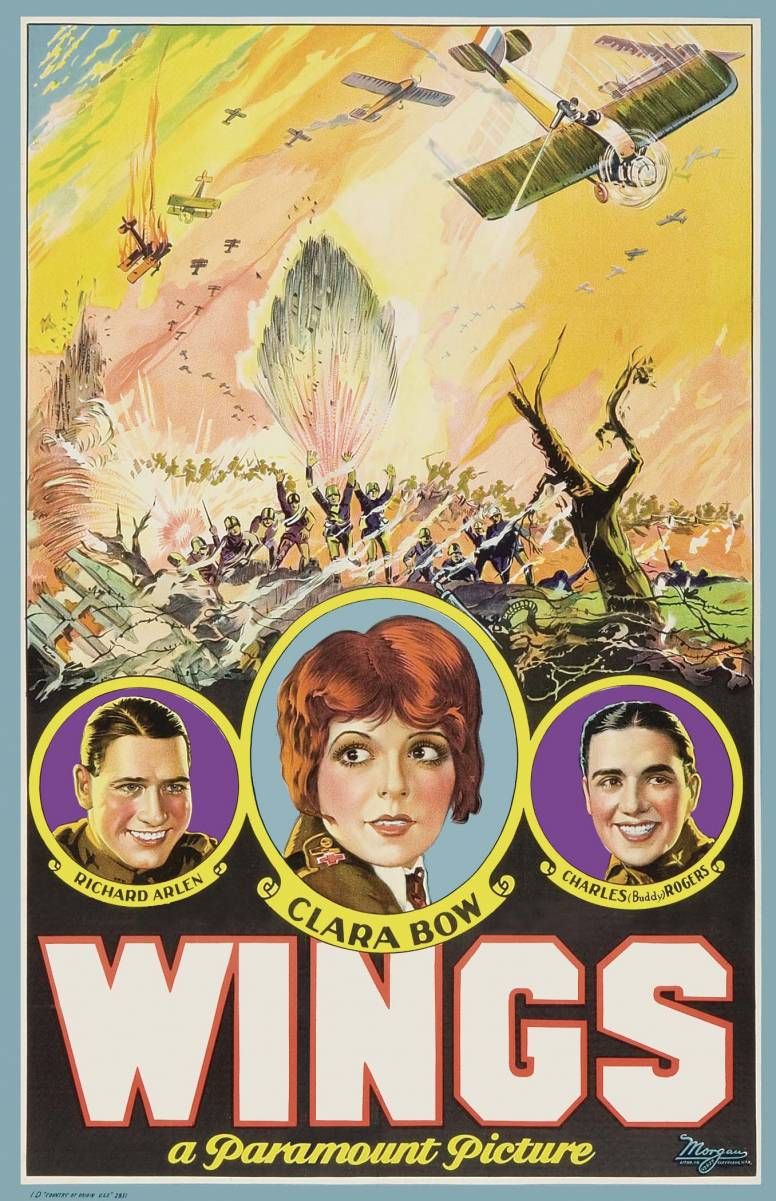
Wings (1927) — We might as well start somewhere near the beginning. This, like some other films on this list, really calls for it’s own dedicated discussion as there are many talking points. Suffice it to say that it is an experience, watching this movie, the first ever to win a Best Picture Academy Award. It’s not every director who flies an airplane himself to get the shots he needs and the actors flew planes, as well. Not only is the aerial footage remarkable but watch for the legendary “push shot” of the camera passing over a series of tables in a night club. And Clara Bow is seen topless for a second. Get the restored version on Blu-ray; if you don’t think a silent film can keep your attention for 144 minutes, think again.
Battle of Britain (1969) — This was always a fun one for me to put in my rotation as it told a British story of World War II, one of their fight against the Luftwaffe for aerial dominance in the summer of 1940, before the US had even entered the fray. The film has a wonderful, crisp look and it features amazing flying sequences. It also boasts a notable cast of Britons including Michael Caine, Robert Shaw, Trevor Howard, Laurence Olivier and Canadian Christopher Plummer. The film has also been lauded in men’s fashion circles due mostly to Robert Shaw’s “submarine sweater”. Battle of Britain is a great flying film owing much to the use of actual Spitfires and Messerschmitts and the footage achieved by director Guy Hamilton (4 Bond movies and this was produced by Harry Saltzman) and his team was used as stock footage for other depictions of these historic events – including for a film we’ll talk about later.
Dunkirk (2017) — Immediately preceding the Battle of Britain was the Miracle of Dunkirk. For this film, we vault forward almost 60 years for Christopher Nolan’s substantial telling of the evacuation of 338,000 Allied soldiers from the beaches of Dunkirk, a port town in northern France. We all love our war movies from the golden era but what a treat to see a telling with modern filmmaking and storytelling techniques. And not just any techniques but those employed by Nolan, a singular craftsman who decided to tell this tale with little dialogue, stunning cinematography and stirring music. Not to mention indelible performances particularly from Cillian Murphy who gives a harrowing performance as a “shell-shocked” soldier, Mark Rylance and Kenneth Branagh. Watch particularly for the interactions on the vessel skippered by Rylance; this is a depiction of one of the thousand difficult personal stories that emerge from the conditions of war. And it must be said; you gotta love Tom Hardy as the pilot. And you didn’t spot Michael Caine, present in all of Nolan’s films? Listen for his voice.
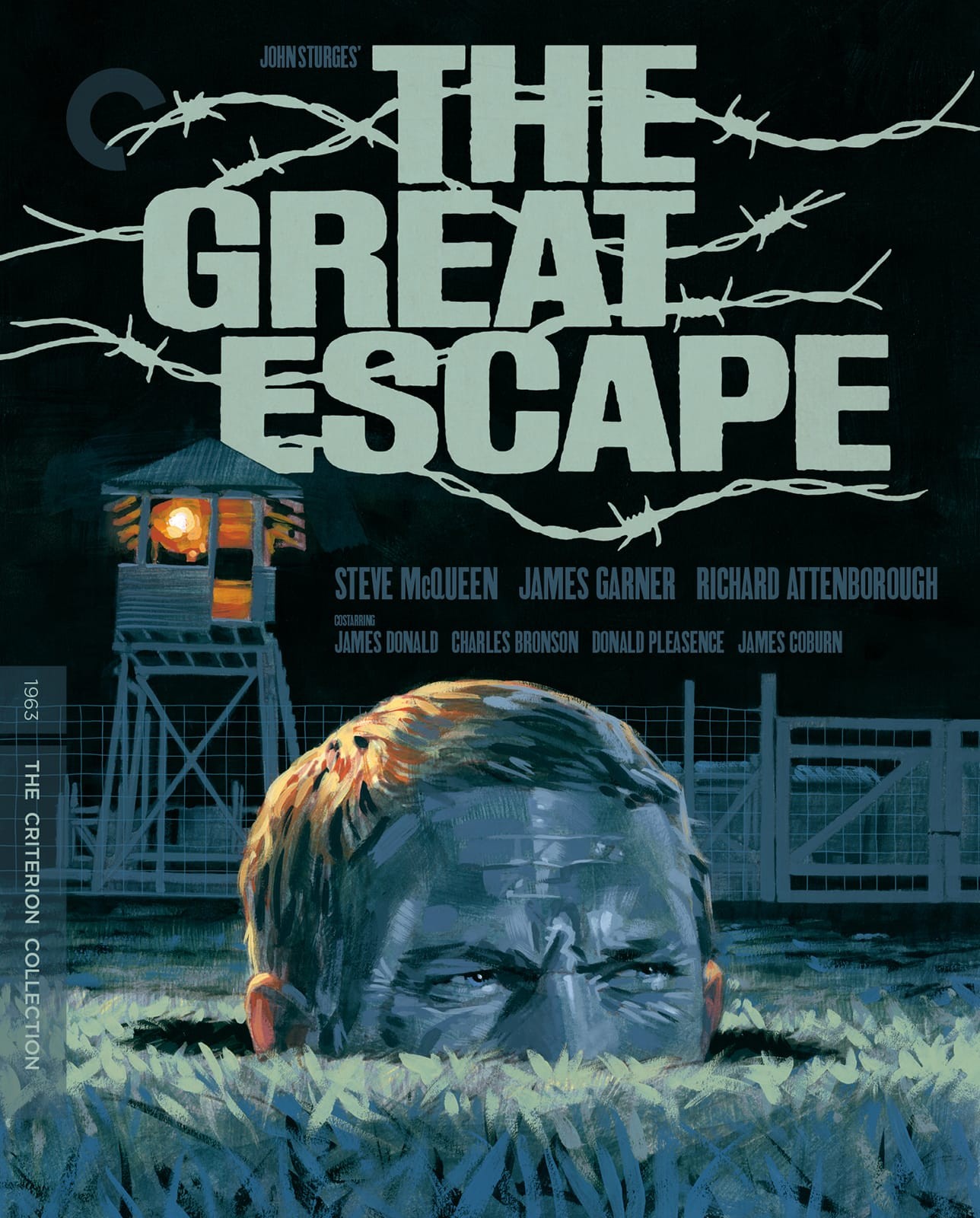
The Great Escape (1963) — Easily one of the finest and most engaging films ever made, The Great Escape was a fun one to watch with my kids when they were young. It’s what I would classify as a “mission” picture; obviously, one that depicts a specific task or feat that a team of people must carry out. A cult favourite and one of the greatest films ever, this one, however, deviates somewhat from the real life events it is based on – mostly in the addition in the film of American participants. The few US prisoners who helped in the early days of the escape from German POW camp Stalag Luft III were moved away from the camp fully seven months before the escape itself. What’s interesting here is life in a prison camp and the ingenuity of the prisoners, the manner in which they dug their tunnels without detection by the guards. And my boys and I always marvelled when considering the fates of the escapees – especially the three who made it. A lot of the appeal of this film is, of course, Steve McQueen as the Cooler King and his famous motorcycle jump.
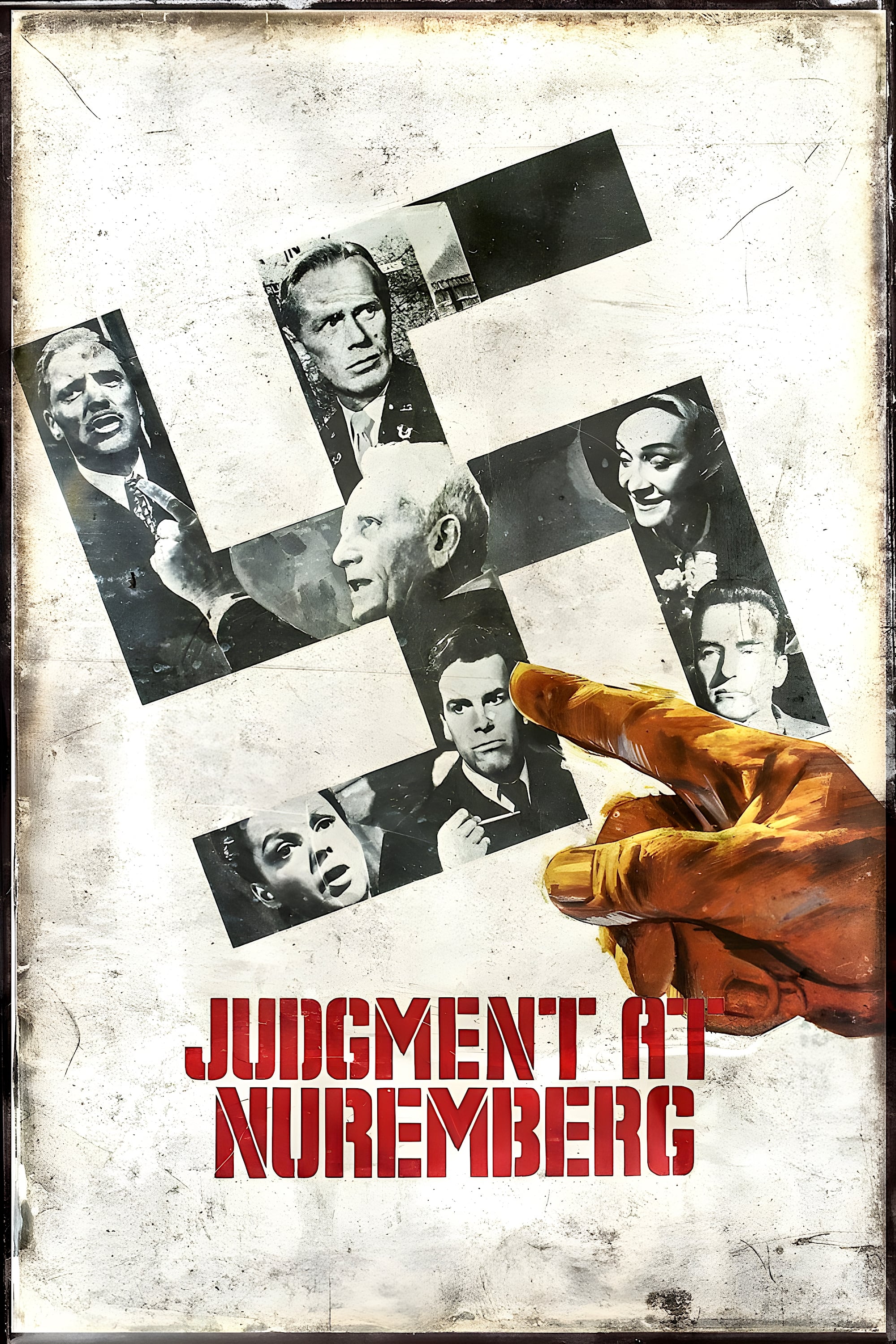
Judgement at Nuremberg (1961) — Let’s not forget that the end of war may only signal the end of hostilities and combat. But the ramifications in their many forms echo down through the years. In the case of this remarkable film it is the immediate aftermath and the criminal trials of members of the Nazi government for crimes against humanity. This is one of those movies that carries so much weight that it is a daunting process just to watch it. The subject matter is so substantial and the presentation of such a high quality that the viewing itself carries such weight. Stanley Kramer helms a stellar cast depicting largely fictionalized characters but to hear some of their stories on the stand is harrowing. To watch both Montgomery Clift and Judy Garland is to be mesmerized. The movie presents the interesting concept of German civilians claiming ignorance of what the Nazis had done while all the while they must have at least suspected. Spencer Tracy is an absolute craftsman and Burt Lancaster plays his part with the utmost gravitas. Judgement at Nuremberg is an oak, a concrete pillar of a movie.
Anthropoid (2016) — It’s a long and fascinating story how I came to discover this remarkable film and the history behind it. I once read a novel that serves as a sequel to the events of the film Casablanca. The author moved the action to Victor Laszlo’s home country Czechoslovakia where Rick Blaine helps the underground resistance assassinate Reinhard Heydrich, the main architect of the Final Solution. This real life Operation Anthropoid ends with the Nazi’s razing the Czech town of Lidice, murdering most of the townspeople. To learn later about this 2016 film of the assassination attempt was thrilling for me, made more so when I stumbled on the Blu-ray at a garage sale. It’s an excellent movie starring Cillian Murphy that illuminates this little known tale. It is an utterly riveting story and this gripping film is the one on this list I would most encourage you to seek out.
Apocalypse Now (1979) — What can you say about this film? Definitely a movie about the insanity of the war in Vietnam but much more than that it seems like a psychological discourse on the depths of a man’s soul and where he will go – physically and mentally – when placed in extreme circumstances. It is an exciting film but also harrowing and Capt. Willard’s journey up the river is an eerie excursion obviously influenced by Dante’s ages-old tale of the descent through the increasingly dire stages of hell. Pretty tough to talk about this movie – the script by my man, John Milius and direction by Francis Ford Coppola – in so few words but every time I clear aside a big block of time to watch it or the full Redux version I am always enthralled. Its a movie that every classic film fan must know, study and understand, not just watch.
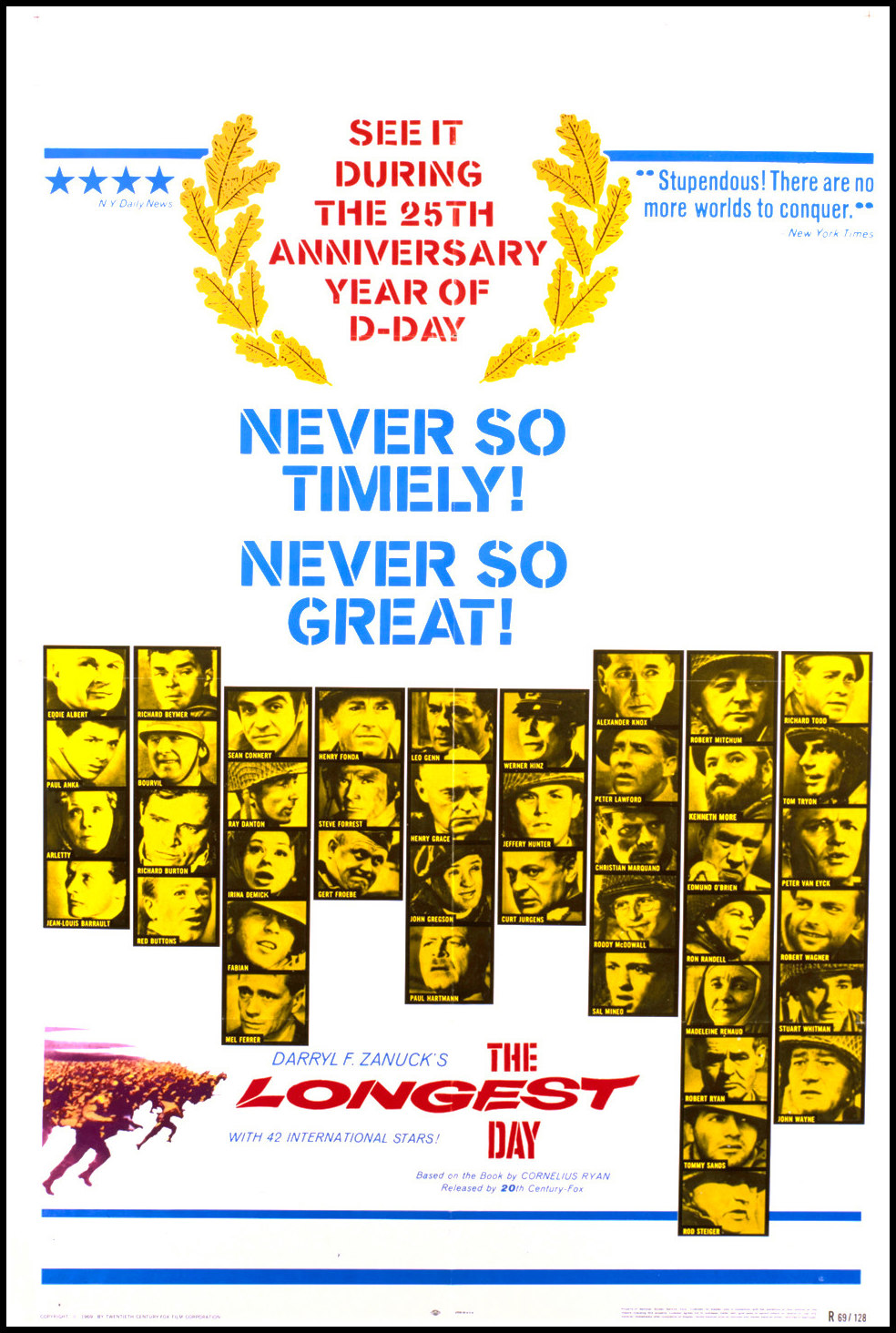
The Longest Day (1962) — A star-studded affair, The Longest Day is an epic war film extravaganza loaded with stories of tactical maneuvers and of the humans who carried them out. Based on a non-fiction book, the movie took four directors and over 130 actors to make. It tells the story of the D-Day landing on June 6th of 1944 and its interesting to note that the film went into production only 15 some-odd years after the events it depicts. Therefore, many of the actors in it saw action during the war and the filmmakers employed actual participants in the action as consultants. So, it’s a docudrama that tells in great detail the planning and the execution of this historic day. At 178 minutes, its great to put on and watch throughout the day looking to spot various actors making little more than cameos and to watch not only the combat scenes but the different characters in their dedicated vignettes. The film is a spectacle and has been called thrilling, amusing, ironic, sad, tingling, eye-gripping, fantastic and a tour de force.
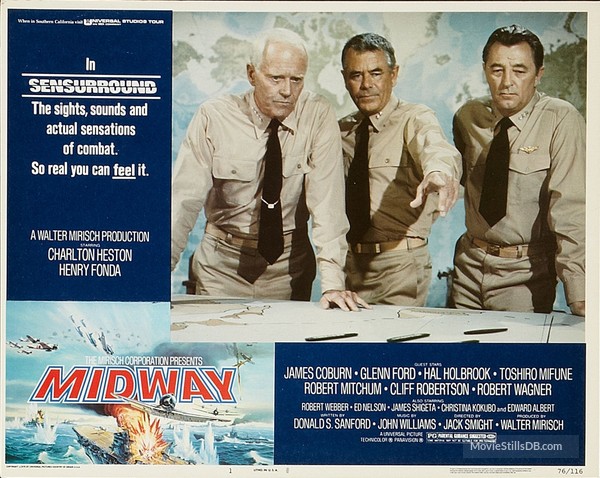
Midway (1976) — Along the same lines is Midway, the telling of the battle that was a turning point in the Pacific War. Here the Japanese are portrayed as equal to the Americans in their military prowess and this is given added weight by the Japanese actors in the cast lead by the magnificent Toshiro Mifune. Naval aviators were on hand as consultants and a lot of the action sequences were assembled from previous films, including Battle of Britain. Stalwarts like Chuck Heston and Henry Fonda were joined in the cast by newcomers like Tom Selleck and Erik Estrada. Another substantial war film that did extremely well at the box-office almost 35 years after the events it depicts. Do not watch the 2019 remake.
We Were Soldiers (2002) — Here, one of my favourite filmmakers, Mel Gibson, drills down on a little illuminated but poignant time in the Vietnam conflict. The film depicts the first major battle between the US and the People’s Army of Vietnam, the Battle of Ia Drang, that took place in the early days of the war in November of 1965. It shows air mobility tactics – “Air mobility called for battalion-sized forces to be delivered, supplied and extracted from an area of action using helicopters”. Something that stands out, though, about this one is the depiction of the wives of the soldiers engaged under Mel Gibson’s command back on the Army base in the States. The Army begins to notify the wives of their husband’s deaths simply by dispatching a taxi and having the driver deliver the devastating news, if you can believe it. Madeleine Stowe, an old favourite of mine, playing Mel’s wife, takes over this job and here we see the origin of a gentler notification system with the wives gently helping each other through the heartache and devastation. And totally out of keeping with the action of the film, there is one hilarious exchange to watch for between grizzly old Sam Elliott and a young soldier. This film, based on a book, is said to be faithful to events except there was no “heroic final charge” in real life. Directed by Braveheart‘s director, Randall Wallace.
From Here to Eternity (1953) — Another extremely thought-provoking element of war time storytelling is the romance angle. James Jones’ sprawling novel was made into this film that is legendary in Hollywood history in part for Burt Lancaster and Deborah Kerr on the beach and for the Oscar-winning performance of a down-on-his-luck singer from Hoboken name of Sinatra. There is much here for your imagination to take in; here we are before the US has entered the war and soldiers have found themselves stationed on the tropical island of Hawaii. Definitely a sweet gig – until December 7th. The romantic complications are intriguing. Big Burt’s dynamic with his boss and his relationship with his boss’s wife come to a head when the lovers realize there is no way forward for them. Monty Clift is head-over-heels for “hostess” Donna Reed and he can’t understand why she keeps going to work after he has expressed his love. How to resolve these things is tough enough – and then the Japanese fighter planes start to drop their payload on the island paradise. What then? Excellent romantic war film with a tough ending.
Things were pretty good – until they weren’t
Fury (2014) — We all love classic films of the 50s and 60s but we also know of the filmmaking of the time and the restrictions sometimes placed on the storytelling of films from that era. So sometimes its great to find a modern western or war film that is free to show things as they really were with the truth told often with appropriate language and explicit carnage. Fury gives you both these things in addition to a serious story of tank warfare during the Second World War and also a human tale about what can happen when people find a connection in the midst of war. Brad Pitt stars in this dirty, gritty film that also displays the tenuous camaraderie that existed between men thrust together in teams despite differences in temperament and personality. The battle-hardened crew of the Fury are resentful at first of young Norman’s innocence but in the end preserving that innocence becomes a priority for them all. This authentic film does well depicting soldiers at the very end of their tether. The scene in the girls’ apartment is fascinating to watch. Maybe most impressive to me, though, is Brad Pitt’s hair, a look I adopted at one time.
These films should help us to remember. Because as the years roll and these things recede further into the distance, it becomes easier to forget the lives we lead today once hung in the balance and had to be fought for. People died to preserve our way of life. One of cinema’s great contributions is presenting these documents that remind us of these historic and these human events – extraordinary feats carried out by ordinary people.
Further Studies

